A collector’s deep dive into one of the rarest and most romantic time-only Rolex watches ever produced
The exceedingly rare Rolex Oyster Perpetual “Galaxy” Ref. 6098 in 18k pink gold with honeycomb star dial, circa 1952–1953.
In the vast and heavily studied universe of vintage Rolex, few configurations evoke as much romance, mystery, and pure collector desire as the “Star Dials.” While the triple-calendar moon-phase Ref. 6062 “Stelline” often steals the spotlight, the true connoisseur’s choice lies in the time-only realm: the exceedingly rare Rolex Oyster Perpetual “Galaxy” Ref. 6098.
This is not merely a watch; it is a testament to a brief, playful era in Rolex’s history when the brand dared to dream beyond the utilitarian constraints of the Oyster case. Today, we explore the history, the extreme rarity, and the allure of the Ref. 6098 Galaxy — with a special focus on the almost mythical pink gold variant.
The Post-War Renaissance and the Birth of the “Galaxy”
To understand the Galaxy, one must understand the era in which it was born. The early 1950s marked a period of post-war optimism and creative renaissance in watchmaking. Brands that had spent the 1940s producing strict, utilitarian military watches suddenly found themselves free to experiment with imaginative and audacious designs.
Rolex, typically known for its robust tool watches, embraced this newfound playfulness. The brand introduced dials adorned with applied gold stars for hour markers. The name “Galaxy” is not a modern collector’s invention; it was the official nomenclature used by Rolex in their 1950s marketing materials to describe these specific time-only star dial models.
The star dials were produced for a very short window, primarily between 1950 and 1953, with case numbers ranging tightly between 698,xxx and 947,xxx. The dials themselves were manufactured by the legendary dial maker Stern Frères — the same artisans responsible for the dials of the Patek Philippe 1518 and 2499. Each dial was stamped with a Stern Frères code: for example, “103·989 2”, where 103 is the Stern Frères code for Rolex, 989 refers to the dial type, and 2 indicates the second example of that particular dial produced.
“These watches are truly connoisseur’s watches. Many consider these the most sophisticated time-only Rolex watches ever made.”— e. w.
The Anatomy of the Ref. 6098 “Ovettone”
The Reference 6098 is a watch of significant proportions for its era. Collectors affectionately refer to it as the “Ovettone”(Italian for “large egg”) due to its substantial 36mm Oyster case and prominently domed case back — a design necessitated by the thickness of the automatic movement within.
The Genex Case
The 36mm case was manufactured by Genex S.A., a renowned casemaker that was a subsidiary of Stern Frères. This is the exact same case design utilized for the legendary triple-calendar Ref. 6062, giving the 6098 a substantial, modern presence on the wrist that belies its 1950s origins. The case features a screw-down Oyster back — a hallmark of Rolex’s commitment to robustness even in their most decorative pieces.
The Honeycomb Dial
The dial of the Galaxy is a masterpiece of mid-century texture. The matte silvered surface features a complex “honeycomb” guilloché pattern — a fine waffle-like texture that catches the light and creates an almost three-dimensional depth. This textured canvas serves as the perfect backdrop for the applied gold star indices and the faceted dagger numerals at 3, 6, and 9 o’clock. The Rolex crown appears at 12. The luminous material was applied directly to the center of each star, making the dial literally glow in low light.
The Caliber A296 and the Copper-Gilt Mystery
Powering the 6098 is the Caliber A296 (or A260 super balance), a robust automatic perpetual movement. Because this movement was relatively thick, it necessitated the deeply domed “bubbleback” style case back.
Interestingly, several known examples of the 6098 Galaxy feature a highly unusual copper-colored gilt movement. Combined with a “double signed” interior caseback — bearing both the standard “Rolex Geneva Swiss Patented” stamp and a vertical “Montres Rolex S.A., Geneva, Swiss” engraving — scholars at Christie’s speculate that these specific watches may have been produced for special exhibition or demonstration purposes, perhaps for trade fairs or commercial presentations in the early 1950s.
18k Pink Gold (also yellow gold and stainless steel)
Case Diameter
36 mm
Case Maker
Genex S.A. (subsidiary of Stern Frères)
Movement
Automatic — Caliber A296 / A260 super balance
Dial
Matte silvered honeycomb with applied gold star indices
Dial Maker
Stern Frères, Geneva
Crystal
Domed Plexiglass
Caseback
Screw-down, double-signed interior
Water Resistance
None
Serial Number Range
698,xxx – 947,xxx
The Numbers: A Study in Extreme Rarity
When we discuss the rarity of the 6098 Galaxy, we are talking about numbers that rival the most elusive Patek Philippe complications. According to extensive research by Christie’s, Phillips, and leading independent scholars, the known public population of the Ref. 6098 with a silvered honeycomb star dial is astonishingly small.
Configuration
Known Public Examples
Yellow Gold + Honeycomb Star Dial
8 – 10 examples
Yellow Gold + Black Star Dial
3 examples
Stainless Steel + Honeycomb Star Dial
2 examples
Pink Gold + Honeycomb Star Dial
1 example (the only one known)
The Complete Register of Known Examples
The following table represents every publicly documented Ref. 6098 Galaxy, compiled from Christie’s lot notes, Le Monde Edmond’s research, and the John Goldberger reference book 100 Superlative Rolex Watches:
Case Number
Est. Year
Material
Dial
Public Record
725’450
1950
Stainless Steel
Honeycomb Star
Sotheby’s Hong Kong, 2008
727’060
1950
Stainless Steel
Honeycomb Star
Christie’s, 2007
740’036
1950
Yellow Gold
Honeycomb Star
Auction record
911’992
1952/53
Yellow Gold
Honeycomb Star
Auction record
912’006
1952/53
Yellow Gold
Honeycomb Star
Auction record
912’015
1952/53
Yellow Gold
Honeycomb Star
Private (Goldberger book)
912’019
1952/53
Yellow Gold
Honeycomb Star
Auction record
912’107
1952/53
Yellow Gold
Honeycomb Star
Auction record
912’120
1952/53
Yellow Gold
Honeycomb Star
Goldberger book
919’039
1953
Yellow Gold
Honeycomb Star
Christie’s, May 2023 — CHF 126,000
928’128
1953
Yellow Gold
Honeycomb Star
Wind Vintage
947’778
1953
Yellow Gold
Honeycomb Star
Auction record
947’830
1953
Yellow Gold
Honeycomb Star
Christie’s, Dec 2024 — USD 100,800
947’848
1953
Yellow Gold
Honeycomb Star
Private transaction
Unknown
1952/53
Pink Gold
Honeycomb Star
The only known example
The Pink Gold Unicorn
While yellow gold was the standard for luxury watches in the 1950s, pink gold was produced in vastly smaller quantities — often representing less than 10% of a reference’s total production. In the case of the 6098 Galaxy, Christie’s research is unambiguous:
“According to our research, including the present watch, only eight reference 6098 are known publicly with a yellow gold case and silvered ‘stelline’ type dial. Three examples are known in yellow gold with a black dial, three in steel with silvered dial and one example in pink gold.”— Christie’s, Lot Essay, Rare Watches, Geneva, 13 May 2023
This makes the pink gold 6098 Galaxy not just a rare watch, but a true “unicorn” in the vintage Rolex collecting sphere — a watch of which the entire known population consists of a single example.
The Sister References: Placing the 6098 in Context
The 6098 did not exist in isolation. It was part of a small family of time-only Rolex references that received the star dial treatment during the same brief production window.
Reference
Case Size
Case Style
Movement
Known Star Dial Examples
6024
~34mm
Flat Oyster
Manual wind
2 (honeycomb only)
6088
36mm
Oyster (Genex)
Automatic A296
~3 (incl. unique black dial)
6098
36mm
Ovettone (Genex)
Automatic A296
~17 (all variants)
6090
32.5mm
Bombé / “Bombay Lugs”
Auto A260 / cal. 645
~2 (in 14k and 18k gold)
Of all the time-only star dial references, the 6098 is the most “collected” — in the sense that it has the largest known population and the most auction history. Yet even so, the total number of known examples across all configurations barely exceeds twenty. For context, a single year of production of a modern Rolex Datejust yields hundreds of thousands of examples.
The Collector’s Verdict
The Rolex 6098 Galaxy represents the absolute pinnacle of time-only Rolex collecting. It combines the robust, wearable 36mm “Ovettone” case with one of the most romantic, delicate, and playful dials ever produced by Stern Frères. It is a watch that tells you the time — and nothing else — yet manages to be more desirable than almost any complicated watch from the same era.
For the collector who seeks the ultimate intersection of Rolex history, mid-century design, and extreme exclusivity, the Galaxy 6098 is the ultimate prize. It is a reminder that once upon a time, even the most serious watchmaker in the world took a moment to look up at the stars — and decided to put them on a dial.
Serpenti Tubogas bracelet-watch in yellow gold, ca. 1960. BVLGARI Heritage Collection. The triple-coil Tubogas construction became the defining structural language of the Serpenti line.
Imagine a serpent coiling around your wrist — not as a creature, but as a masterpiece of Italian goldsmithing that has captivated the world for over 75 years. Since 1948, the Bulgari Serpenti watch has embodied the ancient symbolism of the snake — wisdom, seduction, transformation, vitality, rebirth, and protection — while continuously reinventing itself decade after decade.
The Bulgari Serpenti is more than a timepiece. It is a continuously evolving icon that fuses Italian jewelry artistry with Swiss watchmaking, spanning from its birth in post-war Rome to the cutting-edge innovations of 2026. Bulgari calls it their “true symbol,” one that captures “energy coursing through gold and gems,” creating pieces that “pulse with irresistible magnetism.”
The Serpent Symbol: Ancient Origins, Modern Icon
The serpent motif that defines the Bulgari Serpenti collection is anchored in ancient civilizations, particularly Egyptian and Greek-Roman mythological traditions. In these cultures, the serpent symbolized eternal life, divine wisdom, and perpetual renewal — themes that resonate powerfully in a timepiece designed to mark the passage of time itself.
Bulgari’s Greek-Italian heritage connects directly to these classical traditions. Founded by Greek silversmith Sotirios Voulgaris in Rome in 1884, the house drew naturally from the ancient Roman jewelry traditions that featured snake motifs prominently. When Bulgari transformed the snake from a mere decorative element into a core brand identity in 1948, they were tapping into millennia of symbolic power.
A Chronological History: Decade by Decade
The 1940s: Birth of an Icon
1948 marks the year Bulgari created the first Serpenti bracelet-watch — a gold timepiece with a square-shaped dial and a coiled band that wrapped sinuously around the wrist. This inaugural piece was crafted using the innovative Tubogas goldsmithing technique, an avant-garde method characteristic of the “Retro” or “Machine Style” era.
The Tubogas technique — named after the coiled gas pipes that inspired its form — creates a flexible bracelet through consistent coils of gold without any soldering. The result is a band that moves with the fluidity of a living serpent.
The 1950s: The Secret Watch Emerges
Serpenti bracelet-watch in two-colour gold (yellow and white gold), ca. 1960. BVLGARI Heritage Collection.Thecheckerboard alternation of yellow and white gold segments demonstrates Bulgari’s early mastery of contrastingmetals.
By the mid-1950s, Bulgari had developed the concept of the “secret watch” — a timepiece whose dial was hidden under a small decorative cap, typically fashioned as the serpent’s head. This innovation transformed the Serpenti from a watch that happened to look like a snake into a piece of jewelry that happened to conceal a watch.
The 1960s: Cult Status and the Elizabeth Taylor Moment
Serpenti Tubogas in satined yellow gold with diamond bezel, 1963. Movement by Vacheron & Constantin, Genève.The engraved herringbone texture and diamond bezel mark this as one of the most refined early Serpenti executions.
The 1960s elevated the Serpenti from a luxury accessory to a cultural phenomenon. The defining moment came in January 1962, when Elizabeth Taylor acquired her Bulgari Serpenti while filming Cleopatra in Rome.
“I introduced Bulgari to the world.” — Elizabeth Taylor
Serpenti Tubogas in yellow gold, ca. 1965. The elongated rectangular case with Roman numeral dial and the “BULGARI ROMA” signature reflect the brand’s confident Roman identity during the dolce vita era.
The 1970s: Revival and Versatility
Serpenti Tubogas in yellow gold and burnished steel, ca. 1970. BVLGARI Heritage Collection.The bold alternationof polished gold and matte steel segments gives this triple-coil Serpenti a distinctly modern, graphic energy.
The Tubogas technique experienced a significant revival in the late 1960s and 1970s. This was the decade that democratized the Serpenti — at least within the realm of luxury. Two-tone gold and stainless steel combinations appeared for the first time, making the collection more accessible while maintaining its distinctive serpentine character.
Serpenti Tubogas in three-colour gold (yellow, white, and rose gold), ca. 1970. BVLGARI Heritage Collection. A technical and aesthetic tour de force — three distinct gold alloys in a single continuous Tubogas body.
Serpenti Tubogas in yellow gold with full lapis lazuli dial, ca. 1971. BVLGARI Heritage Collection.The deep ultramarine lapis field framed by Roman numerals in gold represents the most opulent expression of Bulgari’sgemstone integration.
The 1980s and 1990s: Gold Dominance and New Forms
“BVLGARI BVLGARI” Serpenti Tubogas in two-colour gold, 1980. BVLGARI Heritage Collection.The extraordinary seven-turn spiral showcases the Tubogas technique at its most extravagant.
Yellow and white-gold renditions dominated the 1980s Serpenti lineup, reflecting the decade’s appetite for bold, unapologetic luxury. The 1990s brought fresh architectural thinking to the Serpenti collection, most notably with the introduction of square cases mounted on double-coiled bracelets.
Serpenti Tubogas in two-colour gold, ca. 1985. BVLGARI Heritage Collection.The round case with clean white dial represents the refined, more restrained direction of the mid-1980s Serpenti.
The 2010s and 2020s: Modern Renaissance and Technical Innovation
The 2010s represented a modern renaissance for the Serpenti, with the introduction of multiple new sub-collections like the Serpenti Incantati (2016), the Seduttori, and the Spiga.
The current decade has been defined by serious horological innovation. In 2022, Bulgari introduced the Piccolissimo (Caliber BVL 100) movement: just 12mm in diameter, 2.5mm thick, and weighing a mere 1.30 grams. In 2025, Bulgari unveiled the new Caliber BVS 100 Lady Solotempo — an automatic movement designed and assembled entirely in Bulgari’s Swiss manufacture.
Summary Tables
Table 1: Models by Era
Model
Year Introduced
Key Features
Materials
Original Serpenti
1948
Square dial, Tubogas coiled band
Gold
Serpenti Secret Watch
Mid-1950s
Hidden dial under cap
18k gold, diamonds, enamel
Elizabeth Taylor’s
1962
Cuff bracelet, concealed dial
Gold, diamonds, emeralds
1970s Tubogas Revival
Late 1960s
Two-tone metals, wearable design
Gold, stainless steel
Serpenti Seduttori
2010s
Hexagonal case inspired by scales
Steel, rose gold, yellow gold
Serpenti Spiga
2010s
Matelassé bracelet, ceramic
Steel, ceramic, rose gold
Serpenti Misteriosi
2022
Piccolissimo mechanical movement
White/rose gold, diamonds
Serpenti Aeterna
2025
Sculptural bangle design
18kt rose gold, diamonds
Serpenti Tubogas Studs
2026
Stud accents on Tubogas
Stainless steel, 18kt yellow gold
Table 2: Auctions Pricing Data
Model
Auction Price Range
Collectibility Rating
Serpenti Seduttori
$3,700 – $28,000
Moderate (entry-level)
Serpenti Tubogas
$5,200 – $57,000+
High (iconic design)
Serpenti Spiga
$7,550 – $57,000
Moderate
Serpenti Incantati
$36,900 – €39,300+
High (limited, high jewelry)
Serpenti Aeterna
Starting ~$82,000
High (new, limited)
Serpenti Secret/Misteriosi
$285,600 – $300,000+
Very High (GPHG winner)
Vintage 1960s Enamel
Auction: $1,107,038 (record)
Exceptional
Elizabeth Taylor’s Serpenti
Auction: $974,500 (2011)
Legendary (provenance)
Conclusion: The Serpent Endures
The Bulgari Serpenti is one of the longest-running, most iconic watch designs in history — over 75 years of continuous production, continuous evolution, and continuous cultural relevance. It uniquely bridges the worlds of high jewelry and serious watchmaking in a way that few other collections can claim.
For collectors and investors, the numbers speak clearly: 84% value retention, record-breaking auction results, and a trajectory of appreciation for vintage pieces that shows no signs of slowing. The serpent continues to shed its skin and be reborn — just as the Bulgari Serpenti collection reinvents itself decade after decade while remaining unmistakably, irresistibly itself.
Gallery: The Evolution of Forms
Serpenti bracelet watch in pink gold ,1957 private collection
Serpenti tubogas bracelet watch in gold with sapphire, 1959 private collection
Serpenti bracelet-watch in yellow gold, ca. 1960. The octagonal case head is here paired with a clean white dial.
Serpenti Tubogas in yellow gold, ca. 1965. Movement by Jaeger-LeCoultre. The round case head epitomizes the opulent aesthetic of mid-1960s Bulgari.
Serpenti Tubogas in three-colour gold, ca. 1970. Movement by Vacheron & Constantin. The cushion-shaped case with black lacquer dial represents a modernist direction.
Serpenti Tubogas in yellow gold with lapis lazuli and sapphire, ca. 1971. The square case demonstrates Bulgari’s use of semi-precious stones.
Serpenti Tubogas in yellow gold and burnished steel with Movado Museum dial, ca. 1972. An exceptional collaboration piece.
Serpenti Tubogas in yellow gold with pear-shaped case, ca. 1972. The teardrop-shaped case head illustrates Bulgari’s willingness to experiment.
Serpenti Tubogas in yellow gold, 1974. The wider, more voluminous Tubogas body reflects the decade’s taste for bold jewelry.
Serpenti bracelet-watch in yellow gold and burnished steel with woven “Intrecciato” link construction, ca. 1975.
“BVLGARI BVLGARI” Serpenti Tubogas in yellow gold, 1978. The introduction of the circular bezel marks a pivotal moment.
A Collector’s Guide to the Most Extravagant Case Maker in Swiss Horology
There is a secret language hidden inside the case backs of vintage Swiss watches. For the uninitiated, a watch is defined by the name printed on its dial. But for the serious collector, the true story of a timepiece often begins with a tiny, almost imperceptible hallmark stamped into the precious metal of its inner case back. Among these hallmarks, few command as much reverence and fascination as the Geneva Key containing the number 8.
This is the Poinçon de Maître (Master’s Punch) of François Markowski, a Geneva-based case maker who operated from the early 1920s until 1963 . While other legendary case makers like Wenger (Key 1) or Taubert (Key 11) built their reputations on waterproof cases or chronographs, Markowski became the undisputed master of shape. When a brand like Patek Philippe conceived a design so architecturally complex, so organic, or so avant-garde that standard manufacturing techniques failed, they turned to Markowski.
This guide explores the history, the artistry, and the legendary references produced by the man who gave physical form to the most extravagant visions of mid-century horology.
The Geneva Key System: Anonymity and Excellence
To understand Markowski’s role, one must first understand how the Swiss watch industry operated in the mid-20th century. Brands like Patek Philippe, Audemars Piguet, and Vacheron Constantin rarely produced their own cases. Instead, they relied on a network of highly specialized, independent artisans. Case makers would design prototypes and send catalogs to the watch brands, who would then select the cases that best suited their new movements .
Because these case makers supplied multiple competing brands, the watch houses demanded anonymity. They did not want the case maker’s name appearing on their products. To solve this while maintaining traceability and quality control, the Swiss Precious Metal Act of 1933 (effective July 1, 1934) mandated the use of a Poinçon de Maître .
For cases made in Geneva from precious metals (gold or platinum) with a thickness greater than 0.3mm, the hallmark was a key symbol containing a specific number assigned to the manufacturer . Key Number 1 was Wenger, Key Number 2 was Baumgartner, Key Number 4 was Gerlach. And Key Number 8 was François Markowski.
From Engraver to Architect of Gold
François Markowski first appears in Geneva registry records in 1921, well before the mandatory hallmark system was introduced . Crucially, Markowski began his career not as a traditional case maker, but as an engraver working with silver and gold .
This background in engraving is the key to understanding his later work. Engraving requires an intimate understanding of how metal behaves under pressure, how light interacts with faceted surfaces, and how to execute precise, microscopic details by hand. When Markowski transitioned to case making, he applied this sculptural mindset to his designs.
While other manufacturers focused on the utilitarian perfection of the round, waterproof “Oyster” or “Calatrava” styles, Markowski specialized in the technically demanding realm of shaped watches (montres de forme). His cases featured multi-part constructions, domed crystals, hooded lugs, and complex geometries that required extraordinary hand-finishing .
The Markowski Portfolio: Patek Philippe’s Sculptor
Markowski’s relationship with Patek Philippe is one of the most fruitful collaborations in horological history. He was the manufacturer behind some of the brand’s most iconic, polarizing, and sought-after shaped watches.
The Architectural Era: Top Hats and Eiffel Towers
In the 1940s, as Art Deco influences merged with post-war modernism, Markowski produced a series of highly architectural cases.
The most famous of these is the Reference 1450, affectionately known by collectors as the “Top Hat” . Produced from 1940 through the early 1960s, the Top Hat features a rectangular case with distinctive hooded lugs that give it a stepped, tiered profile resembling the formal headwear. Interestingly, because case makers owned their designs, Markowski supplied an identical “Top Hat” case to IWC, and a highly compatible design to Audemars Piguet .
In 1948, Markowski delivered the Reference 2441, nicknamed the “Eiffel Tower” . This flared, rectangular case featured flared lugs that mimicked the sweeping base of the Parisian landmark. The design was so significant to Patek Philippe’s heritage that in 1997, when the brand inaugurated its new manufacture in Plan-les-Ouates, they released the limited-edition “Pagoda” collection, which was a direct homage to Markowski’s Eiffel Tower .
The Organic Era: Marilyn Monroe and Gilbert Albert
As the rigid geometry of Art Deco gave way to the softer, organic forms of the 1950s, Markowski’s designs evolved accordingly. The companion piece to the Eiffel Tower was the Reference 2442, nicknamed the “Marilyn Monroe” . This sensuous, curved rectangular case demonstrated Markowski’s ability to manipulate gold into fluid, feminine lines.
This mastery of organic form made Markowski the natural choice when Patek Philippe hired the visionary jewelry designer Gilbert Albert in the late 1950s. Albert’s designs were inspired by nature—brancusi sculptures, asymmetrical forms, and abstract geometry. Markowski produced the platinum case for Albert’s asymmetrical masterpiece, the Reference 3424 (1961), as well as the rare, short-lived ladies’ asymmetric Reference 3270 (1960) .
The Extravagant Collections: Comets and Turtles
Perhaps the most fascinating chapters in Markowski’s history are two highly limited, extravagant collections produced for Patek Philippe: the “Comet” and the “Turtle” series.
The “Comet” Collection (Refs. 1540, 1545, 1548, 1550, 1551) was produced during World War II, between 1942 and 1945 . These Art Deco masterpieces featured hooded lugs and distinctive “orbs” or spherical decorative elements on the dial perimeter. They are exceptionally rare; across all five references combined, only about 18 examples are known to exist today .
A decade later, in 1954, Markowski produced the cases for the “Turtle” Collection (Refs. 2546, 2547, 2548, 2549, 2549-1, 2549-2, 2550) . Produced for only one year, these cases featured extreme lug art—downturned “Taurus horn” lugs, five-step bezels, and complex profiles. Total production across all seven references is estimated at fewer than 200 cases .
Summary of Key Markowski References for Patek Philippe
Reference
Nickname / Collection
Production Era
Key Characteristics
425
“Tegolino”
1934–1950
Early rectangular design, replaced by the larger 2461
1450
“Top Hat”
1940–1960s
Rectangular with stepped, hooded lugs
1540-1551
“Comet” Collection
1942–1945
Art Deco with hooded lugs and dial perimeter orbs
1593
“Hour Glass”
1944–1950s
Flared rectangular case, precursor to the 2441
2441
“Eiffel Tower”
1948–1950s
Flared base resembling the Parisian landmark
2442
“Marilyn Monroe”
1948–1950s
Sensuous, curved rectangular profile
2546-2550
“Turtle” Collection
1954
Extreme lug art, downturned horns, stepped bezels
3424
Gilbert Albert Asymmetric
1961
Rhomboid asymmetrical platinum case
The End of an Era
The last recorded use of the Markowski Key Number 8 hallmark dates to 1963 . Unlike other major case makers such as Wenger (which survived until 1992) or Ateliers Réunis (which was acquired by Patek Philippe), Markowski quietly ceased operations.
The reasons for the closure reflect the changing tides of horological fashion. By the 1960s, the market’s appetite for highly complex, shaped watches was waning. Consumers increasingly favored round, waterproof, and automatic watches—styles that were better suited to the manufacturing capabilities of makers like Taubert or Baumgartner. Furthermore, the looming “Quartz Crisis” and the gradual shift of major brands toward in-house case production created an inhospitable environment for independent artisans specializing in niche, low-volume designs.
Today, François Markowski is remembered not just as a manufacturer, but as an artist. His cases are physical manifestations of an era when watchmaking was less about industrial efficiency and more about sculptural expression. For the collector, finding the number 8 stamped inside a vintage case is a guarantee that the watch was born from the hands of Geneva’s greatest master of shape.
When the Audemars Piguet Royal Oak Offshore reference 25721ST made its official debut at the 1993 Baselworld fair, it was met with a bewildered and unexpecting crowd. Designed by Emmanuel Gueit, a young designer tasked with injecting testosterone into the classic Royal Oak line, the watch was immediately dubbed “The Beast” due to its massive 42mm diameter and 16mm thickness — proportions that were virtually unheard of in the early 1990s.
The Offshore was originally conceived as an anniversary piece to celebrate 20 years of the original Royal Oak designed by Gérald Genta. However, the development took longer than expected, delaying its release to 1993. The watch was so controversial that even Genta himself reportedly expressed his dismay, claiming his original design had been “ruined.” Yet, history has proven Gueit right. The Offshore not only survived its initial criticism but went on to define the oversized luxury sports watch category, becoming a cornerstone of Audemars Piguet’s modern success.
2. The First Generation: Decoding the Early 25721ST
For serious collectors, not all “Beasts” are created equal. The very first generation of the reference 25721ST holds a mythical status, particularly the first 500 pieces produced. Understanding the nuances of these early models is crucial for any collector looking to acquire a historically significant Offshore.
The First 100 Pieces: The “Unmarked” Casebacks
The most coveted of all Offshores are the first 100 pieces ever made. Audemars Piguet was initially so uncertain about the success of the “Offshore” name that they omitted it entirely from the caseback of these first 100 watches. They simply bear the “Royal Oak” engraving. Finding one of these “unmarked” early examples is akin to finding a holy grail in modern AP collecting.
OLYMPUS DIGITAL CAMERA
The First 500 Pieces: The Blade Clasp
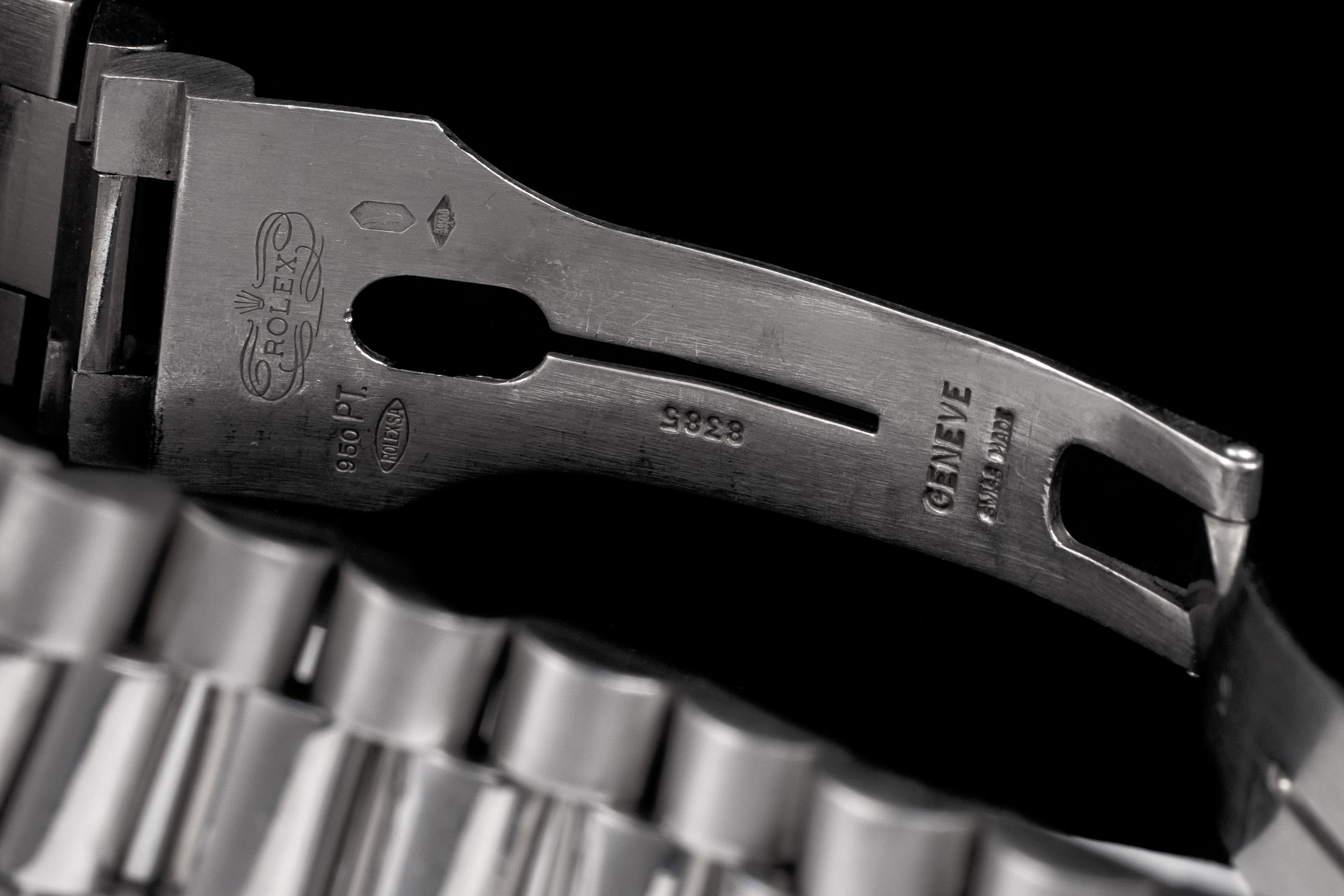
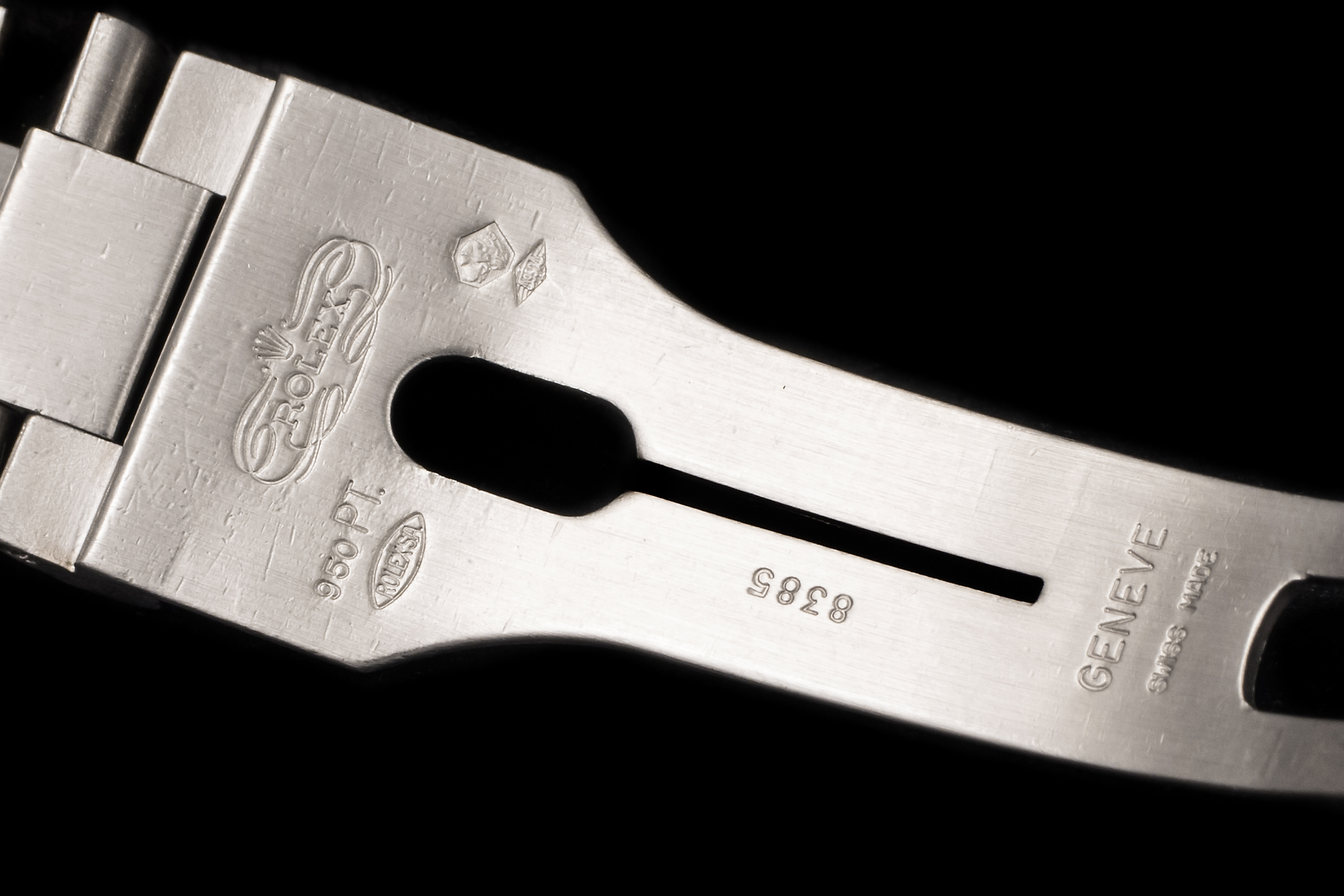
Another defining characteristic of the first 500 pieces is the bracelet clasp. These early models were fitted with a stainless steel bracelet featuring a double-folding clasp with a central piece that is thin and blade-like, completely different from the thicker, more robust clasps used in later iterations.
Feature
First 100 Pieces
Pieces 101–500
Post-500 Pieces
Caseback Engraving
“Royal Oak” only
“Royal Oak Offshore”
“Royal Oak Offshore”
Clasp Type
Thin blade-like clasp
Thin blade-like clasp
Standard thick folding clasp
Dial Color
Original Blue “Petite Tapisserie”
Original Blue “Petite Tapisserie”
Various
3. Technical Innovations and Materials
The Offshore was not just a scaled-up Royal Oak; it was a testing ground for new materials and engineering solutions. To protect the movement from magnetic fields, Audemars Piguet housed the caliber inside an anti-magnetic soft iron inner case. Furthermore, the Offshore introduced Therban® — a high-performance elastomer — for the chronograph pushers and the crown. This use of visible rubber on a high-end luxury watch was revolutionary and paved the way for the widespread use of rubber and ceramic in haute horlogerie.
The movement powering these early Beasts was the caliber 2126/2840 (and later 2226/2840), an automatic chronograph movement based on a Jaeger-LeCoultre ébauche with a Dubois-Dépraz chronograph module.
[ Insert movement image of the Caliber 2126/2840 here ]
4. The Evolution of the Beast: From Steel to Precious Metals
While the original 25721ST was crafted in stainless steel, Audemars Piguet soon realized the potential of the Offshore platform for experimentation with precious metals and exotic materials. This evolution is a critical aspect of the Offshore’s history, transforming it from a robust sports watch into a canvas for haute horlogerie.
The Introduction of Precious Metals
In the late 1990s and early 2000s, Audemars Piguet began introducing the Offshore in various precious metals. The reference 25721 was produced in yellow gold (25721BA), rose gold (25721OR), and even platinum (25721PT). These models retained the massive proportions of the original Beast but added a level of opulence that appealed to a new demographic of collectors.
The White Gold Rarity: Reference 25721BC
Among the precious metal variants, the reference 25721BC in solid white gold stands out as an exceptionally rare and desirable piece. White gold offers a stealthy luxury, appearing similar to steel at a glance but possessing a distinct heft and warmth. The production numbers for the 25721BC were incredibly low, making it a true collector’s item today. The contrast between the understated white gold case and the bold, aggressive design of the Offshore creates a fascinating dynamic that resonates with connoisseurs.
5. The Collector’s Perspective: Why “The Beast” Matters Today
Today, the early D-series and E-series Royal Oak Offshore 25721ST models are experiencing a massive surge in collector interest. As the watch that single-handedly started the oversized watch trend, its historical importance cannot be overstated.
“I have always been attracted by this watch and its massive design and it inspires the feeling of adventure whenever I look at it… When I realised how rare some references were I decided to start this collection.” — Alfredo Paramico, renowned watch collector (via Phillips)
6. Buying Guide: What to Look For
When considering the purchase of an early Royal Oak Offshore “The Beast,” several factors must be carefully evaluated to ensure authenticity and value.
Dial Condition
The original dials of the early 25721ST models featured a “Petite Tapisserie” pattern, typically in a deep blue hue. Over time, these dials can develop a patina, sometimes fading to a lighter blue or even taking on a tropical, purplish tone. While patina can be desirable, it is crucial to ensure that the dial has not been refinished or replaced with a later “Méga Tapisserie” dial.
Case and Bezel
The octagonal bezel and the sharp angles of the case are defining characteristics of the Royal Oak design. Over-polishing can round off these edges, significantly diminishing the watch’s appeal and value. Look for examples with crisp, well-defined bevels and the original brushed finish on the flat surfaces.
Bracelet and Clasp
As mentioned earlier, the bracelet clasp is a key identifier for the earliest models. Ensure that the clasp matches the production era of the watch. The bracelet itself should be tight, with minimal stretch, as replacing or repairing an integrated Royal Oak bracelet can be a costly endeavor.
Documentation and Provenance
Original box and papers add significant value to any vintage watch, and the early Offshore is no exception. Documentation that confirms the original sale date and serial number is highly desirable. For the ultra-rare “unmarked” first 100 pieces, provenance and expert authentication are absolutely essential.
7. Discover “The Beast” at Luca Musumeci
At Vintage Watches Milano & Miami, we pride ourselves on sourcing the most significant and rare timepieces. We currently have exceptional examples of the Royal Oak Offshore available for the discerning collector:
Audemars Piguet Royal Oak Offshore Ref. 25721ST ‘UNMARKED’ First Series ‘The Beast’ — One of the legendary first 100 examples ever produced, featuring the unmarked caseback.
Audemars Piguet Royal Oak Offshore Ref. 25721ST 1st Series ‘The Beast’ — One of the first 500 pieces, complete with box and papers.
Audemars Piguet Royal Oak Offshore Ref. 25721BC — An incredibly rare iteration of ‘The Beast’ executed entirely in solid White Gold.
Sources & Further Reading: [1] Phillips — A Guide: The Audemars Piguet Royal Oak Offshore [2] Monochrome Watches — The History of the Royal Oak Offshore [3] WatchProSite — Insider: Explaining the AP Royal Oak Offshore Reference 25721ST ‘The Beast’
When discussing the golden era of mid-century chronographs, the conversation inevitably turns to the “Holy Trinity” of Swiss watchmaking. While Patek Philippe often dominates auction headlines, astute collectors have long recognized that Vacheron Constantin produced some of the most aesthetically perfect and mechanically refined chronographs of the 20th century. At the very heart of this legacy sits the Reference 4072.
Introduced in 1938 and remaining in the catalog until the early 1970s, the reference 4072 is one of Vacheron Constantin’s most iconic and enduring chronograph designs. Despite its long production run, it remains an exceptionally rare timepiece. Total production across all metals over more than three decades reached only 1,178 examples. This scarcity, combined with its flawless proportions and exceptional movement finishing, makes the 4072 a true connoisseur’s choice.
2. Design and Dial Variations: A Study in Nuance
The reference 4072 is instantly recognizable by its elegant 34mm case, which, despite its modest dimensions by modern standards, wears with remarkable presence due to its elongated, slightly faceted lugs and thin bezel. The pushers are typically rectangular, though extremely rare early examples feature oval pushers — a detail that makes an already rare watch even more exceptional.
What truly sets the 4072 apart for collectors is the incredible variety of dial designs produced over its lifespan. A comprehensive study by horological scholars has identified at least six distinct dial variants.
The Six Dial Variants of Ref. 4072
Variant 1 (Late 1930s): Entirely printed dials with no applied hour markers. Often features sector-dial layouts, highly prized by collectors.
Variant 2 (1940s–1950s): The most common variant, featuring applied hour markers (bead or rectangular) with Arabic or Roman numerals at 12 and 6 o’clock. Outer scales often include tachymeter or telemeter.
Variant 3 (Circa 1948): The ultra-rare black enamel dial. Only a handful of examples are known to exist.
Variant 4 (Early 1940s–1950s): Features applied gold hour markers with Roman numerals XII and VI, an open seconds track, and notably larger sub-dials.
Variant 5 (The Doctor’s Watch): Defined by a unique snail scale (pulsometer and respirometer) at the center of the dial.
Variant 6: Similar to Variant 3 but with double applied hour markers at 12 and 6 o’clock and an applied gold Maltese cross.
Metal
Estimated Production
Rarity
Yellow Gold
~600 pieces
Rare
Rose / Pink Gold
~285 pieces
Very Rare
Stainless Steel
~200 pieces
Extremely Rare
Two-Tone (Steel/Gold)
< 100 pieces
Ultra Rare
3. The Heart of the Matter: Calibre 13’VZ 434
The mechanical soul of the reference 4072 is as impressive as its exterior. Vacheron Constantin utilized ébauches from Valjoux, specifically the Valjoux 22, which was heavily modified and finished to the manufacture’s exacting standards. This movement, designated as the Calibre 13’VZ 434 (and later the 13’VZ 492), represents the zenith of mid-century chronograph finishing.
Vacheron Constantin’s watchmakers applied straight graining to the flat surfaces of the steel levers, mirror-polished the screw heads and countersinks, and meticulously hand-beveled the angles of the bridges. The result is a movement that rewards close inspection with a loupe, revealing a level of artisanship rarely encountered outside of the very top tier of Swiss horology.
“This movement is based on a Valjoux 22, but has undergone the specific (very high) finishing standards of Vacheron Constantin… Having such a piece of history on the wrist is always fascinating, mainly because of what the watch represents… it has a soul!” — Monochrome Watches
4. The Allure of the Sector Dial
Among the various dial configurations of the reference 4072, the sector dial (often found in Variant 1) holds a special place in the hearts of collectors. Sector dials, characterized by concentric circles and distinct “sectors” for hours and minutes, were popular in the 1930s and 1940s. They offer a highly legible, almost scientific aesthetic that contrasts beautifully with the elegant case of the 4072.
The sector dial variants are incredibly rare, representing the earliest production years of the reference. Finding a reference 4072 with an original, unrestored sector dial is a significant event in the vintage watch market. The combination of the complex dial layout, the elongated lugs, and the exceptional movement makes these specific examples some of the most desirable chronographs ever produced by Vacheron Constantin.
the sector dial Ref. 4072
5. Buying Guide: Evaluating a Reference 4072
Acquiring a vintage Vacheron Constantin reference 4072 requires careful consideration and a deep understanding of the model’s nuances. Here are the key factors to evaluate.
Dial Authenticity and Condition
The dial is the most critical component of any vintage watch. For the 4072, it is essential to verify that the dial variant matches the production era of the case and movement. Many dials have been washed, reprinted, or replaced over the decades. Look for crisp printing, correct typography (especially the ampersand in “Vacheron & Constantin”), and appropriate aging. An original, untouched dial, even with some patina, is vastly preferable to a poorly executed redial.
Case Integrity
The 34mm case of the 4072 is defined by its sharp facets and elegant proportions. Over-polishing is a common issue that can ruin the watch’s aesthetic appeal. Examine the lugs carefully; they should retain their distinct shape and not appear overly rounded or thin. The hallmarks on the caseback and lugs should be visible, though some wear is expected on a watch of this age.
Movement Originality
The Calibre 13’VZ 434 should exhibit the high-level finishing characteristic of Vacheron Constantin. Ensure that all components are original and that the movement is free from significant corrosion or damage. The serial numbers on the movement and case should correspond to the correct production period.
Extract from the Archives
Whenever possible, obtain an Extract from the Archives from Vacheron Constantin. This document confirms the original configuration of the watch, including the case material, dial type, and production date, providing invaluable peace of mind for the collector.
6. The Collector’s Verdict
The Vacheron Constantin reference 4072 is not a watch for the novice. It requires a discerning eye to appreciate the subtle variations in dial typography, the crispness of the case facets, and the unparalleled finishing of the movement. For the advanced collector, acquiring a 4072 — particularly an early example with a sector dial or a rare pink gold variant — is a milestone. It represents an era when chronographs were transitioning from pure utilitarian tools to objects of immense elegance and prestige.
7. Discover the Reference 4072 at Luca Musumeci
At Vintage Watches Milano & Miami, we are thrilled to offer two exceptional examples of this legendary reference, catering to the highest echelons of vintage collecting:
Vacheron & Constantin Ref. 4072 First Series Chronograph with Sector Dial — An incredibly rare early execution (Variant 1) featuring the highly sought-after sector dial layout.
Vacheron Constantin Chronograph Pink Gold Ref. 4072 — A stunning example in the highly desirable and rare pink gold case.
Military Provenance in Vintage Rolex: The Story of the Daytona F.A.P. (Fuerza Aérea del Perú)
By Luca Musumeci | Vintage Watches Miami
1. Introduction: The Ultimate Tool Watch
In the realm of vintage Rolex collecting, military provenance elevates a watch from a mere luxury item to a historical artifact. While the British Ministry of Defense (MoD) Submariners (“MilSubs”) often steal the spotlight, there is another, arguably more glamorous chapter in Rolex’s military history: the watches issued to the Fuerza Aérea del Perú (FAP), the Peruvian Air Force.
During the 1960s and 1970s, the FAP commissioned a variety of professional Rolex models for their officers and pilots, including Submariners, GMT-Masters, and most notably, the Cosmograph Daytona. The idea of a South American air force equipping its pilots with manual-wind Rolex chronographs — watches that today command extraordinary prices at auction — adds a layer of romance and intrigue that is unmatched in the vintage watch world.
Key Facts: The FAP Daytona at a Glance Issuing Authority: Fuerza Aérea del Perú (Peruvian Air Force) References Issued: 6238, 6239, 6241, 6262, 6263, 6265 Estimated Total Issued: 700–800 pieces (all references combined) Period of Delivery: Early 1960s to mid-1980s Serial Number Range: 1M to 6M
2. The Rolex-Peru Connection
The collaboration between Rolex and the Peruvian Air Force was not a standard military procurement contract. It was born out of a close personal friendship between the official Rolex dealer in Lima, Peru, and the late André Heiniger, the visionary Managing Director of Rolex SA (and father of Patrick Heiniger, who would later succeed him). This unique relationship allowed the FAP to order highly specialized batches of watches directly from Geneva.
It is estimated that between the early 1960s and the mid-1980s, only 700 to 800 Rolex chronographs were delivered to the FAP. These deliveries spanned several references, from the early pre-Daytona ref. 6238 to the later screw-down pusher models, ref. 6263 and 6265. The FAP also issued other Rolex professional models, including the Submariner ref. 1680, the GMT-Master ref. 1675, and steel Datejusts — but it is the Daytona that has captured the imagination of collectors worldwide.
engraving caseback
3. Identifying a True F.A.P. Daytona
Given their rarity and value, authenticating a FAP Daytona requires meticulous attention to detail. The Peruvian Air Force models possess specific characteristics that distinguish them from standard civilian production.
The Engravings
The most obvious identifier is the caseback engraving. Authentic FAP Daytonas feature the words “Fuerza Aérea del Perú” engraved on the outer caseback. These engravings were done by Rolex in Geneva before delivery. Crucially, these watches also feature the watch’s serial number engraved on the inside of the caseback — a practice not standard for civilian Daytonas of the era. Furthermore, the last three digits of the serial number were often (though not always) engraved in a miniaturized font on the outer caseback, though these are frequently lost to polishing over the decades.
The Dials
The dials of FAP Daytonas are also a subject of intense study. Many of the chronographs delivered to Peru, particularly across references 6239 to 6263/5, feature dials that omit the word “Daytona” entirely. This is consistent with Rolex’s practice for tool watches supplied to military and professional organizations during this era.
“Say what you will about the Peruvian Air Force… their military had style. Where the UK military made due with a few Subs and the US was telling its crew to buy Tudors themselves, Peru ordered Pre-Daytonas, Subs, Seamasters, GMT-Masters, Speedmasters, Railmasters, and this 6263… Rolex then really had a job to do as a tool, not just fashion.” — Hairspring
Feature
Standard Civilian Daytona (6263/6265)
F.A.P. Issued Daytona
Outer Caseback
Plain
Engraved “Fuerza Aérea del Perú”
Inner Caseback
Reference number only
Reference number + Full Serial Number
Dial Text
Usually includes “Daytona”
Often omits “Daytona”
Production Numbers
Tens of thousands
~700–800 total (all references)
4. The Significance of the Sigma Dial
When discussing the reference 6263 FAP Daytona, the presence of a “Sigma dial” adds another layer of collectibility. Sigma dials, produced roughly between 1970 and the late 1970s, are characterized by the presence of two lowercase Greek sigma letters (σ) flanking the “T SWISS T” designation at the bottom of the dial.
These symbols indicate that the applied hour markers and hands are made of solid gold (either white or yellow), rather than steel or other base metals. This initiative was spearheaded by the APRIOR (Association pour la Promotion Industrielle de l’Or) to highlight the use of precious metals in Swiss watchmaking. Finding a FAP-issued Daytona with an original, well-preserved Sigma dial is exceptionally rare, as it combines military provenance with a highly sought-after dial variation.
Sigma dial
5. Buying Guide: What to Look For
Acquiring a FAP Daytona is a significant investment, and careful due diligence is required.
Verifying the Engravings
The outer caseback engraving “Fuerza Aérea del Perú” should be crisp and consistent with known examples. However, because these watches were used in military service, the engravings may be worn or partially polished away. The inner caseback engraving of the full serial number is a critical authentication point — it must match the serial number engraved between the lugs.
Dial and Hands
The dial should be original and untouched. As mentioned, many FAP Daytonas lack the “Daytona” text. The luminous material on the dial and hands should match and show consistent aging. Any signs of reluming or dial refinishing significantly impact the watch’s value.
Case Condition
While military watches are expected to show signs of wear, a well-preserved case is highly desirable. Look for thick, even lugs and original pushers and crown. Over-polishing is a common issue that detracts from the watch’s historical integrity.
Provenance
Any documentation or provenance linking the watch to its original military owner adds immense value and historical context. While rare, such provenance is the ultimate prize for a military watch collector.
6. The Market and Collectibility
The market for FAP Daytonas has matured significantly over the last decade. Once considered a niche sub-category, they are now recognized as blue-chip collector’s items. While a standard reference 6263 is a highly desirable watch, an authentic FAP-issued 6263 commands a substantial premium — often double the price of a civilian model. This premium is justified not only by the extreme rarity of the watches but by the fact that they were genuine military tools, used in the cockpits of Mirage and Canberra fighter jets.
The condition of the dial is paramount. A lightly patinated silver dial with golden tritium plots, like the Sigma dial variant, is considered highly desirable. Any cracks in the acrylic crystal, polishing of the case, or replacement of original components significantly diminishes both authenticity and value.
7. Discover the F.A.P. Daytona at Luca Musumeci
At Vintage Watches Milano & Miami, we understand the profound historical significance of military-issued Rolexes. We are incredibly proud to offer a museum-quality example of this rare breed:
Rolex Daytona Ref. 6263 F.A.P. Silver Sigma Dial — An exceptional and highly original example of the Peruvian Air Force Daytona, featuring the correct engravings and a stunning silver Sigma dial in remarkable condition.
The Ultimate Collector’s Buying Guide: From the 1956 Origins to the Ref. 118206
A comprehensive guide for the collector who demands the very best of the best
Collector’s Foreword By Luca Musumeci
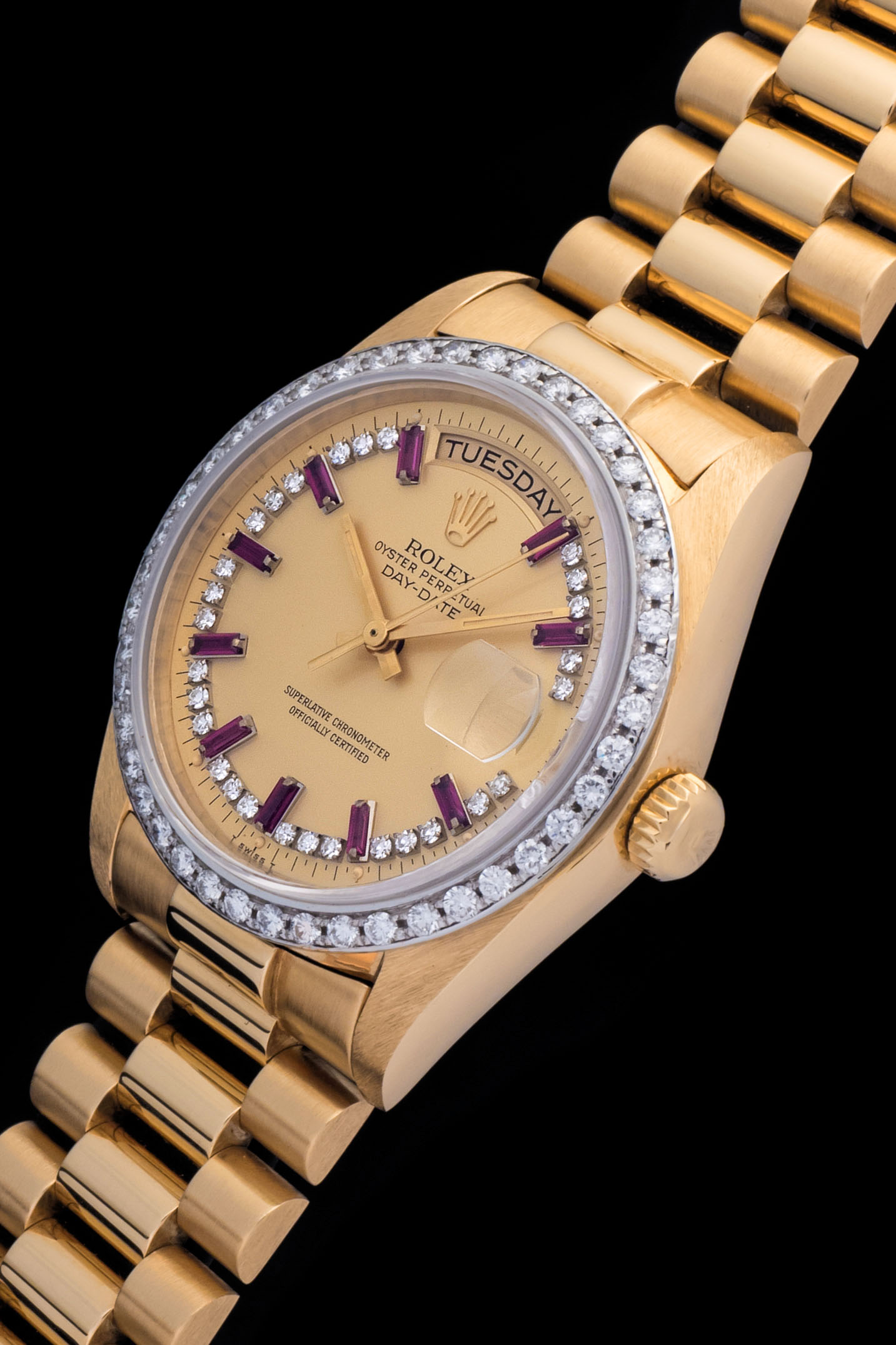
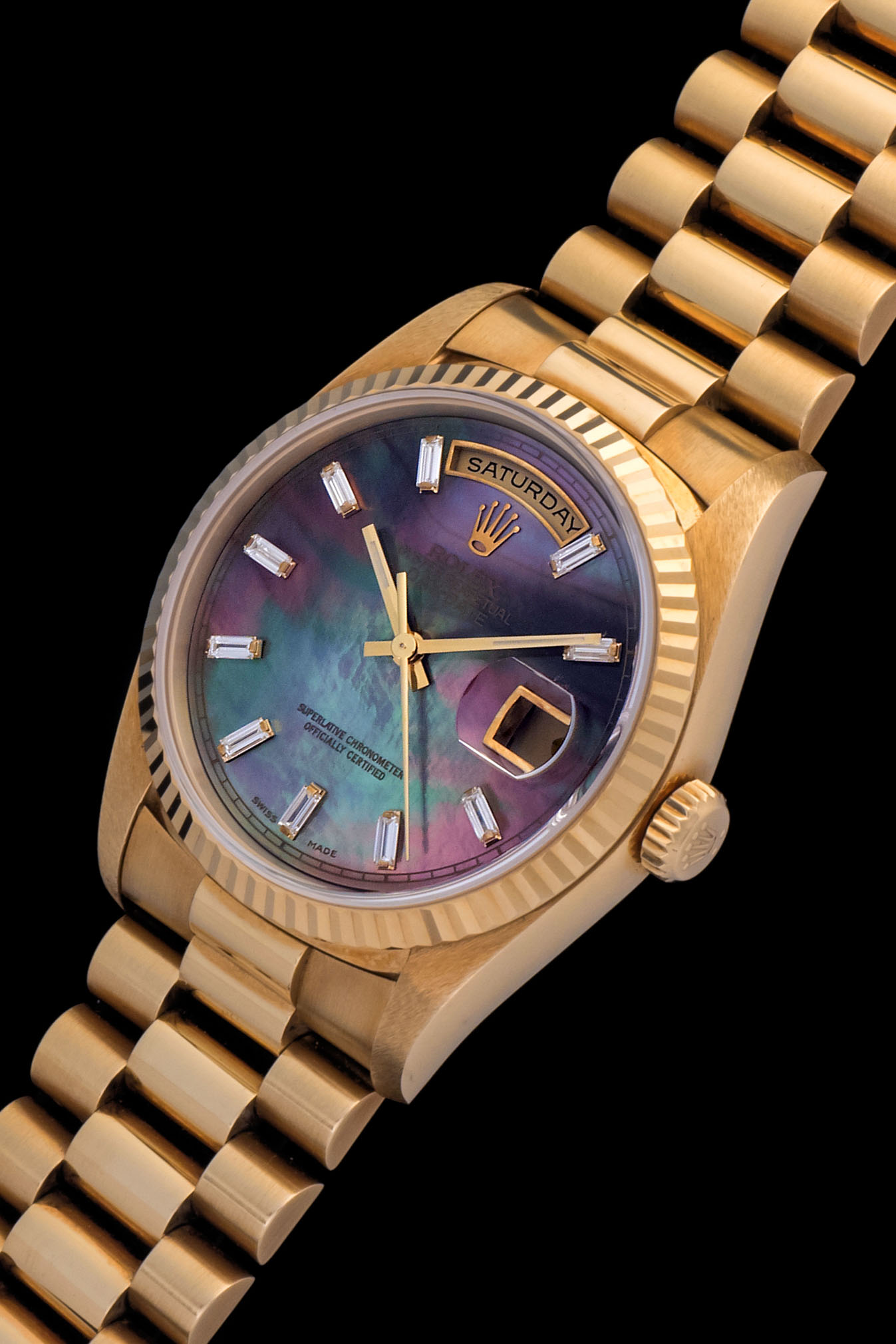
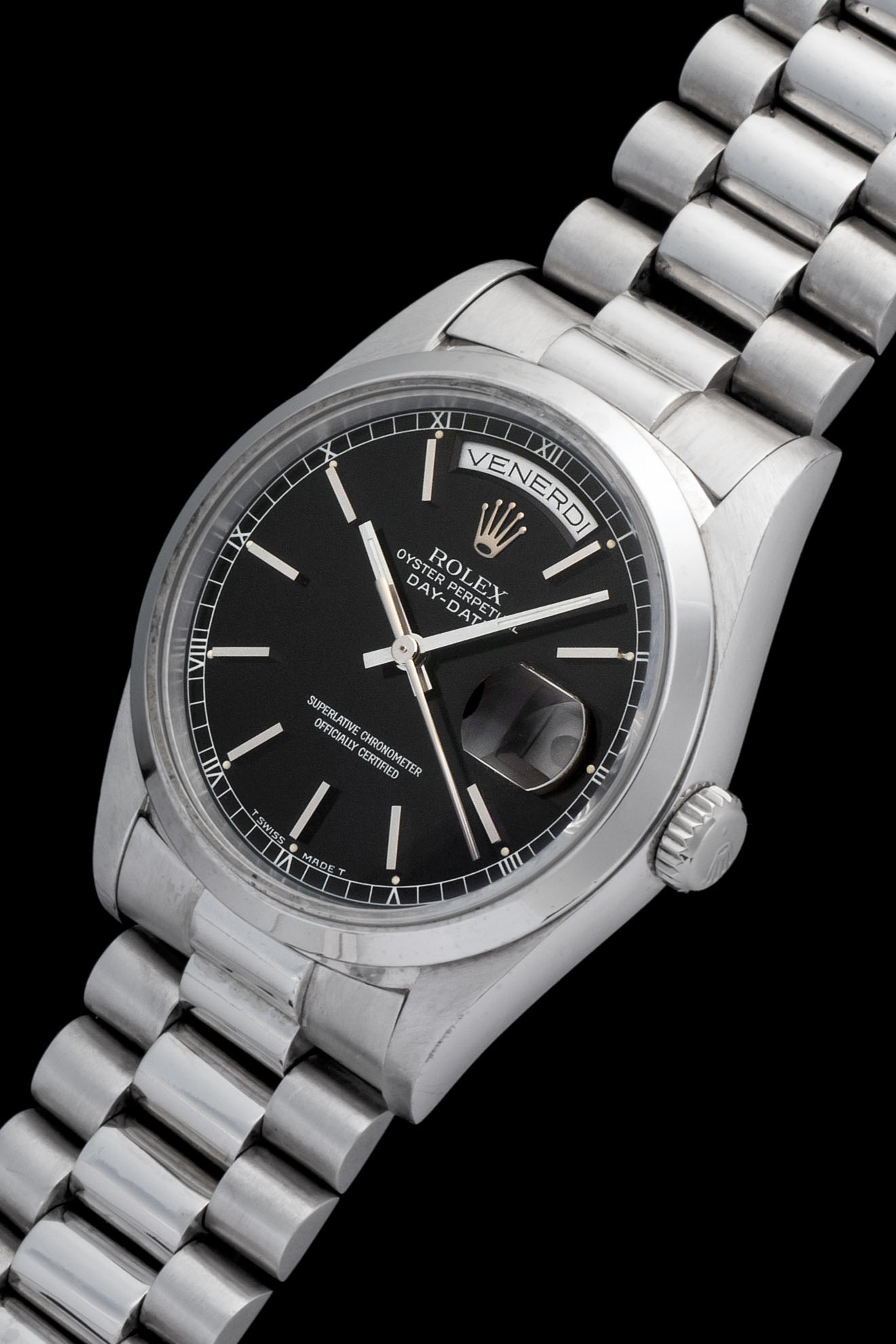
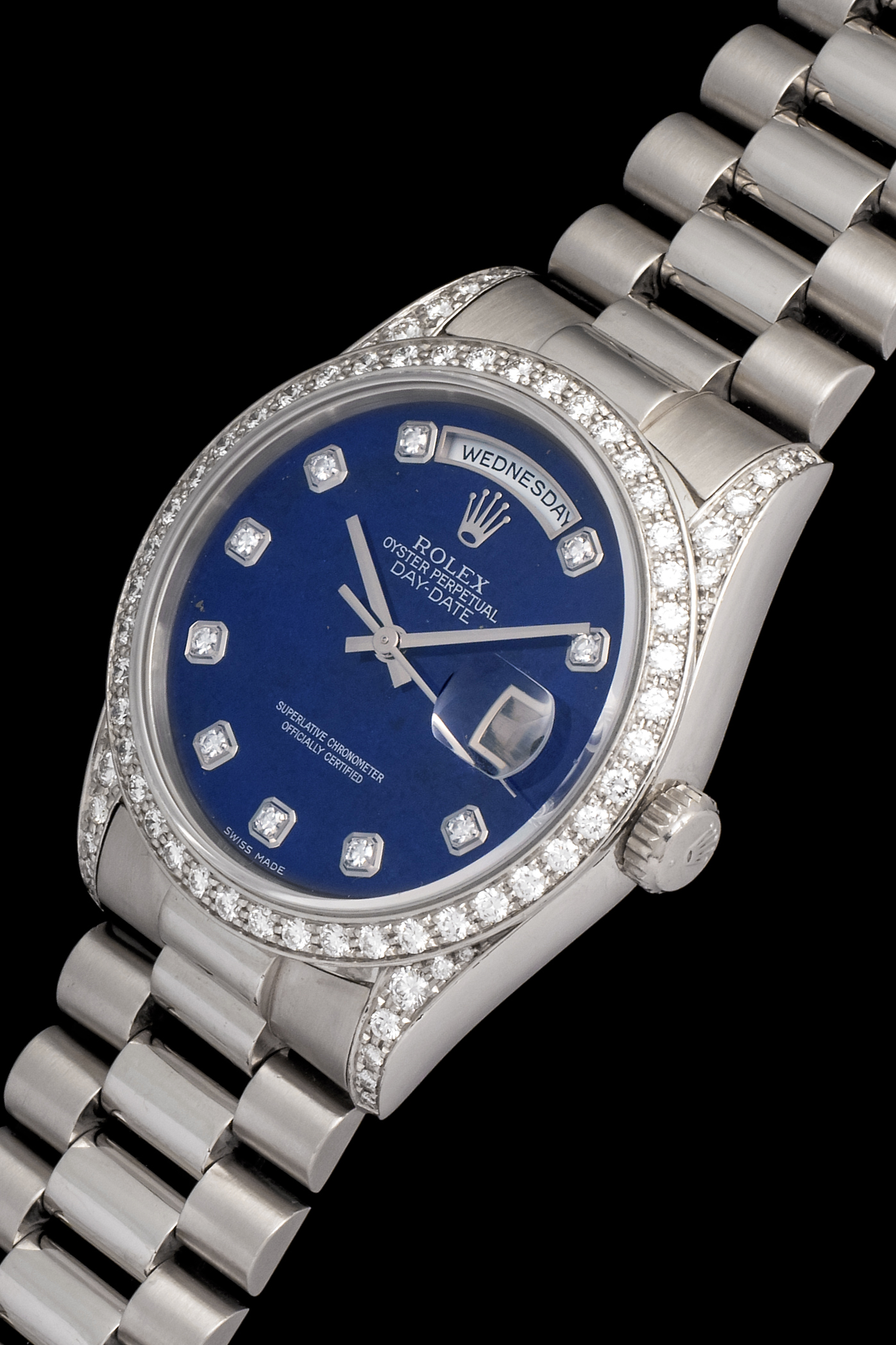
There are watches that tell time, and watches that tell a story. The Rolex Day-Date has been telling both since 1956, gracing the wrists of presidents, kings, and visionaries who understood that the right watch communicates far more than words ever could. Yet within the already rarefied world of the Day-Date — a watch available exclusively in precious metals — there exists a tier so exclusive that even seasoned collectors pause at its sight: the Day-Date in 950 platinum.
This guide is written for the collector who wants to understand not just what a platinum Day-Date is, but why it occupies the absolute apex of the Rolex hierarchy. From the extraordinarily rare first examples of 1956 to the refined reference 118206 that carried the torch into the new millennium, we trace the complete lineage of the platinum President, examining the technical evolution, the manufacturing challenges, the historical pricing, and the key differences between each generation.
1. The Platinum Challenge: Why This Metal Defines the Pinnacle
To appreciate the significance of a platinum Day-Date, one must first understand the material that makes it exceptional. Rolex employs 950 platinum — an alloy of 95% pure platinum and 5% ruthenium — a composition that yields a metal of extraordinary density, permanence, and visual distinction. Unlike gold, which is alloyed down to 75% purity (18 karats) and mixed with copper, silver, or palladium, platinum is used in a state of near-purity. This makes it denser, heavier, and far more demanding to work with.
The manufacturing challenges of platinum are well-documented in metallurgical literature. A diamond cutting tool that can polish thousands of gold cases to a perfect mirror finish will often wear out after polishing fewer than ten platinum cases before the surface quality deteriorates to an unacceptable level]. The fundamental problem is that platinum, despite being ductile and workable in many respects, causes severe and rapid tool wear during machining. As one industry technical paper notes:
“It takes three times longer to produce a platinum case than one in gold, as slower tool speeds and lower pressures have to be applied to platinum to minimise friction and tool wear.”
Even the slightest contamination during the manufacturing process can cause craters, fissures, or an “orange-peel” effect on the case surface . This means that producing a platinum Day-Date requires not only more time but also a higher level of artisanal skill at every stage of production. Rolex’s master craftsmen must work with heightened precision, using specialized tooling that is replaced far more frequently than in gold production.
The result of all this effort is a watch that weighs approximately 20% to 25% more than its 18-karat gold equivalent — a constant, tactile reminder of the extraordinary metal on the wrist. Platinum is also approximately thirty times rarer than gold in the Earth’s crust, and global annual production of platinum is a fraction of gold production. This inherent scarcity, combined with the manufacturing difficulty, ensures that Rolex produces platinum Day-Dates in significantly smaller quantities than gold versions, preserving the model’s status at the very summit of the catalog.
2. The Signature of Platinum: The Ice Blue Dial
Before tracing the chronological evolution of the platinum Day-Date, it is essential to understand its most iconic visual signature: the Ice Blue dial, also referred to as the “Glacier Blue” dial. This distinctive, cool-toned dial — a pale, luminous blue reminiscent of glacial ice — is exclusive to platinum Day-Dates . It does not appear on yellow gold, rose gold, or white gold versions of the watch.
This exclusivity is deliberate. Rolex uses the Ice Blue dial as a visual declaration of the metal beneath: a signal to those who know that the watch on the wrist is not merely gold, but platinum. The color is achieved through a careful manufacturing process and has become so synonymous with the platinum Day-Date that many collectors consider it inseparable from the model’s identity. When you see an Ice Blue dial on a Day-Date, you are looking at platinum.
3. The Early Platinum Day-Dates: 1956–1977
The Genesis: References 6510 and 6511 (1956–1957)
The Day-Date made its debut on January 27, 1956, at the Geneva Salon. It was the world’s first wristwatch to display both the date and the day of the week spelled out in full in a dedicated aperture at 12 o’clock . From its very first day in the catalog, Rolex offered the Day-Date in precious metals only: yellow gold, rose gold, white gold, and platinum . This was not a later addition — platinum was part of the original vision.
Reference 6510 featured a smooth bezel, while reference 6511 wore a fluted bezel. Both were powered by the outsourced Caliber 1035, which unfortunately suffered from technical issues with the date-advance mechanism . As a result, both references were produced for only one year. The total production across all metals was extremely limited, and the platinum variants are among the rarest Day-Dates in existence. Estimated platinum production for both references combined is likely fewer than 50 pieces worldwide.
The First Refinement: Reference 6611 (1957–1959)
To resolve the mechanical shortcomings, Rolex introduced reference 6611 in 1957, powered by the improved Caliber 1055 [2]. This movement, with 25 jewels and a beat rate of 18,000 vibrations per hour, earned the watch the designation “Superlative Chronometer Officially Certified” — a phrase that remains on Rolex dials to this day . The Alpha hands replaced the earlier Dauphine style, and the characteristic “pie-pan” dial — with its sloped, downward-angled edge — became a defining feature of the era.
The platinum version of the 6611 is another exceptional rarity. Produced for only two years, estimated platinum production is fewer than 100 pieces. These early platinum Day-Dates are the ultimate prize for vintage Rolex collectors, combining historical importance with extreme scarcity.
The Classic Era: The 1800 Series (1959–1977)
Around 1959, Rolex launched the 1800 series, which would become the quintessential vintage Day-Date. The reference 1803 — in yellow gold with a fluted bezel — is the most recognized and commonly encountered vintage Day-Date, having been produced for nearly two decades . However, the platinum variants within this series are a different matter entirely.
In the 1800 series, the platinum Day-Date was typically identified by reference 1802 (smooth bezel) or reference 1804 (diamond-set bezel) . These watches retained the acrylic crystal and the pie-pan dial, and were powered by the Caliber 1555 — the first fully in-house Day-Date movement, featuring a free-sprung Micro-Stella balance . In the mid-1960s, the Caliber 1556 was introduced with a slightly higher beat rate of 19,800 vibrations per hour, and in 1972 a hacking feature was added to allow for more precise time-setting.
The 1800 series ran for approximately 17 years, and total Day-Date production across all metals during this period is estimated between 500,000 and 700,000 units. The platinum fraction is estimated at approximately 2% to 3%, suggesting a total of roughly 10,000 to 20,000 platinum pieces produced over the entire run. While this sounds significant in absolute terms, it must be understood in context: spread across nearly two decades and distributed globally, these watches are far rarer in the market than the numbers suggest. A platinum 1802 or 1804 commands a substantial premium at auction over its gold counterparts.
4. The Modern Platinum Day-Date: 1977–2000
The Single Quickset Generation: Reference 18026 (1977–1988)
In 1977, Rolex introduced the five-digit Day-Date series, marking a significant modernization of the model. The platinum reference for this generation was the 18026, featuring the smooth bezel that would become the traditional signature of the platinum Day-Date . The companion references in other metals — such as the 18038 in yellow gold with a fluted bezel, or the 18039 in white gold — are frequently confused with the platinum model by less experienced buyers. The 18026 is the platinum reference; the 18039 is white gold.
This generation brought two major improvements. First, the acrylic crystal was replaced by a scratch-resistant sapphire crystal — a change that Rolex implemented on the Day-Date earlier than on any other model, reflecting the watch’s status as the brand’s flagship . Second, the “pie-pan” dial was replaced by a flat dial surface, creating a larger, more legible appearance. Hidden beneath the caseback was the new Caliber 3055, operating at 28,800 vibrations per hour and introducing the “single quickset” feature. For the first time, the wearer could advance the date independently by pulling the crown to the second position, without having to rotate the hands past midnight. However, setting the day of the week still required the laborious process of advancing the hands.
During its 11-year production run, the 18026 remained extremely rare. The total 180xx series production across all metals is estimated at approximately 200,000 units, with the platinum 18026 accounting for an estimated 2,000 to 4,000 pieces — roughly 1% to 2% of total production.
The Double Quickset and the Ice Blue Signature: Reference 18206 (1988–2000)
The introduction of the reference 18206 in 1988 represents a watershed moment in the history of the platinum Day-Date. This model is the one that most collectors consider the definitive expression of the classic platinum President, and for good reason: it combines the most important mechanical upgrade in the model’s history with the full establishment of the Ice Blue dial as the platinum Day-Date’s exclusive visual identity.
The mechanical upgrade was the Caliber 3155, which introduced the “double quickset” function — the ability to set both the date and the day of the week independently from the central timekeeping hands [4]. This seemingly simple feature transformed the daily usability of the watch. For a collector who does not wear the Day-Date every day, the ability to quickly correct both calendar displays without spinning the hands through multiple days is an enormous practical improvement.
Aesthetically, the 18206 era is when the Ice Blue dial became firmly established as the platinum Day-Date’s signature . While earlier platinum models had been available with various dial options, the 18206 era saw the Glacier Blue dial become the default and most desirable choice. The combination of the cool, silvery-white platinum case, the smooth polished bezel, and the pale blue dial creates a visual harmony that is impossible to replicate in gold. It is understated, sophisticated, and immediately recognizable to those who know.
The 18206 was produced from 1988 to 2000, a 12-year run. Total 182xx series production is estimated at approximately 150,000 units across all metals, with the platinum 18206 accounting for an estimated 1,500 to 3,000 pieces.
5. The Turn of the Millennium: Reference 118206 (2000–2009)
The year 2000 brought the six-digit 118xxx series, and with it the reference 118206 — the platinum Day-Date that carried the model into the new millennium. From a movement perspective, the 118206 retained the proven Caliber 3155, ensuring continuity of the double quickset function and the 48-hour power reserve.
The most significant changes were structural. The President bracelet underwent a fundamental transformation: the hollow center links of previous generations were replaced with solid platinum links. This was a major upgrade in both quality and value. The hollow links of earlier models were prone to stretching over time, particularly given the weight of platinum, and a stretched bracelet is both aesthetically displeasing and expensive to restore. The solid links of the 118206 bracelet are far more durable and add considerable weight to the overall watch, making it feel even more substantial on the wrist.
Additional refinements included a redesigned case with broader, high-polished lugs, an improved Crownclasp for better security, and the addition of an engraved “ROLEX ROLEX ROLEX” inscription on the rehaut (the inner bezel ring), along with the watch’s unique serial number [2]. This last feature was introduced across the 118xxx series as an anti-counterfeiting measure and serves as a useful authentication point for collectors.
The 118206 was produced until approximately 2009, when it was succeeded by the 218206 (the 41mm Day-Date II). Estimated production of the 118206 is in the low thousands, maintaining the tradition of extreme exclusivity that defines the platinum Day-Date lineage.
6. Platinum vs. Gold: A Collector’s Comparison
Understanding the differences between a platinum Day-Date and its gold counterparts is essential for any serious collector. The distinctions go far beyond the material itself.
Feature
Platinum Day-Date
18kt Gold Day-Date
Metal Purity
950‰ (95% pure)
750‰ (75% pure)
Density
~21.45 g/cm³
~15.5 g/cm³
Weight on Wrist
Noticeably heavier
Lighter
Signature Dial
Ice Blue (exclusive)
Various (not Ice Blue)
Traditional Bezel
Smooth (polished)
Fluted (standard)
Production Numbers
~1–2% of total Day-Date output
~90%+ of total output
Manufacturing Time
~3x longer than gold
Standard
Historical Price Premium
~80–100% over gold
Baseline
Visual Tone
Cool, silvery-white
Warm (yellow/rose) or rhodium-plated (white)
The smooth bezel of the platinum Day-Date deserves special mention. While gold Day-Dates have traditionally been offered with the fluted bezel as the standard configuration, the platinum version has historically worn a smooth, polished bezel. This design choice is deeply intentional: the smooth bezel is the more understated option, allowing the platinum to speak for itself without the visual “noise” of the fluting. It is the choice of those who know, rather than those who wish to show. As one collector succinctly noted, the platinum Day-Date with a smooth bezel is “a discrete and private pleasure” [6].
7. Historical Pricing: The Cost of the Pinnacle
The platinum Day-Date has always commanded a substantial premium over its gold counterparts. The following table provides approximate historical retail prices, illustrating the consistent premium that platinum has commanded throughout the model’s history.
Era
Platinum Reference
Gold Reference
Approx. Platinum Retail
Approx. Gold Retail
Premium
1980s
18026
18038 (YG)
~$12,000–$15,000
~$6,000–$8,000
~90–100%
Early 1990s
18206
18238 (YG)
~$15,000–$18,000
~$8,000–$10,000
~80%
Late 1990s
18206
18238 (YG)
~$17,000–$20,000
~$9,000–$11,000
~80%
c. 2000
118206
118238 (YG)
~$22,000–$25,000
~$12,000–$14,000
~75–80%
Note: All prices are approximate historical retail estimates. Actual prices varied by market, authorized dealer, and specific dial/bezel configuration. Sources: Crown & Caliber, Chrono24 historical data, collector community records.
The premium reflects three compounding factors: the intrinsic value of the raw material, the dramatically higher manufacturing cost due to the difficulty of machining platinum, and the deliberate scarcity of production. Rolex has never sought to maximize platinum Day-Date output; rather, the brand has consistently maintained the model’s position as the ultimate expression of the Day-Date concept.
8. Estimated Production Numbers by Platinum Reference
The following estimates are based on available historical data, collector community records, and proportional analysis of known total Day-Date production figures. They should be understood as informed approximations rather than confirmed figures, as Rolex does not publish production data.
Reference
Production Years
Estimated Total DD Production
Estimated Platinum Fraction
Estimated Platinum Pieces
6510 / 6511
1956–1957
~500–1,000 (all metals)
Very small
< 50 pieces
6611
1957–1959
~2,000–5,000 (all metals)
Very small
< 100 pieces
1802 / 1804
1959–1977
~500,000–700,000 (all metals)
~2–3%
~10,000–20,000 pieces
18026
1977–1988
~200,000 (all metals)
~1–2%
~2,000–4,000 pieces
18206
1988–2000
~150,000 (all metals)
~1–2%
~1,500–3,000 pieces
118206
2000–2009
~100,000 (all metals)
~1–2%
~1,000–2,000 pieces
Note: These are estimates based on available research and collector community data. Rolex does not publish official production figures.
9. The Caliber Evolution: The Engine Behind the Crown
The mechanical heart of the Day-Date evolved significantly over the decades covered by this guide. Understanding the caliber history is essential for dating and evaluating any platinum Day-Date.
Caliber
Approximate Period
Key Features
1035
1956
Outsourced; date advance issues
1055
1957–1959
25 jewels, 18,000 vph; first “Superlative Chronometer”
1555
1959–mid 1960s
First fully in-house; free-sprung Micro-Stella balance
1556
Mid 1960s–1977
19,800 vph; 26 jewels; hacking added in 1972
3055
1977–1988
28,800 vph; single quickset date; sapphire crystal era
3155
1988–2015
Double quickset (day + date); 31 jewels; 48h power reserve
10. Collector’s Buying Guide: What to Look For
10.1 Authentication: Platinum or White Gold?
The most common mistake among less experienced buyers is confusing a platinum Day-Date with a white gold model. The key identifiers are as follows. The reference number is the most reliable indicator: platinum references end in -06(e.g., 18026, 18206, 118206), while white gold references end in -39 (e.g., 18039, 18239, 118239). The dial is also a strong indicator: the Ice Blue dial appears exclusively on platinum models. Finally, weight is a practical test: a platinum Day-Date will feel noticeably heavier than a white gold equivalent of the same size.
10.2 The Dial: Condition is Everything
The Ice Blue dial is the soul of the platinum Day-Date, and its condition is paramount. Inspect for any fading, discoloration, or moisture damage around the day and date apertures. Original factory dials in excellent condition are significantly more valuable than refinished examples. Any signs of unauthorized polishing or repainting will substantially reduce the watch’s collector value.
10.3 The Case: Preserving the Geometry
Platinum is a soft metal in the sense that it scratches relatively easily, but unlike gold, it does not lose material when scratched — the metal displaces rather than removes. This means that a platinum case can be polished back to a near-original condition more successfully than gold. However, excessive or improper polishing by non-specialist watchmakers can round the edges and destroy the precise geometry of the case. Always prefer a watch with original, sharp case geometry, even if it shows honest wear, over one that has been improperly “restored.”
10.4 The Bracelet: Hollow vs. Solid Links
For references prior to the 118206, the President bracelet featured hollow center links. Inspect these carefully for stretching, as a stretched bracelet is a significant defect. For the 118206 and later, the solid links are far more durable. A complete, original bracelet in good condition is essential for maximum collector value.
10.5 Documentation and Service History
As with all vintage and pre-owned Rolex watches, the presence of original box, papers, and service history significantly enhances value. For a platinum Day-Date, a documented service history from an authorized Rolex service center is particularly important, as it confirms the authenticity of all components and ensures the movement has been maintained to factory standards.
11. Why the Platinum Day-Date Remains the Ultimate Rolex
The platinum Day-Date occupies a unique position in the world of luxury watches. It is not merely the most expensive version of an iconic watch; it is the embodiment of a philosophy. Rolex has always positioned the Day-Date as the watch for those who have achieved the highest levels of success. The platinum version takes this concept to its logical conclusion: it is the Day-Date for those who demand not just the best, but the absolute best.
The manufacturing difficulty, the raw material scarcity, the exclusive Ice Blue dial, the traditional smooth bezel, the weight on the wrist — all of these elements combine to create a watch that is simultaneously the most understated and the most significant in the Rolex catalog. It does not shout. It does not need to. Those who know, know.
For the collector, the platinum Day-Date offers something increasingly rare in the modern watch market: a watch that is both historically significant and genuinely scarce. The early references — the 6511, the 6611, the 1802 — are true artifacts of watchmaking history, produced in tiny numbers and surviving in even smaller quantities. The later references — the 18026, the 18206, the 118206 — offer the combination of historical significance, mechanical excellence, and the visual perfection of the Ice Blue dial. Each generation tells a chapter of the same story: the story of the watch that sits at the very top of the world’s most recognized luxury watch brand.
Guide written for informational and collecting purposes. Production numbers are estimates based on available research and collector community data. Rolex does not publish official production figures. Historical prices are approximate and should not be used as a basis for purchasing decisions.
White Gold & Galvanic Blue Dial — A First for Lange
Collector’s Foreword
There are watches you simply buy, and watches you study. The Lange 1 Ref. 101.027 unequivocally belongs to the latter category. Produced for a short window of just five years, between 1997 and 2002, this timepiece represents a turning point in the history of A. Lange & Söhne: it was the first Lange 1 in white gold, the first with a blue dial, and one of the few regular-production models to feature this color combination before blue became almost exclusively reserved for limited editions and Boutique series.
This guide is written with the respect owed to a watch that, more than many others, synthesizes the essence of the Saxon renaissance: mechanical rigor, formal beauty, and a history worth knowing even before strapping it to your wrist.
1. The Rebirth of Glashütte: Historical Context
To understand the value of the Lange 1 Ref. 101.027, it is essential to know the history of the brand that created it. A. Lange & Söhne was founded in 1845 by Ferdinand Adolph Lange in Glashütte, Saxony, and within a few decades became one of the most respected names in European watchmaking. World War II, culminating in the Soviet bombings of May 1945, destroyed the manufacture. The subsequent nationalization by the GDR in 1948 erased the brand from the map of haute horlogerie for nearly half a century.
The rebirth occurred on December 7, 1990, exactly 145 years after the original founding, when Walter Lange — great-grandson of the founder — and Günter Blümlein, a brilliant manager already leading IWC and Jaeger-LeCoultre, re-established the company. On October 24, 1994, at the Royal Palace in Dresden, they presented four new watches to the world: the Saxonia, the Arkade, the Tourbillon Pour le Mérite, and the Lange 1. The latter, with its asymmetric dial and outsize double-disc date, immediately became the emblem of the German renaissance in fine watchmaking.
2. Reference 101.027: A Precise Genealogy
Understanding the Lange reference numbering system is crucial for navigating the collector’s market. The first Lange 1 models from 1994 were identified by three-digit references ending in .001, .002, and .005, corresponding respectively to yellow gold, rose gold, and platinum, all with solid casebacks. Starting in 1995/1996, Lange introduced sapphire crystal exhibition casebacks, identified by references ending in .021, .022, and .025.
In 1997, this hierarchy was definitively inverted: models with exhibition casebacks became the primary offering, and Lange introduced two new chromatic variants — the blue dial and the white gold case — identified by the terminal digits .027. In this context, reference 101.027 was launched alongside three other variants:
Reference
Description
Production Years
101.007
Solid caseback, white gold, blue dial
1997–1998
101.027
Exhibition caseback, white gold, blue dial
1997–2002
151.007
Solid caseback, Wellendorff bracelet
1997–1998
151.027
Exhibition caseback, Wellendorff bracelet
1997–2000
Among the four variants, the 101.027 with an exhibition caseback had the longest production run (five years) and is the most common on the market, though it remains a rare piece in absolute terms. The version with the integrated Wellendorff bracelet (151.027) is considered the rarest of the four, having been discontinued as early as 2000.
3. Aesthetics and Design: Why This Dial is Special
The Lange 1 is universally recognized for its asymmetric dial, designed following the principles of the golden ratio and the rule of thirds. Every element — the main time dial, the outsize date, the small seconds, and the power reserve — is positioned to create perfect visual balance, where no display overlaps another, ensuring maximum legibility.
The blue dial of reference 101.027 adds another layer of allure to this composition. Achieved through a meticulous galvanic process, the blue is not a uniform, flat color: it is alive, shifting, capable of transitioning from a near-black midnight blue under soft light to a bright, electric navy under direct sunlight. This chromatic quality is difficult to fully appreciate in photographs and only completely reveals itself when the watch is on the wrist.
The dial features a vertically brushed finish, which imparts a subtle and refined texture visible only up close. The white gold hands and indices create an elegant contrast with the dark blue background, while the outsize date discs — white with crisp black printing — offer immediate and precise legibility.
“The blue of the 101.027 possesses a vibrant quality that shifts with the light—ranging from a near-black midnight blue to a bright, electric navy under direct sunlight. Unlike the standard silver or black dials, this reference is truly unique.”
— Langepedia, 2022
4. Caliber L901.0: A Movement to Admire
The heart of the Lange 1 Ref. 101.027 is the manual-winding caliber L901.0, a movement that embodies all the principles of German haute horlogerie. Developed specifically for the Lange 1, it was the first movement built by the modern A. Lange & Söhne, as suggested by its very name: L(90)1.0, where 90 indicates the year of design, 1990.
Technical Feature
Specification
Type
Manual winding
Diameter
30.6 mm
Jewels
53
Power Reserve
72 hours (twin mainspring barrels)
Frequency
21,600 vph (3 Hz)
Base Plate
Three-quarter plate in untreated German Silver
Visible through the sapphire crystal caseback, the L901.0 offers a spectacle of rare beauty. The three-quarter plate in untreated German Silver, which covers most of the movement, features the characteristic Glashütte ribbing and develops a warm, golden patina over time. The screwed gold chatons surrounding the jewels, the thermally blued screws, and, above all, the hand-engraved balance cock by a dedicated artisan make each piece technically unique. Lange can identify, thanks to the engraving motif, exactly which of its master engravers worked on every single watch.
5. Buying Guide: What to Check Before Purchasing
Acquiring a Lange 1 Ref. 101.027 on the secondary market requires attention and preparation. Below are the key points every collector should verify.
5.1 The Dial: The Absolute Priority
The galvanic blue dial is the most delicate and important element of this reference. Carefully verify:
•Absence of spots or oxidation, especially around the outsize date windows and the hand pinions. Any moisture ingress leaves permanent traces.
•Uniformity of the brushed finish: under grazing light, the texture must be homogeneous and free of scratches.
•Color of the outsize date discs: they must be pure white with crisp black printing, without any yellowing.
•Integrity of the hands: the white gold hands must not show deep scratches or signs of contact with the crystal.
5.2 The Case: Preserving Geometries
The Lange 1 case is a masterpiece of metalwork, with a precise alternation between polished surfaces (bezel, lugs) and brushed surfaces (caseband). A watch excessively polished by a non-specialized watchmaker loses the sharpness of these transitions, irreparably compromising the original aesthetics. Always prefer an example with natural signs of wear but with intact original geometries over one that has been improperly “restored.”
5.3 Accessories and Documentation
The presence of the original box and warranty significantly increases the desirability of an example. However, for a watch of this mechanical complexity, the service history is even more important. A Lange 1 officially serviced by the Glashütte manufacture guarantees:
•The authenticity of all movement components.
•The correct functioning of the complex outsize date mechanism.
•The replacement of any worn parts with original components.
5.4 The “Secret” Variant 101.027X
Experienced collectors are aware of the existence of an exceedingly rare variant, the 101.027X, characterized by a silver dial with blued hands, housed in the same white gold case. This variant was never officially presented by Lange through traditional promotional channels — hence the nickname “Secret” — and its history is shrouded in mystery. If you come across a 101.027X, know that it is one of the most sought-after and discussed pieces in the entire Lange universe.
6. Why Buy It: The Collector’s Verdict
The Lange 1 Ref. 101.027 is a watch that justifies itself on multiple levels. Historically, it is the first Lange 1 in white gold and the first with a blue dial — a primacy that no other reference can ever take away. Aesthetically, the contrast between the cold metal of the white gold and the shifting depth of the blue dial is simply unrepeatable. Mechanically, the caliber L901.0 with its hand-engraved balance cock is an open window into the purest craftsmanship.
For the collector approaching Lange for the first time, the 101.027 offers an ideal entry point into the brand’s history: it is not the most complicated piece, but it is perhaps the one that best tells the story of why A. Lange & Söhne has become what it is today. For the seasoned collector, it is simply a piece that cannot be missing from a comprehensive collection.
Historical and Technical Analysis of the Platinum Breguet Reference 3617
The history of the Breguet Reference 3617 represents one of the most fascinating and complex chapters in modern horology, standing as the connecting point between the end of the Brown family’s artisanal management and the global industrial rise under the aegis of Investcorp and, subsequently, the Swatch Group. This timepiece is not simply a high-level complication, but embodies the philosophy of “Neo-Vintage,” a period in which Daniel Roth’s technical mastery met the resources of a large financial group to bring the name of Abraham-Louis Breguet back to the top of the world’s horological pyramid.
Genesis and Historical Context of Reference 3617
To fully understand the birth of reference 3617, it is necessary to analyze Breguet’s turbulent corporate path in the 20th century. After being led for a century by the Brown family (1870-1970), the manufacture passed into the hands of the Chaumet brothers, owners of the eponymous Parisian high jewelry maison. The Chaumets had the intuition to restore the brand’s prestige and, in 1975, hired a young and talented master watchmaker: Daniel Roth. Roth spent years studying the historical pieces preserved in the Place Vendôme museum and in the manufacture’s archives, with the aim of translating the aesthetic canons of the 18th century — originally conceived for pocket watches — into the proportions of a contemporary wristwatch.
In 1987, due to the Chaumet brothers’ financial difficulties, Breguet was acquired by Investcorp, an investment fund based in Bahrain. Under the new ownership, the manufacture experienced unprecedented expansion, increasing sales approximately tenfold in a decade. In 1991, Investcorp founded the “Groupe Horloger Breguet” (GHB) and in 1992 took a fundamental step: the acquisition of Nouvelle Lemania. This move allowed Breguet to have total control over the production of its own movements, transforming Lemania into the group’s true internal manufacture.
Reference 3617 was born right at the beginning of the 1990s, in this climate of industrial and technical fervor. It represents the evolution of the perpetual calendar chronograph concept, one of the noblest and most difficult combinations to achieve in mechanical horology. If reference 3050 had been one of the first automatic perpetual calendars of the Roth era, the 3617 elevated the complication by introducing the manual-winding chronograph based on the Lemania architecture, creating a direct link with the tradition of the great pocket watch complications.
Corporate Structure and Industrial Rebirth
Year
Key Event
Impact on Production
1970
Acquisition by Chaumet
Beginning of the aesthetic recovery of A.L. Breguet’s historical codes.
1975
Hiring of Daniel Roth
Definition of Breguet’s “modern” style: coin-edge, guilloché, pomme hands.
1987
Acquisition by Investcorp
Financial strengthening and opening to new global markets.
1991
Creation of Groupe Horloger Breguet
Structuring of a holding company dedicated to luxury horology.
1992
Acquisition of Nouvelle Lemania
Vertical integration of complicated caliber production.
1999
Acquisition by Swatch Group
Definitive consolidation under the leadership of Nicolas Hayek.
Technical Characteristics and the Architecture of Caliber 533 QP
The beating heart of the Breguet 3617 is the caliber 533 QP, a movement that represents one of the absolute pinnacles of mechanical chronometry. This engine is based on the legendary Lemania 2310, a movement architecture so refined that it has been adopted by the most prestigious Swiss houses. It is the same base caliber that powers the Patek Philippe 3970 and 5070, as well as some of the most celebrated references from Vacheron Constantin and Roger Dubuis.
The caliber 533 QP is a manual-winding chronograph with function sorting via a column wheel, integrated with a perpetual calendar module developed in collaboration with Dubois Depraz. Its architecture is characterized by impeccable manual finishing, with bridges decorated with “côtes de Genève,” deep and polished anglage, and the use of a balance spring with a Breguet overcoil, which guarantees superior isochronism.
Technical Details of the Movement
The movement beats at a frequency of 18,000 vibrations per hour (2.5 Hz), a choice that recalls the tradition of classical horology and allows one to admire the slow and majestic movement of the oversized balance wheel. It features 21 jewels and is adjusted in five positions to ensure maximum chronometric precision in various conditions of use.
The dial of reference 3617 organizes the numerous pieces of information in a surprisingly legible manner, following a cross layout derived from large pocket watches. The functions are distributed as follows:
12 o’clock sub-dial: Months of the year and leap year indication.
3 o’clock sub-dial: Date of the month and 30-minute chronograph counter.
6 o’clock sub-dial: Moon phases with moon age indication.
9 o’clock sub-dial: Days of the week and continuous small seconds.
Evolution of References and Differences with Subsequent Models
One of the crucial aspects for the expert collector is the ability to distinguish reference 3617 from reference 3610 (which preceded it) and from reference 5617 (which followed it starting from the late 1990s). Although the general aesthetic appearance may seem similar, there are subtle constructive differences that define their era and collectible value.
Reference 3610, introduced in the very early 1990s, was originally conceived with a solid case back. Reference 3617 introduced the transparent sapphire crystal case back, finally allowing one to admire the finishes of the caliber 533 QP, a detail that quickly became essential for haute horlogerie enthusiasts. However, the case back of the 3617 is a “snap-back,” while subsequent models would introduce more complex closure systems.
Around 1998, Breguet launched reference 5617, making several incremental modifications that reflect the more advanced industrialization under the Swatch Group. Among these, the winding crown stands out: in the 3617 the crown is flat and unbranded, faithful to Daniel Roth’s minimalist style, while in the 5617 the crown is thicker and features the embossed “B” logo. Furthermore, the moon phase disc in the 5617 often features a human face (“moon face”), while in the 3617 the moon is typically represented in a smooth and abstract manner.
Structural Comparison between Chrono-Perpetual References
Characteristic
Reference 3617
Reference 5617
Case Back
Transparent, snap-back.
Transparent, often secured with 7 screws.
Crown
Flat, unbranded.
Thick, with embossed “B” logo.
Moon Phases
Smooth moon, no-face.
Anthropomorphic moon, moon-face.
Case Diameter
38 mm (extended to 40 mm in rare PT).
38 mm.
Guillochage
Dominant vertical orientation in moon phases.
Horizontal orientation in moon phases.
The Breguet Aesthetic: A Masterpiece of Manual Guillochage
Reference 3617 is not only a triumph of mechanics but also of decorative craftsmanship. The dial is made of solid silvered gold and entirely hand-decorated with various types of guillochage (“guilloché main”), a technique that consists of engraving geometric patterns using manual lathes. This is not a purely ornamental choice: Breguet used different patterns to visually delimit the watch’s functions without having to add heavy demarcation lines.
The dial of the 3617 features a masterful combination of motifs:
Clous de Paris: Used for the central part of the dial.
Vieux Panier (Woven basket): Characterizes the subsidiary dials.
Wave Pattern: Decorates the moon phase aperture.
Filet Saute: Used as an outer contour for the various sub-dials.
The case features the famous fluted “carrure” (coin-edge), which requires extremely precise mechanical machining and subsequent hand finishing to achieve the typical texture similar to the edge of a coin. The lugs, straight and thin, are manually soldered to the case and equipped with screw bars, a detail that testifies to the manufacture’s attention to robustness and build quality, representing the absolute pinnacle of technical production.
The Importance of Provenance in Modern Collecting
Provenance from a key figure in the brand’s history acts as a value multiplier. A watch that has passed through the hands of someone who actively contributed to Breguet’s rebirth in a fundamental market like Italy carries with it a narrative that transcends the physical object. This makes the piece not only a technical rarity but a historical document of the “resurrection” of mechanical haute horlogerie post-quartz crisis.
The Rarity of Platinum and “Stealth Wealth”
Although reference 3617 was produced in yellow, white, and rose gold, the platinum version remains the most coveted and difficult to find. Platinum is an extremely difficult metal to work with; due to its density and toughness, it requires specific tools and much longer processing times compared to gold. This difficulty is reflected in an extremely limited production: it is estimated that the total number of chrono-perpetual reference examples (3610, 3617, 5617) produced between 1992 and 2002 does not exceed 300-400 pieces in total, of which only a tiny fraction are in platinum.
Wearing a platinum Breguet 3617 represents the essence of “stealth wealth” (discreet wealth). Unlike gold, platinum has a deep white luster that can be confused with steel by an untrained eye, but its considerable specific weight conveys to the owner a feeling of unparalleled substance and value.
Why Reference 3617 is Fundamental for Collectors
Reference 3617 occupies a unique position in modern horology for several reasons that go beyond simple rarity:
The Daniel Roth Era: Despite being produced under Investcorp ownership, the 3617 keeps intact all the aesthetic codes defined by Daniel Roth during his time at Breguet. It represents the purity of the original design before the subsequent evolutions of the Swatch Group.
The Lemania 2310 Caliber: This movement is considered by many experts to be one of the best chronograph calibers ever produced. The fact that Breguet acquired Nouvelle Lemania makes this watch a piece of manufacturing integration history.
The Complexity of the Perpetual Calendar: Integrating a perpetual calendar onto a manual-winding chronograph is an immense technical challenge. The 3617 solves this challenge with an elegance and legibility that few other models can boast.
Market Value: Compared to similar Patek Philippe references (such as the 3970), the Breguet 3617 has long been considered undervalued by the market. In recent years, however, interest in Breguet’s “Neo-Vintage” models has grown exponentially, leading to a significant revaluation of examples in noble metals, especially if accompanied by original box and papers.
Future Perspectives and Value Preservation
Analysis of auction data and private transactions indicates that examples of reference 3617 in platinum tend to maintain or increase their value over time, especially when they present excellent preservation conditions (“unpolished” or with intact factory finishes). The presence of an archive extract confirming the manufacturing date and any special order is a fundamental element to consolidate the watch’s status as an investment piece.
Conclusions: A Pillar of 20th-Century Haute Horlogerie
In conclusion, the platinum Breguet Reference 3617 is not just a luxury watch, but a historical pillar that documents the return of one of the world’s oldest manufactures to the glories of the past. Its genesis during the Investcorp era, its architecture based on the Lemania 2310 caliber, and its refined aesthetics place it at the pinnacle of modern collecting.
Reference 3617 represents the opportunity to own a piece of mechanical history where manual craftsmanship had not yet been supplanted by mass production, and where every engraving on the dial and every chamfer on the movement’s bridges tell the story of an unprecedented horological rebirth.
Regardless of market fluctuations, Reference 3617 will remain a benchmark for anyone seeking the perfect union between Abraham-Louis Breguet’s 18th-century tradition and the technical excellence of the late 20th century.
Historical Note
As a testament to the importance of this reference, the specific example pictured in the photograph is of particular historical interest, as it originally belonged to Giovanni Sutti, owner of one of the most significant luxury watch distribution companies in Italy and, among other prestigious brands, a distributor of Breguet. Subsequently, this very same example passed into the hands of Alfredo Paramico, one of the most influential collectors and market-makers on a global scale. Paramico, a former investment banker and creator of the Precious Time Fund, is celebrated for having owned some of the rarest watches in the world — including a steel Patek Philippe reference 1518. His well-known predilection for Breguet watches from the neo-vintage era (often referred to as “Pre-A” or early 1990s pieces) has contributed enormously to reigniting international interest in these references. The fact that a collector of his caliber chose the 3617 stands as definitive testimony to the absolute historical and technical relevance of this model.
Audemars Piguet Bamboo: An Exhaustive Investigation into Organic Iconography and Technical Innovation in 1980s Haute Horlogerie
1. Introduction: The Geopolitical and Horological Landscape of the Post-Quartz Era
The history of Audemars Piguet in the last quarter of the 20th century is often reduced to a single hegemonic narrative: the launch of the Royal Oak in 1972 and the subsequent birth of the luxury steel sports watch concept. However, this tunnel vision risks obscuring a chapter that is equally crucial, if not more representative of the zeitgeist, known as the manufacture of Le Brassus’ “Classique” era. It is in this context, characterized by radical formal and material experimentation, that the Audemars Piguet Bamboo collection was born and thrived.
Introduced in the late 1970s and consolidated as a catalog pillar throughout the 1980s until the late 1990s , the Bamboo line does not represent a simple styling exercise, but a complex strategic response to the Quartz Crisis. At a time when the Swiss watchmaking industry saw its exports decimated by the precision and affordability of Japanese technology, Audemars Piguet chose not the path of conservatism, but that of creative audacity. The Bamboo collection embodies this philosophy: watches that were primarily jewelry, sculptural bracelets in solid gold that “happened” to tell time, inverting the traditional functional hierarchy of watchmaking.
This monographic report aims to dissect the history, technique, and aesthetics of the Bamboo model. Through the analysis of archival documents, period catalogs, and contemporary auction results, we will explore how this timepiece, designed under the direction of the visionary Jacqueline Dimier, became not only an icon of 1980s “Power Dressing,” but also the vehicle for fundamental technical innovations, including Audemars Piguet’s first historic foray into the use of technical ceramic.
1.1 The Macroeconomic Context: Luxury and Resistance
To understand the genesis of the Bamboo, it is imperative to analyze the economic climate of the 1980s. After the inflationary turmoil of the 1970s, the following decade saw a return to ostentatious opulence. Yellow gold, overshadowed by the industrial steel of the previous decade, made a powerful comeback as a primary status symbol. In this scenario, the “Holy Trinity” manufactures (Audemars Piguet, Patek Philippe, Vacheron Constantin) had to reinvent themselves.
Audemars Piguet, in particular, adopted a two-pronged strategy: on the one hand, the Royal Oak for the sporty-chic market, and on the other, the “Classique” and shaped lines for international high society clientele, from the Middle East to the United States. The Bamboo was conceived to compete directly with giants of integrated design like the Piaget Polo and the Cartier Panthère, while offering a level of manual finishing and construction complexity typical of the Vallée de Joux.
2. Artistic Genesis and Design Philosophy
2.1 From Gérald Genta to Jacqueline Dimier: A Paradigm Shift
While the Royal Oak (1972) and the Cobra (Ref. 5403, early 1970s) bear the indelible signature of Gérald Genta, characterized by aggressive lines and industrial or reptilian geometries, the Bamboo marks the transition to a softer, more naturalistic aesthetic. This shift is attributed to the creative direction of Jacqueline Dimier, a pivotal figure in Audemars Piguet’s history, often celebrated for her ability to interpret and “feminize” the brand’s robust language, adapting it even to the male audience with a new sensibility.
Dimier took the helm of the design department at a time when the dividing line between haute horlogerie and haute joaillerie was thinning. Her vision for the Bamboo was not to create a watch with an attached bracelet, but a continuous organic object, where case and bracelet were indistinguishable. The inspiration, as the name suggests, derived from the bamboo plant, a symbol of “lightness and flexibility” in Eastern cultures, but also evocative of that “tropical paradise” that represented the lifestyle aspiration of the era’s elite.
2.2 The Architecture of the “Tige de Bambou”
The hallmark of the design is the structure of the links. Unlike the flat, angular links of the Royal Oak, or the woven Milanese mesh of the Cobra, the Bamboo features cylindrical links, modeled to resemble the stalks (culms) of the plant. These solid gold cylindrical sections are interspersed with thinner connecting rings, simulating the nodes of the bamboo.
This visual rhythm does not stop at the junction with the case. The bezel itself is crafted to appear as a natural extension of the bracelet wrapping around the dial. It is segmented at the hour markers, creating a visual continuity that transforms the watch into a continuous cuff. However, despite its monolithic appearance, the construction required extreme flexibility to ensure comfort on the wrist, a significant engineering challenge for the goldsmiths of Le Brassus.
2.3 Artisanal Finishes: Beyond Polishing
Period brochures describe an extraordinarily complex finishing process, necessary to give the gold that organic and silky shine typical of the Bamboo. The polishing process involved three distinct stages, rarely mentioned in modern industrial production:
Burnishing with diamond paste: To prepare the surface and remove rough casting imperfections.
Fine polishing with elderberry pith (Elderberry lustre): An ancient and highly delicate technique used to achieve a deep brilliance without aggressively abrading the metal.
Final polishing with chamois leather: To ensure absolute tactile softness, essential for a watch destined to be worn like a second skin.
This level of attention to detail explains why the Bamboo was positioned in an extremely high price bracket, often surpassing steel sports models.
3. Engineering and Construction: The Integrated Bracelet
The most critical structural element of the Bamboo is its integrated bracelet. In the 1980s, the ability to produce gold bracelets that were both solid and flexible was the true testing ground for a luxury manufacture.
3.1 The Internal Pins Technique
Unlike modern bracelets, designed with removable links via exposed screws for easy adjustment, the early Bamboo bracelets (particularly the B series and early C series) were constructed as semi-permanent pieces of jewelry. There were no external screws. The links were held together by invisible internal pins, pressure-fitted and riveted.
The Problem of “Hack Jobs”: This construction has generated one of the most significant issues for modern collecting. At the time, shortening the bracelet required the intervention of an expert goldsmith capable of “drilling” or extracting the internal pins without damaging the gold. Unfortunately, many inexperienced or hasty jewelers opted to physically cut the excess links and resolder the bracelet, or worse, remove the links destructively. Today’s collectors define these interventions as “hack jobs.” A “full length” Bamboo bracelet (about 20 cm) that is fully intact is a rarity today and commands a significant premium on the market, as restoring a poorly shortened bracelet is almost impossible without cannibalizing another watch.
3.2 The Clasp and Ergonomics
The standard closure was a “jewelry clasp” (ladder or jewelry style), often with a raised AP logo that served as a release mechanism. However, there was an upgrade option for a deployant (hidden) clasp, which offered greater security and a cleaner aesthetic. The ergonomics were studied so that the bracelet would follow the natural curve of the wrist without pinching the skin, a result achieved thanks to the perfect calibration of the spaces between the bamboo “nodes.”
4. Material Innovation: The Primacy of Ceramic (1986)
One of the historically most overlooked aspects of the Bamboo collection is its pioneering role in Audemars Piguet’s materials science. Long before the Royal Oak Offshore made ceramic a “cool” and sporty material in the 2000s, the Bamboo introduced it into the manufacture’s lexicon as a decorative and functional element.
The Turning Point Year: 1986 Audemars Piguet archives unequivocally confirm that “The Bamboo collection introduces the use of ceramic in Audemars Piguet” in 1986. This innovation was driven not only by aesthetic needs but by the desire to experiment with scratch-resistant materials in high-wear areas.
Ceramic Configurations:
The ceramic models were not “full ceramic” like today. They were hybrid watches, primarily in 18k yellow gold, where the connecting rings (the bamboo nodes) or intermediate links were made of technical ceramic.
Colors: Ceramic was produced in three main color variants: Black, White, and, very rarely, Red.
Key References: One of the most emblematic men’s references of this series is the Ref. 56219.681AN, which featured a yellow gold bracelet with black ceramic inserts and a diamond-set bezel. The corresponding women’s version was the Ref. 66220.681AN.
Historical Significance: The use of ceramic in the 1980s was technically arduous. The ceramic formulas of the time were more fragile than current zirconium oxide formulas, making machining and integration with soft gold a challenge of micrometric precision. These watches represent the missing link between traditional watchmaking and the era of composite materials.
5. Taxonomy of References and Configurations
The production of the Bamboo, extending for almost two decades, generated a plethora of references. Thanks to the cross-analysis of catalogs and auction results, it is possible to reconstruct a detailed taxonomy.
5.1 Classification by Metal Code
Audemars Piguet used a precise coding system for case materials :
BA: 18k Yellow Gold (The predominant configuration, in line with 1980s tastes).
BC: 18k White Gold (Rarer, often reserved for models with precious stones or special dials).
CA: Combined / Two-Tone (Mixed Yellow and White Gold, or Gold and Ceramic).
5.2 Compendium of Known References
The following table summarizes the identified models, their technical characteristics, and known configurations.
Reference
Category / Size
Movement
Distinctive Features
Historical Notes
25621/614
Jumbo (33mm)
Automatic (Cal. 2120/2130)
Moon Phases, Day, Date
The “Grail” of the collection. Sold by Christie’s in 2021. Extremely rare.
14485BA
Men’s (27mm)
Automatic
Date, Central 21k Gold Rotor
Standard automatic model for men. Reduced thickness.
56205
Men’s (27mm)
Quartz (Cal. 2508)
Extra-plat, 2 hands
The most widespread men’s version (“Time Only”). Also available in manual.
56219.681AN
Men’s (27mm)
Quartz
Yellow Gold & Black Ceramic
Historic model for the use of ceramic. Bezel with 48 diamonds.
56208.636
Men’s High Jewelry
Quartz
Full Pavé (421 diamonds on case/bracelet)
Highest jewelry “Rivière” model. Dial with 296 diamonds.
66193
Ladies (Small)
Quartz
Extra-plat
Standard women’s version. Available with or without diamonds (Ref. 66193.661).
66220.681AN
Ladies (Small)
Quartz
Yellow Gold & Black Ceramic
Women’s version of the ceramic model. Bezel with 40 diamonds.
14376BC
Men’s / Unisex
Manual (Cal. 2003)
White Gold, Ultra-Thin Movement (1.64mm)
For the purists. Houses the legendary ultra-thin manual caliber.
66116.636
Ladies High Jewelry
Quartz
Full Pavé (250 diamonds)
Women’s high jewelry version.
66172BA
Ladies
Quartz
Diamond Pavé Dial
Sold in online auction by Christie’s.
5.3 Case Dimensions
The perception of size has drastically changed from the 1980s to today.
Jumbo (33mm): Considered a large size at the time for a shaped, jewelry watch. Today it appears as a classic unisex size. This case usually housed complicated automatic movements.
Men’s Standard (27mm x 32mm): The most common men’s size in the 1980s. The 27mm width, combined with the wide integrated bracelet, gives it a “wrist presence” far greater than the numbers suggest.
Ladies (19-22mm): Delicate models, often used as evening or cocktail watches.
6. Calibers: Technological Heart between Mechanics and Quartz
The Bamboo collection embodies Audemars Piguet’s technological transition. While the Royal Oak 5402 defended the honor of the automatic, the Bamboo embraced quartz not as a compromise, but as a technical solution for elegance.
6.1 High-End Quartz (Caliber 2502 / 2508)
The majority of Bamboos are equipped with quartz movements. It is crucial to emphasize that in the 1980s, high-end Swiss quartz (like the Cal. 2508) was considered a luxury product. It allowed for the creation of ultra-thin watches without the need for daily winding, a feature appreciated by clientele who viewed the watch primarily as jewelry. These movements were decorated (even if hidden) and built to be repairable, not disposable.
6.2 The Ultra-Thin Legacy (Caliber 2003 and 2120)
For the most demanding collectors, AP offered the Bamboo with historic mechanical movements.
Caliber 2003: Developed in 1953 in collaboration with Jaeger-LeCoultre (JLC 803), it was for decades the thinnest manual-winding movement in the world (1.64 mm). Its presence in some Bamboo models (e.g., Ref. 14376BC) elevates the watch from a simple design object to a masterpiece of micromechanics.
Caliber 2120/2121: The legendary ultra-thin automatic movement with central rotor (the same as the Royal Oak Jumbo). Used in the 33mm “Jumbo” Bamboo versions, often with a customized 21k gold oscillating weight.
7. The Art of Dials: Hard Stones and Exotic Variants
If the shape of the case defines the Bamboo’s silhouette, the dial defines its soul. The 1970s and 1980s saw an explosion in the “Stone Dials” trend, and the Bamboo was a privileged canvas for this art.
7.1 Hard Stone Dials
These dials are carved from thin slices of semi-precious minerals. Their crafting is highly risky: cutting a stone to a thickness of less than a millimeter without fracturing it requires absolute mastery.
Onyx: The most sought-after for its deep, glossy black, devoid of veins. Often paired with diamond indices for an absolute “black tie” contrast. It is extremely rare to find a Bamboo with an intact onyx dial, as the stone tends to crack with impact or pressure from the hands.
Lapis Lazuli: Characterized by an intense blue speckled with golden pyrite. The texture of the stone made each watch a unique piece. The white gold references with lapis dials are considered among the most elegant.
Tiger’s Eye: A chatoyant stone with brown and golden tones. Perfectly in tune with yellow gold and the warm aesthetics of the 1970s/80s.
Coral: Extremely rare and delicate. The vibrant orange/red color was destined for special pieces or specific markets. Christie’s has auctioned models with coral and diamond dials, confirming their existence in high jewelry configurations.
7.2 Special Dials and Settings
“Black Diamond” / Midnight Blue: An exceptional variant described as a “darkened base” dial that appears black or deep midnight blue depending on the light, set with 112 diamonds featuring engraved flourishes above and below each stone. This complex artisanal craftsmanship is unique and differs from classic pavé.
Grainé and Tapisserie: Standard gold dials often featured surface treatments to echo the texture of the case. The “grainé” (grainy) finish or vertical striations (similar to stylized bamboo canes) created a monolithic effect.
8. The “Grail”: Reference 25621 Moon Phase
Among all the variants produced, one stands above the rest for its complexity and rarity: the Ref. 25621.
This model represents the pinnacle of AP’s watchmaking art applied to the Bamboo form.
Complications: Full calendar (Day, Date) and Moon Phases.
Movement: Automatic.
Dimensions: 33mm “Jumbo” case.
Market: A specimen appeared at auction by Christie’s in April 2021. The combination of an organic shaped case with a classic astronomical complication is highly unusual for AP, which usually reserved such mechanics for round cases (Quantième Perpétuel series) or the Royal Oak. Owning a Moon Phase Bamboo means owning one of the rarest modern-era APs.
9. Collecting and the Market: An Unexpected Renaissance
9.1 Oblivion (2000-2015)
For much of the 2000s, the Bamboo (like many integrated gold and quartz watches) was ignored. The restrained dimensions and excessively “baroque” style did not fit well with the trend of oversized sports watches (Panerai, Hublot, Royal Oak Offshore). Many examples were melted down for their gold value, drastically reducing the number of surviving pieces.
9.2 The “Geezer Watch” Phenomenon and Rediscovery (2020-Present)
Starting in 2020, the market underwent a seismic shift driven by a new generation of collectors and influencers (cited in reports as the “Geezer Watch” trend). The saturation of the steel sports watch market pushed attention toward vintage gold pieces, with unusual shapes and integrated bracelets. The Bamboo has been rediscovered as a “Grail” for trendy collectors.
Value Drivers: The build quality (weight of gold, hand finishing) is perceived as enormously superior to its market price compared to modern retail lists. A Bamboo offers a level of craftsmanship that today would cost tens of thousands of euros, making it an attractive “value proposition” in vintage.
Rarity: Unlike the Rolex Datejust or the Cartier Santos, the Bamboo is rare. Running into another collector with the same watch is highly unlikely.
10. Technical Guide to Conservation and Authenticity
For those intending to acquire or study a Bamboo today, there are critical elements to evaluate, resulting from the analysis of the model’s historical issues.
Bracelet Integrity (Length and Pins): This is the crucial point. You must check the number of links and the total length. If the bracelet has been cut (“hack job”) or if the internal pins have been forced, the value plummets. There are no spare links available; to lengthen a bracelet, you must cannibalize another watch.
Condition of Stone Dials: Use a loupe to inspect the center of the dial (around the hand pinion) and the edges. Micro-fractures in onyx or lapis are common and irreversible. A “hairline cracked” dial loses up to 50% of its collectible value.
Serial Numbers: The casebacks bear a serial letter.
B (1975-1990): The earliest productions. Rarer.
C (1984-1995): The vast majority of Bamboos on the market belong to this series.
D (1991-2000): The final examples, often with updated clasps.
Gem Setting: Verify that the stones are “Factory Set” (set by the factory). AP issued archive extracts that confirm if a watch was born with diamonds. “Aftermarket” settings (added later by third parties) are common on these watches and diminish their historical value.
11. Conclusions
The Audemars Piguet Bamboo is not simply a watch; it is a historical document that chronicles the resilience and creativity of Swiss watchmaking in the face of the most severe crisis in its history. Under the guidance of Jacqueline Dimier, AP transformed the threat of quartz into an opportunity to explore new forms of ultra-thin elegance, blending the goldsmith’s art with precision engineering.
From a technical standpoint, the Bamboo deserves a place of honor for having introduced ceramic into the workshops of Le Brassus as early as 1986, anticipating trends that would explode decades later. From an aesthetic standpoint, it remains one of the most successful interpretations of the “organic” theme in industrial design, capable of transforming the rigidity of gold into the suppleness of a plant.
Today, as the collecting world rediscovers the value of 1980s stylistic audacity, the Bamboo emerges from the shadow of the Royal Oak to reclaim its status as an icon. It is not a watch for everyone: it requires wrist presence, personality, and a sophisticated understanding of luxury that goes beyond mere brand recognition. It is, to all intents and purposes, a piece of wrist sculpture.
Analysis of the Patek Philippe Reference 2552 in Platinum
1. Introduction to the Patek Philippe Reference 2552 in Platinum:
The Patek Philippe reference 2552, affectionately nicknamed the “Flying Saucer” due to its distinctive case shape reminiscent of a flying saucer, represents an icon of twentieth-century watchmaking. Produced between 1954 and 1960, this automatic model stands out for its elegance and design that was modern for its time. While the reference 2552 was made in various metal options, including yellow, white, and rose gold, it is the platinum version that holds particular fascination for collectors due to its extreme rarity. The nickname “Flying Saucer” is widespread among enthusiasts, as evidenced by numerous online sources and watchmaking forums. This common designation suggests that the case design, characterized by a stepped bezel and curved lugs, was perceived as remarkably innovative or unusual at the time of its introduction.
This report aims to provide an in-depth analysis of the Patek Philippe reference 2552 in its precious platinum variant. The objective is to explore its history, technical specifications, presence in the auction and retail market, discussions among collectors, its current market value, and, finally, its high degree of collectibility.
2. Historical Overview and Technical Specifications:
The reference 2552 appeared on the watch market between 1954 and 1960. Its introduction occurred during a period when public preferences were evolving towards watches with a slimmer profile, and the 2552 was conceived as a sleeker alternative to the previous reference 2526, which featured a thicker enamel dial. This evolution in design reflected a broader trend in the watchmaking sector towards cleaner and more discreet lines.
The beating heart of the reference 2552 is the caliber 12-600 AT, the first self-winding movement developed by Patek Philippe, introduced in 1953. This caliber not only marked a milestone for the Geneva-based manufacturer but was also used in other references of great importance, such as the aforementioned 2526. The 12-600 AT is renowned for its exquisite craftsmanship and its technically advanced features for the era, including 30 jewels, the Gyromax balance, a guilloché gold rotor, and the prestigious Geneva Seal certification. Some examples intended for the American market bear the “HOX” hallmark on the movement, further evidence of their history. The reputation of this caliber as a “legendary” and “superb” movement underscores its historical and watchmaking importance, significantly contributing to collectors’ desire for the reference 2552.
The platinum case of the reference 2552 typically has a diameter of 36 mm. Its distinctive shape is characterized by a well-defined stepped bezel and elegantly curved and downward-facing lugs. The case back is screwed down, ensuring a degree of water resistance for the time. Hallmarks attesting to the purity of the platinum and identifying the case maker, Wenger, whose mark is number 1, are often present on the sides of the case and on the lugs. It is interesting to note that Wenger was the case maker for the reference 2552, unlike Baumgartner, who made the cases for the reference 2526. This subtle distinction highlights the differences between these two closely related references.
The dials of the platinum examples of the reference 2552 are generally silvered. In some particularly rare versions, the dial is embellished with applied diamond indices. A subsidiary seconds counter is classically positioned at 6 o’clock. Below the 6 o’clock index, the inscription “Swiss” can be found. It is crucial to emphasize that platinum examples of the reference 2552 with diamond-embellished dials are considered exceptionally rare, with only four known examples in this specific configuration.
The estimated total production of the reference 2552 in all its metal variants is around 650 pieces. Of these, the number of platinum examples made is extremely limited, with estimates indicating the presence of only 7 or 8 known pieces, including variants with baton dials and those with diamond indices. This discrepancy between the total production and the scarcity of the platinum version, which represents about 1% of the total, underscores the exceptional rarity of this variant, a primary factor that determines its high collectibility and potential market value.
Patek Philippe Reference 2526: An In-depth Analysis of a Vintage Watchmaking Icon
The Patek Philippe manufacture is universally recognized as a bastion of haute horlogerie, celebrated for creating timepieces of exquisite craftsmanship and profound historical significance. Among its numerous creations, the reference 2526 holds a place of particular importance. Introduced in 1953, this model marked a fundamental step in the brand’s history, representing its first self-winding wristwatch. This innovation, combined with an elegant design and meticulous execution, has made the 2526 a highly desirable piece for collectors and a symbol of watchmaking excellence. This report aims to provide an in-depth analysis of the Patek Philippe reference 2526, exploring its historical context, technical specifications, design characteristics, rarity, market value, opinions of the collector community, and the importance of its provenance.
Genesis of an Icon: Historical Context and Development
The reference 2526 made its appearance at the Basel Fair in 1953, a period of significant evolution for the watchmaking industry, characterized by a growing focus on automatic movements. In this context, Patek Philippe, while maintaining its reputation for the highest quality manual-winding movements, recognized the importance of embracing this emerging technology. The result of this vision was the development of the caliber 12-600 AT, the first automatic movement entirely designed and manufactured by the company. This caliber represented a remarkable technical achievement for Patek Philippe, testifying to its commitment to innovation and independence. The choice to develop an in-house automatic movement, rather than relying on external suppliers, allowed Patek Philippe to maintain its high quality standards and exercise complete control over the production process.
It is interesting to note that the introduction of an automatic movement by Patek Philippe occurred at a time when automatic winding technology had already been present on the market for several decades. Rolex’s patent on the “perpetual” movement with a 360-degree rotor, filed about twenty years earlier, may have represented a legal constraint for other watchmaking houses. However, evidence suggests that Patek Philippe had already begun working on its own automatic movement for years, meticulously perfecting it while awaiting the expiration of the Rolex patent. This strategy demonstrates Patek Philippe’s philosophy, oriented towards quality and technical precision, rather than the hasty introduction of a product not yet up to its standards. The wait and subsequent introduction of the caliber 12-600 AT confirmed Patek Philippe’s dedication to watchmaking excellence.
Anatomy of a Classic: Design and Technical Specifications
Case Construction and Materials
The case of the reference 2526 typically featured a three-part construction, with a screw-down case back designed to ensure a certain degree of water resistance. This feature, innovative for the time, contributed to the robustness of the watch and made it more suitable for everyday use. The 2526 was produced in various precious metal versions: 18-karat yellow gold (the most common), 18-karat rose gold, 18-karat white gold, and platinum. The availability in all four noble metals underscores the luxurious nature of this timepiece. The case dimensions generally hovered around 35-36 mm in diameter, a size that was considered quite generous at the time and gave the watch a notable presence on the wrist.
The Distinctive “PP” Crown
An iconic detail of the reference 2526 is its cast gold crown, characterized by the intertwined “PP” logo. This particular crown not only facilitated manual winding and time setting but also became a distinctive element highly appreciated by collectors, often associated with the era of the caliber 12-600 AT. Its presence adds a touch of refinement and recognizability to the overall design of the watch.
The Revolutionary Caliber 12-600 AT
The beating heart of the Patek Philippe reference 2526 is the caliber 12-600 AT. This self-winding movement, awarded the prestigious Geneva Seal, was composed of 30 jewels and featured a Gyromax balance and an 18-karat gold rotor finely decorated with a guilloché pattern. The caliber 12-600 AT was not only technically advanced for its time but also beautifully finished, reflecting Patek Philippe’s commitment to haute horlogerie. The innovative automatic winding mechanism was the subject of a Swiss patent, number 289758, granted in 1953, testifying to the originality of the technology developed by Patek Philippe.
The Enamel Dial: A Masterpiece of Craftsmanship
Characteristics of the Double-Fired Enamel Dial
One of the most distinctive elements of the reference 2526 is its enamel dial. Made using the “double-fired on sterling silver disc” technique, this type of dial was conceived to offer greater beauty and durability, resisting color change and scratches. The typical hue of many enamel dials of the 2526 is a cream or ivory white, a shade that has become a hallmark of the vintage model and is particularly appreciated by collectors. The earliest versions of the dial featured applied 18-karat gold baton indexes riveted or fixed with pins.
First Series vs. Subsequent Dials
A significant difference between the first series and subsequent dials concerns the method of fixing the indexes. In the first series dials, the indexes were inserted into the enamel through pins, a process that left subtle “dimples” visible on the surface of the dial. In later series, this technique was abandoned, and the indexes were glued directly onto the enamel surface. The first series dials, with indexes fixed with pins, are often considered more desirable by collectors for their rarity and for being a testament to an initial production technique later abandoned.
The Rarity of Black Enamel Dials
Another peculiarity that significantly increases the value of the reference 2526 is the presence of a black enamel dial. Examples with a black dial are extremely rare and highly sought after by collectors, fetching significantly higher prices at auction due to their scarcity. The difficulty in producing perfect black enamel dials contributed to their limited distribution.
The Fragility of Enamel Dials
Despite their beauty and presumed durability, enamel dials are inherently fragile and susceptible to cracks or damage, especially in the event of shocks. Therefore, the condition of the dial is a crucial factor in the evaluation of a vintage Patek Philippe 2526. Collectors pay particular attention to the absence of cracks or chips, as even a small defect can significantly affect the value of the watch.
Rarity and Variations: Exploring Different Metals and Series
Production Numbers and Metal Rarity
Estimates of the total production of the reference 2526 hover around 2500 examples, distributed among the different metal variants. Yellow gold is considered the most common metal, with an estimated production of around 2400 examples. Rose gold is significantly rarer, with approximately 360 examples produced. White gold and platinum are the rarest variants, with an estimated production of around 70 examples each. This scarcity makes the white gold and platinum versions particularly coveted by the most discerning collectors. Some sources suggest that, despite the estimated production number being the same for white gold and platinum, white gold examples are even harder to find on the market today.
Distinctive Features of Different Series/Generations
Over the course of its production, the reference 2526 underwent some evolutions, giving rise to different series or generations. Although the differences may be subtle, collectors hold them in high regard. Generally, four main series are distinguished. The first series is characterized by a domed screw-down case back and an enamel dial with applied indexes fixed with pins. The second series also features a domed screw-down case back and an enamel dial with inlaid indexes. The third series is identical to the second but with a practically flat screw-down case back. Finally, the fourth series has a flat screw-down case back and an enamel dial with inlaid luminescent indexes. Understanding these differences between the series helps collectors identify the specific characteristics and relative rarity of each example.
The Auction Block: Tracing Market Value and Notable Sales
The Patek Philippe reference 2526 is a highly sought-after watch in the vintage and collectible watch market, and its performance in international auctions reflects this interest. The prices achieved vary considerably depending on the case metal, dial color, condition, and the presence of any special features such as the signature of a prestigious retailer or the completeness of the original accessories.
Table 1: Notable Auction Results for the Patek Philippe Reference 2526
Auction House
Date
Reference (Metal/Dial)
Realized Price (Currency)
Estimated Price (Currency)
Notable Features
Christie’s
May 2012
Ref. 2526 Rose Gold/Enamel
HKD 524,000
HKD 240,000 – 380,000
Extract from the Archives
Sotheby’s
October 2024
Ref. 2526 Platinum/Enamel (Serpico Y Laino)
HKD 5,700,000 (approx. USD 732,690)
HKD 1,200,000 – 2,400,000
Retailed by Serpico Y Laino
Christie’s
November 2017
Ref. 2526 Yellow Gold/Black Enamel (Gobbi Milano)
CHF 100,000
Not specified
Signed by Gobbi Milano, Black Dial Certified Original
Sotheby’s
November 2024
Ref. 2526 Yellow Gold/Enamel
CHF 20,000 – 30,000
Not specified
With Patek Philippe box
Sotheby’s
April 2023
Ref. 2526 Yellow Gold/Enamel (First Series)
Not specified
Not specified
Extract from the Archives
Sotheby’s
December 2024
Ref. 2526 Yellow Gold/Enamel (First Series)
USD 25,000 – 50,000
Not specified
Extract from the Archives, Service Box
Sotheby’s
October 2024
Ref. 2526 Platinum/Enamel (Serpico Y Laino)
HKD 1,200,000 – 2,400,000
Not specified
Signed by Serpico Y Laino, Extract from the Archives
Antiquorum
November 2007
Ref. 2526 Yellow Gold/Enamel (Third Generation)
CHF 13,000 (Hammer Price)
CHF 8,000 – 12,000 (Estimate)
Extract from the Archives
Antiquorum
November 2007
Ref. 2526 Rose Gold/Enamel (Hausmann & Co.)
CHF 64,900 (Hammer Price)
CHF 60,000 – 70,000 (Estimate)
Patek Philippe rose gold bracelet, Extract from the Archives
First Patek Philippe automatic wristwatch, Sold to J.B. Champion
The analysis of auction results highlights how platinum examples, especially those signed by prestigious retailers such as Serpico Y Laino, tend to fetch the highest prices. Examples with the rare black enamel dial also achieve significantly higher prices due to their scarcity. The overall condition of the watch, particularly that of the delicate enamel dial, and the presence of original accessories, such as the box and papers, play a fundamental role in determining the final hammer price.
Voices of Collectors: Opinions from Forums and Online Communities
The Patek Philippe reference 2526 is held in high regard by the vintage watch collector community. On specialized forums such as Rolex Forums, WatchProSite, and WatchUSeek, there is a general appreciation for its historical importance as the brand’s first automatic watch, for its refined design, and for the exceptional quality of the caliber 12-600 AT and the enamel dial.
A recurring theme in discussions is the fragility of the enamel dial. Collectors are aware of its vulnerability to cracks and emphasize the importance of carefully examining the condition of the dial before a potential purchase. The search for examples with immaculate enamel dials is a priority for many enthusiasts.
Some collectors believe that the reference 2526 is an “underrated” model in the landscape of vintage Patek Philippe watches. Despite its historical significance and horological value, its market price may not always fully reflect its importance compared to other iconic models of the brand. This aspect makes it, for some, an interesting opportunity to acquire a piece of watchmaking history at a relatively accessible price.
Navigating the Market: Retailer Listings and Availability
The Patek Philippe reference 2526 is available for purchase through various channels, including retailers specializing in vintage watches and online platforms such as Chrono24. The presence of the model on different platforms offers collectors a variety of acquisition options but also requires careful research and due diligence.
The prices requested by retailers can vary significantly depending on the case metal, dial variant, condition, and the presence of original accessories. For example, a Patek Philippe 2526J Vintage Hausmann Automatic Calatrava Watch from the years 1954-5 was found for sale on Patekmonger at a price of $52,900.00 1. Several listings for the reference 2526 are present on Chrono24, including an 18-karat yellow gold version with an enamel dial from 1955 2.
Often, retailers highlight particularly desirable features such as “first series,” “enamel dial,” or the signature of a renowned retailer in their listings to attract experienced buyers. The presence of these specifications can significantly influence the asking price.
The Significance of Provenance: Retailer Signatures and Historical Documentation
The presence of a retailer’s signature on the dial, such as Tiffany & Co., Gobbi Milano, Serpico Y Laino, and Hausmann & Co., can add significant value and increase the historical importance of a vintage Patek Philippe 2526 4. These signatures testify to the partnership between Patek Philippe and internationally renowned jewelers and confer an aura of exclusivity to the watch.
Equally crucial for collectors is the presence of original documentation, particularly the Extract from the Archives of Patek Philippe 8. This official document certifies the authenticity of the watch, its production date, and its original specifications, providing a fundamental guarantee for collectors. The availability of the original box and papers, although not always possible for watches of this age, further contributes to the completeness and collectible value of the timepiece.
Conclusion: The Enduring Legacy of the Patek Philippe 2526
In summary, the Patek Philippe reference 2526 represents a milestone in the history of watchmaking as the first self-winding wristwatch produced by Patek Philippe . Its timeless design, the technical brilliance of the caliber 12-600 AT, and the enduring appeal of the enamel dial make it a piece of great value for collectors . The rarity of certain variants, particularly those in white gold, platinum, and with a black enamel dial, is reflected in their high prices in the auction market . For collectors, the condition, provenance, and presence of signatures from prestigious retailers are factors of primary importance in evaluating an example . The Patek Philippe 2526 remains a highly collectible and historically significant watch, testifying to a crucial moment in the evolution of Patek Philippe and automatic watchmaking .
chronological overview of the styles, trends, technical features, and influences that have shaped watchmaking over the past 100 years, from the 1920s to the present day:
1920s: Art Deco and the Rise of the Wristwatch
* Style: Art Deco. Geometric lines, stylized patterns, use of precious materials like platinum, diamonds, and enamel. Rectangular, tonneau (barrel), and cushion shapes.
* Fashion and Influences: Art Deco reflected the optimism and modernity of the post-World War I era. The wristwatch, previously considered a feminine accessory, became a status symbol for men as well, gradually replacing the pocket watch.
* Technical Features: Manually wound mechanical movements, small and flat to fit the reduced size of wristwatches.
* Trends: Elegant and refined watches designed for special occasions. The Cartier Tank and Jaeger-LeCoultre Reverso are iconic examples from this period.
1930s: The Great Depression and Functionality
* Style: More sober and functional design, with clean lines and legible dials. Use of stainless steel and less expensive metals to keep prices down.
* Fashion and Influences: The Great Depression influenced watch design, making watches more practical and accessible. Aviation and exploration inspired the creation of robust and reliable watches.
* Technical Features: Development of chronograph watches and pilot’s watches with useful functions such as world time and the measurement of time intervals.
* Trends: Durable and reliable watches for everyday use, such as the Rolex Oyster and Omega CK2129.
1940s: War and Military Watches
* Style: Utilitarian and robust design, with high-legibility black dials and luminous hands. Cases in stainless steel or chrome-plated metal.
* Fashion and Influences: World War II led to the mass production of military watches for the armed forces. These watches had to be reliable, accurate, and easy to read in any condition.
* Technical Features: Shock-resistant and water-resistant mechanical movements. Luminous hands and markers with radium (later replaced with less dangerous materials).
* Trends: Military watches with precise specifications, such as the “Dirty Dozen” (12 watches supplied to the British Army by various Swiss manufacturers).
1950s: The Golden Age of Sports Watchmaking
* Style: Sporty and elegant design, with stainless steel cases, rotating bezels, and colorful dials.
* Fashion and Influences: The passion for water sports and motor racing inspired the creation of diving watches and sports chronographs.
* Technical Features: Improved water resistance, automatic movements, and chronographs with useful complications such as the date and tachymeter.
* Trends: Diving watches like the Rolex Submariner and Blancpain Fifty Fathoms, and sports chronographs like the Omega Speedmaster and Rolex Daytona.
1960s: Technical Innovation and Modern Design
* Style: Modern and minimalist design, with clean lines and simple dials. Use of new materials such as brushed stainless steel and plexiglass.
* Fashion and Influences: Space exploration inspired the creation of watches with futuristic design and innovative functions.
* Technical Features: Introduction of more precise and reliable automatic movements, and new shock-resistant and water-resistant materials.
* Trends: Elegant and sporty watches like the Patek Philippe Calatrava and Rolex Datejust, and sports chronographs like the Heuer Carrera.
1970s: The Quartz Crisis and the Explosion of Design
* Style: Bold and experimental design, with geometric shapes, bright colors, and unusual materials such as plastic and titanium.
* Fashion and Influences: The quartz crisis led to a diversification of production, with the creation of inexpensive quartz watches and luxury watches with innovative design.
* Technical Features: Spread of quartz technology, which offered greater accuracy and reliability at a lower cost.
* Trends: Inexpensive quartz watches and luxury watches with iconic design like the Audemars Piguet Royal Oak and Patek Philippe Nautilus.
1980s: The Return to Luxury and the Renaissance of the Mechanical Watch
* Style: Classic and luxurious design, with gold cases and decorated dials. Return to traditional watchmaking and craftsmanship.
* Fashion and Influences: The economic recovery led to a renewed interest in luxury mechanical watches, considered symbols of status and refined taste.
* Technical Features: Revival of mechanical watchmaking, with the production of complicated and high-quality movements.
* Trends: Classic and luxurious watches like the Patek Philippe Perpetual Calendar and Breguet Tourbillon.
1990s: Complication and Transparency
* Style: Design that showcases the internal mechanics of the watch, with skeletonized dials and transparent case backs.
* Fashion and Influences: The passion for mechanical watchmaking led to the creation of watches with sophisticated complications such as the tourbillon, minute repeater, and perpetual calendar.
* Technical Features: Development of automatic movements with advanced complications and new materials such as silicon to improve accuracy and reliability.
* Trends: Watches with sophisticated complications like the A. Lange & Söhne Datograph and Franck Muller Crazy Hours.
2000s and 2010s: Personalization and Material Innovation
* Style: Increasingly customizable design, with the ability to choose from a wide range of materials, colors, and finishes.
* Fashion and Influences: The influence of the fashion and luxury world led to the creation of watches with original design and innovative materials such as carbon, ceramic, and titanium.
* Technical Features: Development of automatic movements with extended power reserve and new scratch-resistant and wear-resistant materials.
* Trends: Luxury watches with personalized design like the Hublot Big Bang and Richard Mille RM 011.
2020s: Sustainability, Technological Integration, and the Return to Vintage
* Style: Greater attention to sustainability, with the use of recycled materials and eco-friendly production processes. Return to vintage aesthetics, with the re-edition of iconic models from the past. Minimalist and functional design, with a focus on legibility and usability.
* Fashion and Influences: Growing environmental and social awareness, with an impact on the design and materials used. Influence of social media and vintage culture, with a renewed interest in watches of the past. Integration of smart technologies, such as Bluetooth connectivity and health monitoring functions.
* Technical Features: Development of automatic movements with greater energy efficiency and durability. Use of new ecological and sustainable materials. Integration of smart technologies, such as Bluetooth connectivity and activity sensors.
* Trends: Watches with recycled materials and high-efficiency movements. Modern reinterpretations of iconic vintage watches. Hybrid watches that combine traditional aesthetics with smart features.
In summary, over the past 100 years, watchmaking has been influenced by a variety of factors, including fashion, historical events, technological innovations, and social trends. Each decade has seen the emergence of new styles, materials, and technical features, which have helped to shape modern watchmaking.
The Audemars Piguet Royal Oak Offshore reference 25721, one of the most exciting watches of the past decades made its official debut at the 1993 Baselworld to a bewildered unexpecting crowd. Since then the Offshore has gone on to become an extraordinarily recognizable watch with countless variations and an array of ambassadors ranging from businessmen to athletes to Hollywood types.
1993 – BEAST IS BORN
Lovingly deemed “The Beast” for its eccentric beefed up design and dimensions. It is a watch that strayed away from the known Audemars Piguet mold. It was initially “test run” on a very small batch of 100 examples to serve as a pilot program to gauge demand. The telling trait of this small batch can be clearly seen on the case back as the word “Offshore” is absent. Each watch is individually numbered (#32 belongs to the Audemars Piguet museum).
THE ORIGINAL “BEAST” – AVAILABLE AT VINTAGE WATCHES MIAMI
Pictured is Offshore ref. 25721 and number 51 hailing from 1993 and accompanied by a box and its original extract of archives from Audemars Piguet. Available in mint condition and fitted with a beautiful crisp dial that showcases grey and blue hues.
FIRST EDITION OFFSHORE & FIRST EDITION BRACELET
Alongside the absence of the word “Offshore” our first edition is fitted with a first edition bracelet, which further completes the watch. This special bracelet was available on the first 500 examples, it is characterized by its double folding clasp. This type of bracelet was later replaced and is continued to be used on the contemporary Offshore’s.
THE FIRST 500
It is no secret the Offshore became a massive commercial hit for Audemars Piguet and following the first 100 came the first 500 examples. Audemars Piguet had settled on the name Offshore, which now graced the case back as “Royal Oak Offshore” continuing detail from the previous 100 was the ever cool double-folding clasp and blue dial.
THE FIRST 500 – AVAILABLE
Available at our shop is one of the first 500 examples made, ours is numbered 471 and is accompanied by its box, papers, and service records from renowned dealer Bucherer. Furthermore the watch is put together by a first series bracelet and fantastic blue dial.
Early sketch two years prior to the official release of the Offshore! Signed by head designer Emmanuel Gueit.
D-SERIES OFFSHORE
The first official series of the Offshore is the D-Series, which lasted from 1993 to roughly 1995 and is the most sought after iteration of the model. These early models were fitted with a blue dial referred too as “petite tapisserie” Featured is a 1995 example of a mint condition D-series Offshore accompanied by its box and paperwork from dealer Wempe. Fitted with a magnificent deep blue petite tapisserie dial and put together by a second series bracelet.
E-SERIES OFFSHORE
The E-series Offshore’s followed from 1995 to 1999, the new series now incorporated a re-designed bracelet as well as a new set of dial variations with more pronounced blue hues. Titanium was also offered, which gave the Offshore a lighter and sportier feel.
TITANIUM E-SERIES OFFSHORE – AVAILABLE
The titanium Offshore is noticeably lighter and more comfortable as a daily watch. Still carries 100% of the Beast DNA. Available at our shop is an E-series grey dialed Offshore.
With the end of production of the D and E series came the F series. Still very much kept the original Offshore DNA but incorporated better finished purple-like and non-degrade prone dials.
F-SERIES YELLOW GOLD OFFSHORE – AVAILABLE
Available at our shop, The yellow gold Offshore also known as “The Pounder” is a beast in its own right. This beauty is heavy and just gorgeous. The combination of solid yellow gold with a near purple dial is just out of this world.
“THE POUNDER”
The yellow gold version of the Offshore also known as “The Pounder” for its heft! Ours is accompanied by its Audemars Piguet Extract of Archives document.
OFFSHORE EMBRACES COMPLICATION WITH THE QUANTIEME PERPETUAL
As the Offshore continued to gain momentum in the 1990’s Audemars Piguet decided it was time to add complications to their already successful new line. And in 1997 the manufacture announced its foray into the Offshore Quantieme Perpetual territory with the reference 25854.
The Offshore Perpetual was launched in steel, rose gold, and titanium. Pictured above is a very important early example of the rose gold and titanium versions.
Our titanium example is accompanied by its box & paperwork from Audemars Piguet
Our rose gold example is accompanied by its box & paperwork from Audemars Piguet
F-series Perpetual Calendar Offshore in titanium available
Arguably the rarest Quantieme Perpetual made. The incredibly early D-series rose gold Offshore available
RARE & LIMITED OFFSHORE
The success of the Offshore, which spans 27 years and change has yielded an array of models. From titanium to steel to platinum to many more. But there have been a few editions that simply stray away from the pack and become instant icons.
ONE OF FOUR EVER MADE
The reference 25721SA which is featured in a steel case and bracelet but fitted with a gold bezel is believed to have been produced in a grand total of four examples.
Pictured is our example of ref. 25721SA, which bears a D-series serial and is accompanied by an original Audemars Piguet Extract of Archives document
Given the rarity and provenance of this watch a further detail that just makes the Offshore jump is its oxidized gold bezel. Demonstrates the overall condition of the watch and hints at the fact that it was probably worn a handful of times.
THE ULTIMATE BEAST: THE 25TH ANNIVERSARY LIMITED EDITION (25 PIECES MADE) IN FULL PLATINUM
On the 25thanniversary of the Offshore Audemars Piguet one upped the game and came out with the ultimate Beast! A full platinum (case, bracelet, bezel) beauty. Featured is our example, which aside from being brand new is also accompanied by its original full set, which includes an additional Audemars Piguet strap and buckle.
Weighing in an astonishing 430 grams the reference 26470PT is certainly a watch that will makes its self-known and felt.
Aside from its physical presence the all platinum Offshore is fitted with what is probably one of the most beautiful dials with a cobalt – navy blue – purple like hues. It is certainly a dial one can stare in awe for hours.
With newly worked ceramic pushers and crown that have by now replaced the rubber like Dupont made “therban” pushers and crown.
The ever cool and hefty platinum bracelet secures with no problem to the wrist thanks to its twin fold double trigger release clasp, which will ensure the bracelet does not accidentally open unless consciously activated.
The Patek Philippe Perpetual Calendar ref. 3940 is a watch that nears absolute perfection. There is no simpler way to say it. This watch is downright fantastic. First released in 1985 during tough times but despite the adverse times the 3940 became a rapid success, which led it to a healthy 20 year production span ending in 2006.
Genius During Times of Turmoil
The reference 3940 was created to replace the outgoing ref.3450 “Padellone”, a masterpiece in its own right. Originally offered in yellow, white, and rose gold as well as in limited amounts in platinum. As tales go it is said the 3940 became Philippe Stern Patek Philippe’s head at the time go to watch. He was often seen wearing one and was even featured in an ad with the perpetual calendar in his hand.
Quartz Crisis
The Perpetual Calendar ref. 3940 was introduced during one the most trying times for the Swiss watch industry. The decade of the 1980’s was saw the rise of the highly controversial quartz movements. The very being of the quartz takeover in Switzerland nearly destroyed the industry. It is estimated that during this time the industry saw its workforce shrink from 90,000 to 28,000 people.
Why It’s Special
The design of the Patek Philippe 3940 is perfect from an aesthetic to a mechanical point of view. Consider that it was Patek’s most complicated serially produced watch at the time. For the lack of technology at the time it would have been thought such complicated watch would have needed a thick and oversized case. However despite everything this was not the case. As a matter of fact the 3940 incorporated all its charm and complication inside a very slim, incredibly comfortable 36mm case.
Micro Rotor
The aesthetic perfection of the 3940 was facilitated thanks to the revolutionary movement inside. Powering the watch was one of the most influential calibers made. The 240-Q automatic perpetual calendar fitted with an extra heavy 22k yellow gold micro-rotor to ensure additional momentum thus more efficient power.
Importance of Details
In the twenty years of production Patek manufactured many 3940’s and even though various examples can be found at the moment not all are equal. Like with any vintage watch condition is the key and the best way to know if a 3940 is in top condition is by examining the state of the hallmarks. They are noticeably positioned on the side of the case. A strong hallmark indicates the watch has received minimal to zero polishing.
Collection at Vintage Watches Miami
Available at Vintage Watches Miami are two mint full set examples of the Patek Philippe 3940. One is in yellow gold and the other in platinum.
Yellow Gold 3940
Platinum 3940
Additional Collection of Complicated Patek Philippe
To browse through our collection of complicated Patek Philippe visit:
The Audemars Piguet Jules Metropolis 25919 in Platinum: Undervalued Masterpiece
First introduced in 2001, the Jules Audemars Metropolis wristwatch indicates the local time in all 24 time zones without the need for any calculations. The present reference 25919 features a perpetual calendar with universal time indication. This associated perpetual calendar mechanism indicates the date, day, month and leap year.
Highly Complicated and Highly Undervalued
The Audemars Piguet Jules Metropolis reference 25919 is arguably one of the most beautiful and distinguished modern AP’s.
Elegant yet Casual
Slim, properly sized and downright spectacular. The Metropolis was released in 2001 and was offered in an array of metals with platinum being the sought after one.
Artfully Designed
The beauty of the case design coupled with its highly complicated functions and ultra thin automatic movement make for an outstanding, rare, and undervalued watch.
Find it at Vintage Watches Miami
The reference 25919 is a perpetual calendar which indicates date, day, month as well as leap year. Ours is cased in platinum. Put together by a brown leather strap, which is fitted with an Audemars Piguet deplo buckle. Accompanied by an extract of archives from AP.
Patek Phillipe 5271P Perpetual Chronograph in Platinum with Diamond Case
The Patek Philippe 5271P is a watch that will not be everyone’s cup of tea, but no one will deny its absolute charisma and standing as a modern mega watch.
It is a highly complicated watch that encompasses an in-house manufactured perpetual calendar coupled with a chronograph movement, the ultimate in Patek Philippe. Furthermore, is cased in the most noble of metals, which is platinum and is also adorned by diamonds on the case and lugs.
Fitted with a spectacular black dial containing 12-layers of lacquer, which creates a fantastic glossy look. Furthermore, the mix of black with the grey chronograph counters gives the watch a look not seen previously within the complicated Patek lineup.
A noteworthy finishing touch pertaining to the beauty that is the ref. 5271 is found on the deployment buckle, which is fully adorned by diamonds. What shows the lengths taken to create a wholesome masterpiece.
A bright future awaits the Patek 5271P and we cannot wait to see it go as far as possible. The reason to this is because the previous two models did not prove to be nearly as attractive as the 5271. For example the ref. 3990 based on the ref. 3970 had a rather unappealing mix of a diamond bezel coupled with a diamond index dial.
Lot 154 from Phillips The Geneva Watch Auction: Five
The same went for the ref. 5971 based on the ref. 5970, a reference with tremendous potential but that was sadly also fitted with a diamond index dial. A major plus for the ref. 5271 is the absence of a diamond index dial.
Lot 857 from Phillips The Hong Kong Watch Auction: Five
There is no vintage watch topic that does not touch on the prevalence of the Rolex Daytona. Lets all face it, it’s a watch that brings about an unchartered amount of curiosity and lore. Written below we will delve into a brief and very condensed overview of the Daytona family lineup. It will allow you to differentiate one model from another. We will explain where all these terms come from and what they actually mean.
The Red Daytona
The ever-cool signature found on the dial above the six o’clock sub-dial. Distinctive recognition due to its oversized red color printed “Daytona”. This feature is found on references 6263 and 6265.
Double Swiss
Found on early Daytona’s and features a double printed “Swiss” on the six o’clock sector of the dial. This occurrence came about due to the presence of a large bezel that covered the lower part of the dials. As per regulation Rolex had to re-print these dials with an additional “Swiss”. A double Swiss print on a dial is coveted and carries a substantial premium price tag.
Image via 10PastTen
Floating Cosmograph
Rolex vocab is applied when a line of text is floating or suspended below the text or above the chronograph sub dial. Really cool detail to see in person.
Oyster First Series
Another form of “floating” occurrence where there are gaps between multiple lines of text. This detail is prevalent on some gold screw down Daytona’s such as the ref. 6263 and 6265. An Oyster split Daytona is incredibly rare.
Lot 4 from Phillips Daytona Ultimatum Auction
John Player Special
The highly lauded JPS Daytona is found on yellow gold models and is fitted on black dialed “Exotic Paul Newman’s” and text is printed in gold lettering. Named John Player Special after its similarity with the color schemes of the 1970’s John Player Special car racing team. There was never an affiliation between the team and the Rolex manufacture.
Lot 24 from Phillips Daytona Ultimatum Auction
Oyster Sotto
Is seen on Daytona’s with the “Oyster” print located beneath the “Cosmograph” print. Oyster Sotto’s are found on early batches of the exotic dialed screw down chronographs. Sotto’s are amongst the most coveted variations and those who own them know exactly what they are doing.
Lot 14 from Phillips Daytona Ultimatum Auction
Panda Chronograph
Is a Daytona fitted with a white dial accompanied by black sub dials. Much like a panda bear.
Double Stamped Daytona
A double stamped Daytona is the dream for many a collector. A twice stamped dial features the Rolex name but also the name of the retailer that originally sold the watch. Tifanny & Co. remains to the day the most significant partner of the Swiss manufacturer. It is common for double stamped Daytona’s to feature a hand engraved inventory number inscribed on the back side of the case lug.
Lot 171 from Phillips The Geneva Watch Auction: Seven
Sigma Daytona
Are those dials that feature solid white gold indexes and hands. These types of dials are found on both steel and gold models, and they represent an additional step taken in the quality control. A Sigma dial can be identified by observing the small Greek sigma letters printed below the six o’clock mark.
Tropical Daytona
Is a dial that has become brown from its original black color. This phenomenon is caused by an error in pigmentation coupled with exposure to UV rays. An evenly brown dial on a Daytona is an unbelievable sight and a detail that drives collectors and auction houses afire.
Underline Daytona
Dial features a short line underneath the text at 12 o ‘clock or 6 o’clock. Rolex introduced as a measure to indicate their transition from using radioactive radium with tritium as the source of dial luminescence. The underline Daytona ceased after dials incorporated the tritium indicating wording conveniently located below the six o’clock marking.
Around the mid-1980s, Rolex has implemented a 3 number coded system to categorize their stock according to the destined country of the timepiece, after its final production in Switzerland. There was never an official list of country codes published by Rolex SA. The list of country codes below is the collective result of worldwide Rolex watch owners.
On All Rolex Garantie, there are typically 2 sets of printed or punched numbers at the top row of the certificate. The right number is the watch’s serial number , and the left 3-digit number denotes the country code.
In 1956 Rolex introduced the Day-Date and its doing ensured its relevance for perpetuity. The release of the Day-Date was as magnificent as it was bewildering to its fans, some still attempting to embrace the reference 8171 “Padellone” that had just ceased production and the charm of the newer reference 6062 at the same time. The Day-Date brought about an era that celebrated luxury and elegance, and it joined the 6062 to show the world that Rolex could do luxury watches just as well as it did tool watches. The novelty behind the Day-Date was its capability of displaying both the day and the date, and to add an additional degree of luxury the watch was only to be cased in precious metals such as gold and platinum. Note: handful of examples in steel were made for special Rolex clients.
The Day-Date put Rolex in an unbeatable path through brilliant manufacture practices and forward thinking advertising. Early Day-Date adverts remain as cool today as they were back then. The fact that the Day-Date would go on to become President Lyndon B. Johnson’s go-to watch played right into Rolex’s brilliant marketing plan. Through unofficial spokesmen the Day-Date snowballed into success and Rolex into a household name. Now that modern times have rolled in and symbolic references have ceased production the Day-Date continues to be an intrinsic symbol of elegance, power, and distinction. In our collection are some of the most beautiful and rare Day-Dates available to the public. Read on to learn more about the Rolex Day-Date.
Rolex Day-Date 6611B
Following the reference 6611B came an equally as beautiful model, the Day-Date 6612 (see ours pictured) Along with a re-designed watch came two additional novelties: a smooth bezel and a slightly better movement. Our Day-Date 6612B from 1959 is put together by an 18K yellow gold oyster rivet band, which is an incredibly rare detail as Day-Dates were sold with jubilee bands, very select few were sold with gold oyster rivets.
Rolex Day-Date 1803
The reference 1803 came out in 1961 with an array of details that earned it a decades long production period. The first three references allowed Rolex to make changes and technological advances, which eased in the design and launch of the Day-Date 1803. This was the model that became a staple on the wrists of the worlds most powerful men. With the reference 1803 the Day-Date adapted its identity and pedigree that is palpable today. From 1961 to 1968 the Day-Date 1803 stayed its course with no features added or taken, although during this time Rolex did introduce a wide array of dial variations. However in 1969 Rolex introduced a detail that would forever become synonymous with the model and that was the hidden clasp bracelet later deemed the Presidential bracelet. The moniker comes about thanks to United States president Lyndon B. Johnson as he was pictured wearing his reference 1803, which included the new bracelet style. In our collection are two special full sets 1803’s. One is fitted with a doorstop dial and the other An 1803 manufactured in 1962 and accompanied by its original box and papers. A nice detail aside from its complete set is its doorstop dial. If you notice the indexes positioned at 6 o’clock and 9 o’clock resemble a doorstop. This watch comes with a leather band and not a hidden clasp gold bracelet. Pictured is another 1803 fitted with a hidden clasp bracelet and accompanied by box and papers. The papers denote a full Rolex service done to the watch in Saudi Arabia.
Rolex Day-Date 18038
The successful Day-Date 1803 was replaced in 1977 with the reference 18038. This new reference introduced two details that are now staples on modern Day-Dates. The sapphire crystal replacing the plexiglass and the quick-set capable movement. Pictured is an early iteration of the reference, this one being manufactured in 1977 and fitted with a rare champagne colored baguette diamond index dial. An added plus is the Spanish calendar.
Rolex Day-Date 18048
The Day-Date reference 18048 is an interesting reference as it incorporates highly luxurious details. This says a lot considering the Day-Date is altogether synonymous with luxury. A glance at this beautiful example will provide understanding as to why the watch is not like its contemporaries. Pictured is a Day-Date manufactured in 1981 and fitted with a diamond bezel and diamond & rubies stringed dial. This watch embodies luxury at its finest.
Rolex Day-Date 18238
The reference 18238 added a new novelty to the Day-Date family in the form of the double quick-set. This new movement update allows the user to change both the date and day with more ease. Aside from that function the reference retains its standard details such as sapphire crystal and concealed buckle bracelet. Bear in mind not all 18238’s were made the same. Pictured is a special iteration. A never worn full set Day-Date fitted with an ultra rare Tahitian mother of pearl and diamond baguette dial. The look and feel of this watch is fantastic.
Rolex Day-Date 18206
The reference 18206 is arguably one of the most beautiful models in the Day-Date family. This watch is elegance at its purest. It strays away from the luxurious gold case and array of dial variations with a clean dial fitted on a hefty platinum case. A lot can be said about the 18206 but it would not make it proper justice. The watch is best appreciated when worn. In our collection are two examples of the Day-Date 18206. One’s fitted with a blue dial and another fitted with a black dial.
Rolex Day-Date 18296
Unlike the previous mentioned reference, our 18296 is an amalgamation of elegance, rarity, and an example of Rolex’s attention to detail. Pictured is a watch that is seldom seen, a watch with so many rare details that only a handful have appeared publicly. For starters this Day-Date is cased in platinum with lugs and bezels adorned with factory diamonds and fitted with a Lapis Lazuli dial coupled with diamond indexes. If the Day-Date family had a hierarchy this watch would be at the top.
Collectability
The Rolex Day-Date is rich in history and is without a doubt slated to be a part of the Rolex lineup for decades to come. But note that with endless references available and with an immeasurable amount of dial variations bear in mind not every Day-Date is created equal. There are highly rare and collectible examples that deserve greater attention and pursuit. The Day-Dates highlighted in this article are on a level of their own. They are the special kind of outliers we collectors travel the world to find.



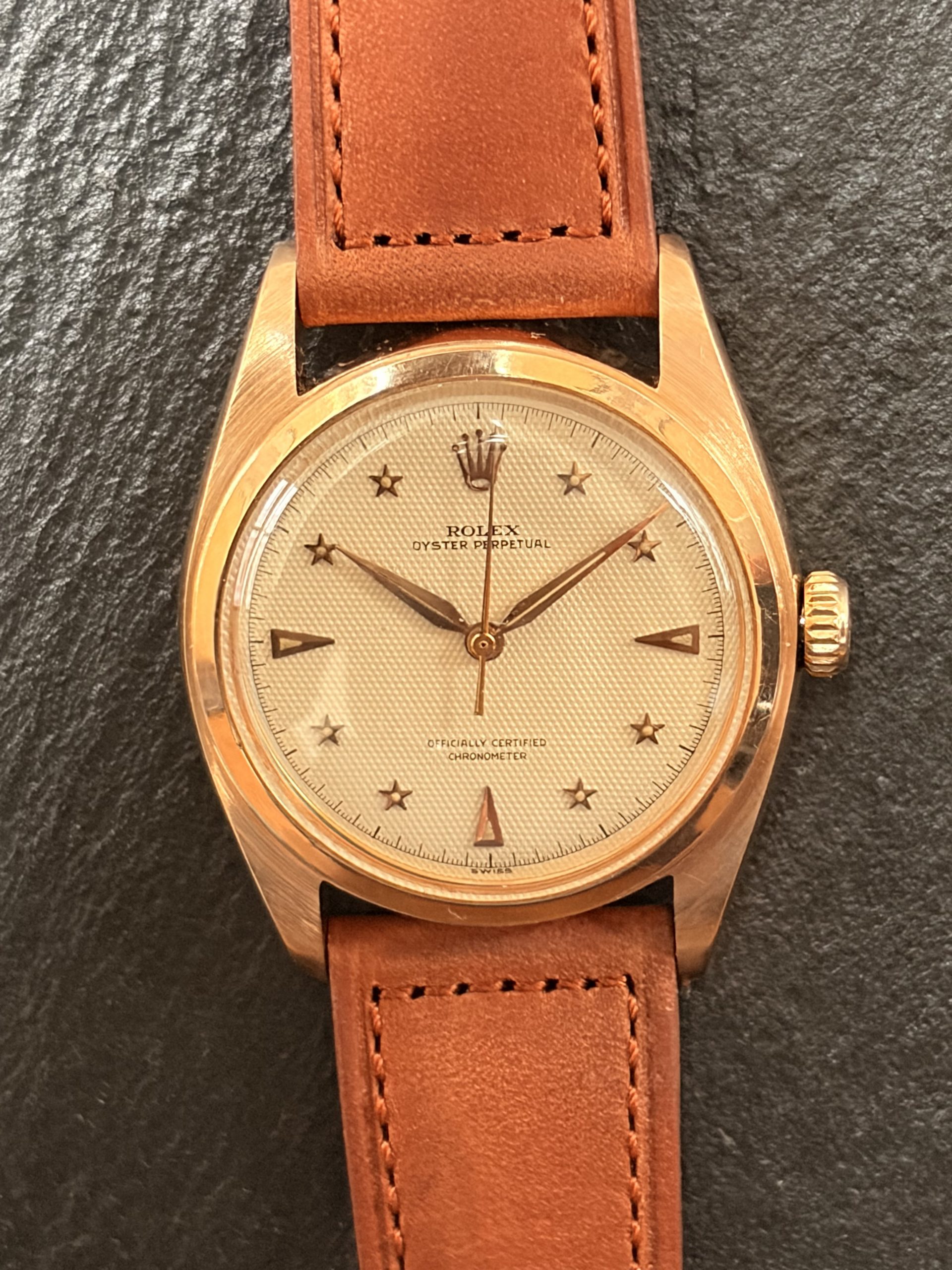
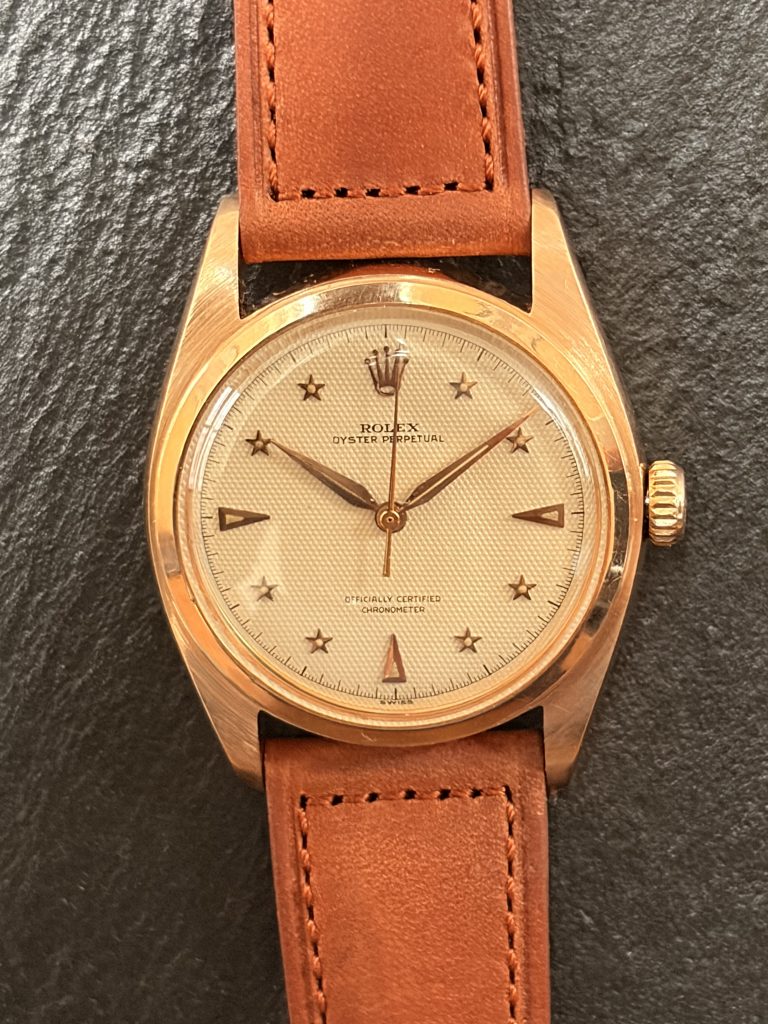
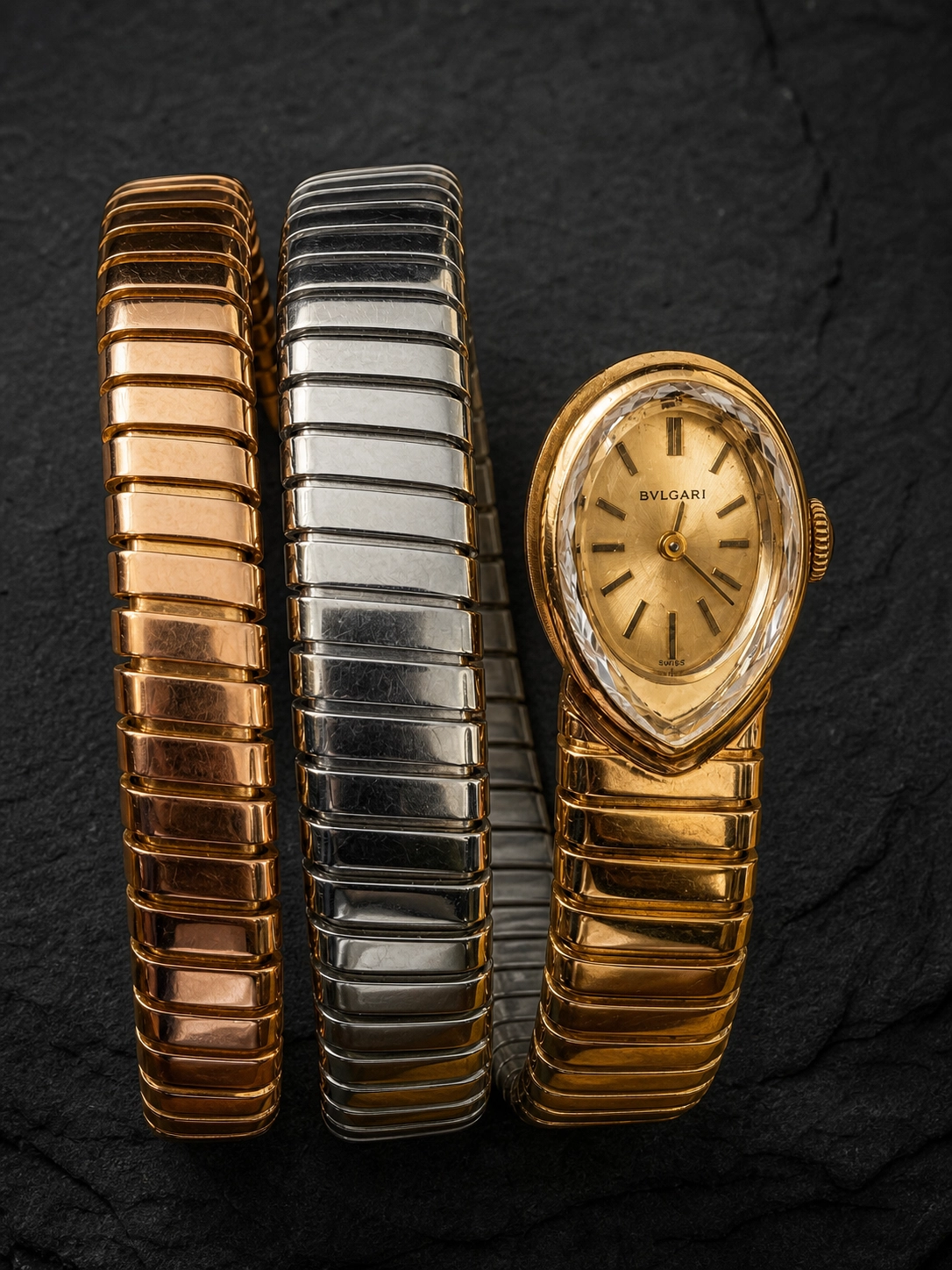
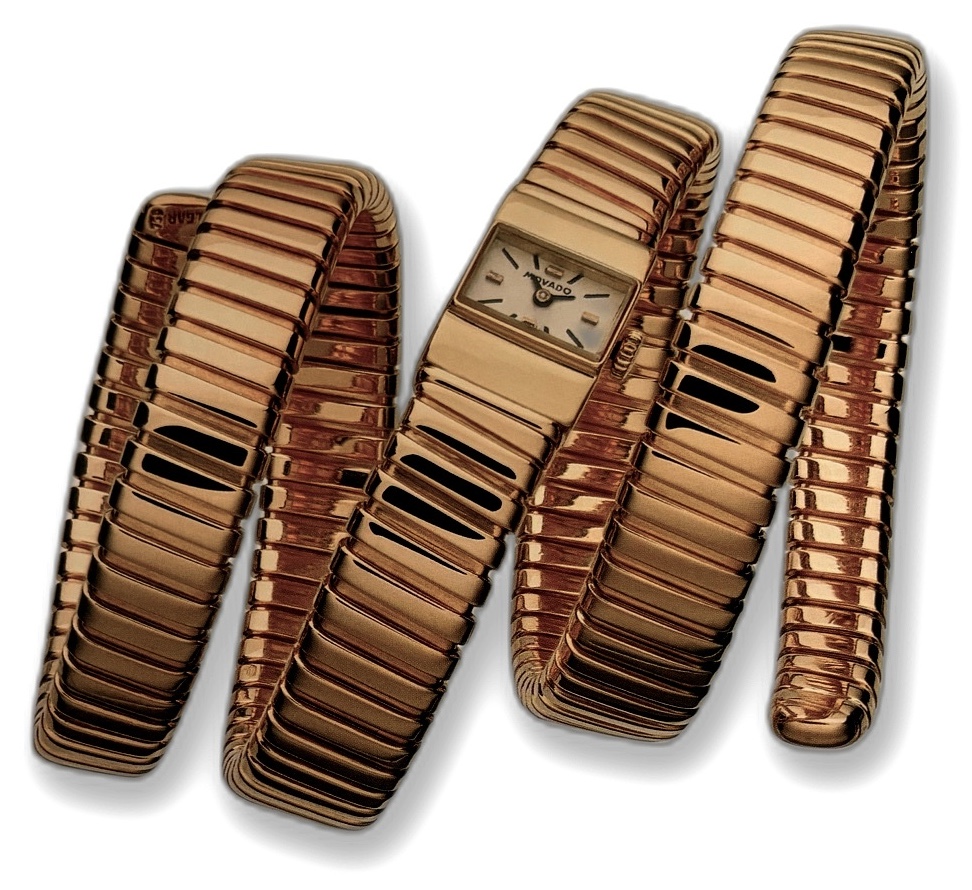
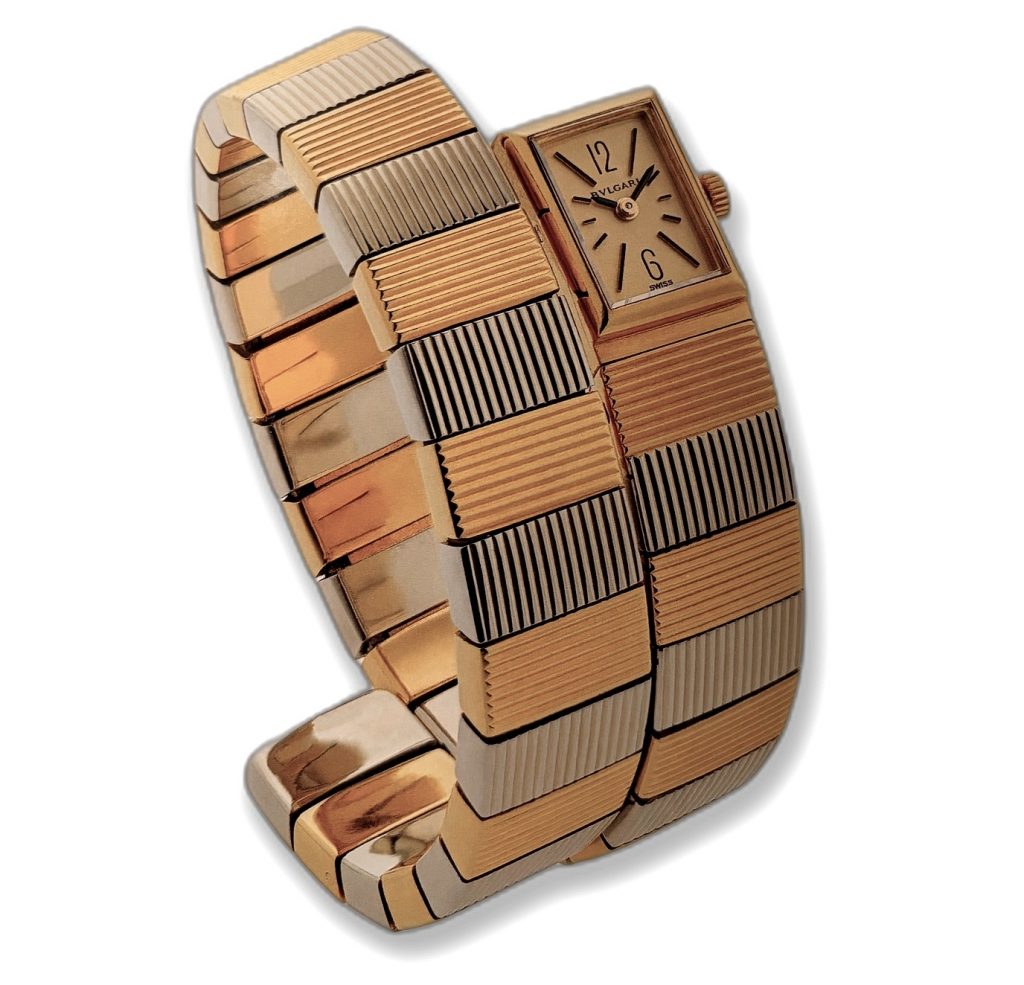
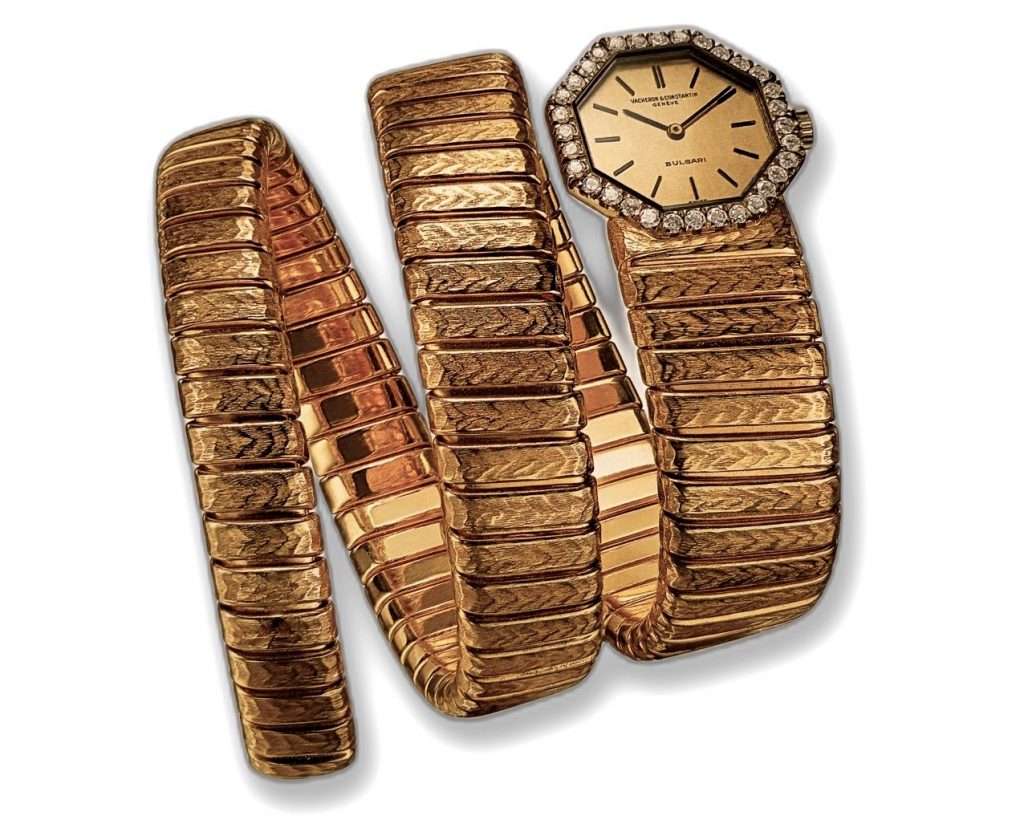
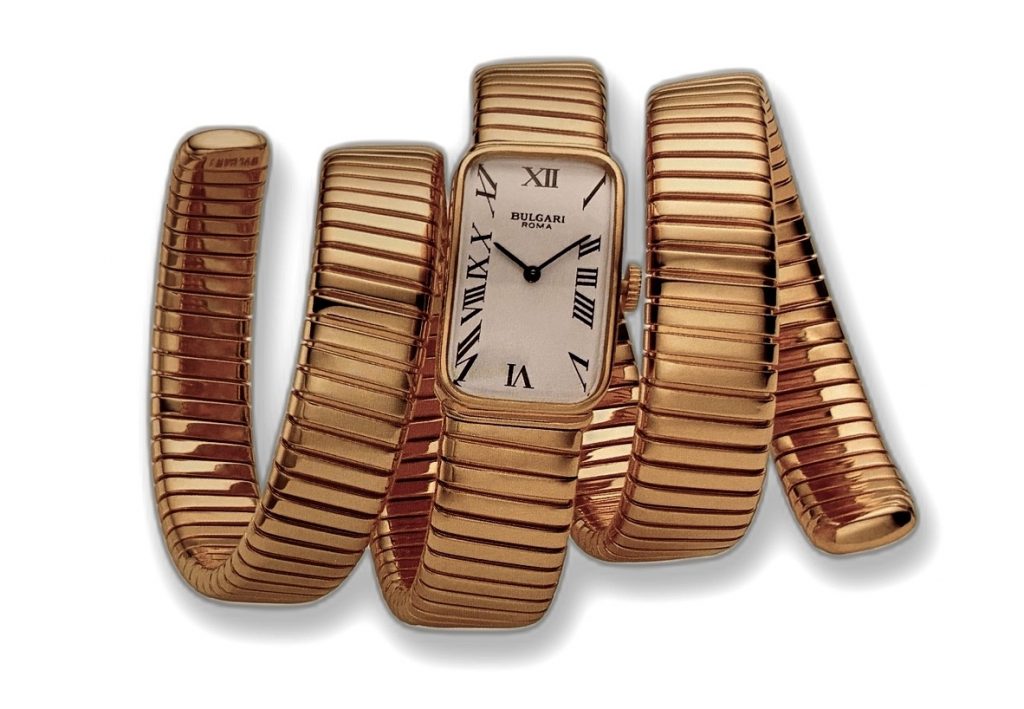
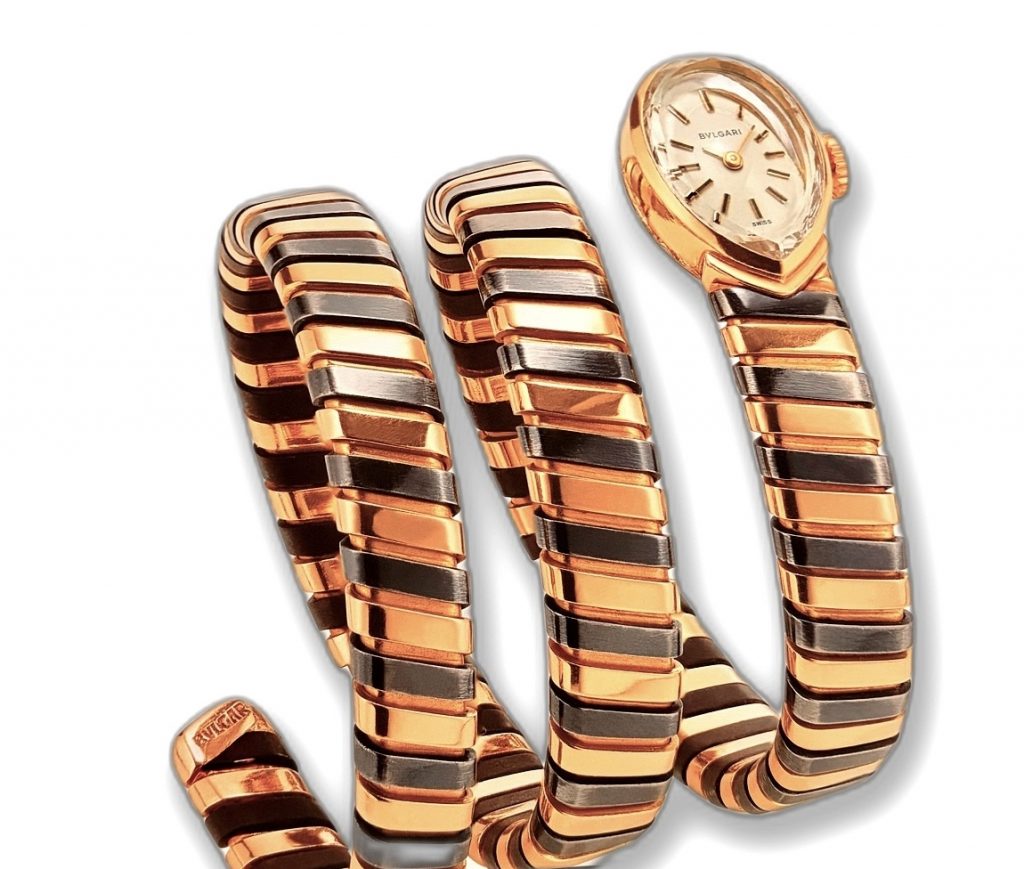
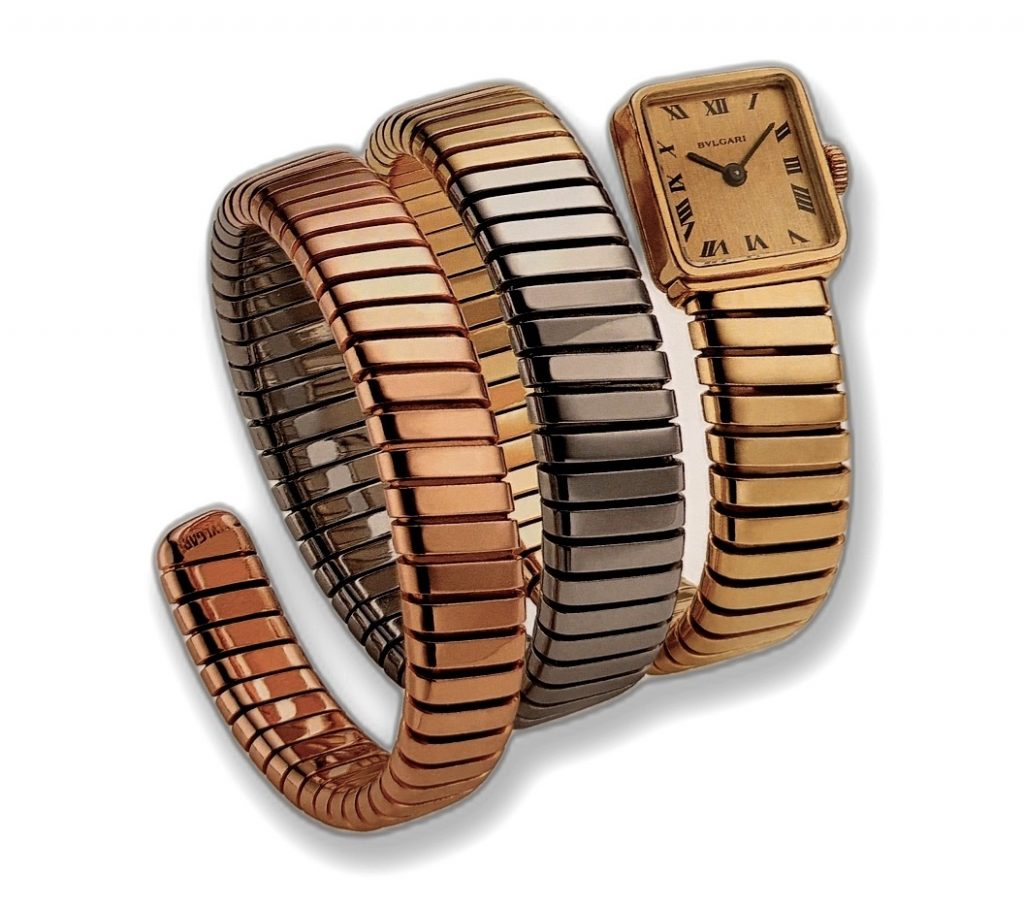
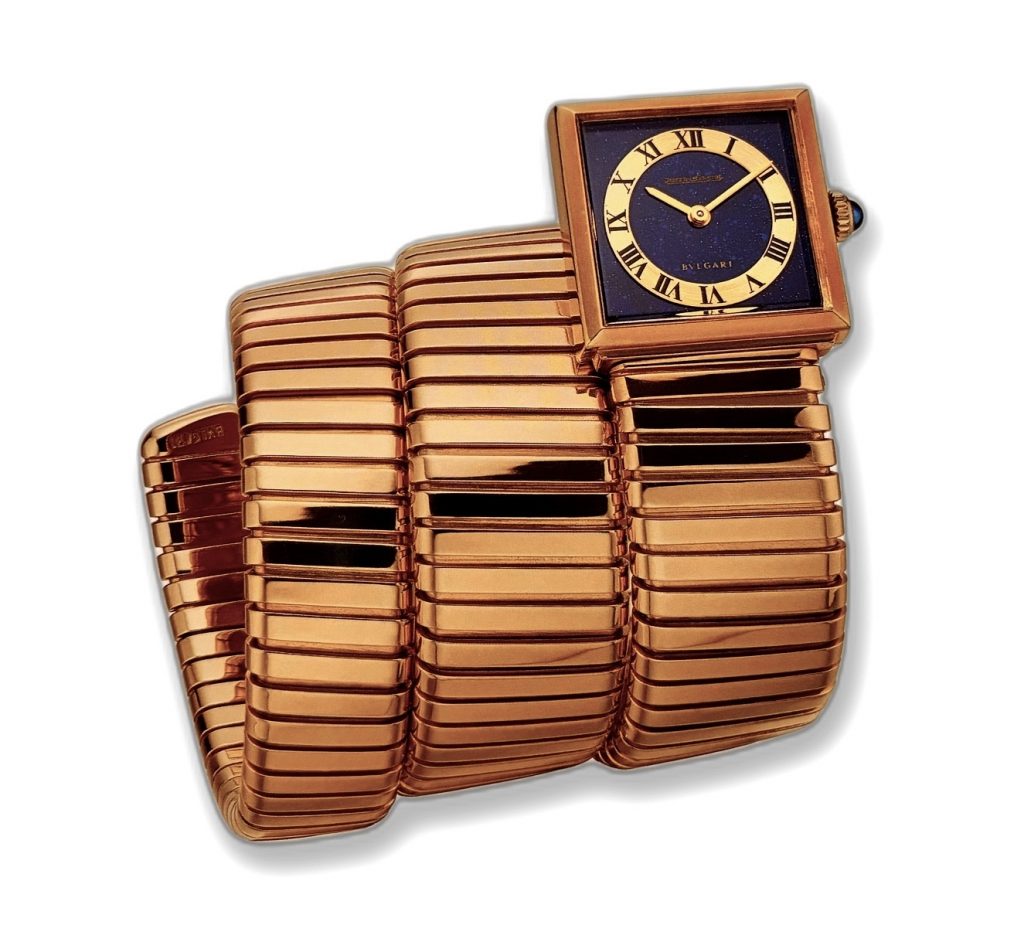
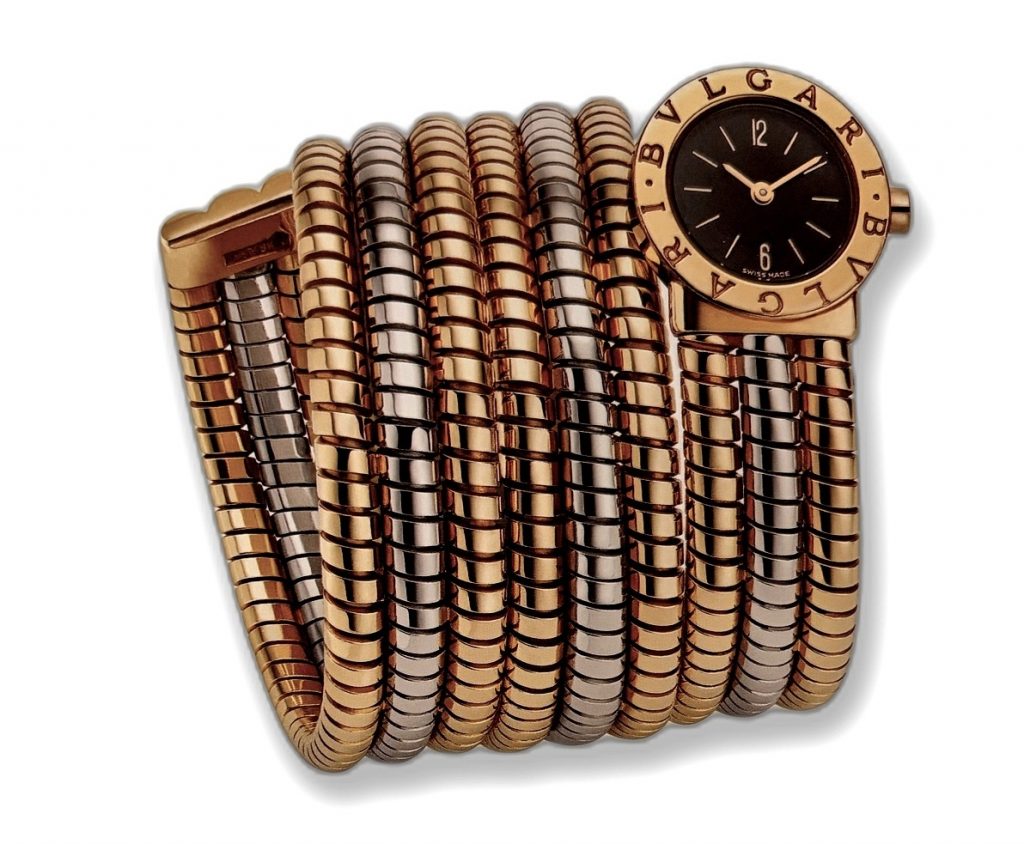
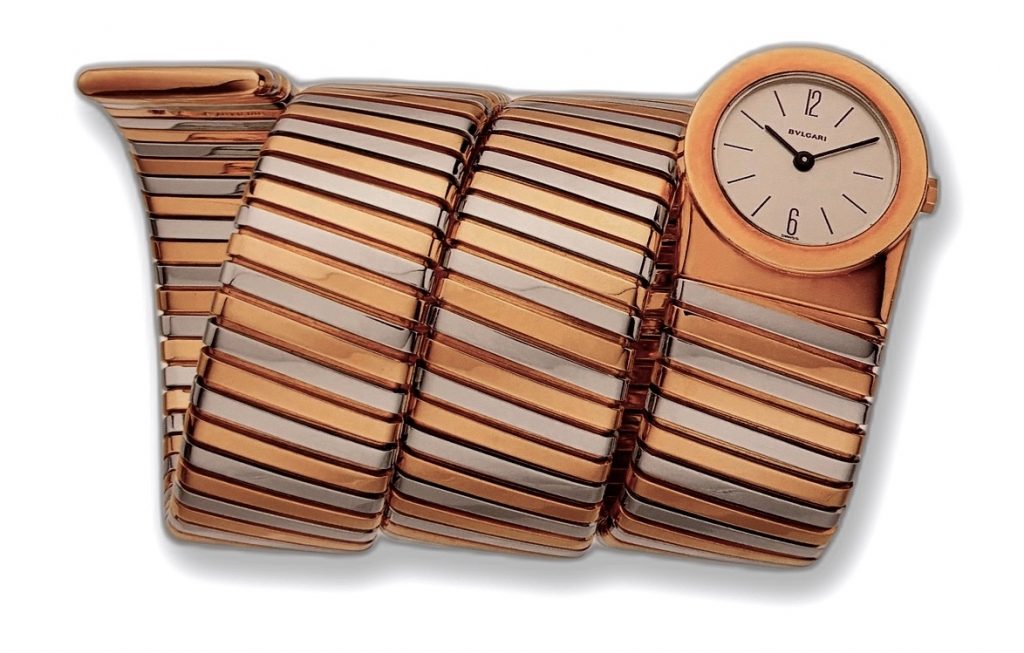
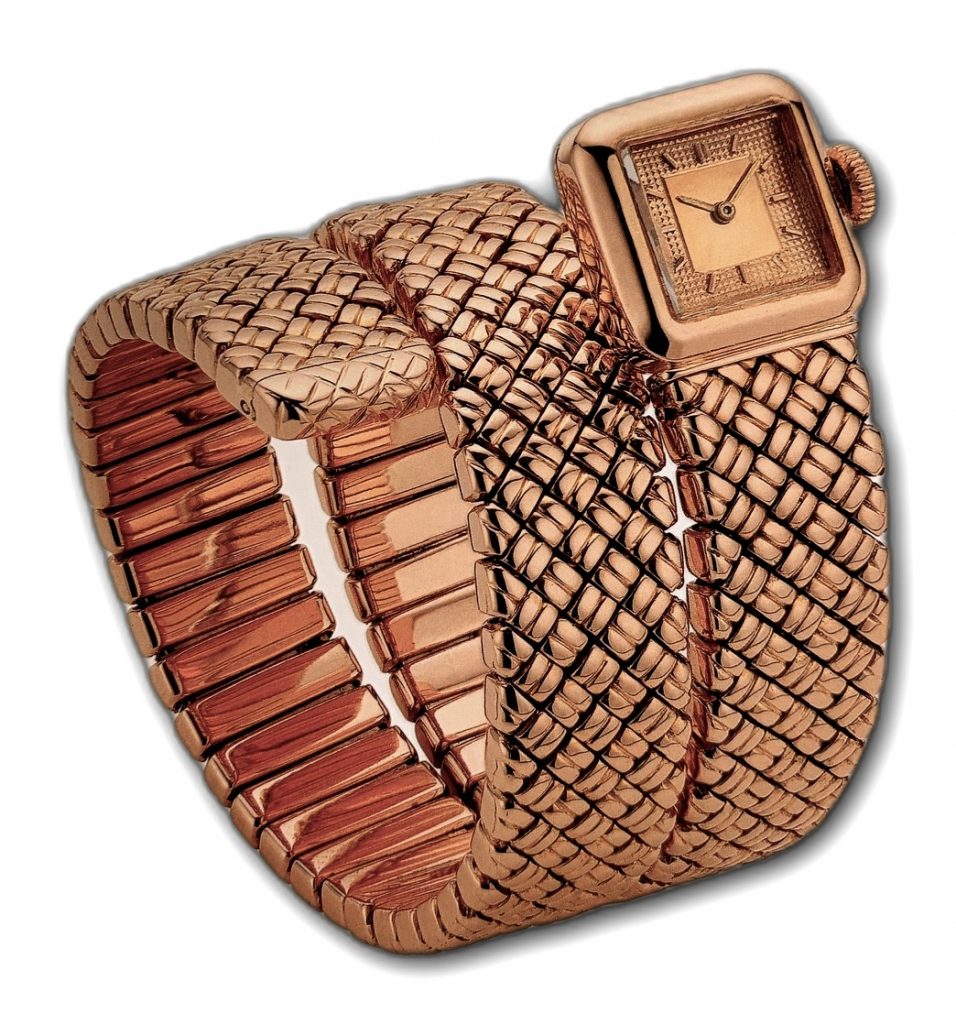
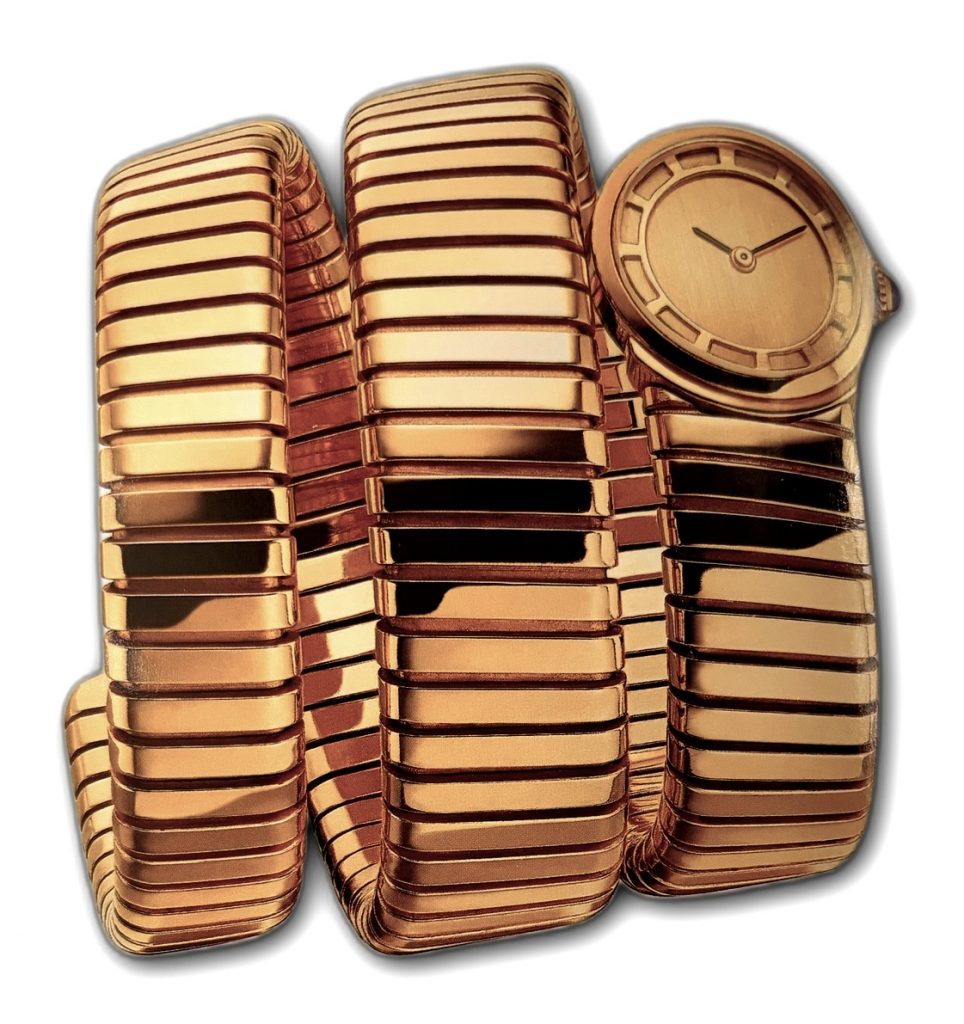
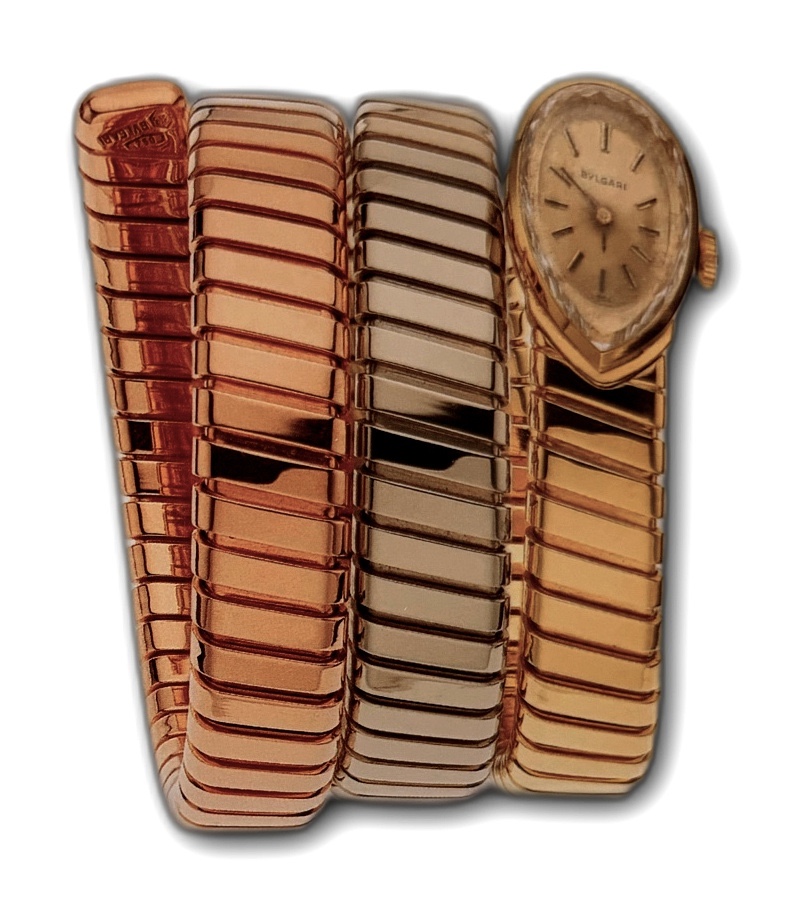
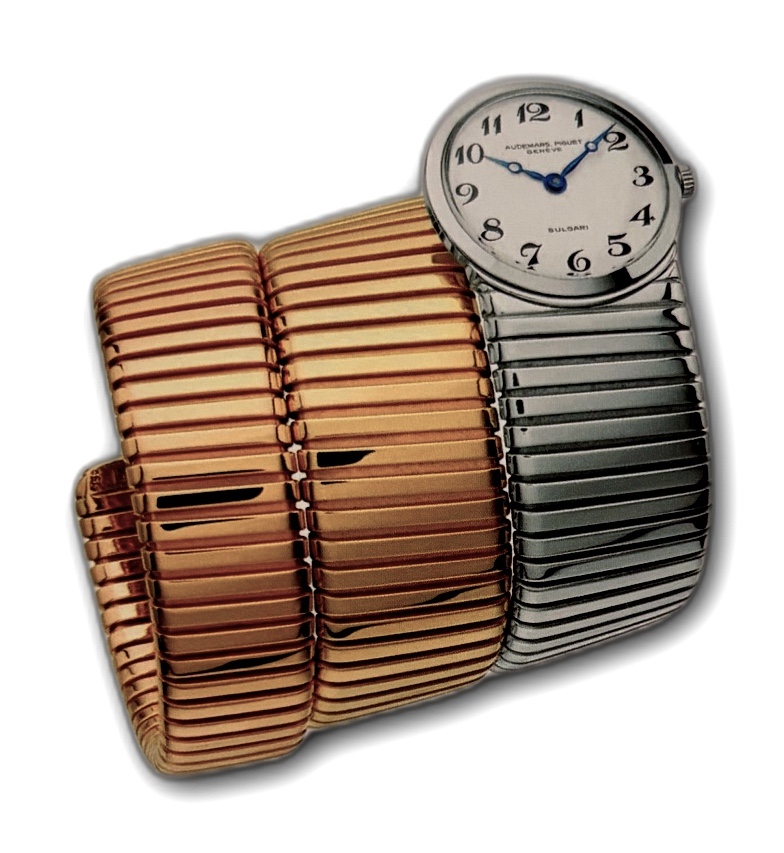
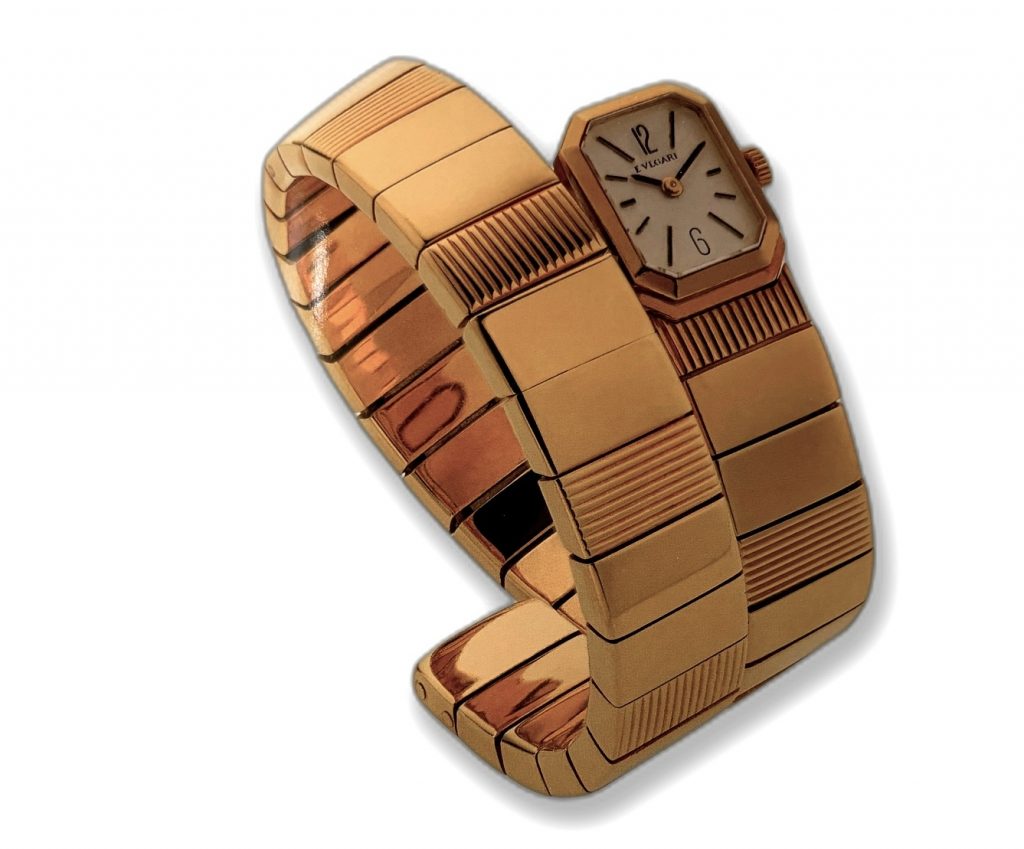
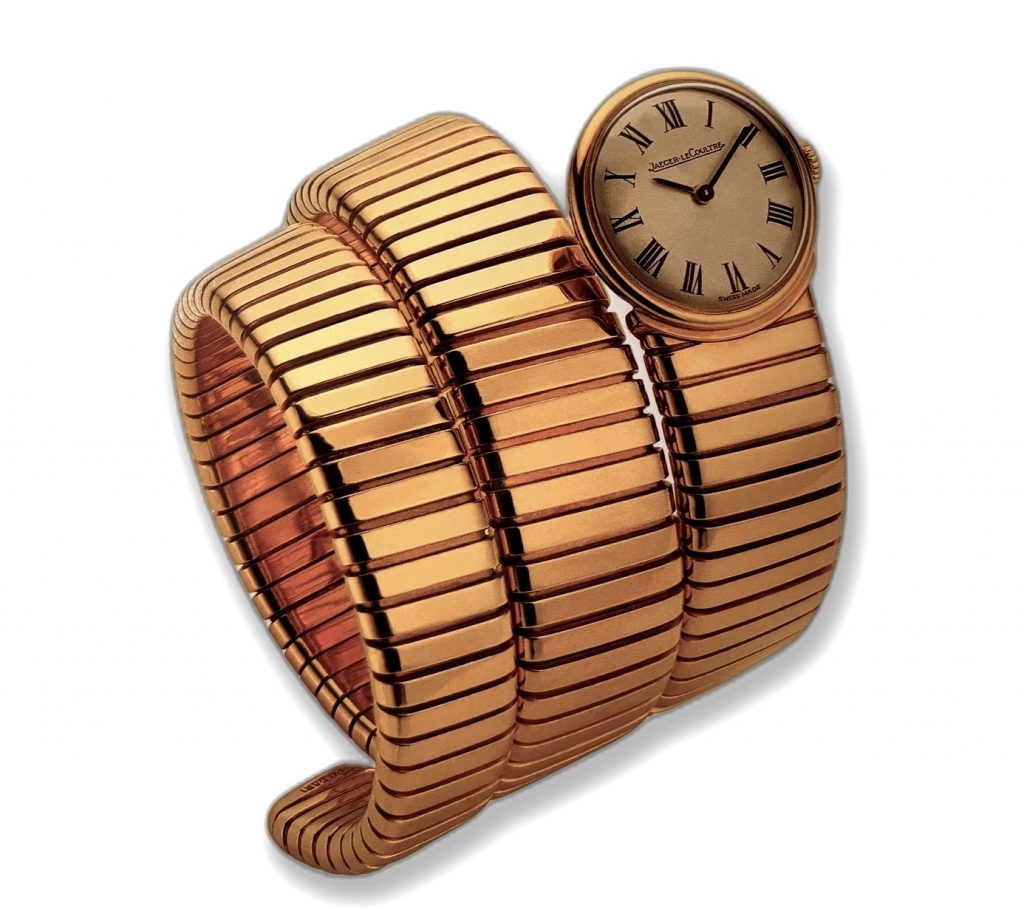
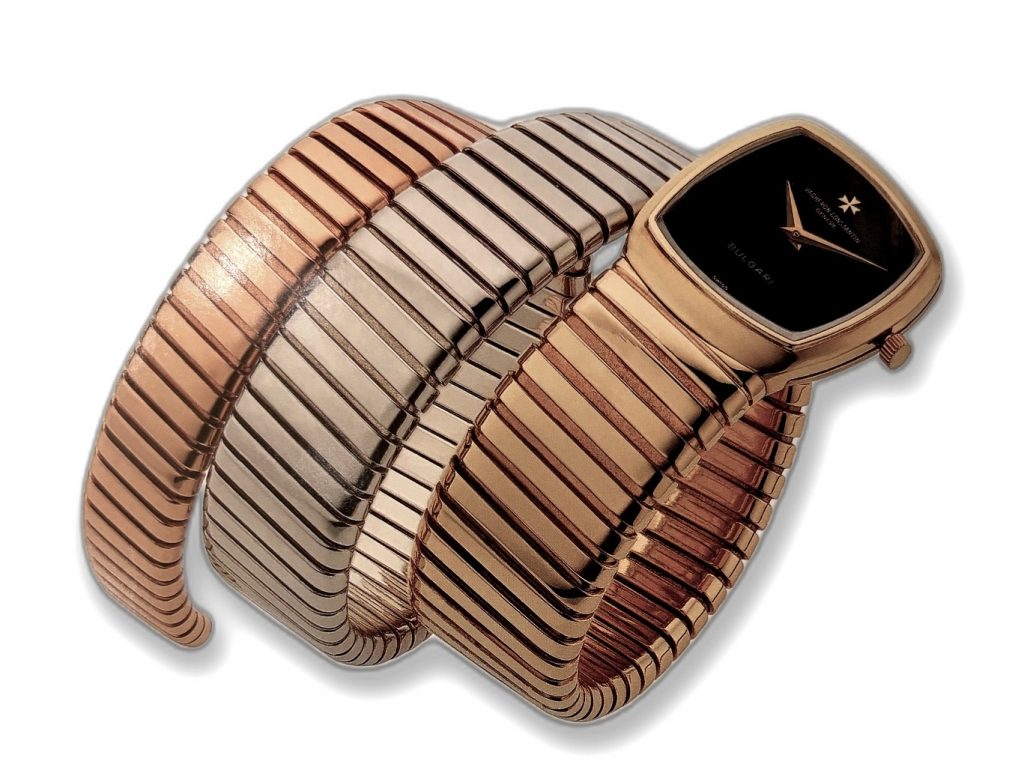
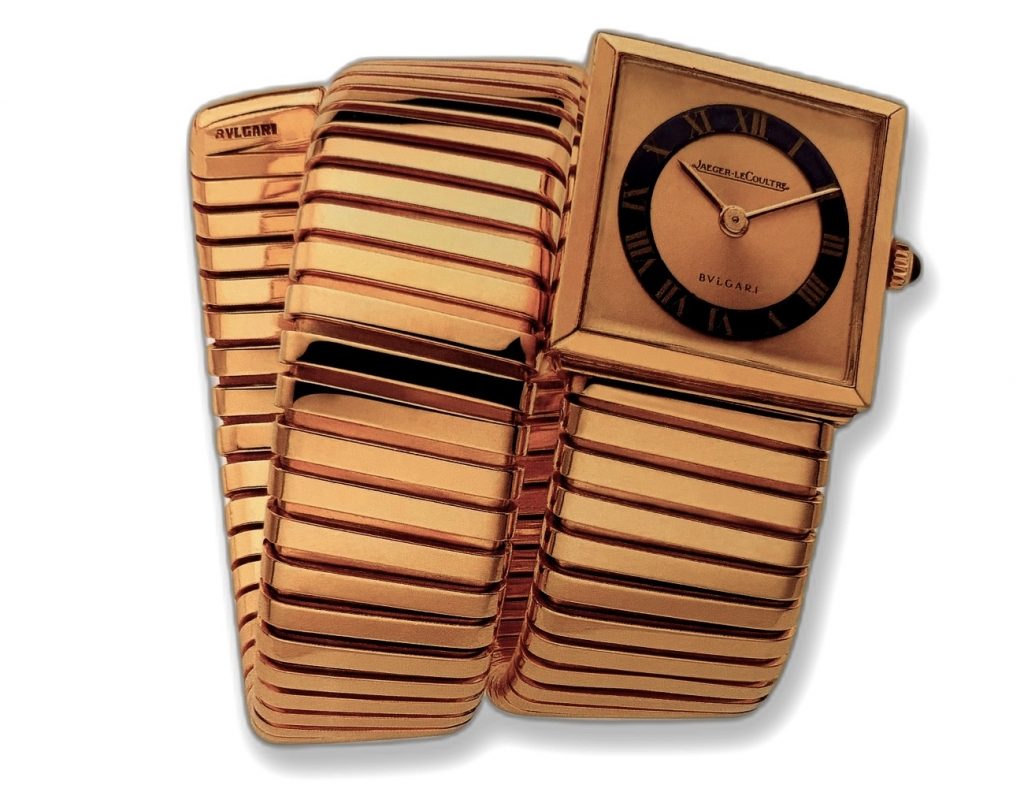
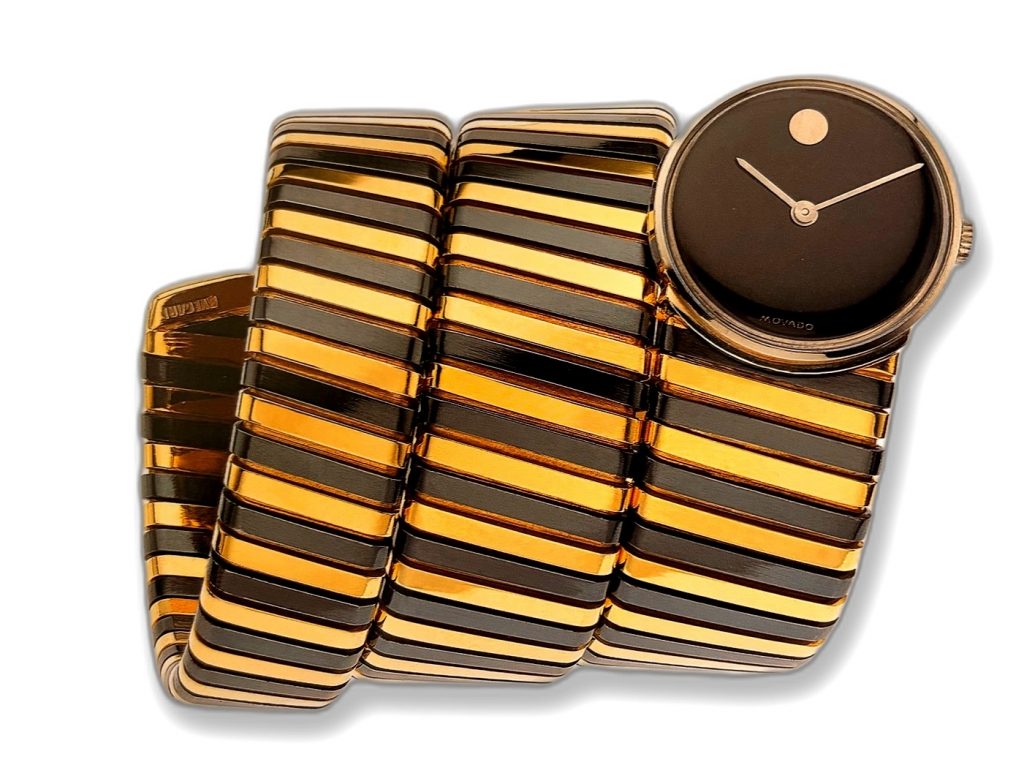
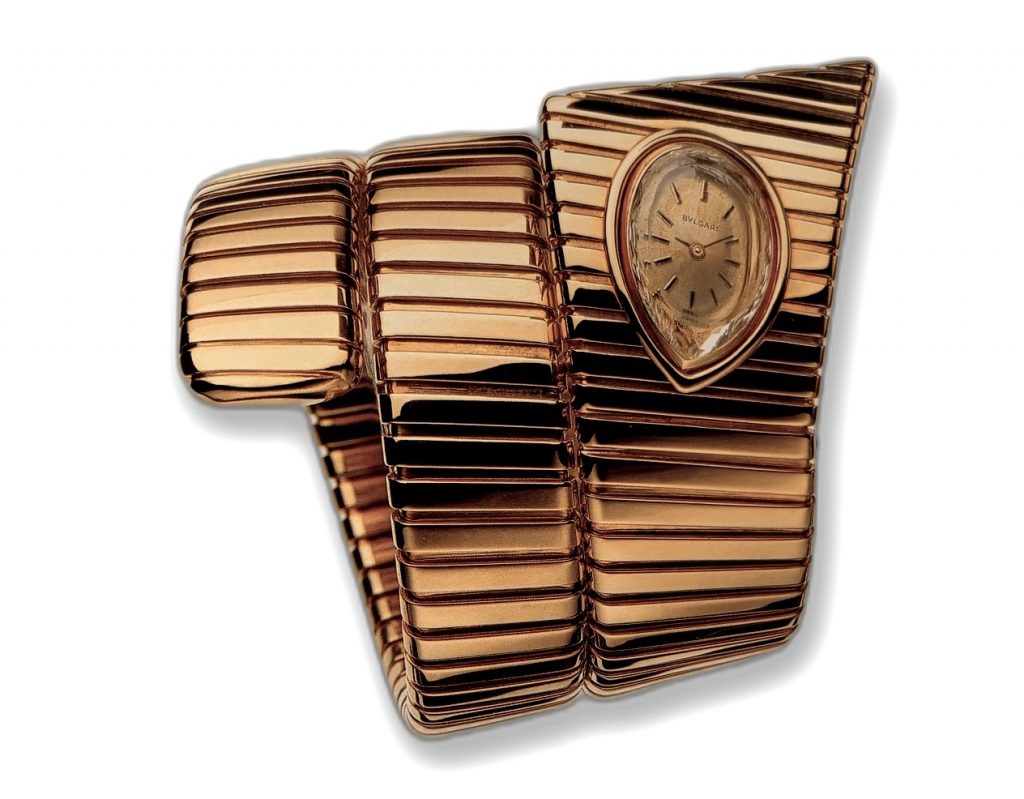
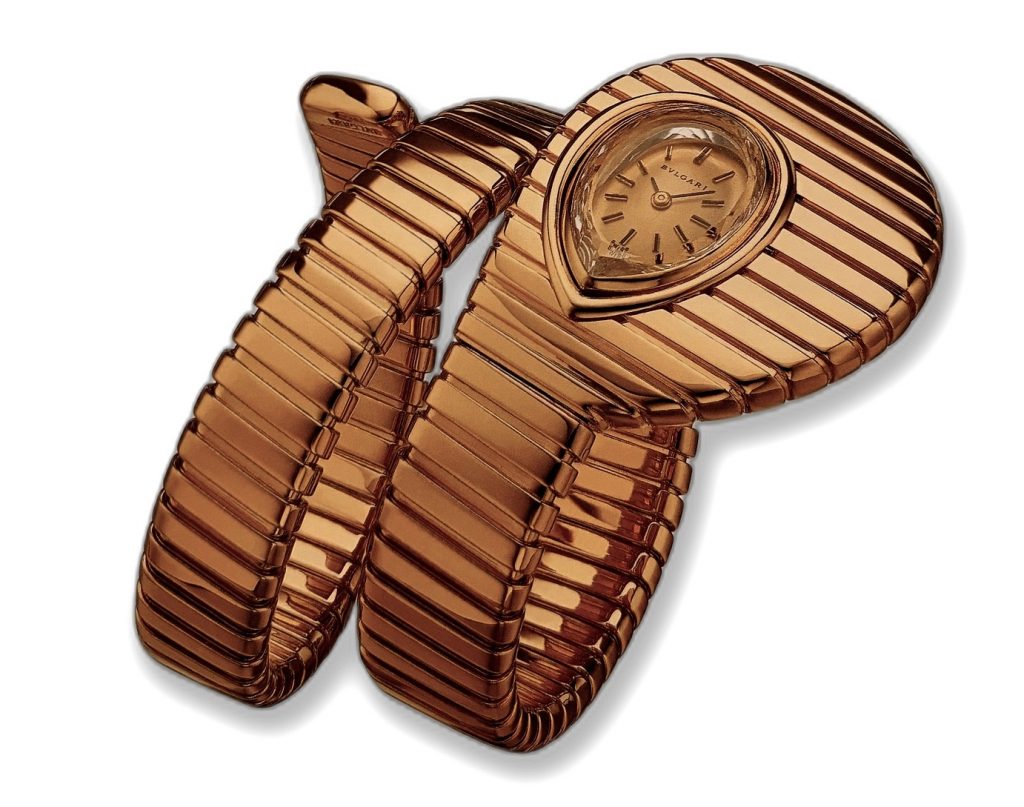
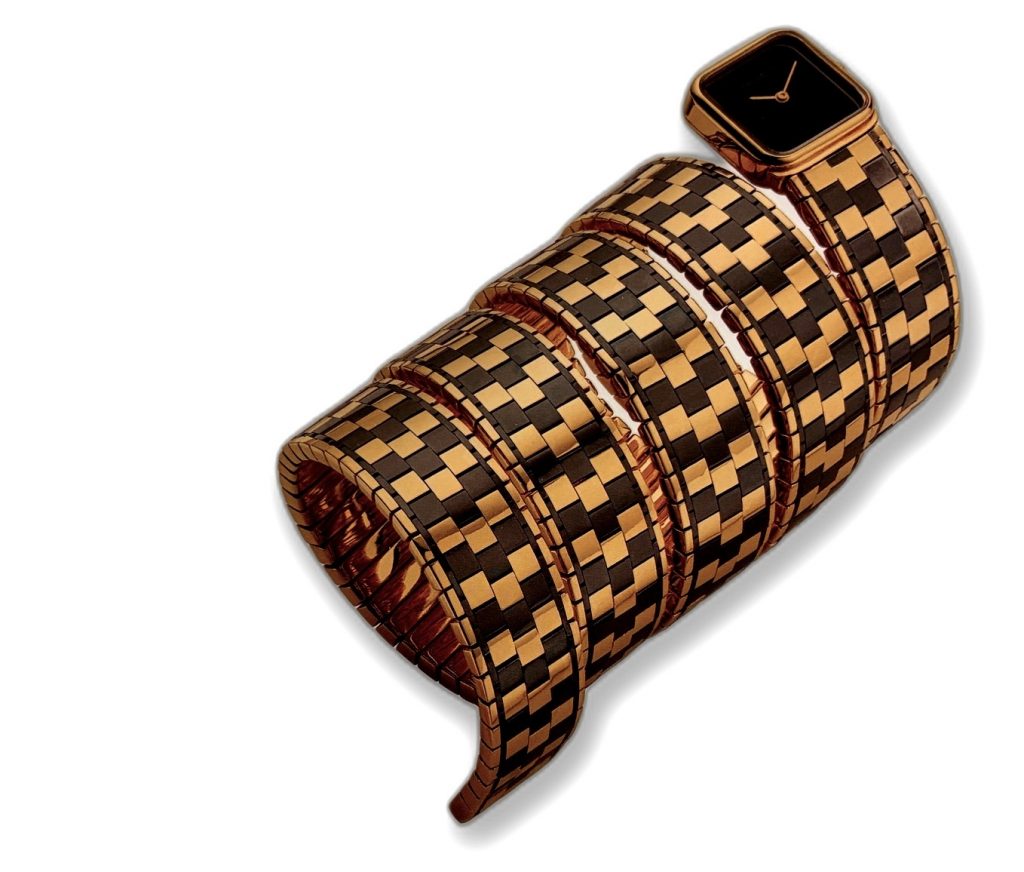
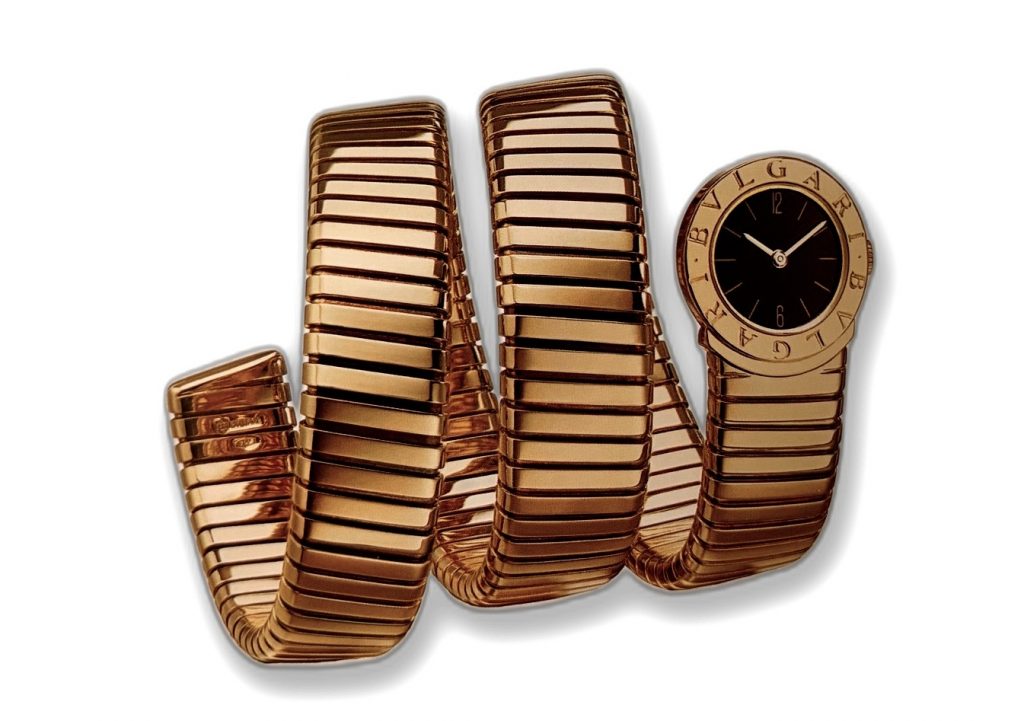
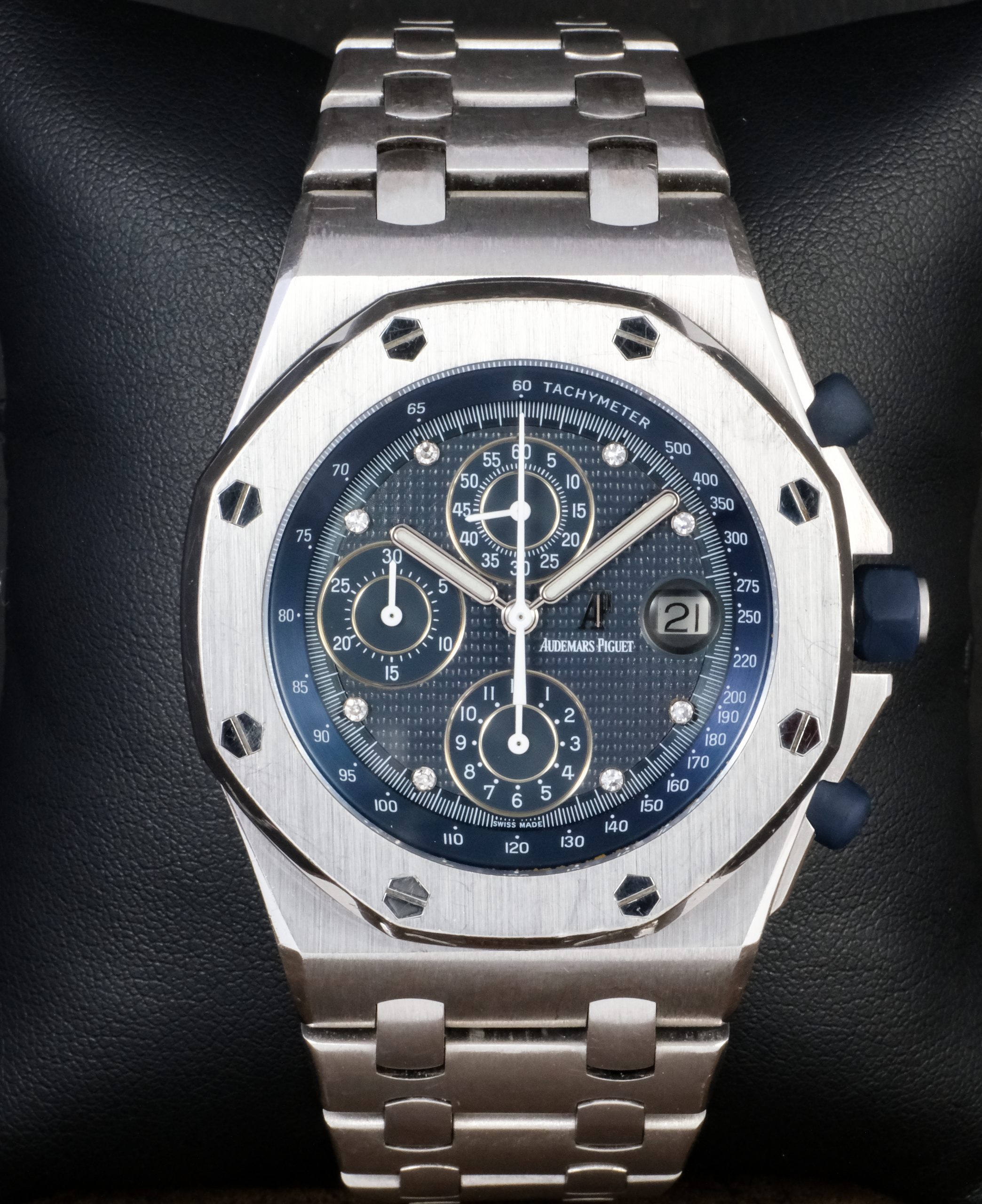
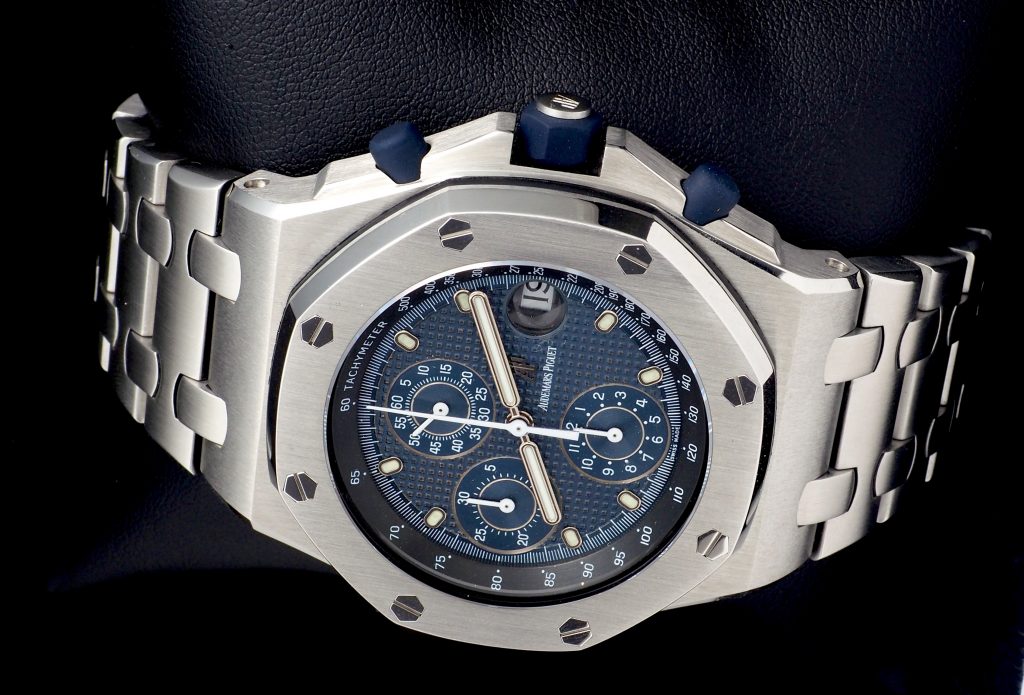
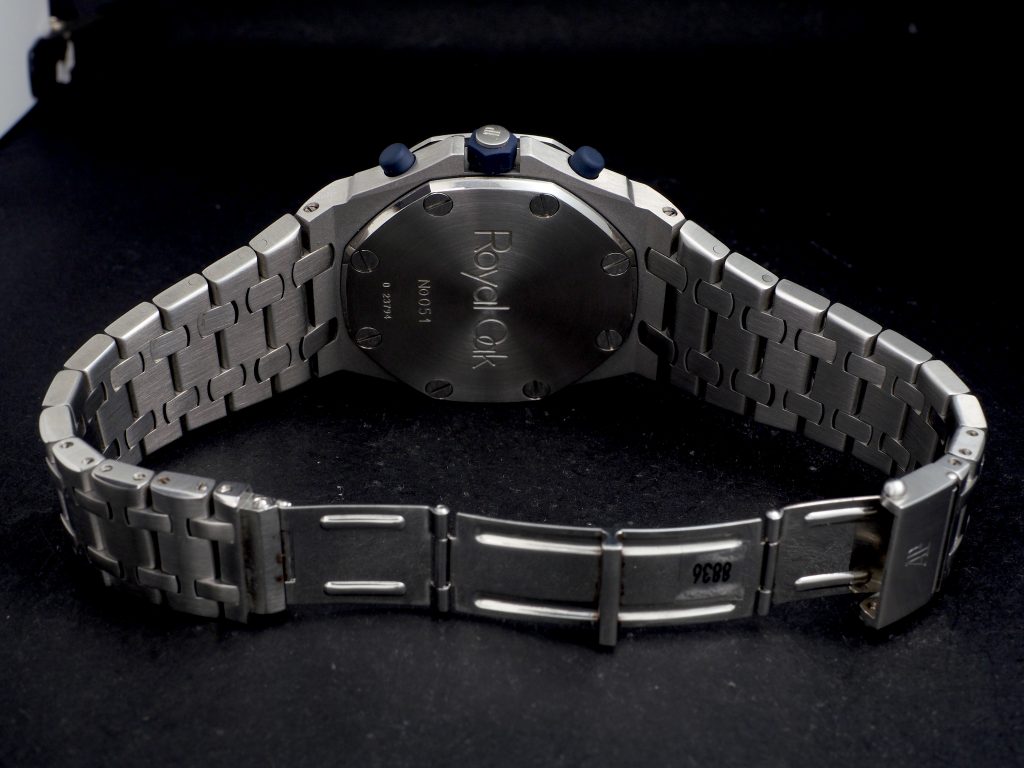
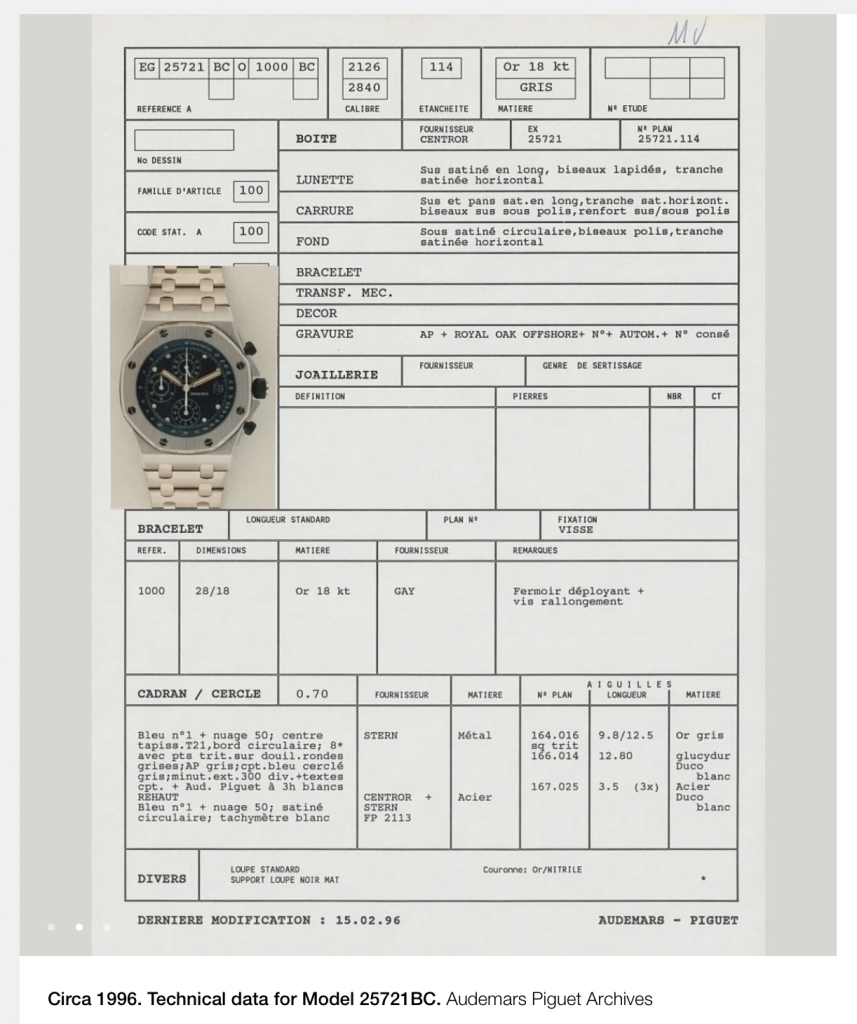
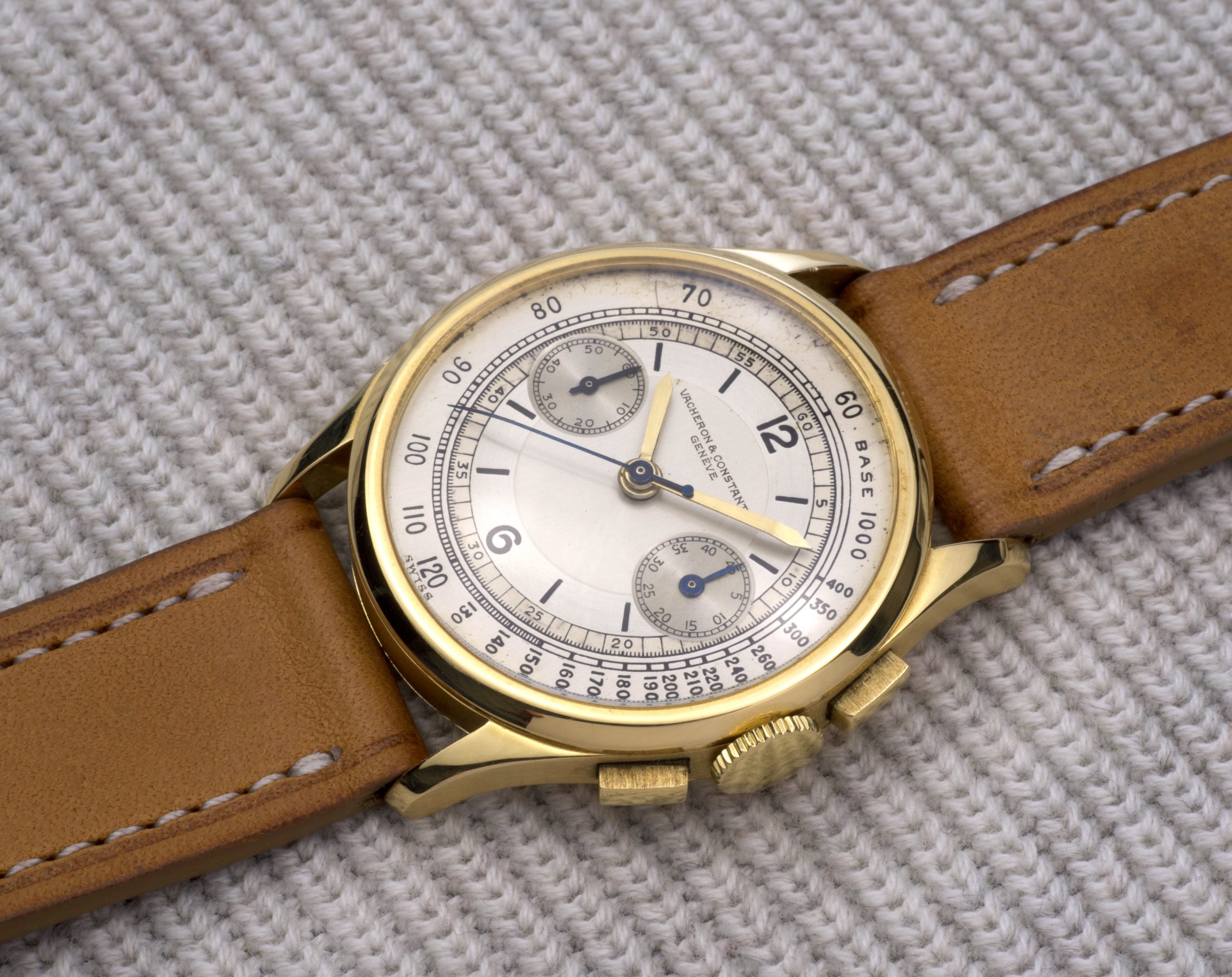
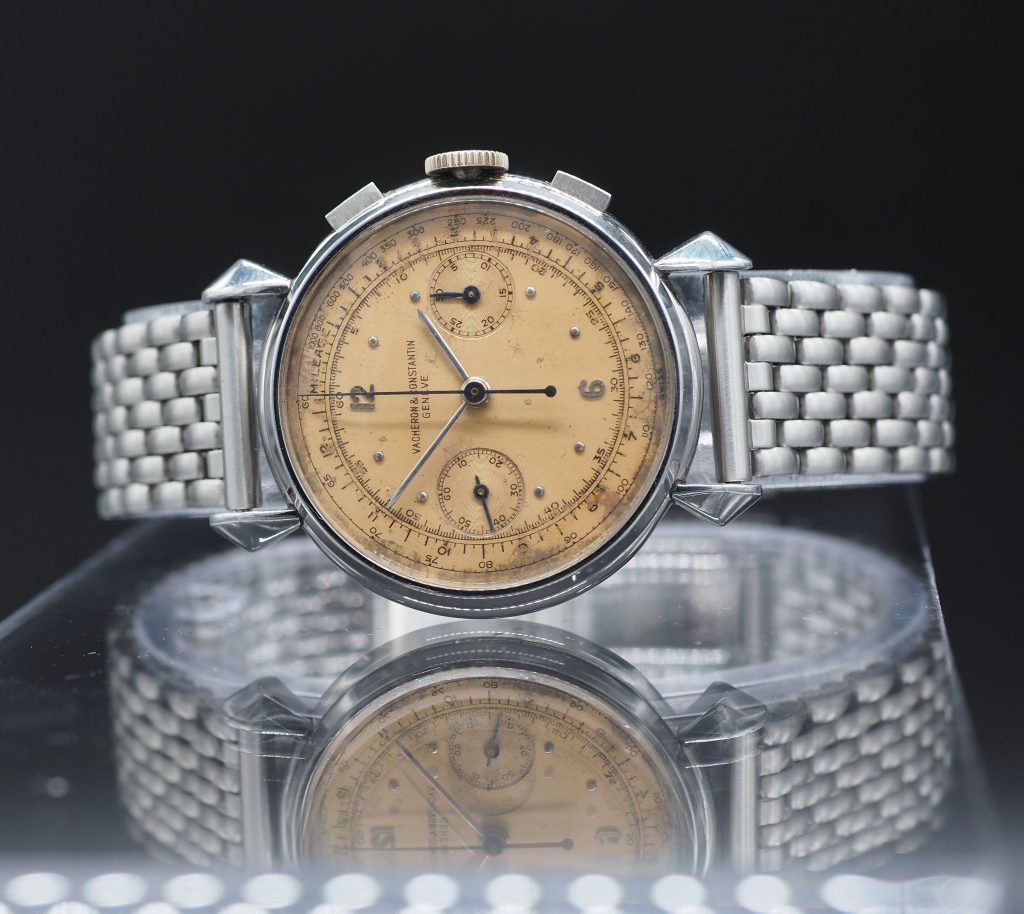
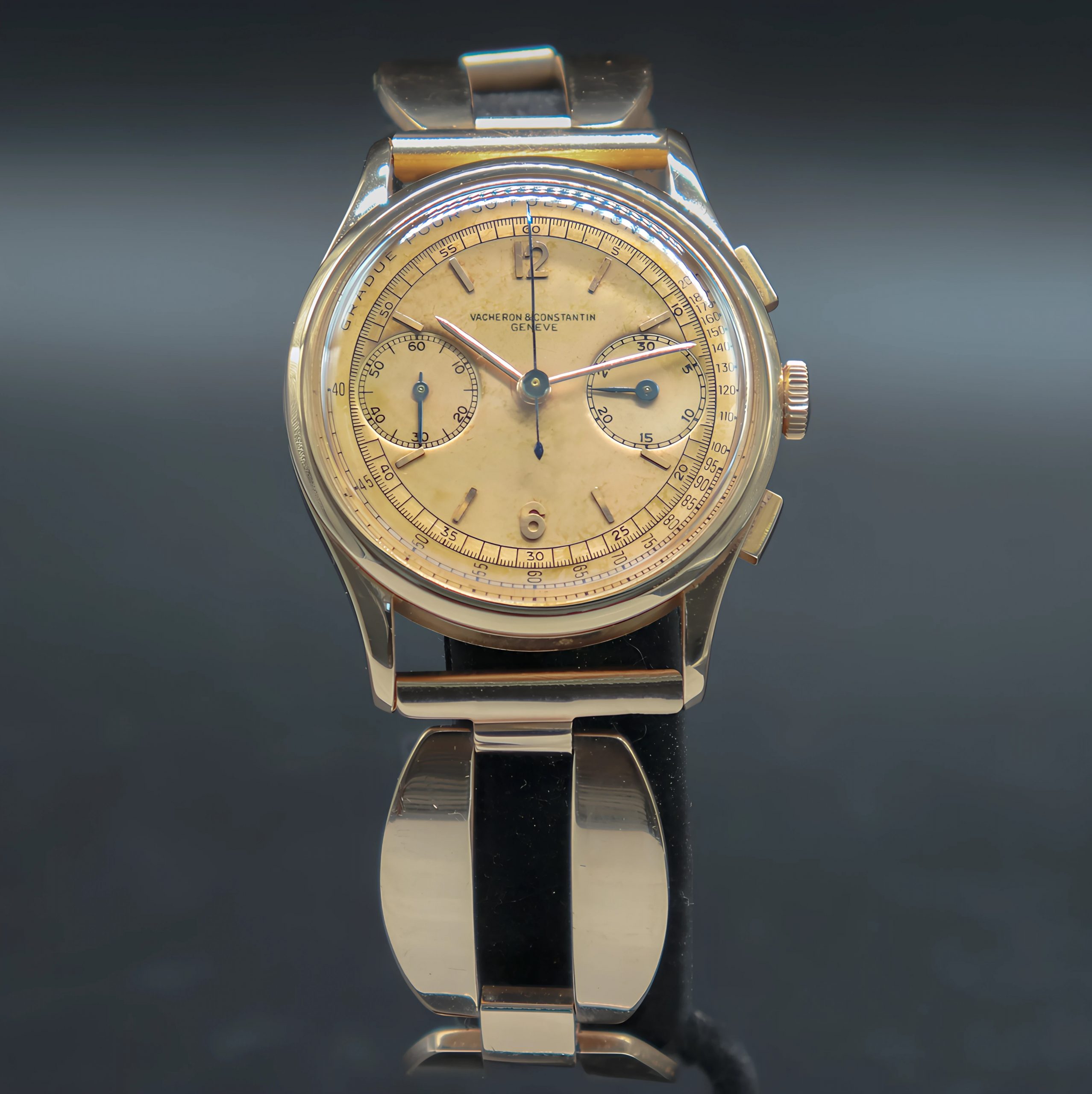
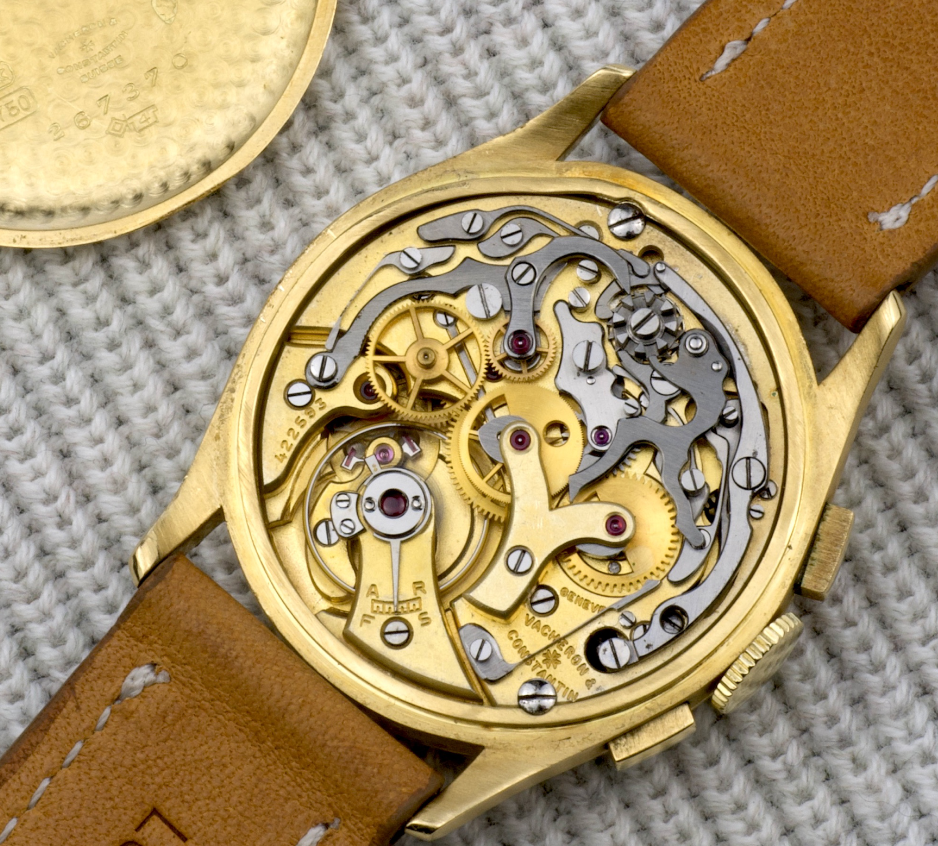
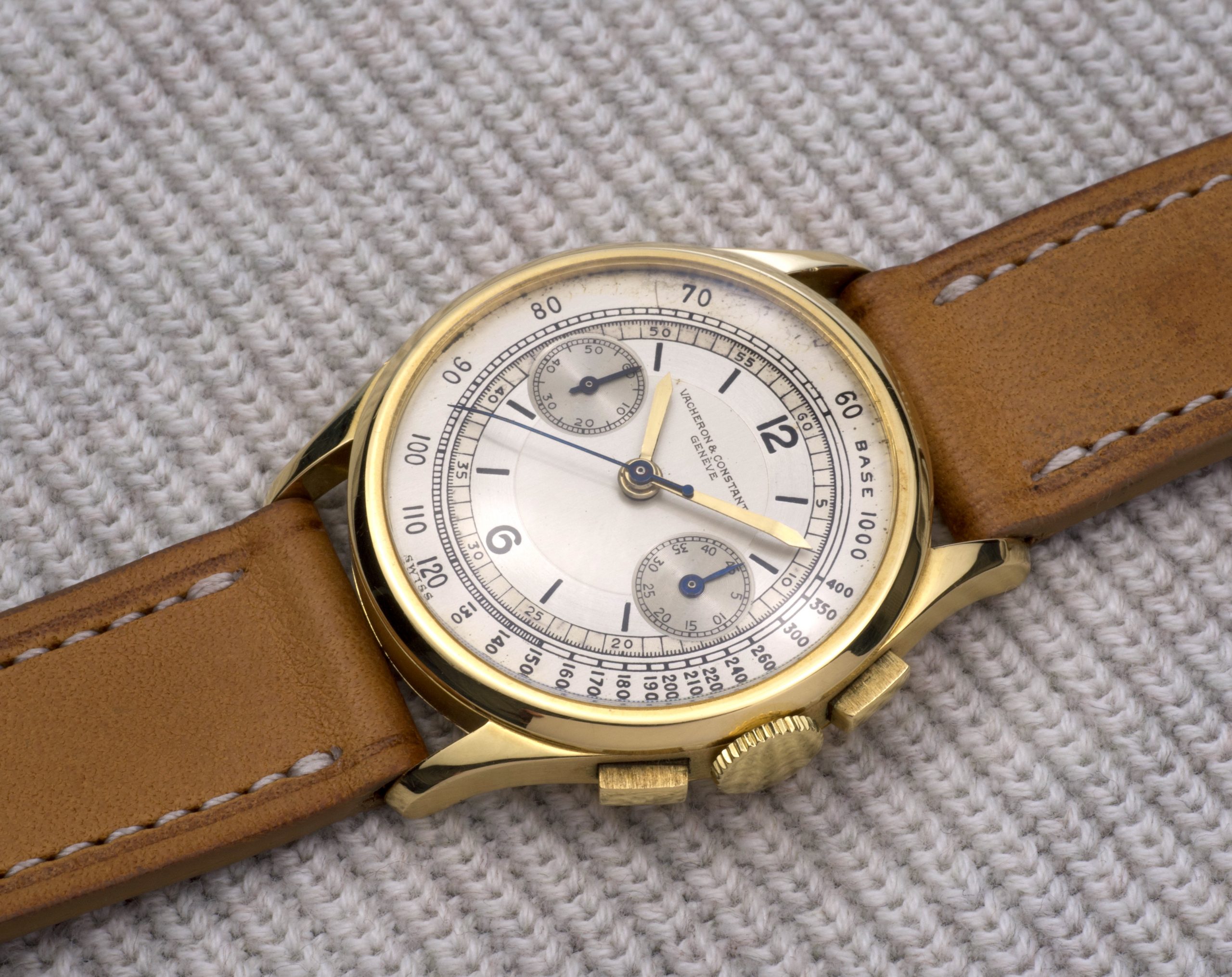
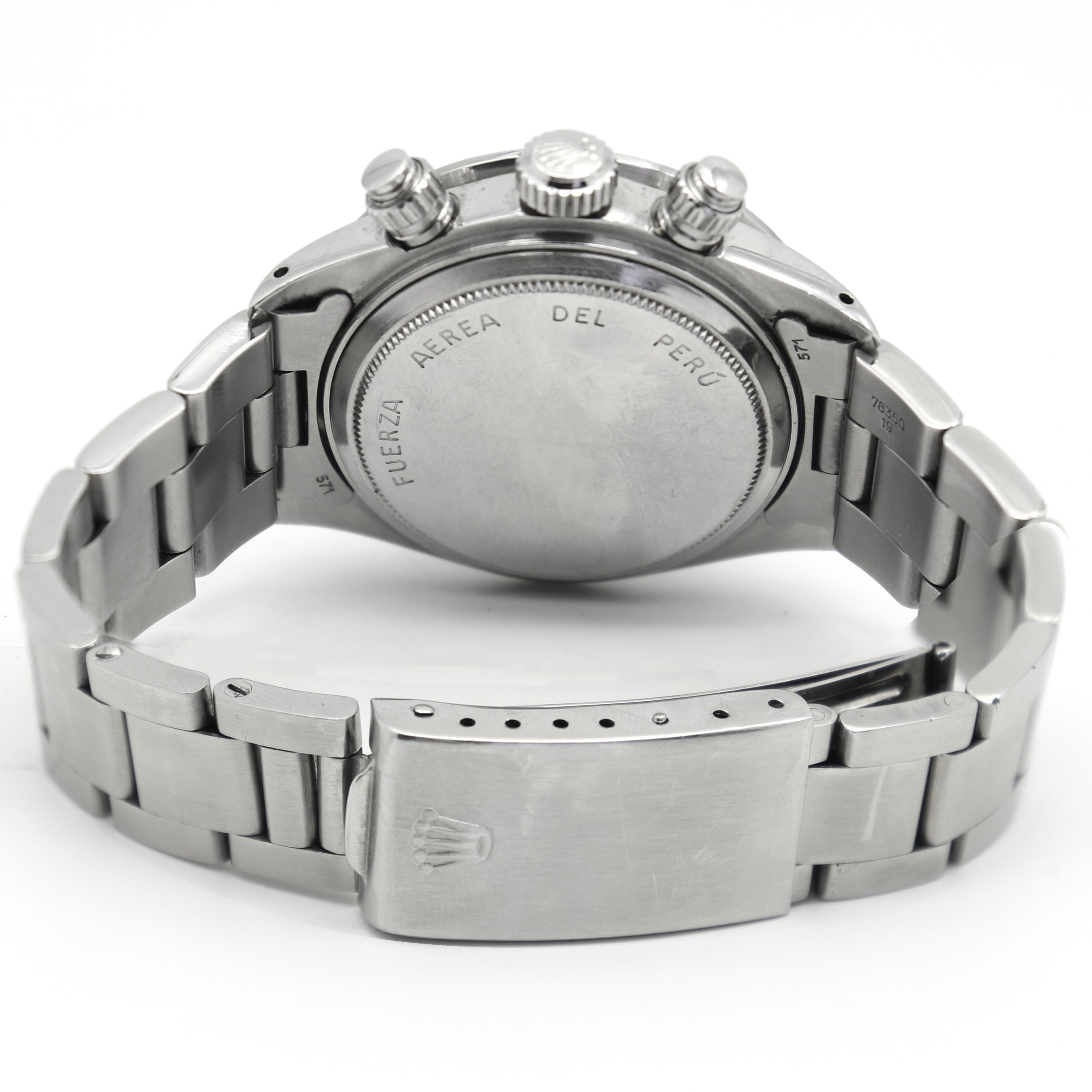
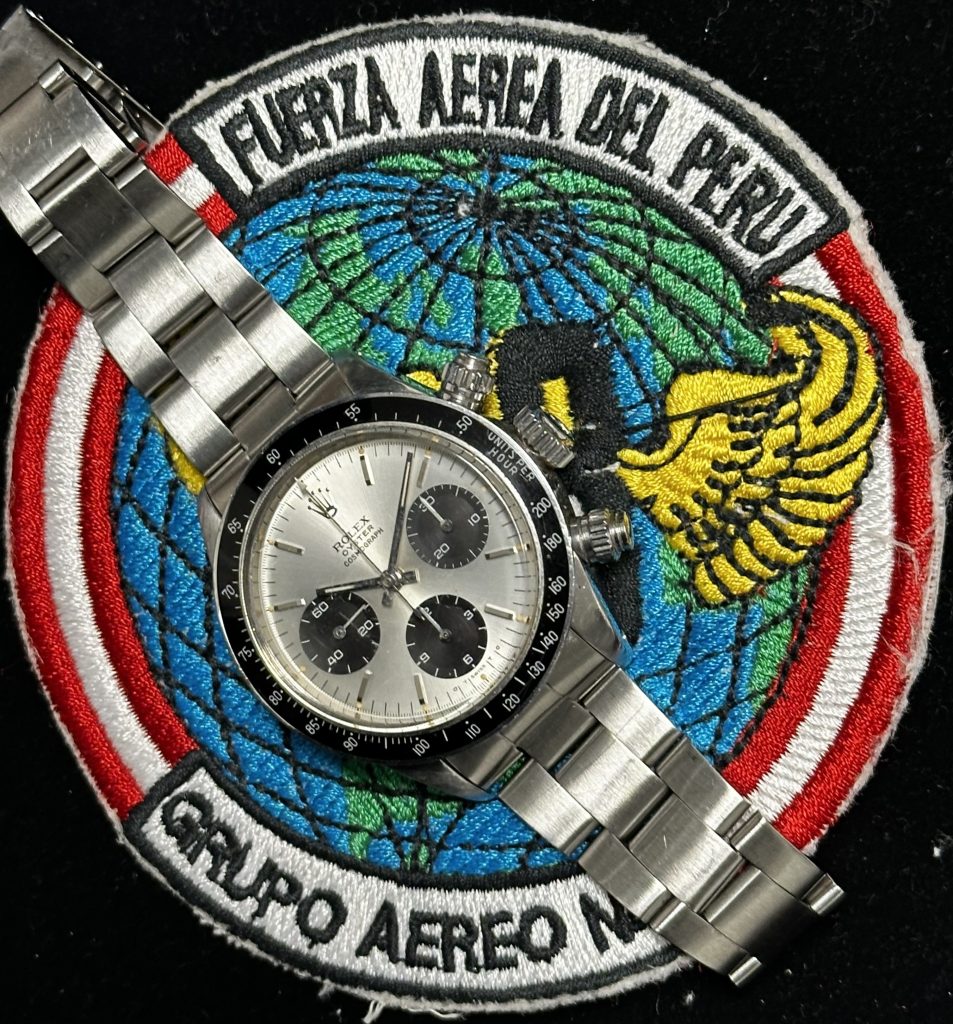
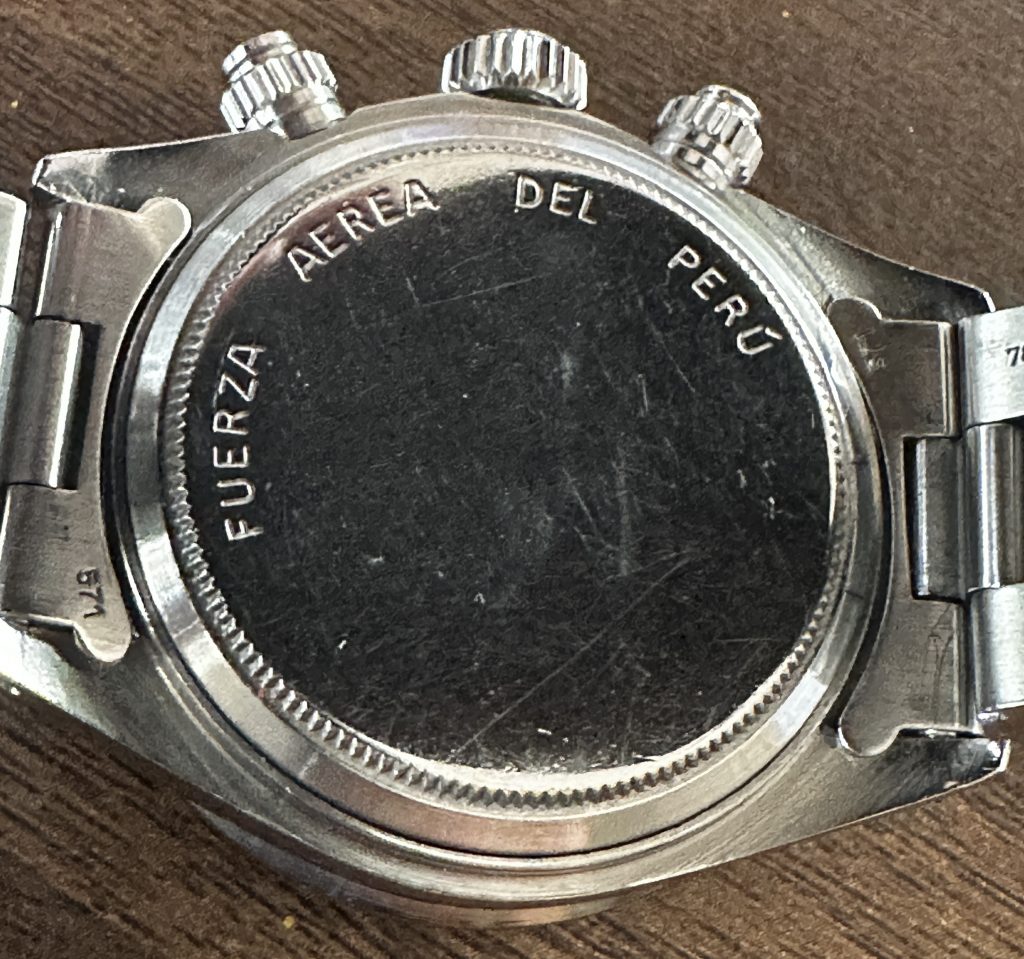
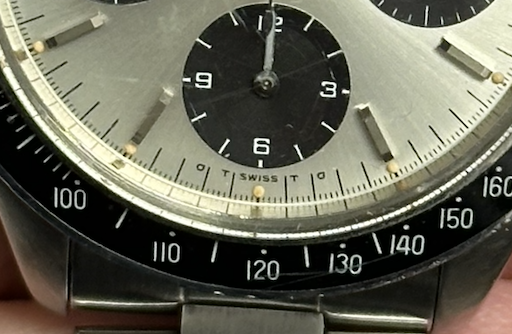
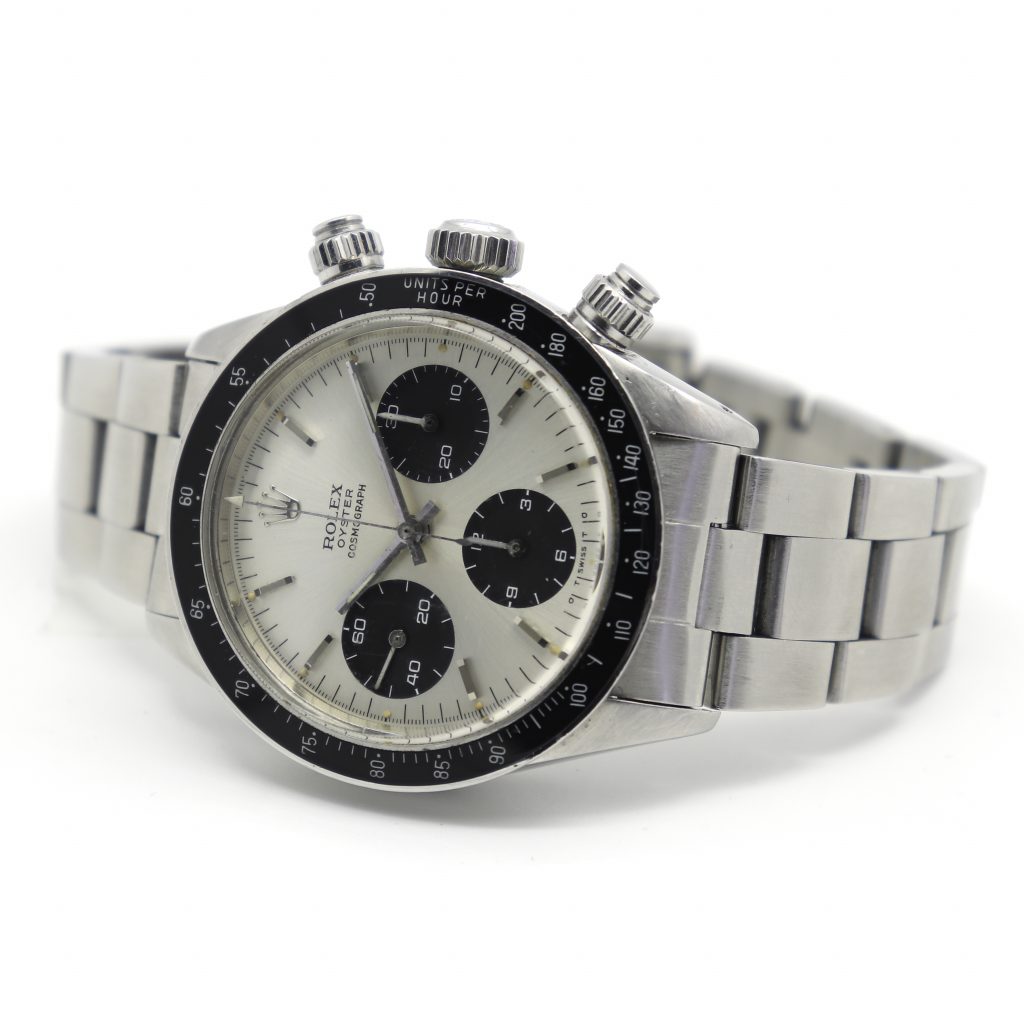
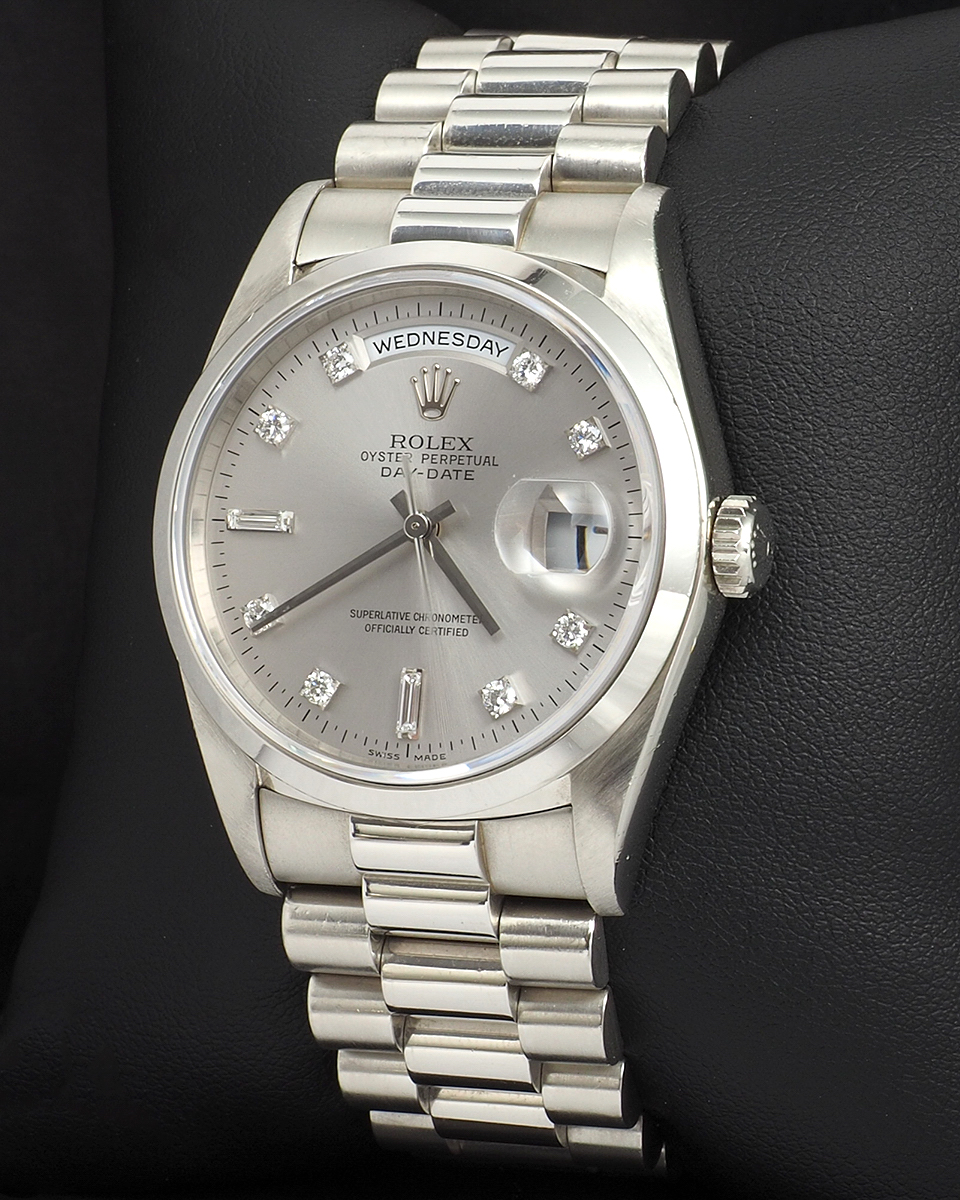
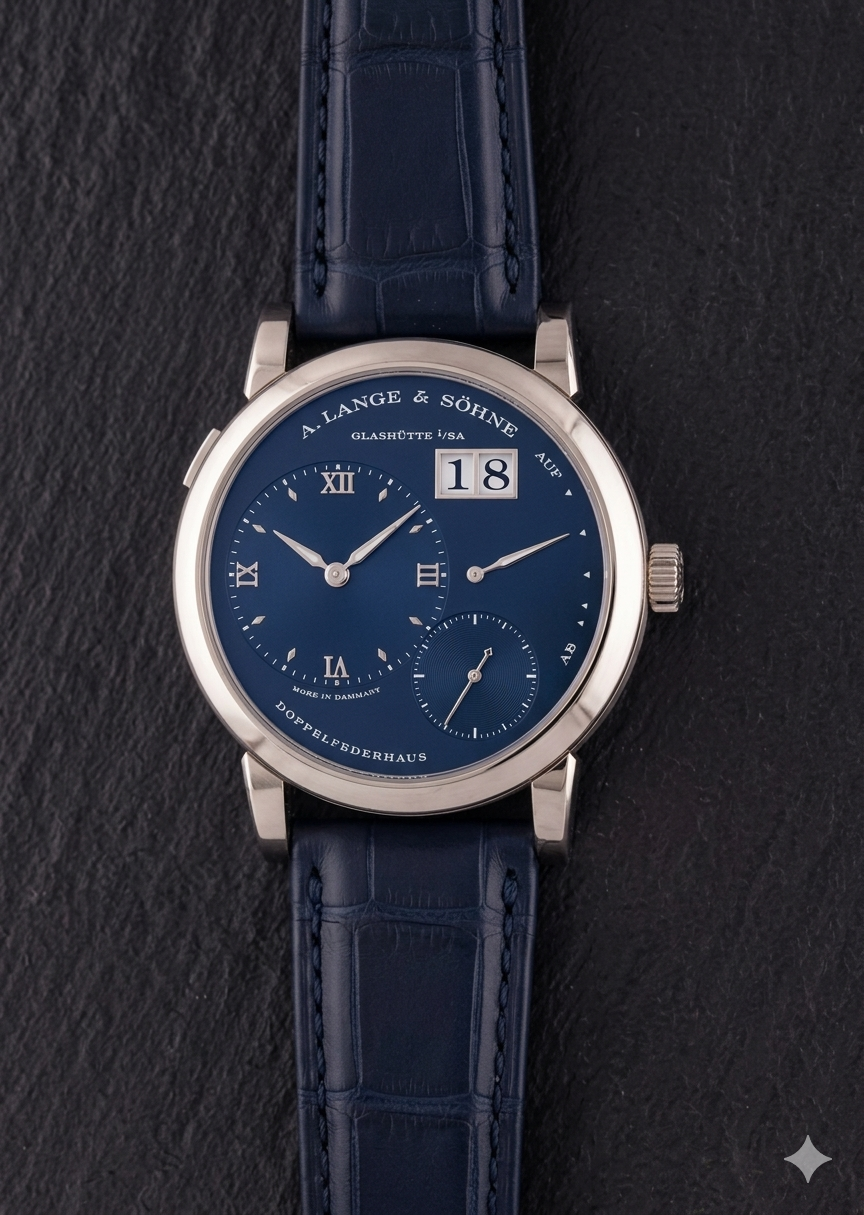
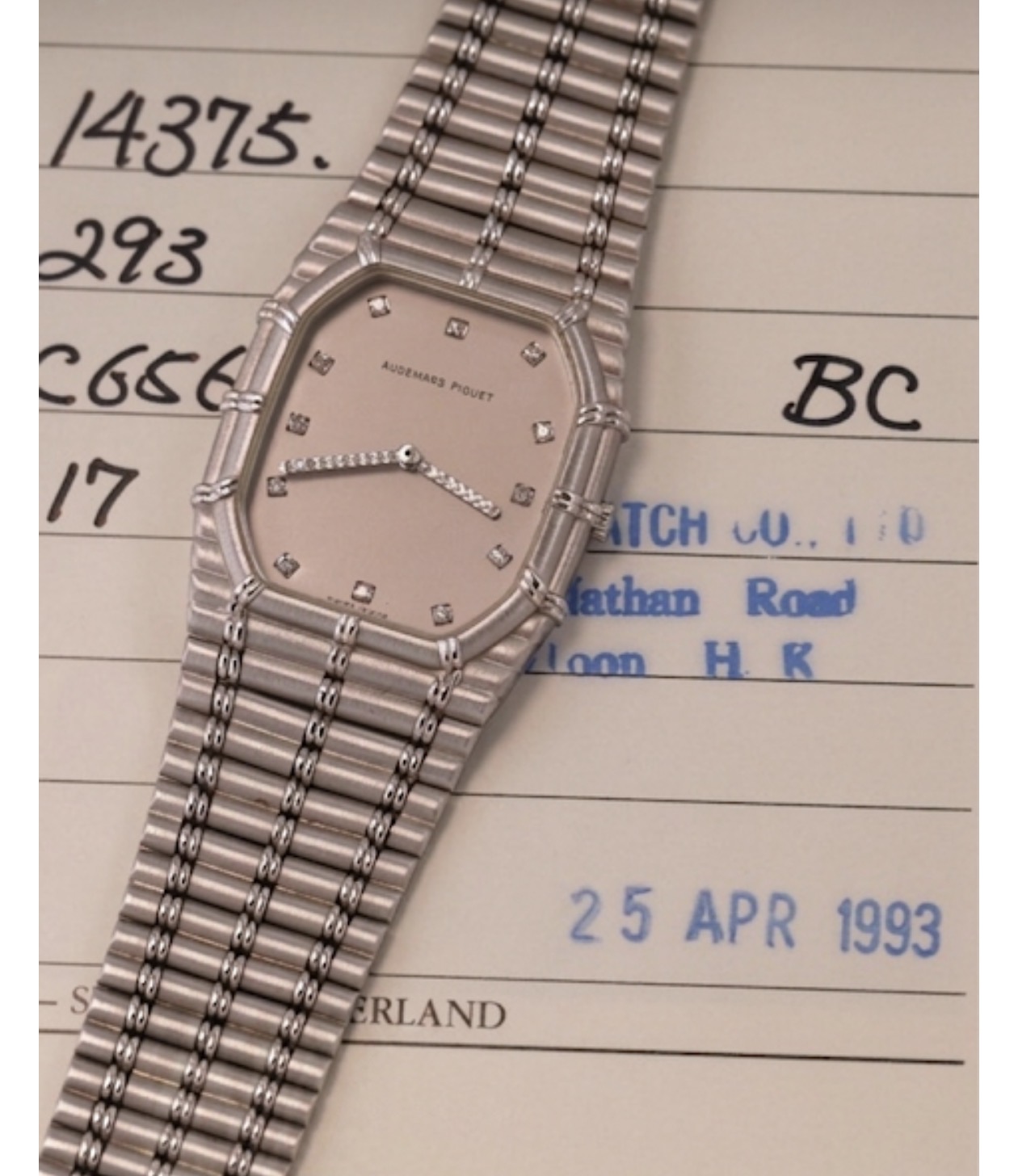
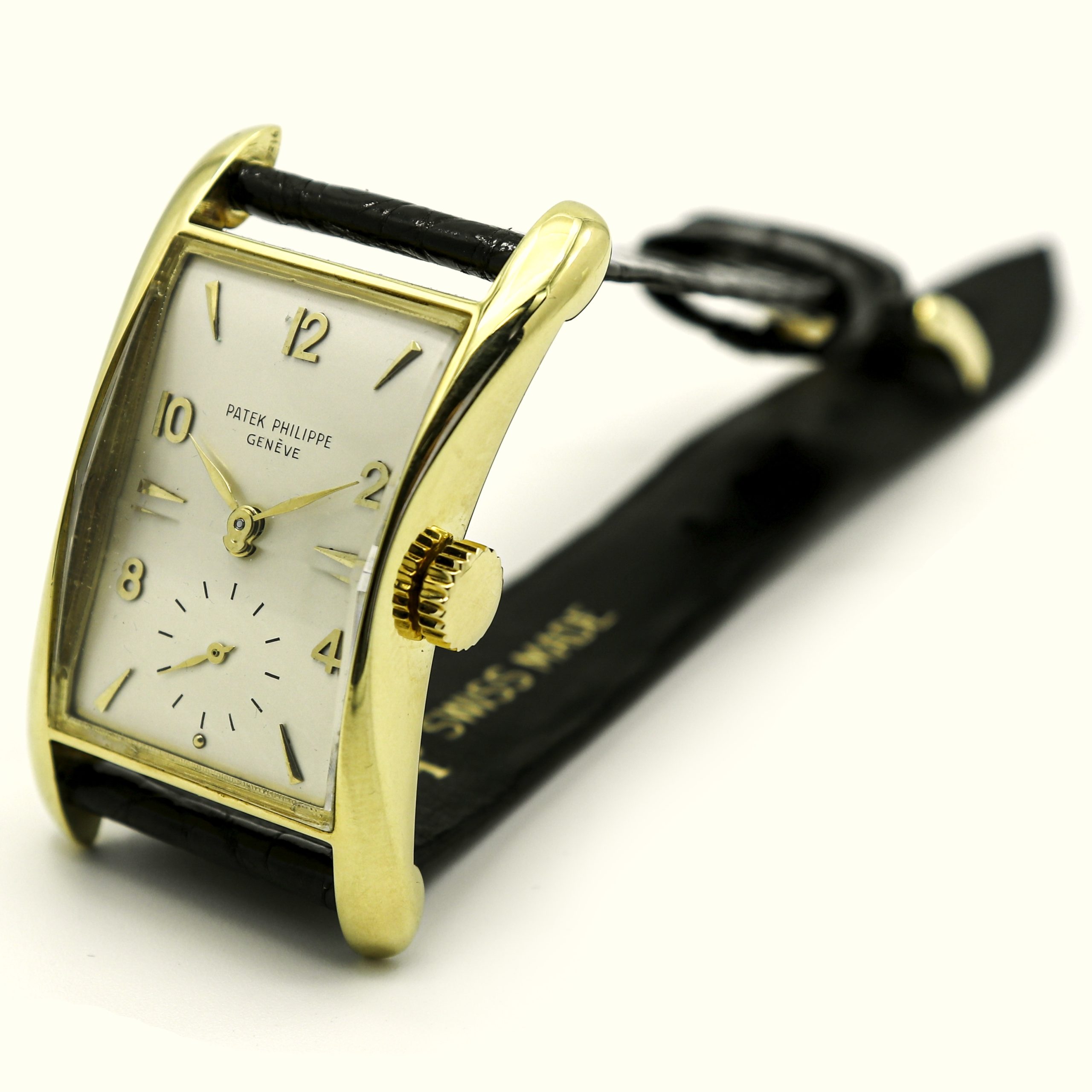 1930s: The Great Depression and Functionality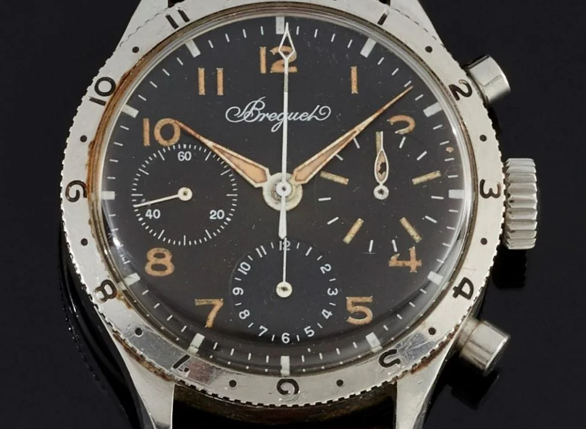
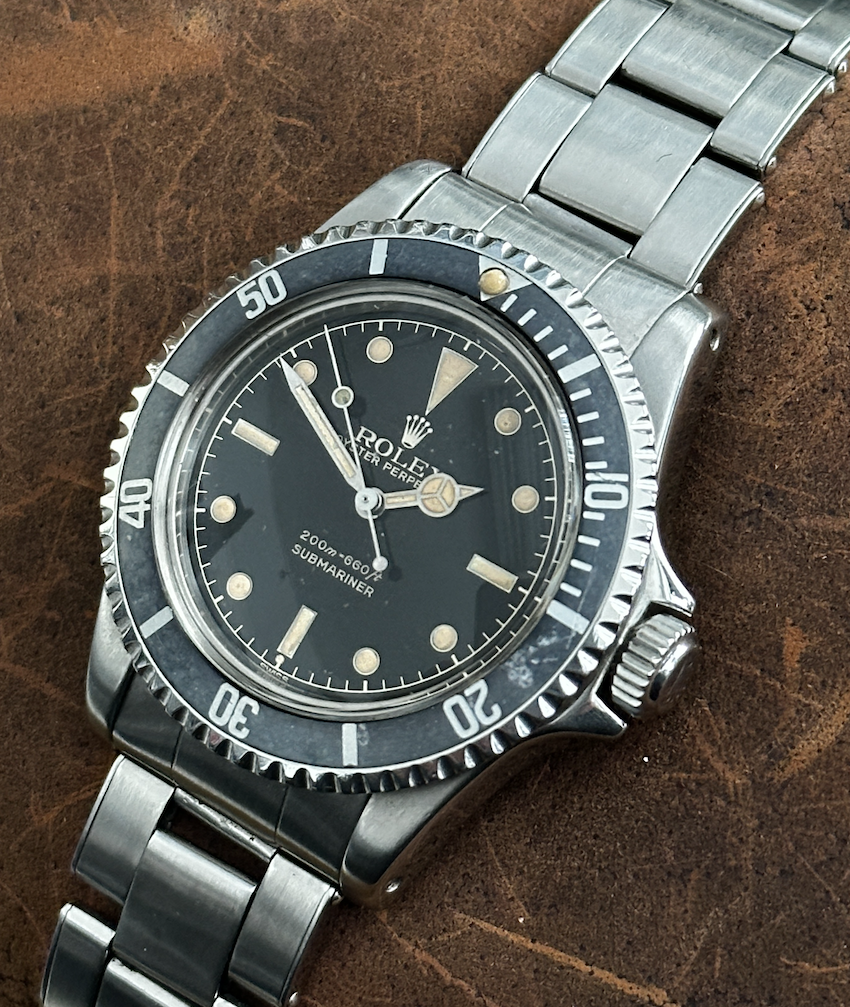 1950s: The Golden Age of Sports Watchmaking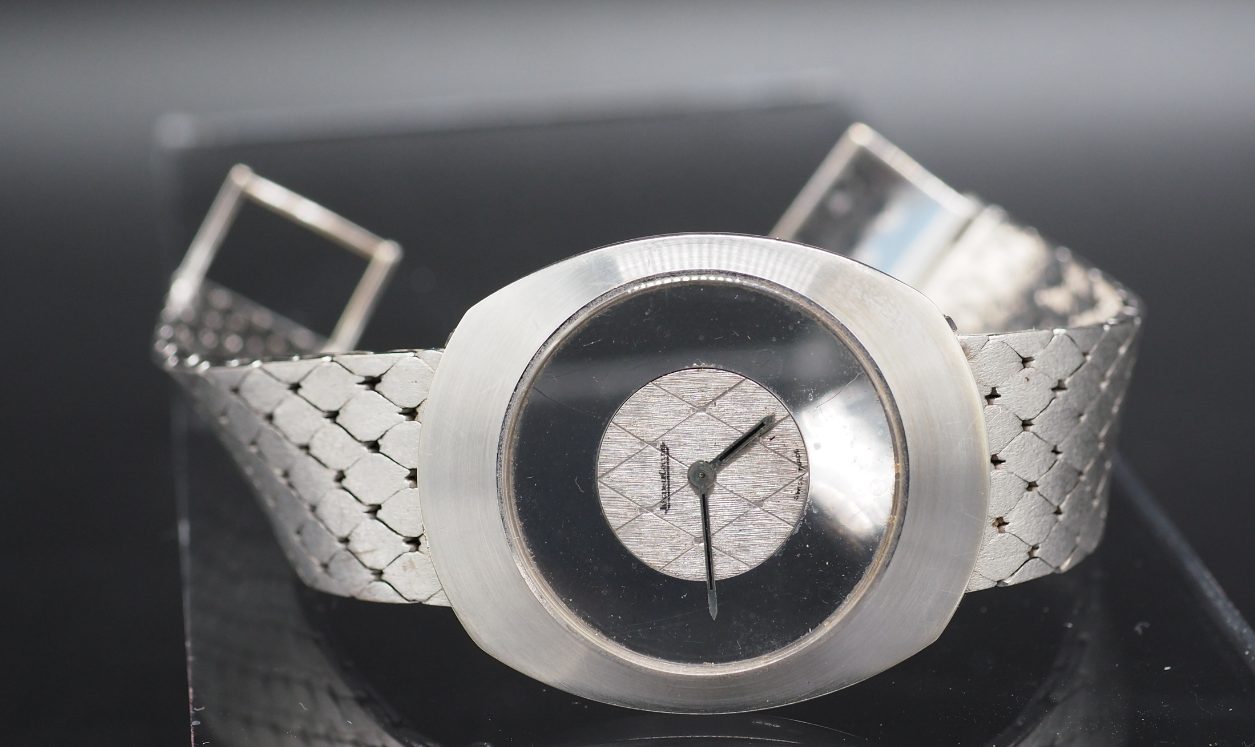
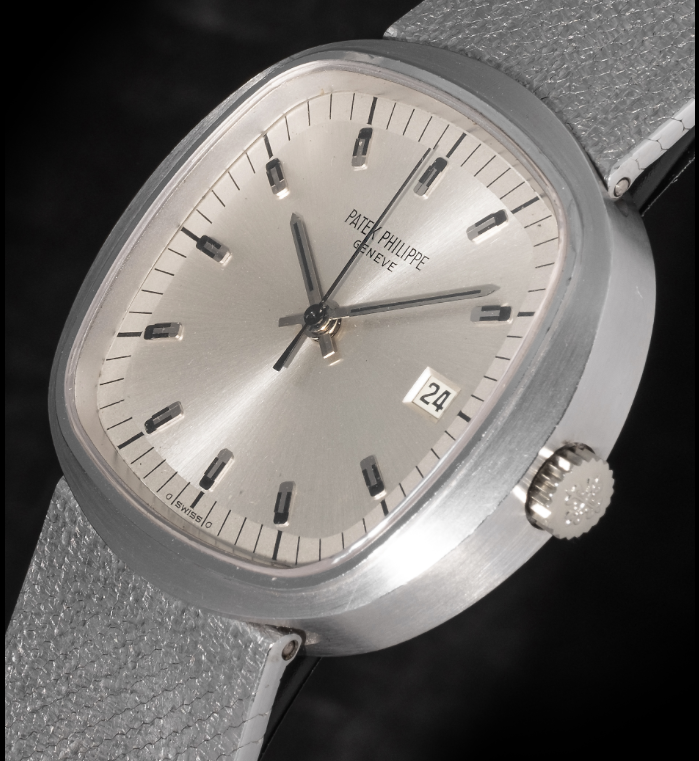 1970s: The Quartz Crisis and the Explosion of Design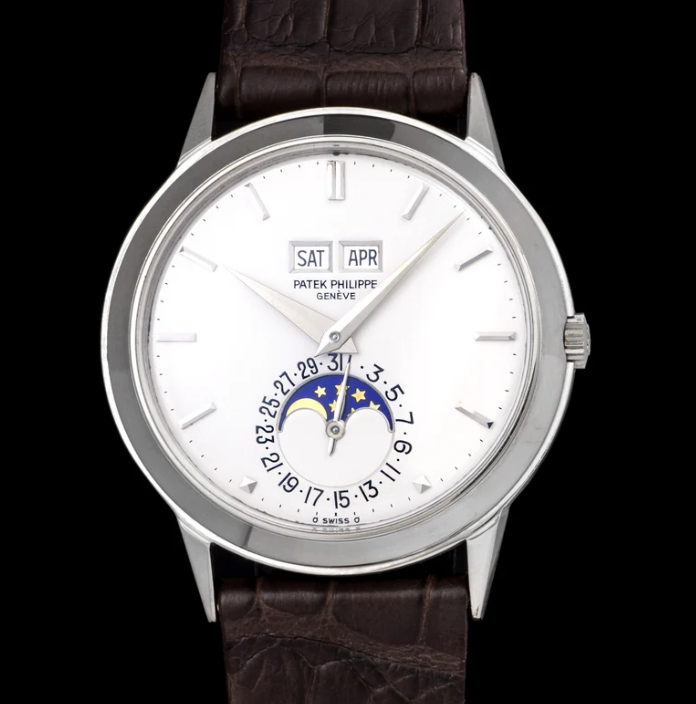
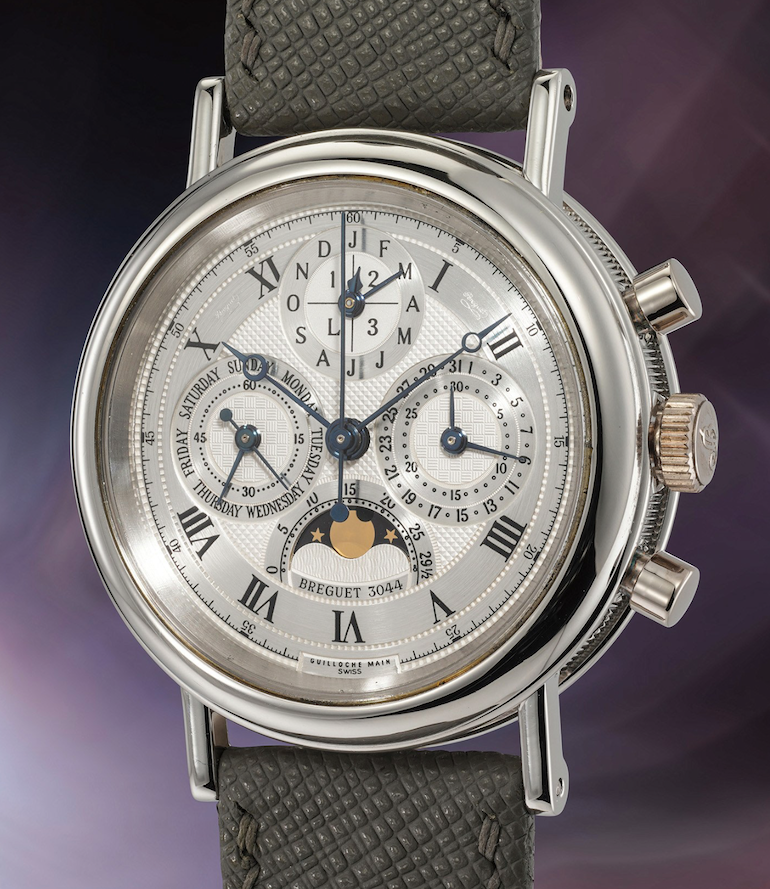 1990s: Complication and Transparency