

Author: Luca Musumeci
Patek Philippe ref. 3970 – The Most Undervalued Perpetual Chronograph
 Overshadowed Giant
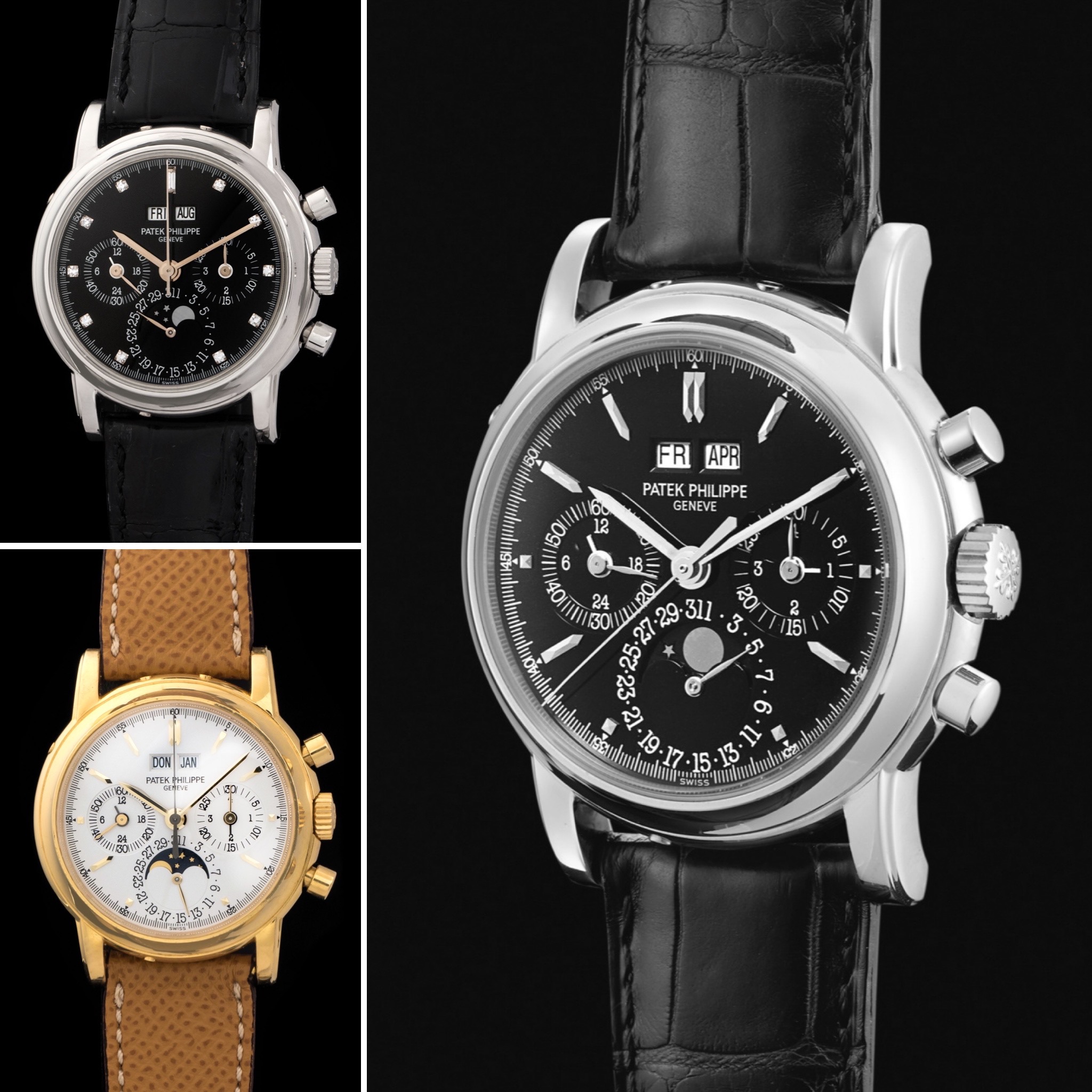
There is real opportunity with the Patek Philippe 3970, people are not really aware of that fact. It has long been agreed that the 3970 is perhaps the world’s most undervalued perpetual chronograph. Explanation? No one really knows. The balance of the watch is absolutely incredible, at 36mm it wears like a charm and the way it looks is just beautiful. Very much a classical Patek Philippe. Here is a thought: The 3970 is the child of the ref. 2499 and the father of the ref. 5970.
Production
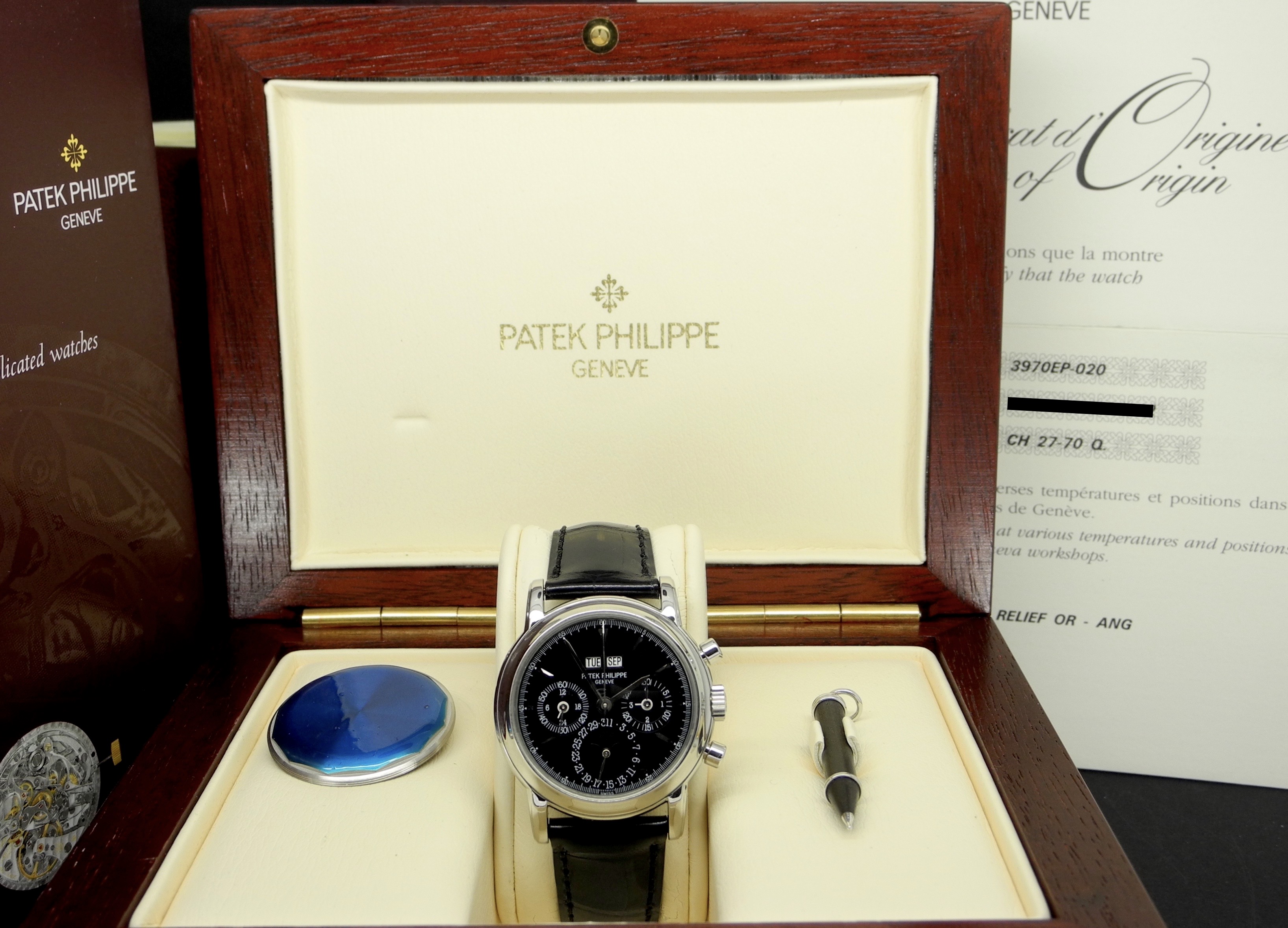
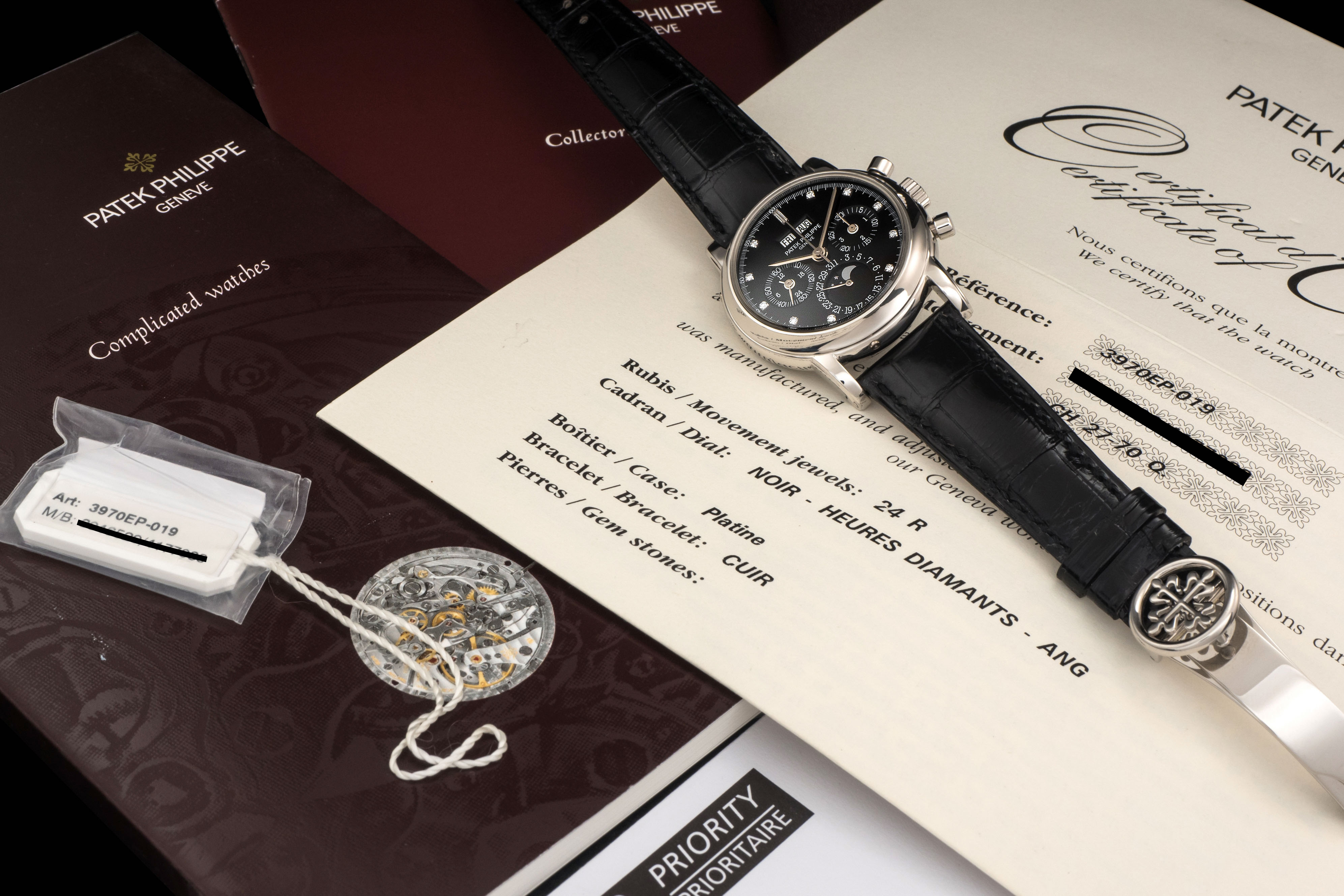
Patek Philippe first released the ref. 3970 in 1986, at the tail end of the ref. 2499 and continued its manufacture for 18 years until capping production in 2004. The reference was available in 4 metals (yellow gold, rose gold, white gold, and platinum) – steel version/s are not documented, but if we have learned anything from Patek these past years we might be in for a surprise.
Caliber
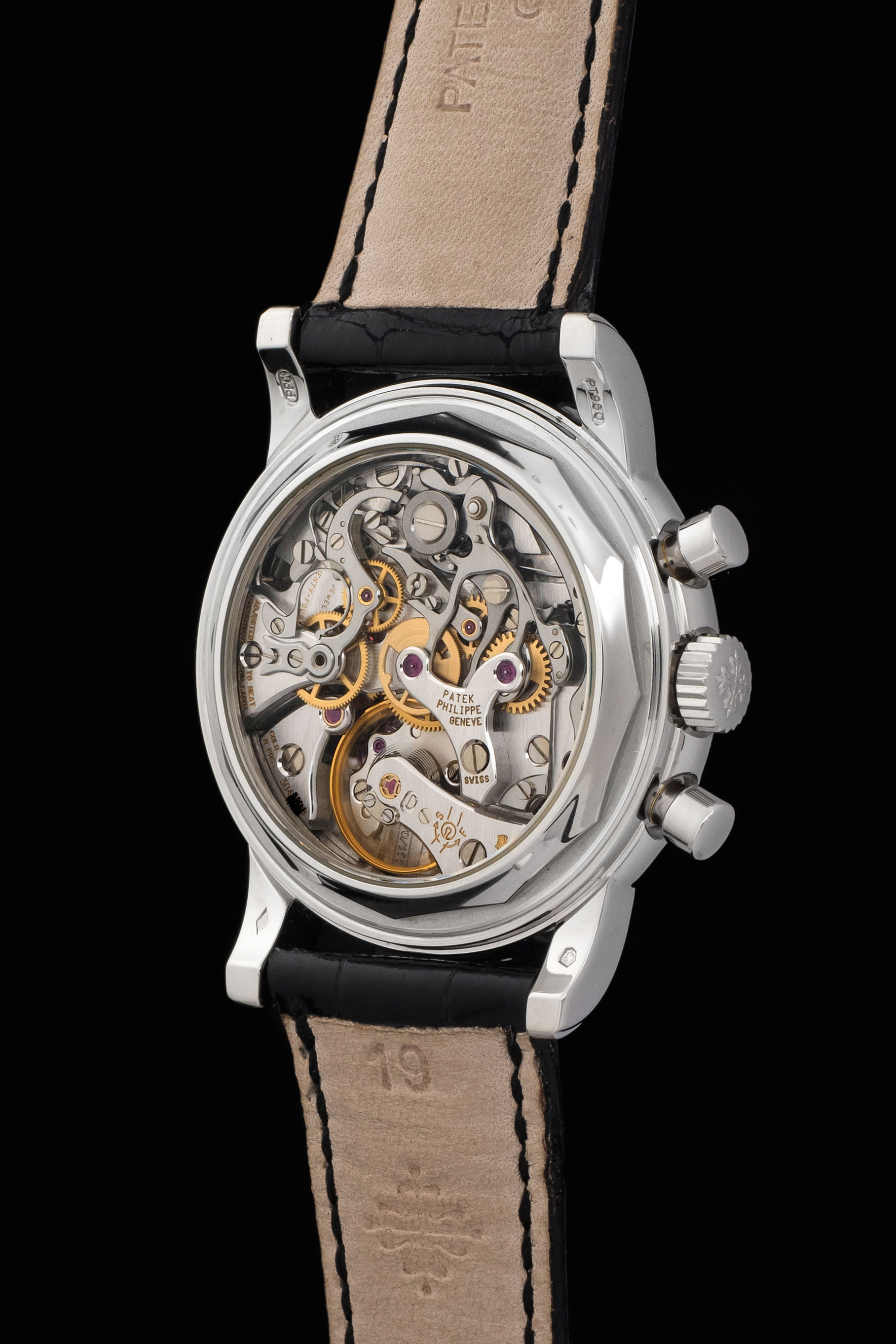
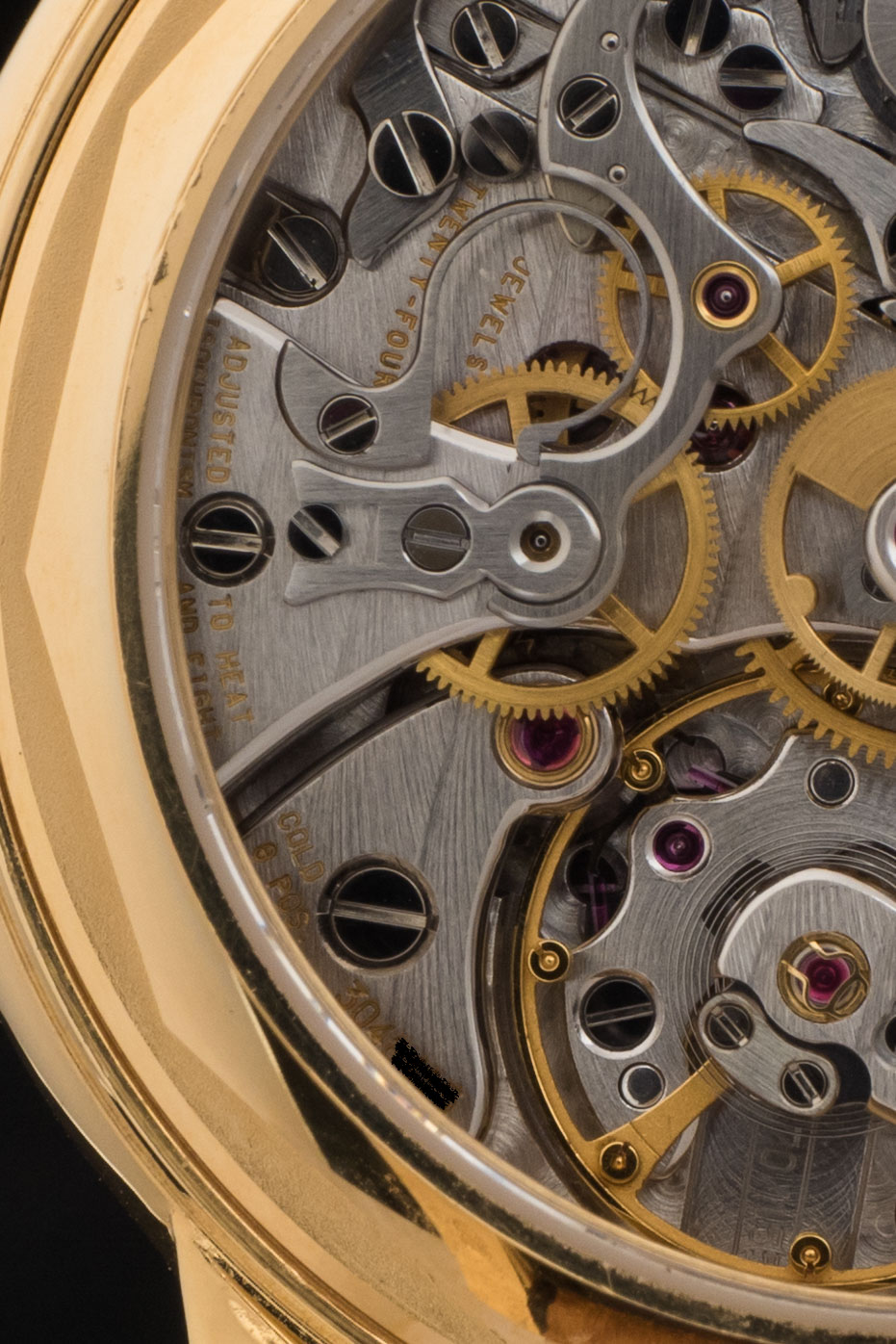
The caliber inside the ref. 3970 was a first for Patek as they chose a reworked Lemania 2310 movement. The laureled caliber quickly ascended in the ranks to become one of the most important movements ever made. The cal. 2310 is built on the foundations of the cal. 321, the very movement used on the original Omega Speedmaster. Of course true to Patek fashion a lot of re-finishing was done to later carry the designation CH 27-70Q.
Wearability
The 3970 is a perpetual chronograph that fits perfectly as an everyday watch, it is that good. Its movement is as reliable as they come, while its design is executed to look classic yet sporty. Also, on second and third series 3970’s the case back comes in sapphire, exposing the movement inside.
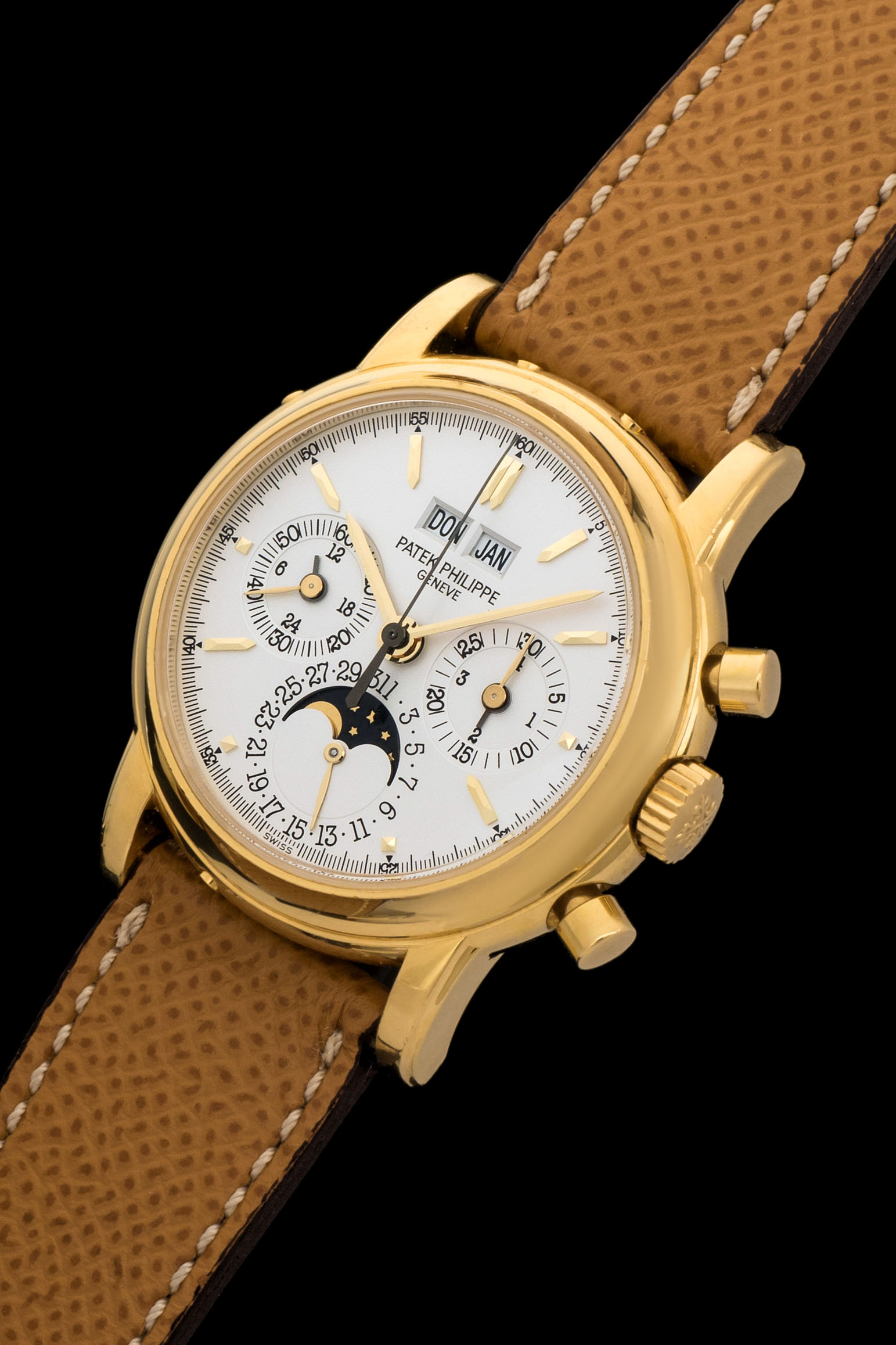
Patek Philippe 3970 in 18K Yellow Gold
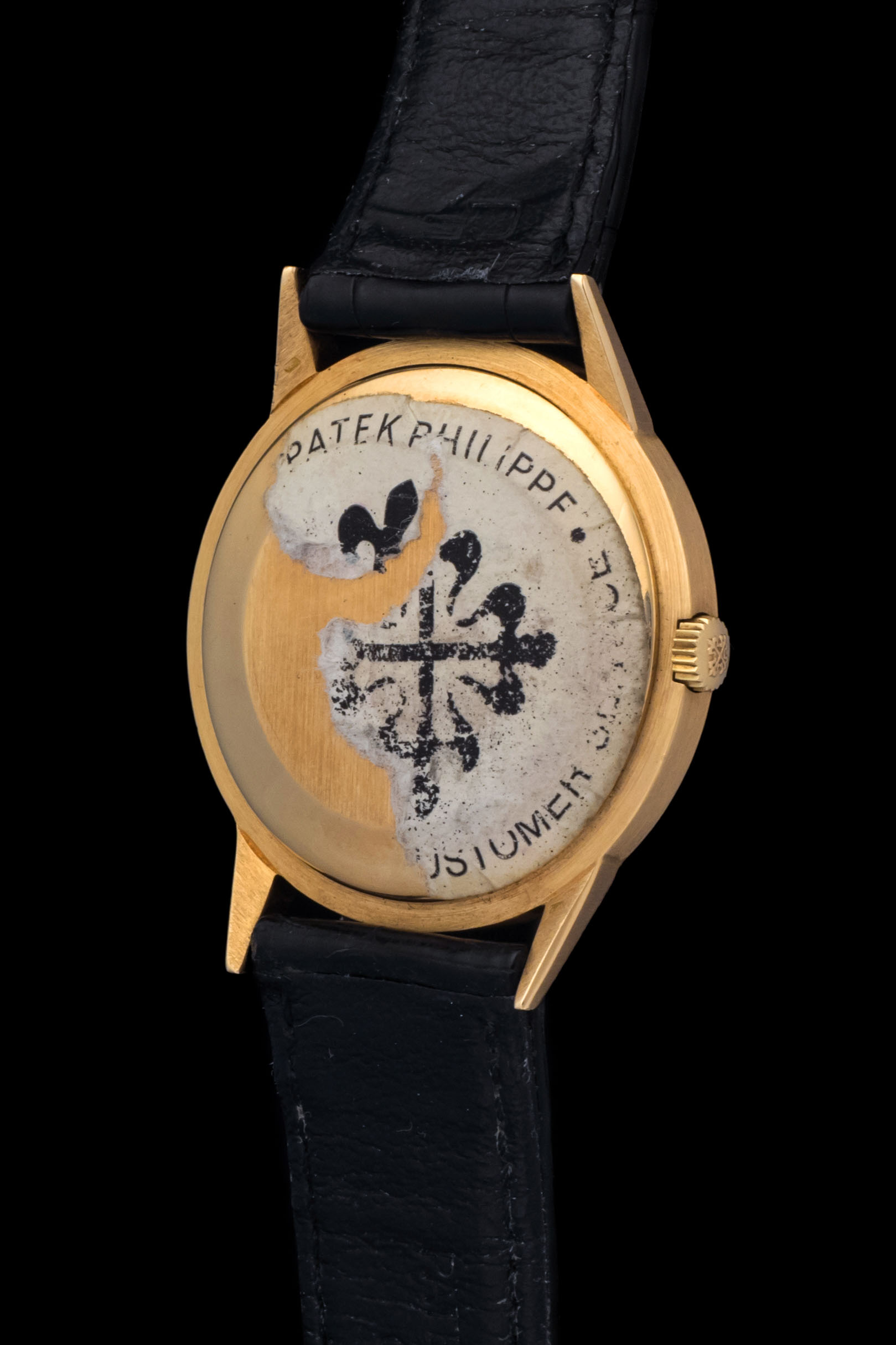
Pictured is an example cased in yellow gold. The condition of the watch is mint plus and it comes accompanied by an official extract. A yellow gold watch can be worn on a daily basis, the pleasure it will bring you will be forever lasting. This particular 3970 was manufactured in 2002 and belongs to the third and final series. The sapphire back exposes the beautifully finished manual movement.
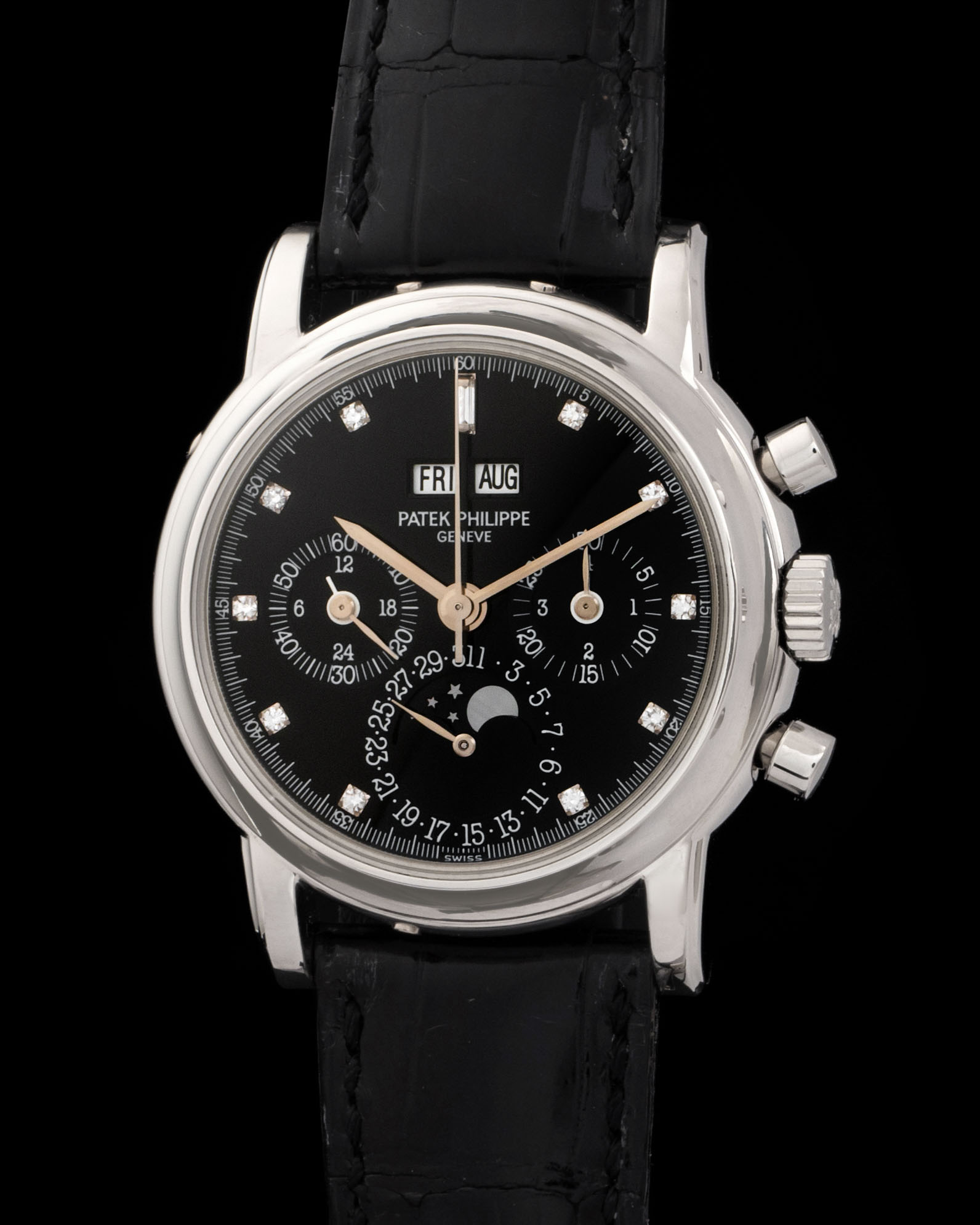
Patek Philippe 3970 in Platinum with Black Dial (with & without Diamonds)
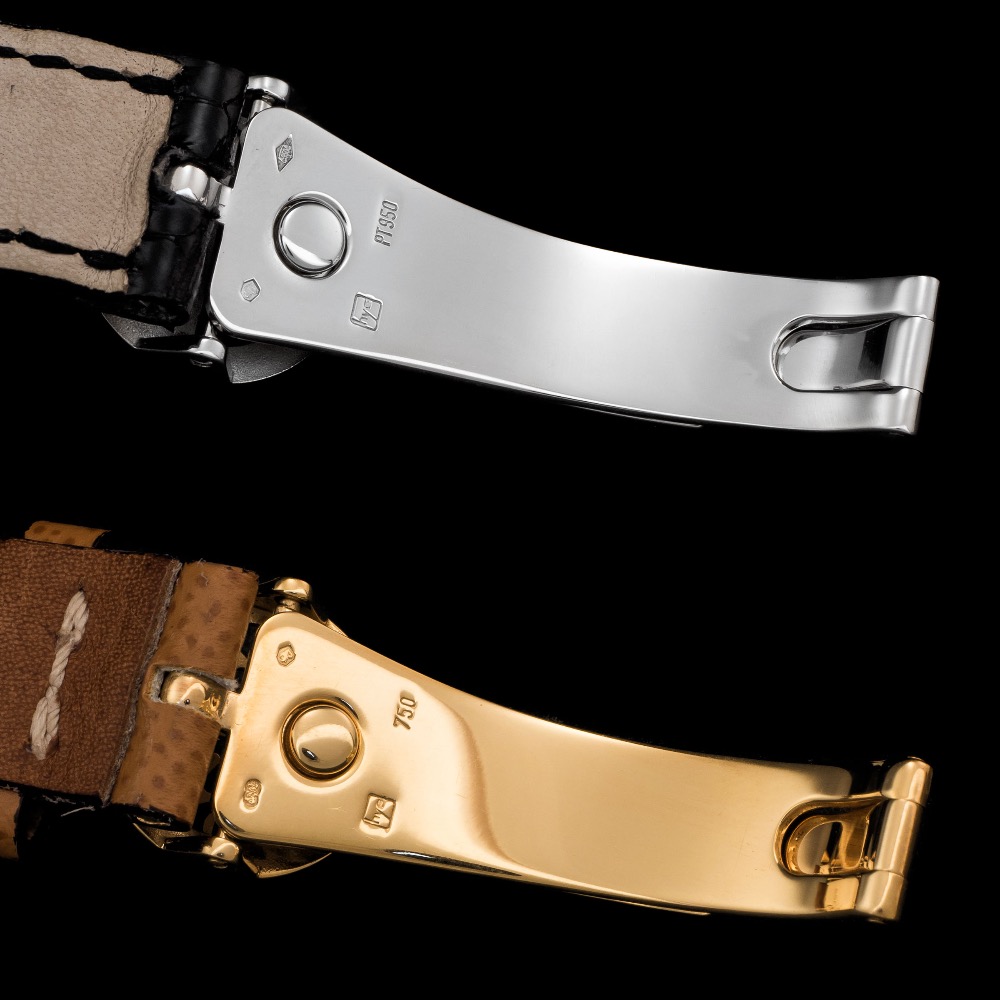
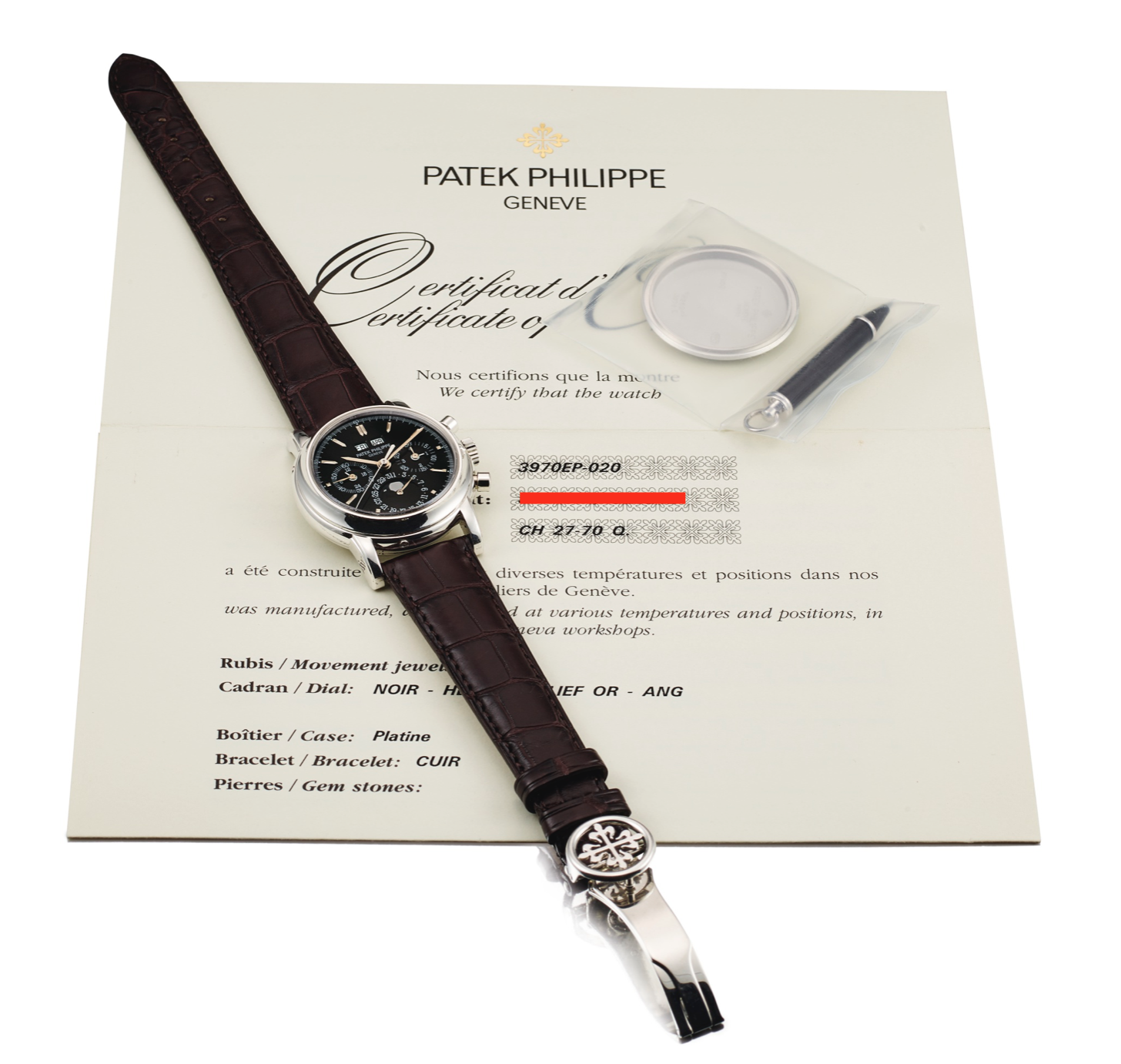
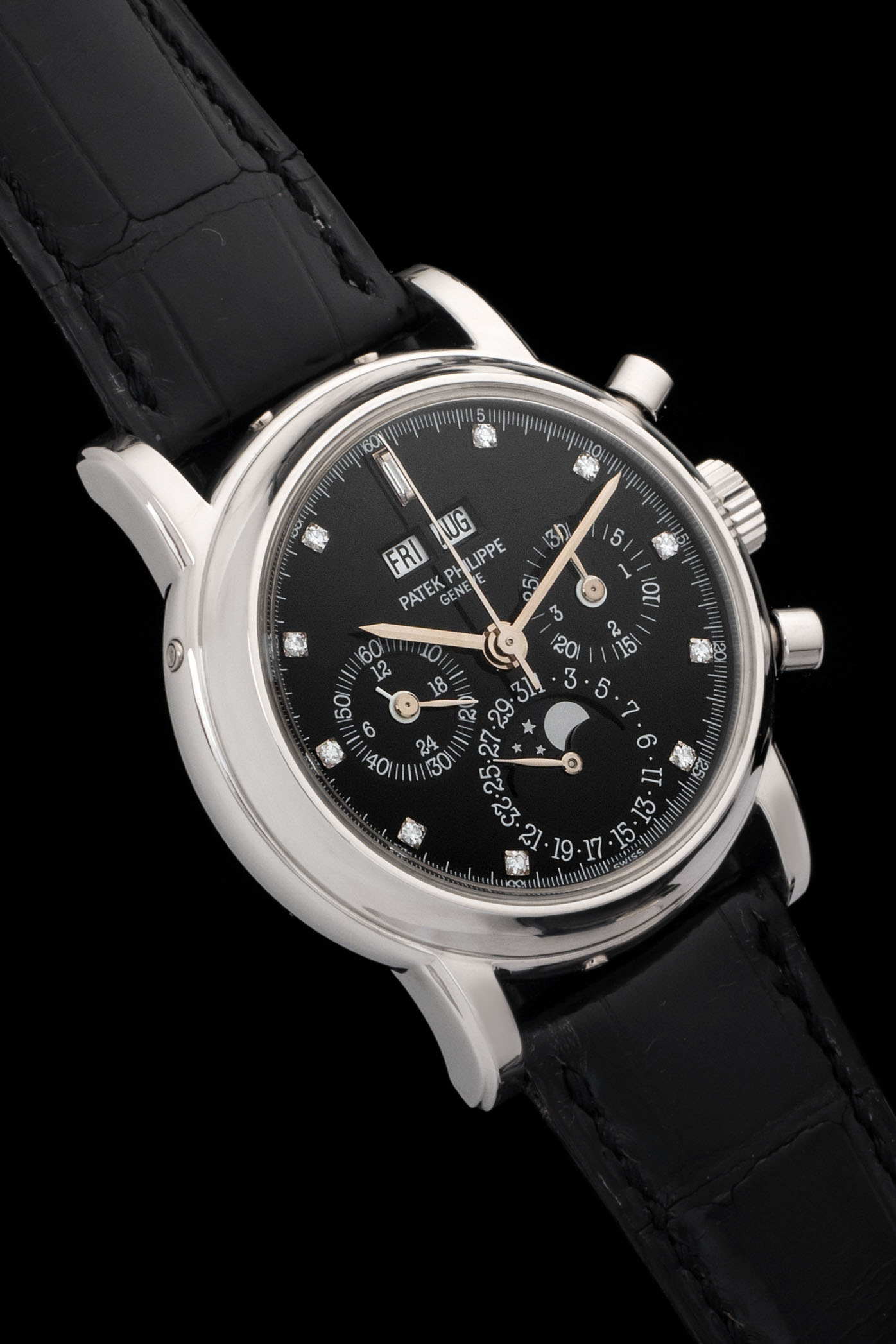
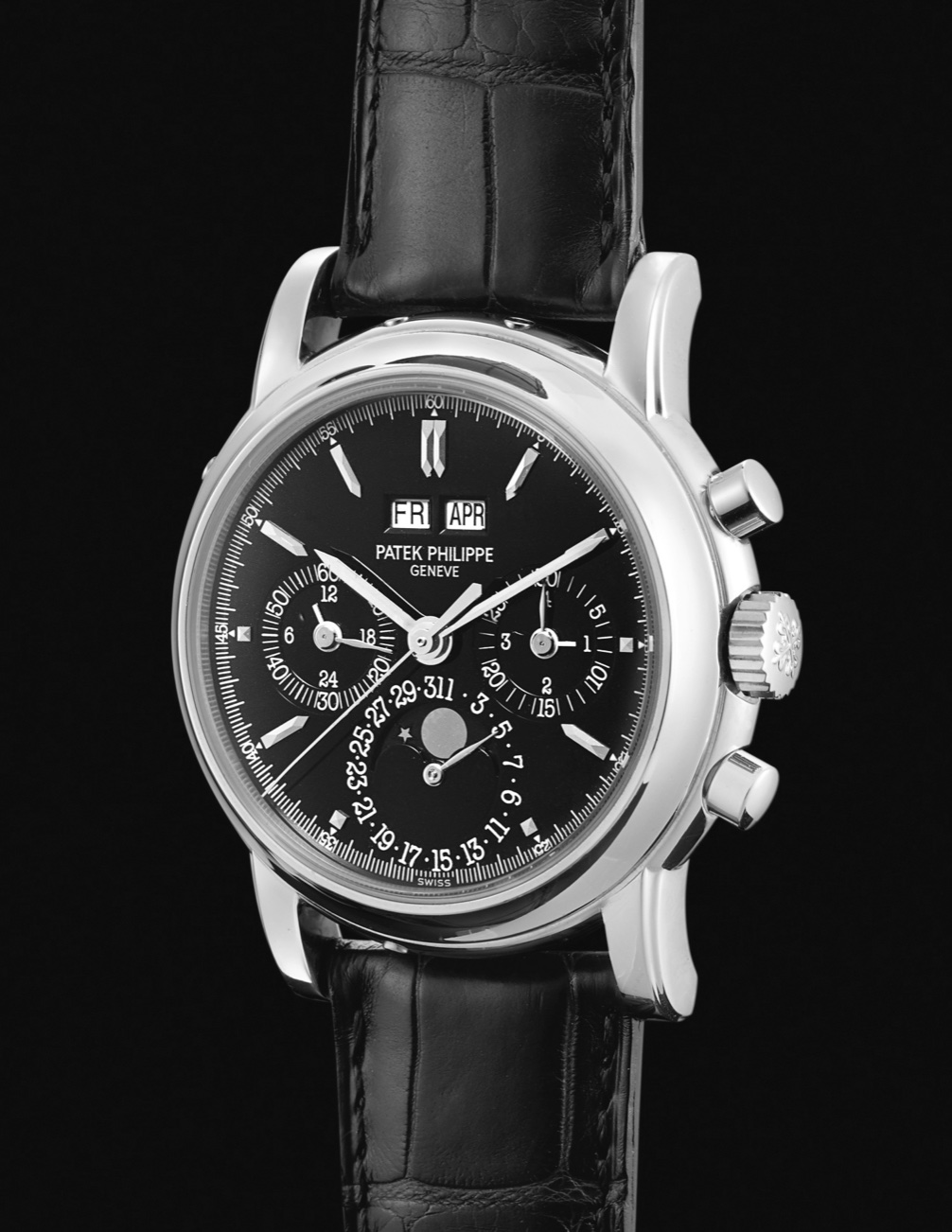
Platinum is regarded as a white metal and when it comes to Patek Philippe there is a premium attached to it. This particular ref. 3970 comes accompanied by its original paperwork, box, and solid case back. A true full set. Two important features come together with this platinum version. A diamond index dial and a platinum case and buckle deployant. The dial is remarkable to look at while the platinum’s heft is unmatched by the other metals. A much rarer version of the 3970 in platinum is the one that is fitted with a black dial but without diamonds. These were made in exceedingly low quantities
Collectability
At the current moment the Patek Philippe 3970 is the only perpetual chronograph that offers the most bang for the buck. No other complicated world-class Patek can be found at these price ranges. The ref. 3970 is a truly under appreciated watch but based on recent auctions we might start to see them performing the way they should. The vintage and important watch market is unpredictable and we believe now is the time to buy a 3970. The current prices are at their lowest point, but indicators show that will not be the case for much longer.
Patek Philippe Ref.3448 – “Padellone”
Patek Philippe “Flying Saucer” or “Padellone”
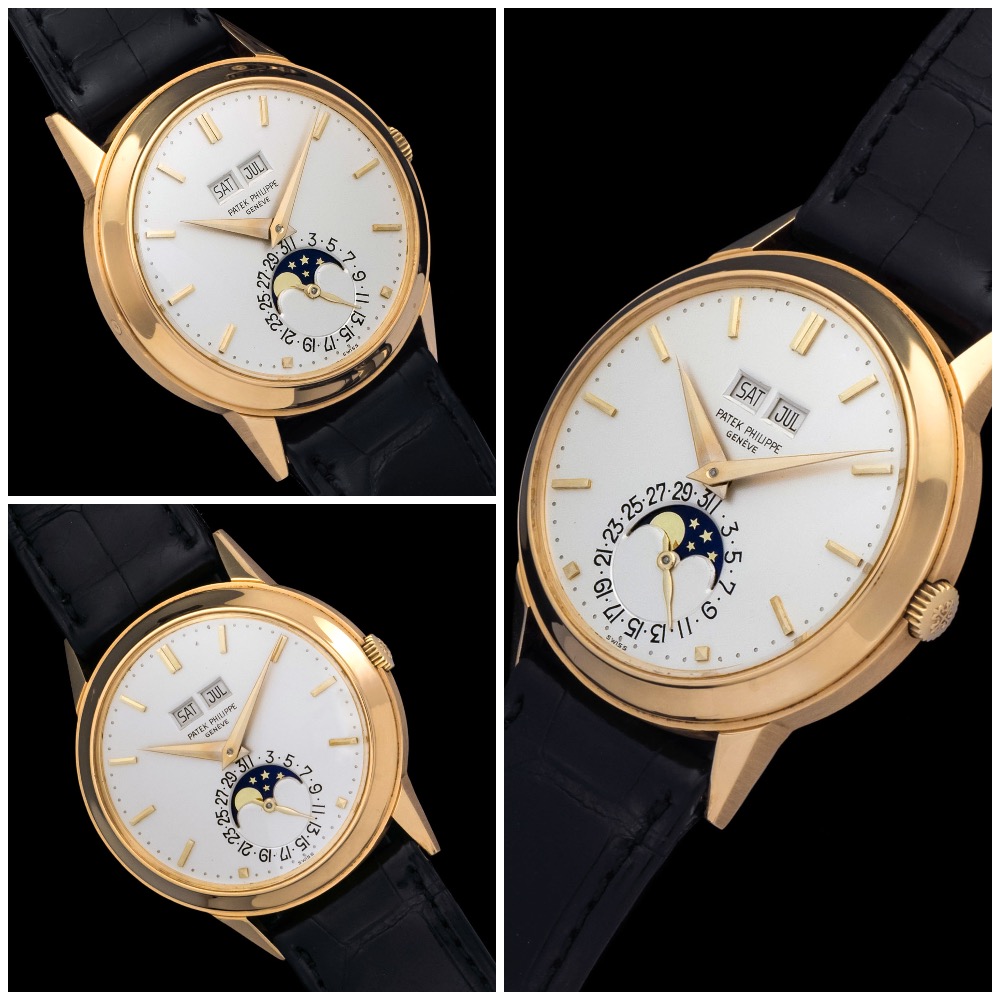
The Patek Philippe ref.3448 is one of the most beautifully designed watches in existence. Records indicate 580 examples were made between 1962 and 1981 (Our 3448 hails from 1971.)
Design
When the watch was released in 1962 critics described it as an elegant yet futuristic watch because it strayed away from what was a normal Patek. The ref.3448 is known by collectors as the “Padellone” and the “Disco Volante”, or “Flying Saucer” in English.
Perpetual Movement
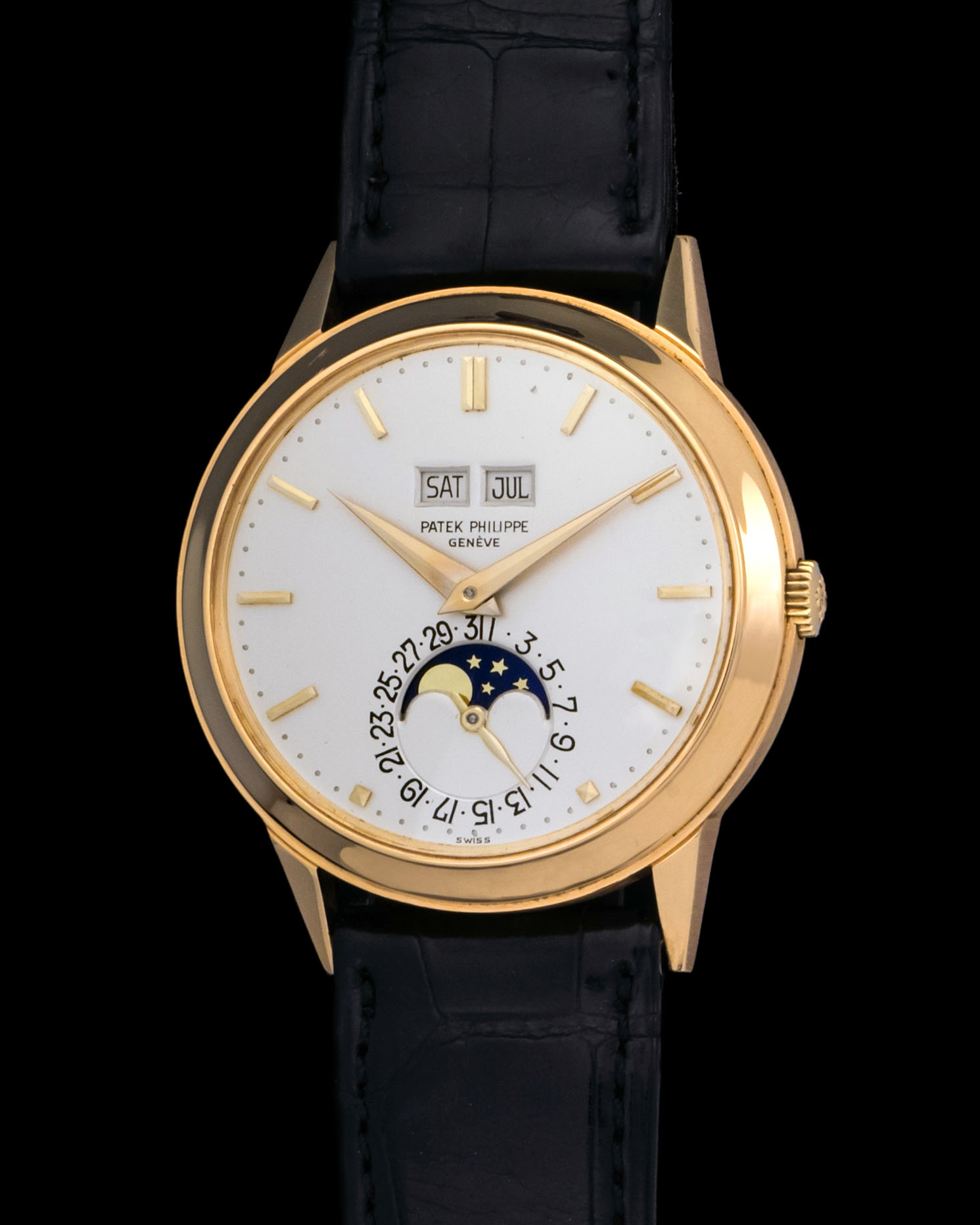
A beautifully striking feature about this watch is its integrated crown to the case. The movement inside the watch is also very significant as it was Patek’s first automatic movement capable of carrying a perpetual calendar. The movement in question is the 27-460 Q (Q is the designation given to Perpetual Calendars).
Rolex Submariner, Lapis and Onyx Dials
The Rolex Practice
The genius behind Rolex is that even though they manufacture droves of watches per year they don’t half ass at anything. They put the same amount of love and care into the Datejust as they do into the Daytona Platinum Pave Diamond Dial. The best part about it is the manufacture has been true to its practice ever since it was a small brand headquartered in the United Kingdom.
Hard-Stone Dials
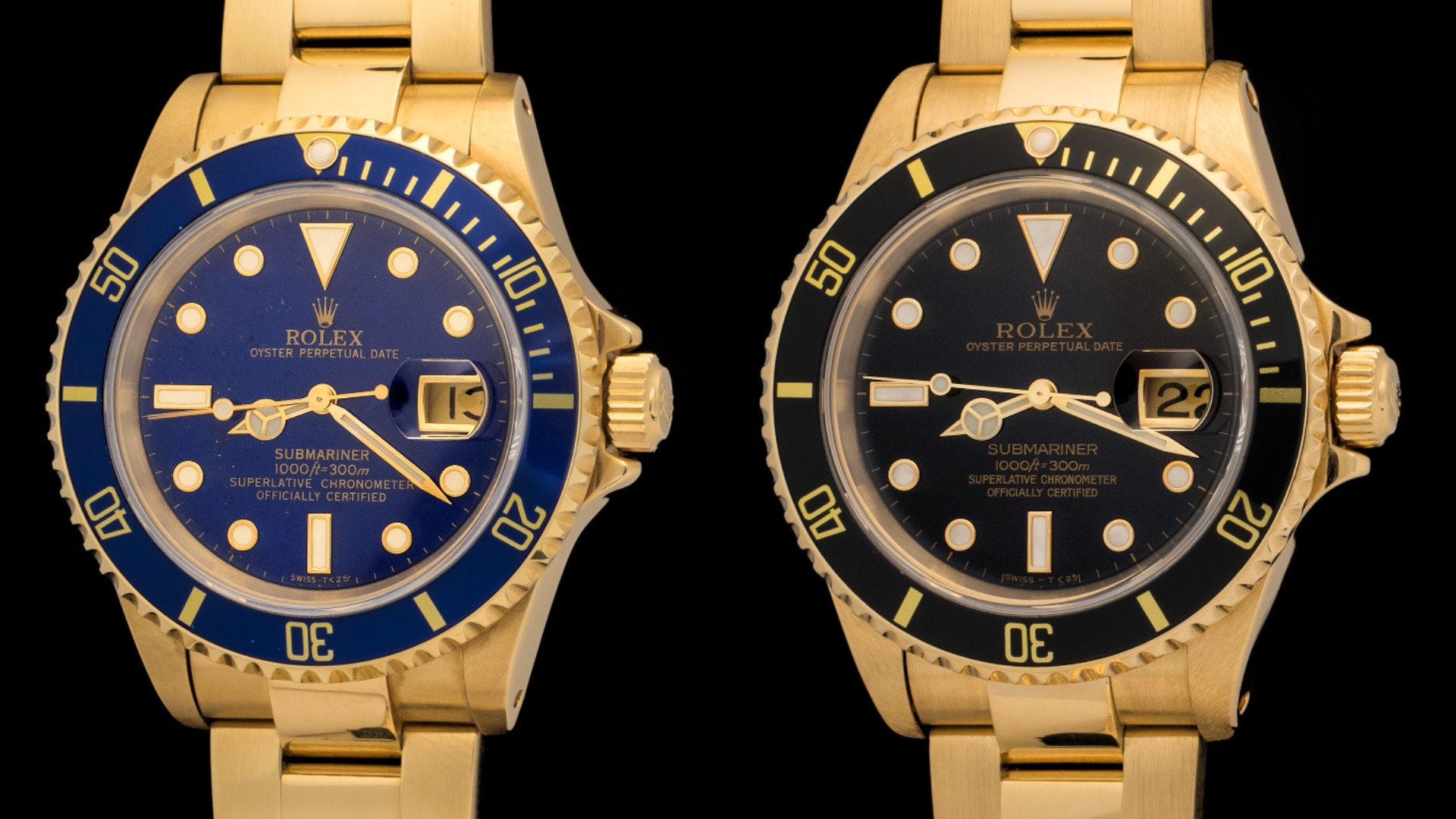
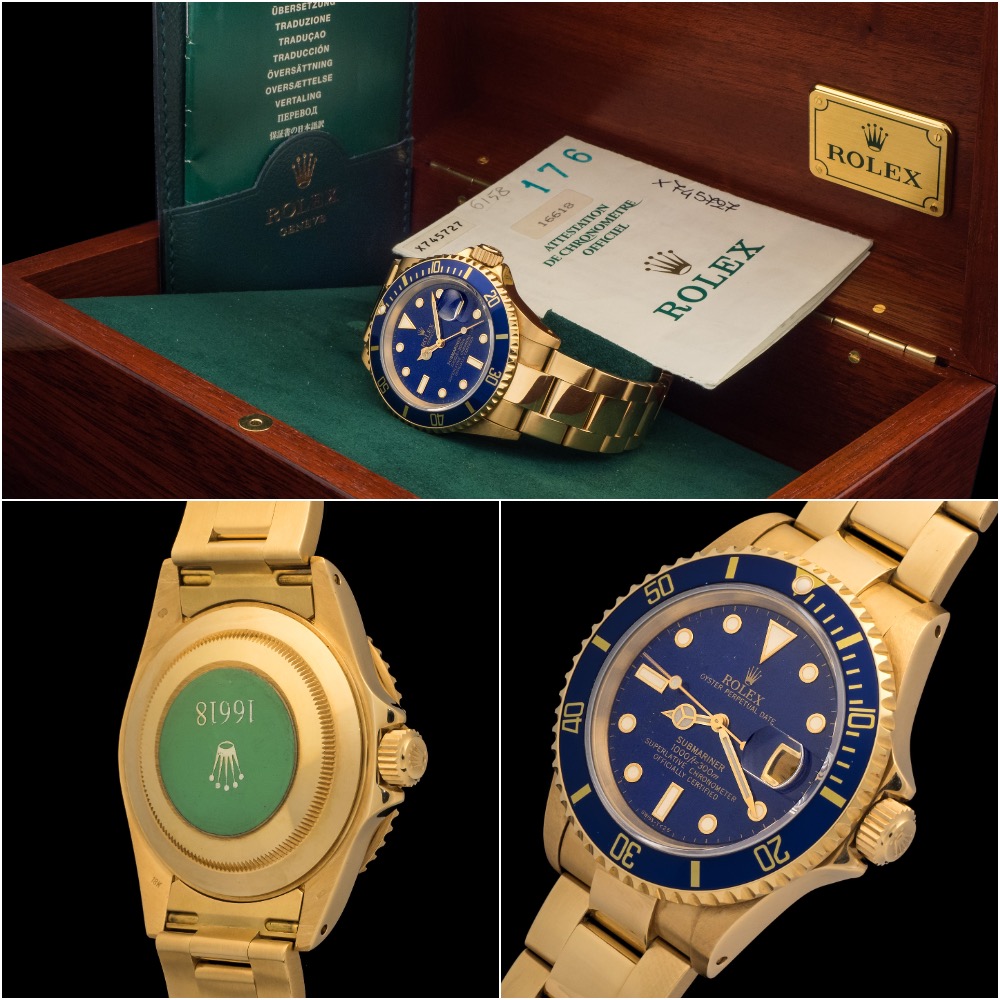
Rolex is known for its founding role in the tool watch department with the introduction of the first Submariners and GMT’s, but their role in the sporty-elegance department is also worthy of much attention. Here we’ll cover two watches that are as unique as they are wearable. The Onyx Dial Submariner Ref.16618 and the Lapis Dial Submariner Ref.16618.
90’s Innovation
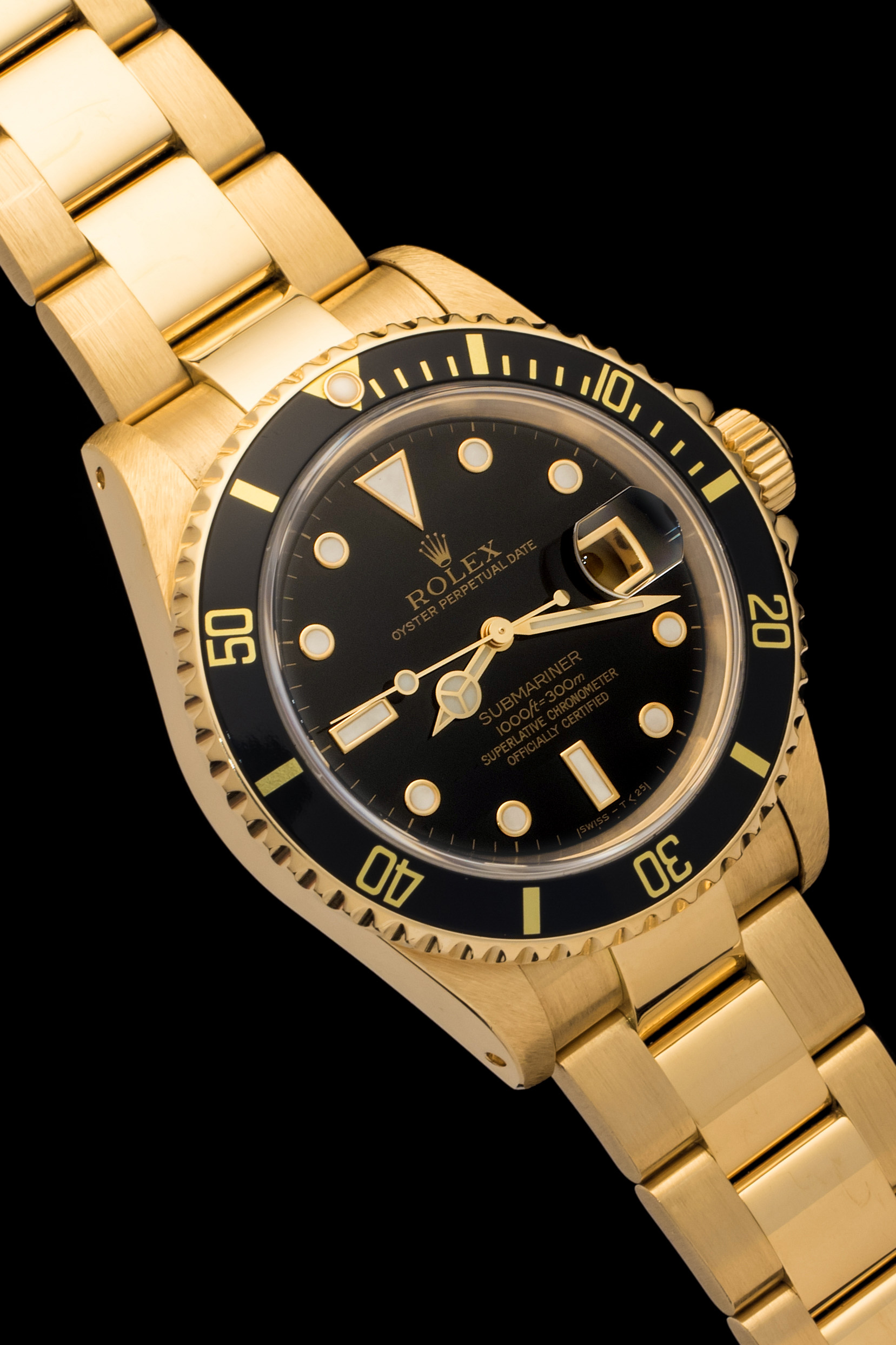
The 90’s were an inventive era for Rolex as they began to merge various types of hard-stones with dial production. Take the 1997 Rolex Submariner 16618 Onyx dial as an example. Rolex watchmakers delved into the process of trimming a 1-kilogram the rock into a 0.20mm piece to later be mounted onto the copper dial plate.
Rolex Submariner Onyx Dial
This process of manufacture was so complicated that it’s estimated that out of 10 dials only 2 made it past the rigorous Rolex inspection phase. The rejection ratio was unfathomable but the dials that made it through made it all worth it. Since Onyx rocks cannot be man made no two dials will ever be the same, which is astonishing for a company like Rolex.
Identifying an original Rolex Onyx dial is simple as they all have a small golden frame surrounding the date function. Do not trust a dial that does not have this detail.
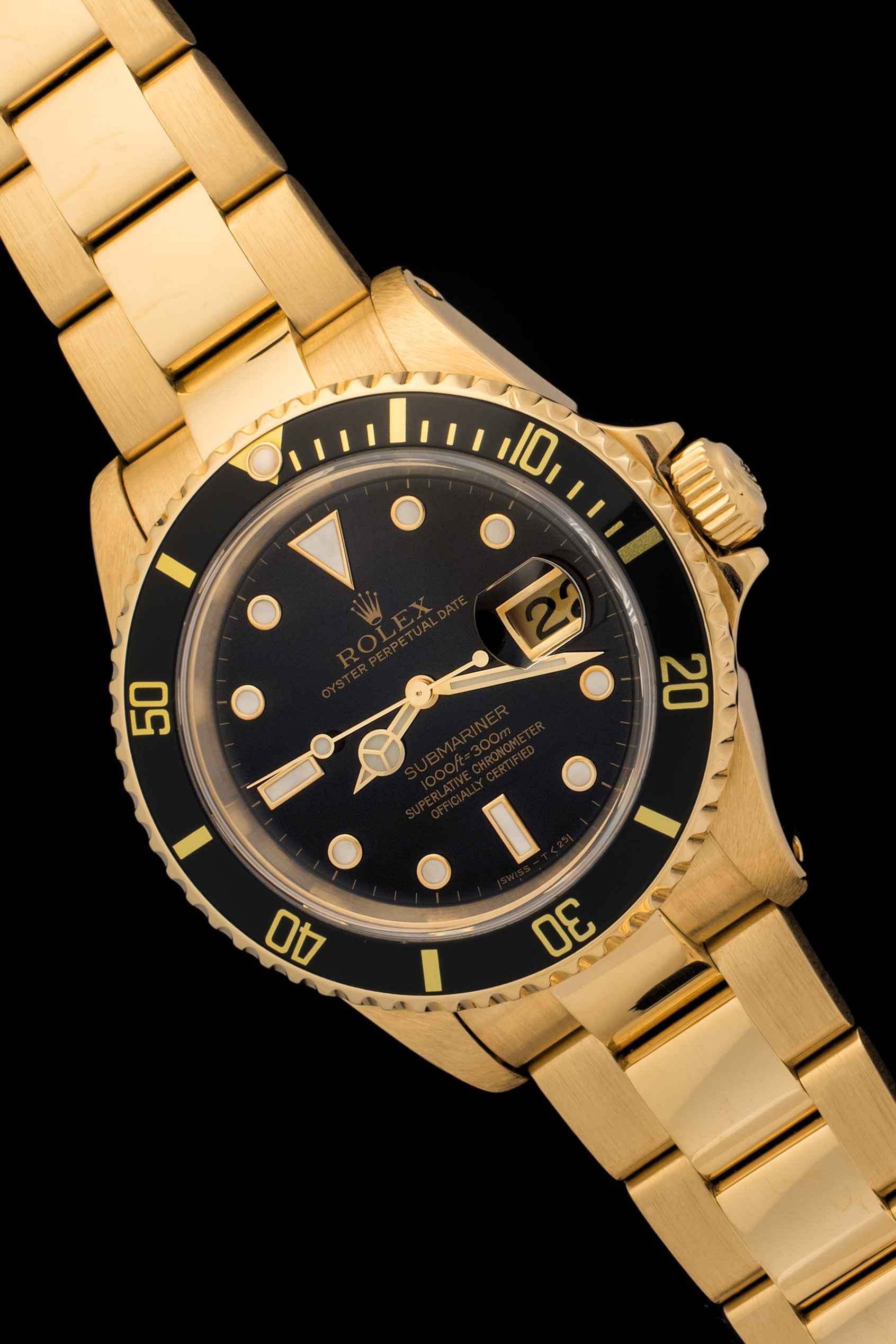
Rolex Submariner Lapis Lazuli Dial
The Rolex Submariner with Lapis dial is another work of art, and it’s without a doubt Rolex’s most elusive dial as its production was incredibly sporadic. The manufacturing process of this dial is the same as that of the Onyx dial. A large portion of the stone is needed to then trim it down to a small circular 0.20mm piece.
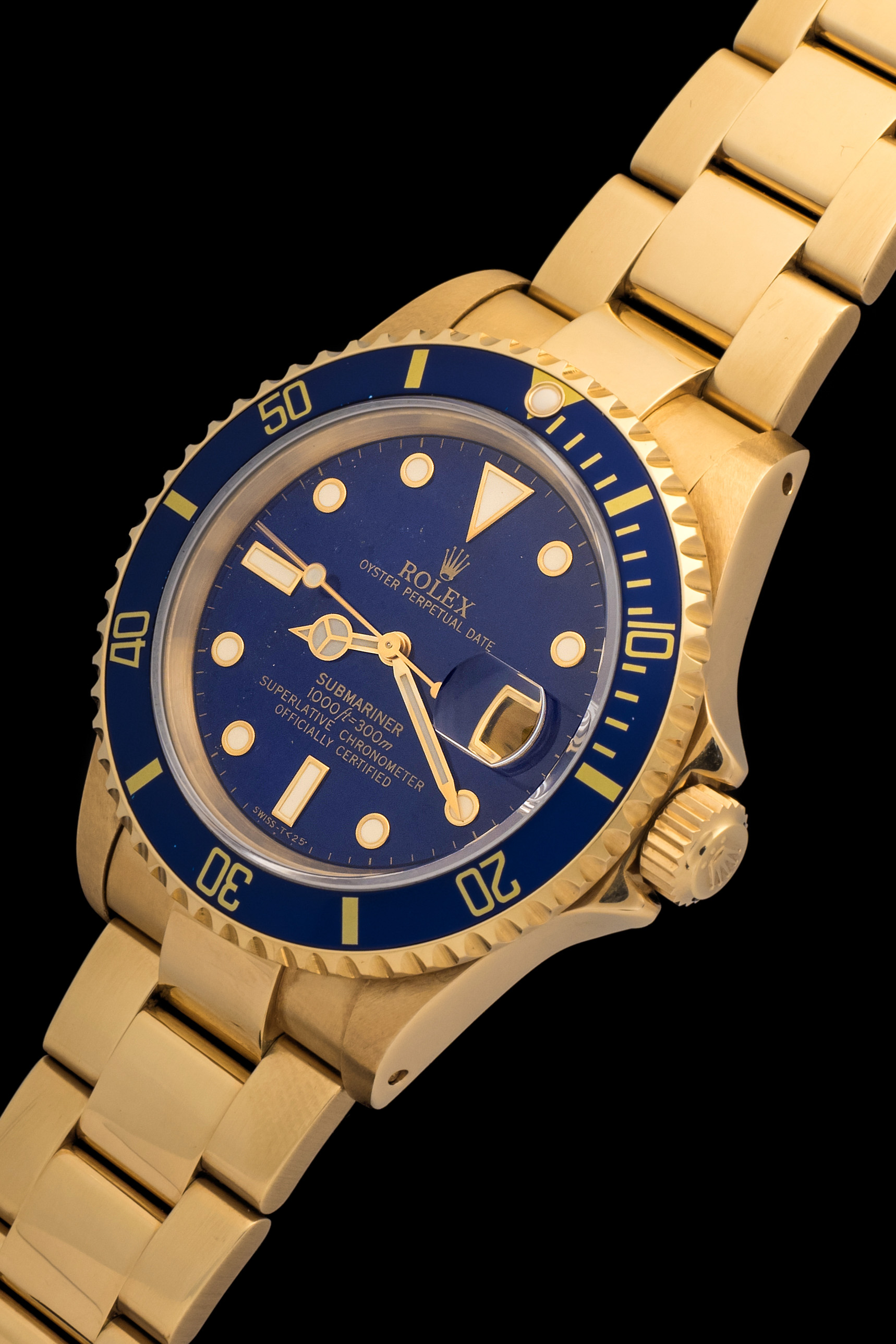
Rarest Dial Variation
The Lapis stone is entirely blue but it also has specks of green, white, and gold when seen in the light. The look of the dial on a gold Submariner leaves us without words. These are watches that are hardly found and we are not exaggerating. In our 32 years of experience we have only seen a handful pop up.
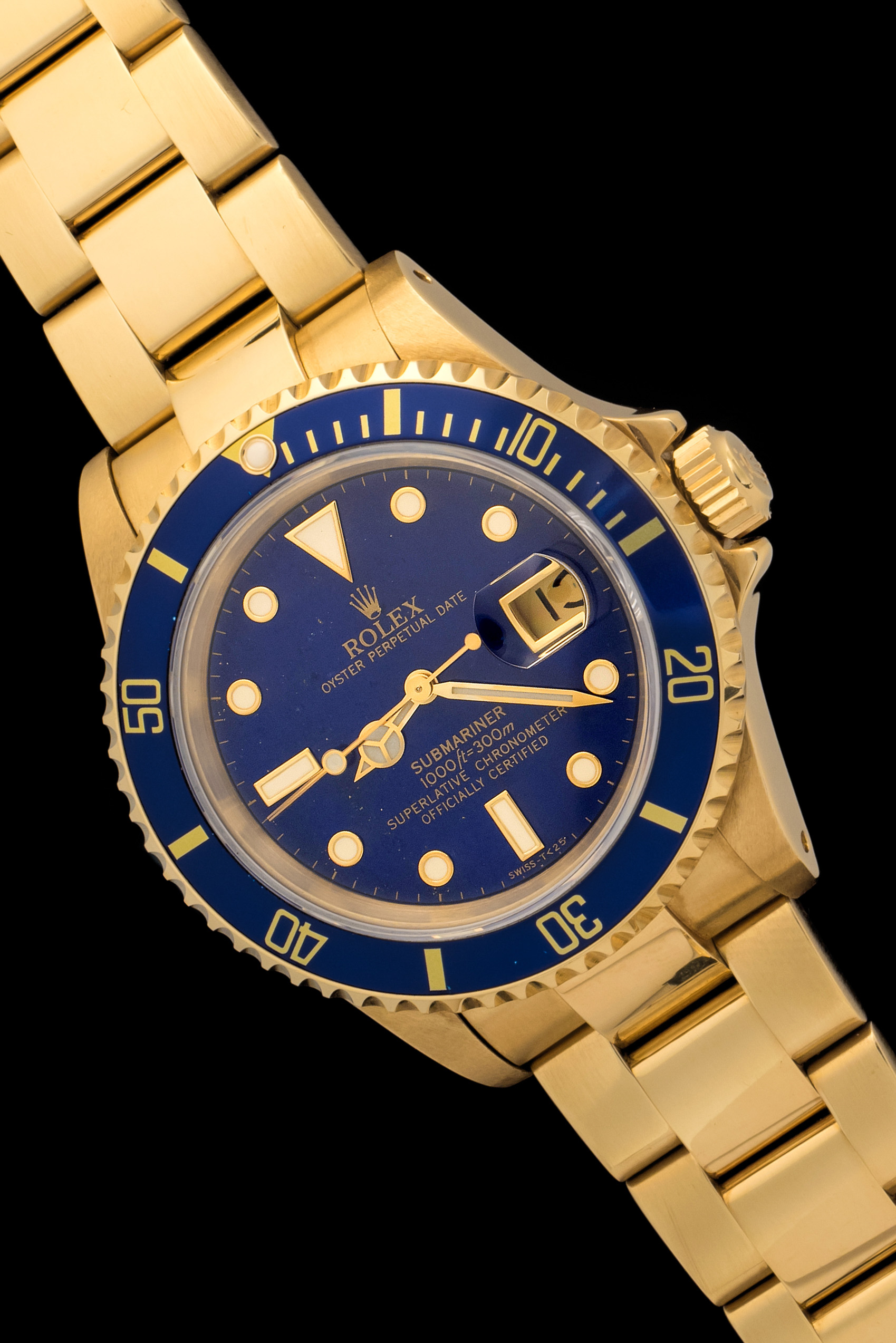
Lapis Lazuli & Onyx Dials
Our 16618 is a magnificent example as it’s in new old stock conditions and is accompanied by its original papers and box, a true collection item.
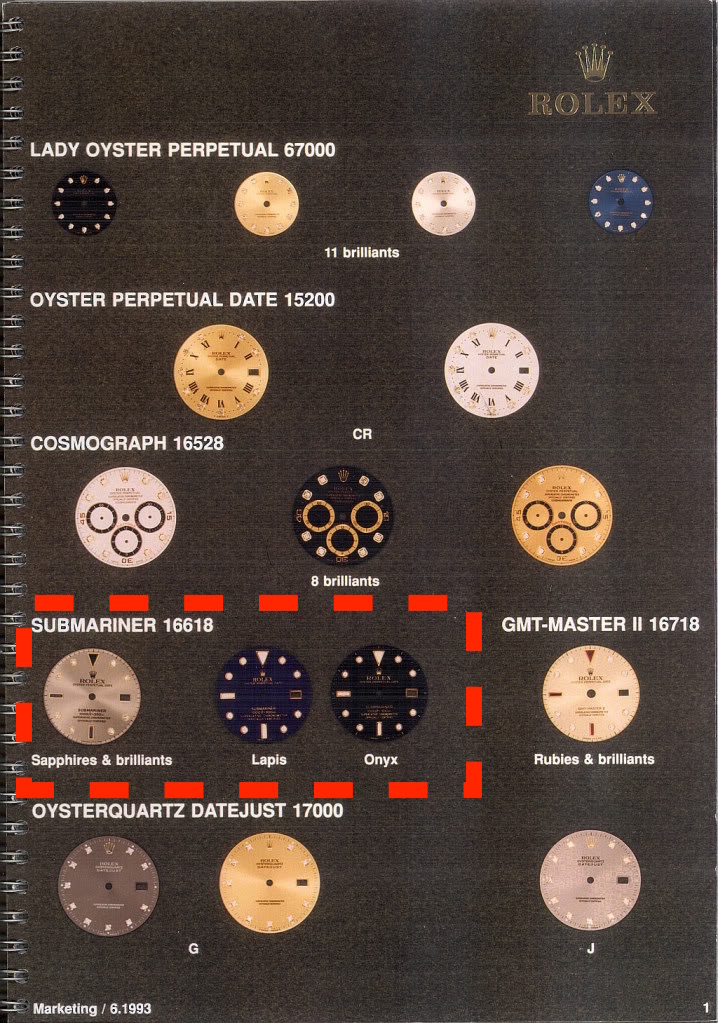
OCC Caliber vs. SCOC Caliber
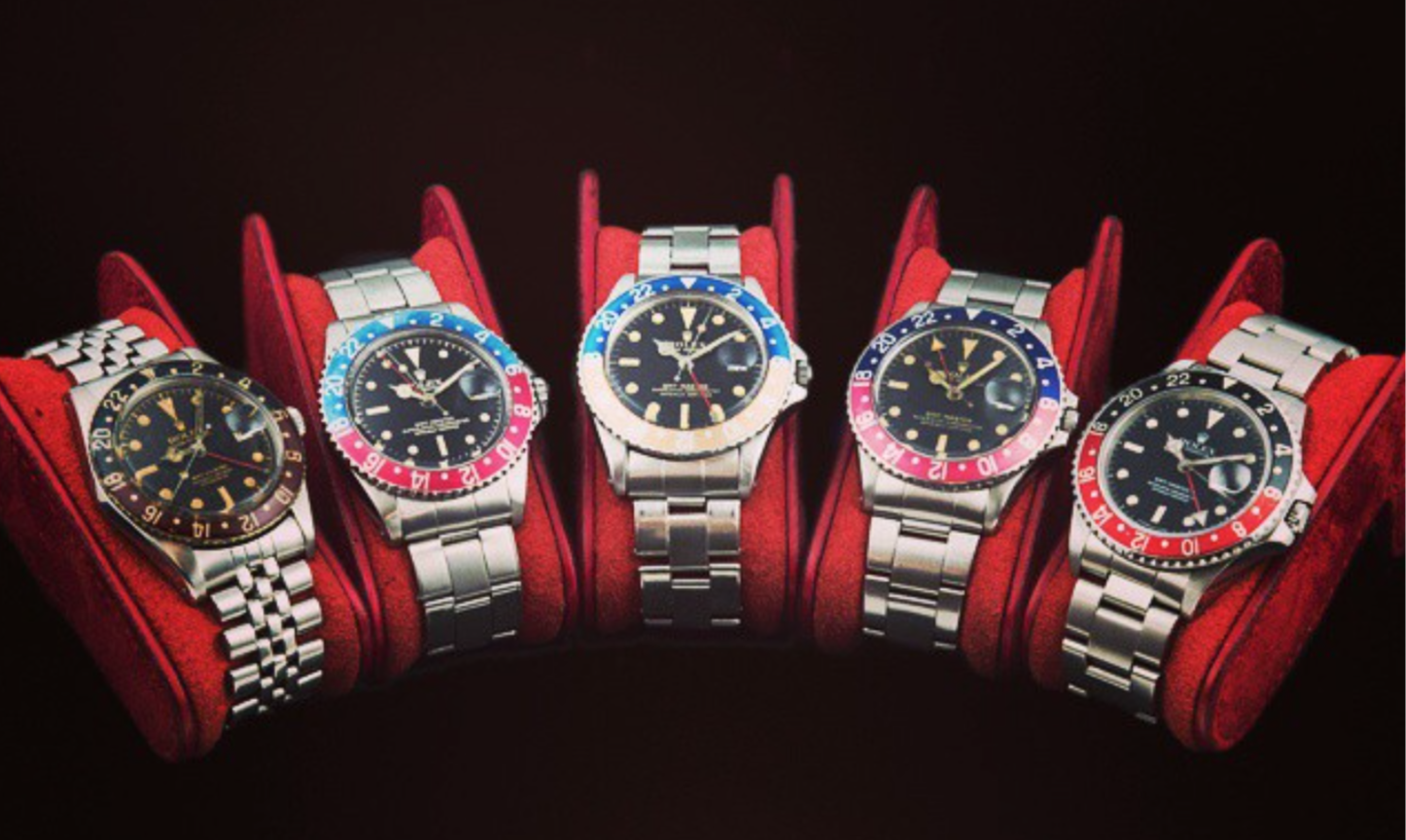
Rolex Gmt-Master : SCOC Dial vs. OCC Dial
OCC stands for Officially Certified Chronometer while SCOC stands for Superlative Chronometer Officially Certified. A seemingly insignificant wording on the dial will make a world of a difference to a seasoned and informed collector.
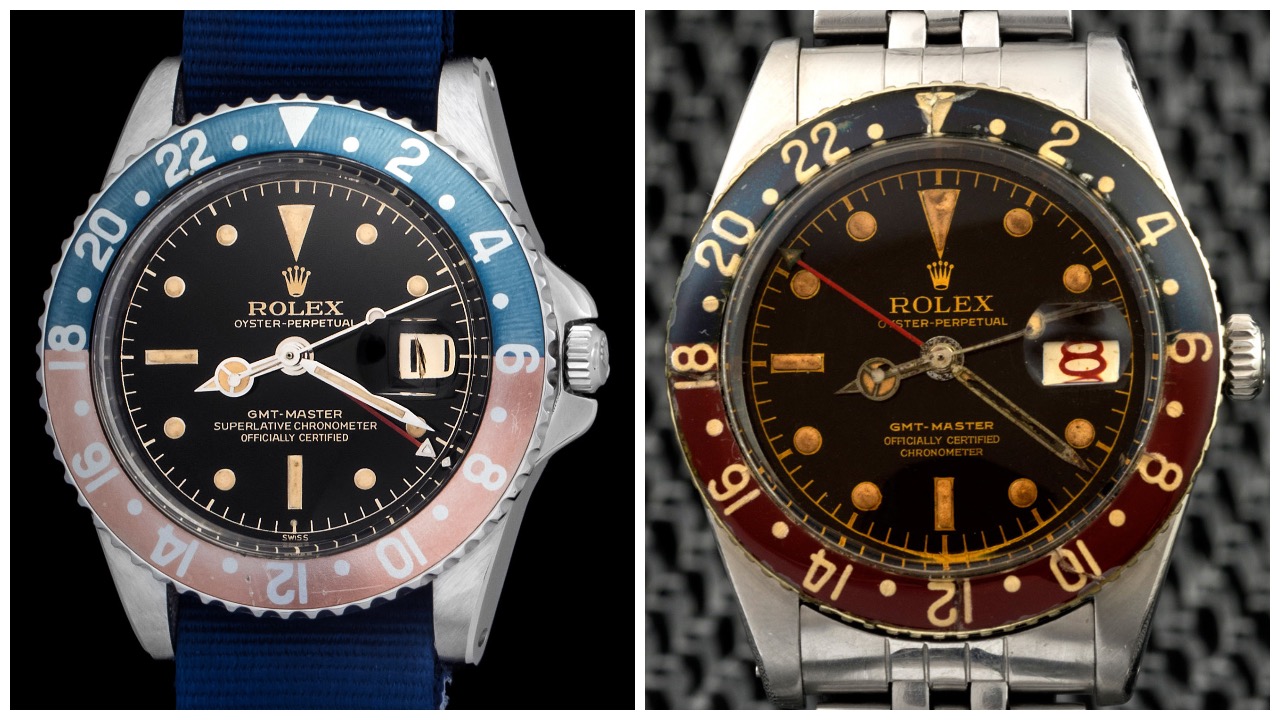
An OCC movement is one, which has successfully passed a test conducted by the Swiss Official Chronometer Testing Institute or COSC.
The test consists of testing a watch for 15 days and 15 nights putting it through five positions and 3 types of temperatures (normal, oven-heat, and refrigerator). OCC movements feature a regulator, which allow the wearer to manually adjust the movement to run faster or slower. The process of manually adjusting a movement can be cumbersome and inefficient.
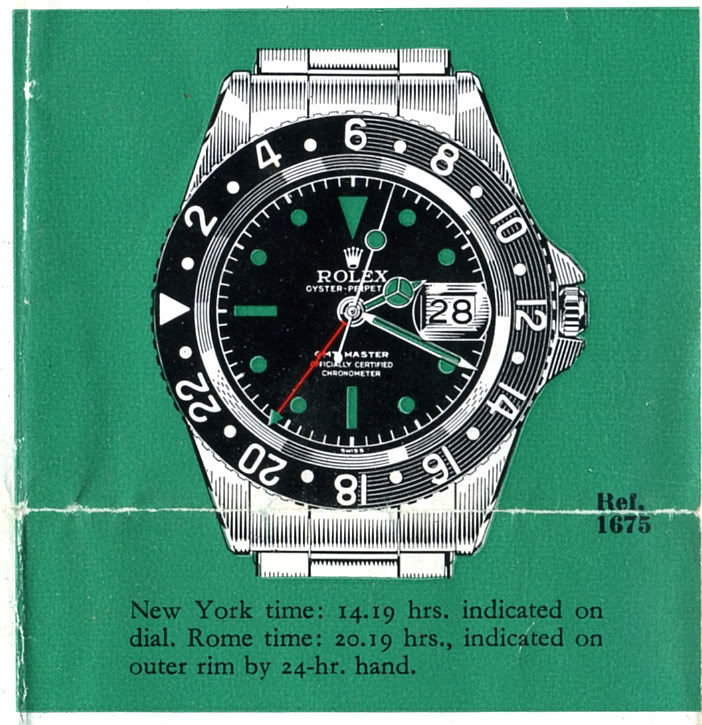
The Rolex GMT-MASTER Ref. 6542 for example was fitted with an OCC movement while its successor the 1675 was not. These ones were fitted with SCOC movements.
A SCOC movement is an upgrade from the OCC. These movements have also passed the rigorous COSC testing but are not fitted with regulators, and this allows them to keep accurate timing for much longer.
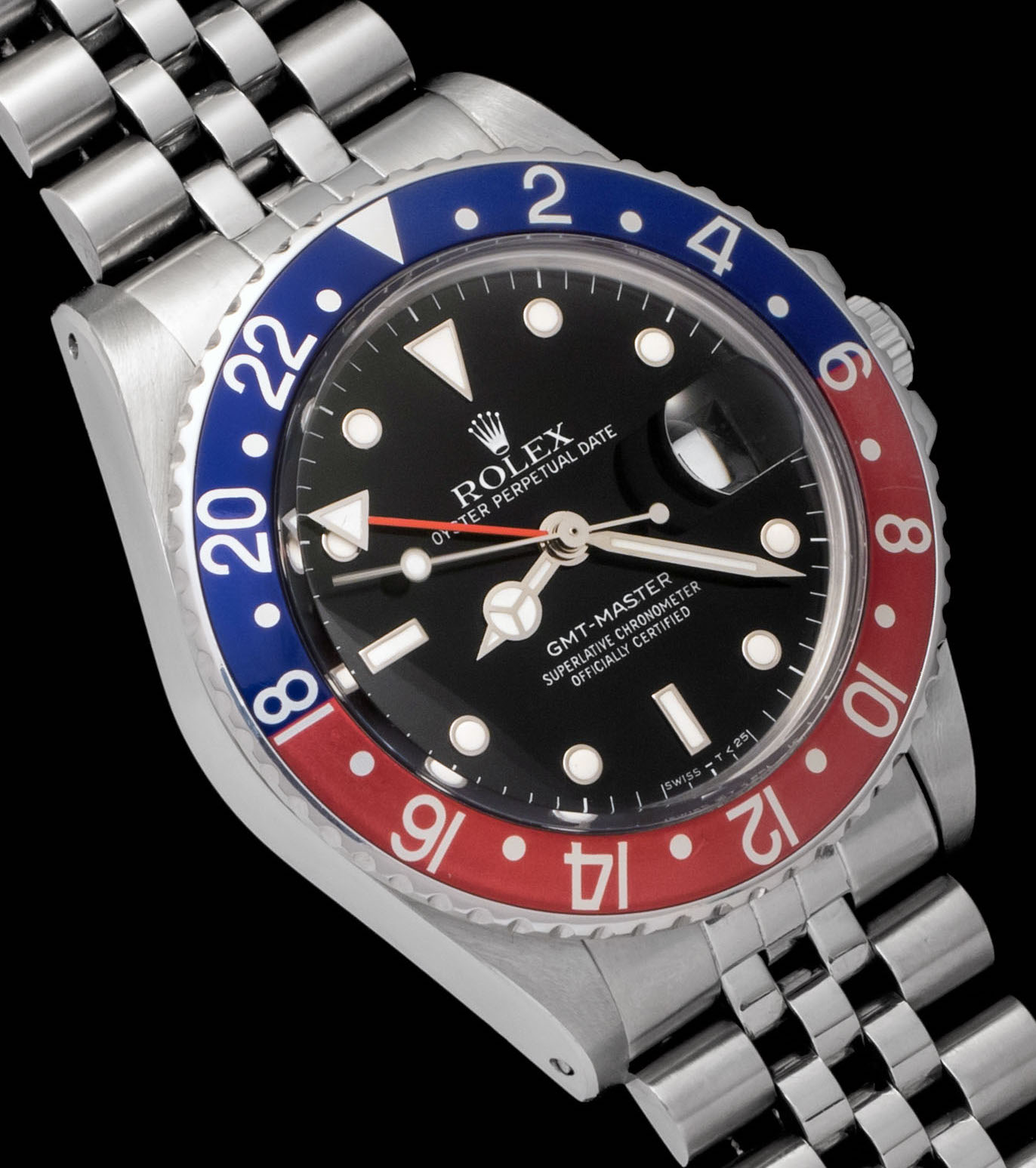
Rolex GMT-Master 1675 – The Early Years
A Legend is Born
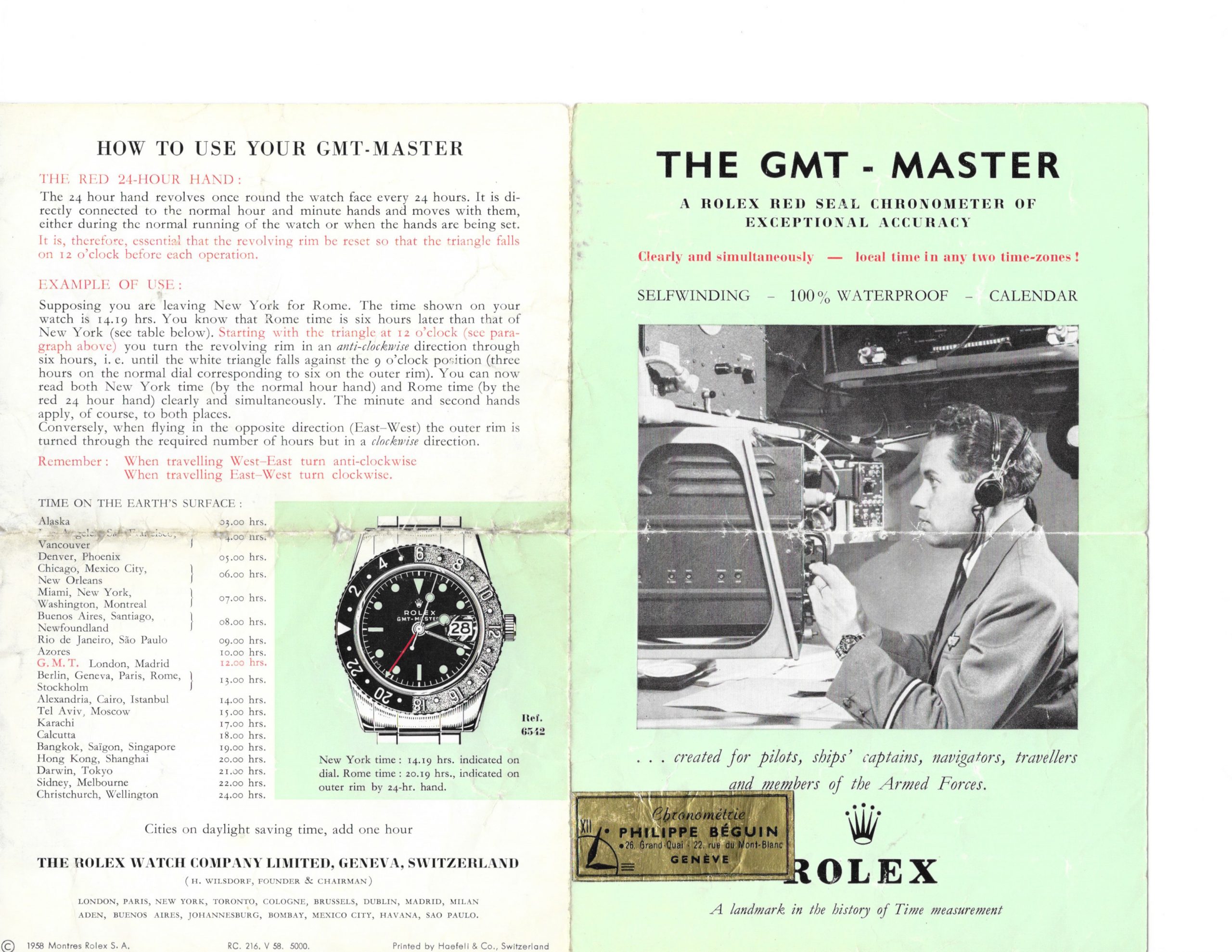
The late 50’s and 60’s era brought about a boom in globalization that enabled people to travel farther allowing the airline business to flourish as the demand for long haul flights skyrocketed. This new trend led to one of the worlds most famous corporate collaborations – the Pan Am and Rolex project. In an effort to better equip its pilots with reliable tools Pan Am approached Rolex to develop a watch capable of keeping track of two time zones. Rolex being the world’s most influential tool watch manufacturer delivered with the creation of the GMT-Master.
The first GMT was the reference 6542, also known as the Bakelite for its plastic blue and red colored bezel. The dual colors enabled pilots to distinguish nighttime from daytime hours, a simple yet important feature. Although revolutionary the Bakelite did not come without flaws. Being plastic, the bezel tended to crack easily thus compromising the watch’s integrity. While the absence of crown guards hampered the case’s waterproofness.
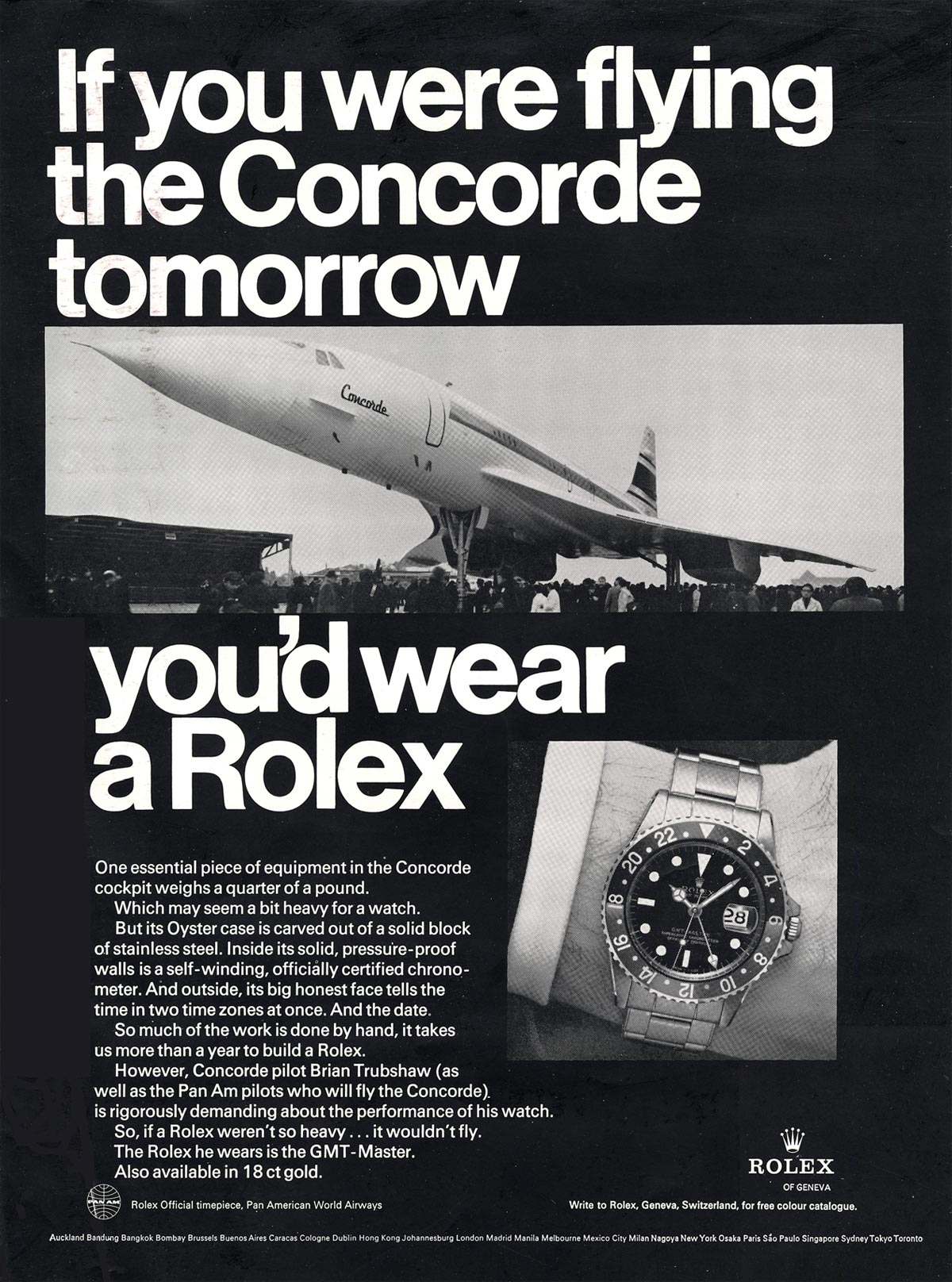
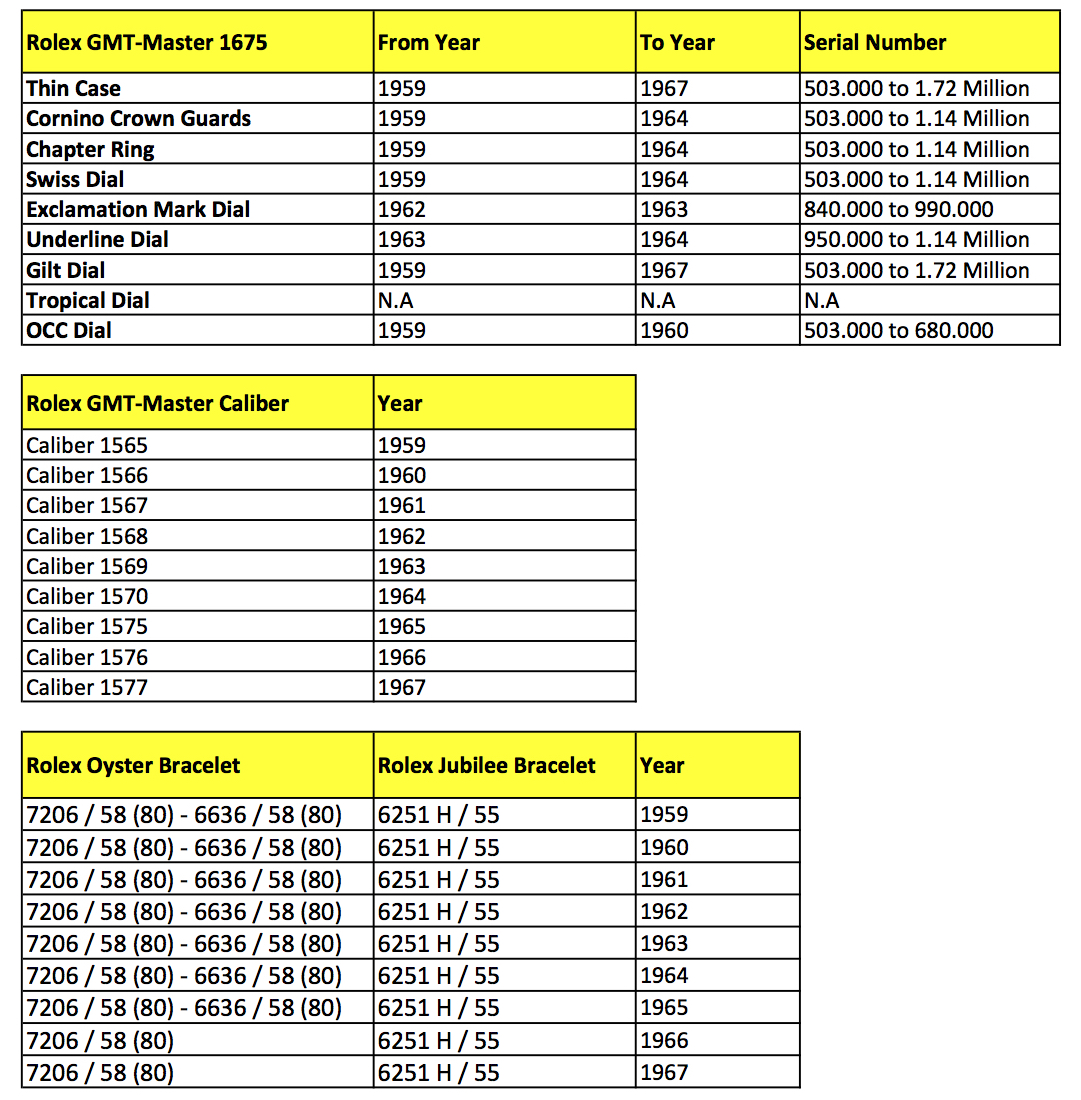
The 6542 series had a production run of 5 years (1954 to 1959) they were then replaced by our beloved 1675’s. These post 6542’s knocked it out of the park, most specifically those manufactured between 1959 and 1967 (serials ranging from 503.000 and 1.720.000).
Early executions of the GMT will remain our favorites as they came with certain intricacies no longer found and celebrated.
Thin Case
Early GMT’s were manufactured in thin metal casings, only later would Rolex shift to the beefier cases that are now commonly seen. Sadly Rolex phased these out rather quick as they were seen as structurally flawed. But gladly they produced them long enough to allow us to collect and share them with our peers. Thin cased GMT’s have a distinguished look best appreciated when observing the watch from its sides. They are also phenomenally comfortable. Look for GMT’s manufactured between 1959 and 1967.
Cornino Crown Guards
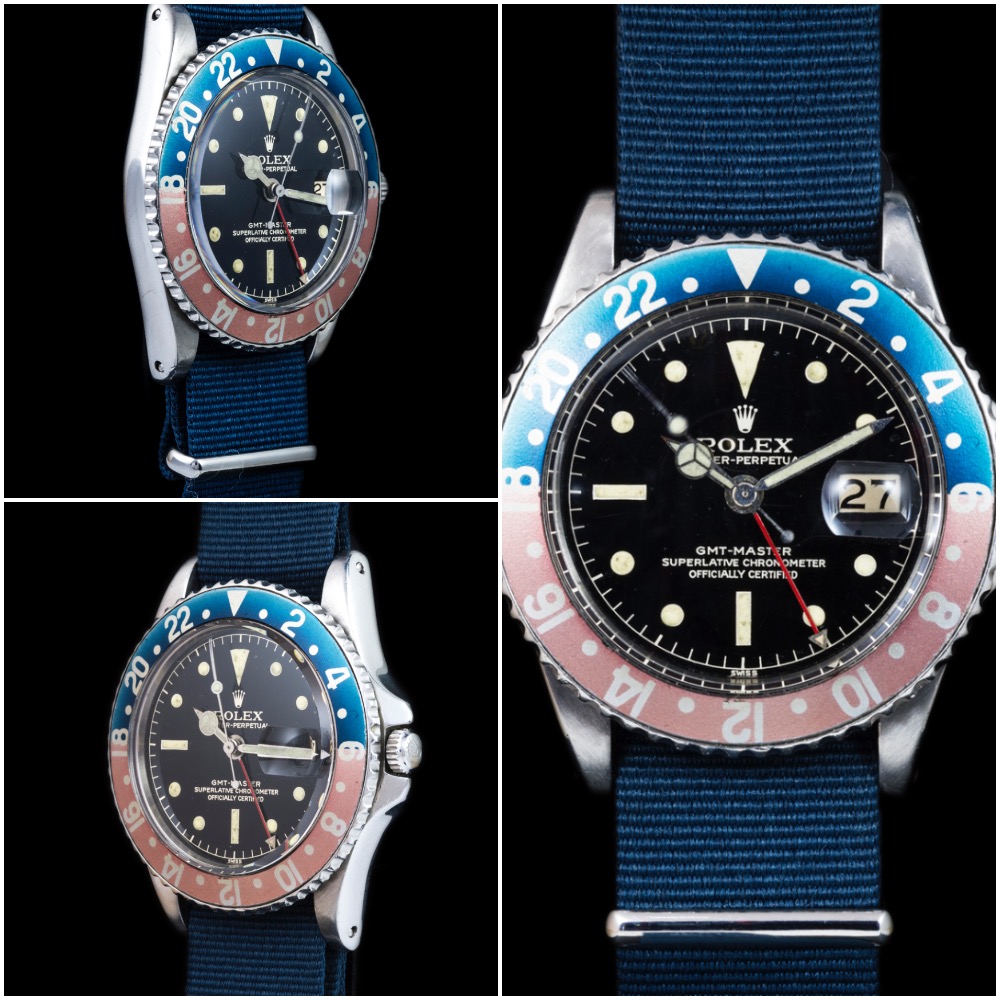
The famed Cornino crown guards are as beautiful as they are sought after. Cases with these guards were only manufactured from 1959 to 1964, which in Rolex numbers is incredibly limited. The incorporation of crown guards came as a result of a desire to make sturdier GMT’s, as 6542 although beautiful proved to be fragile. The term Cornino came about due to their resemblance to bull horns. Rolex later replaced these guards with thicker squared shaped ones.
Chapter Ring Dial
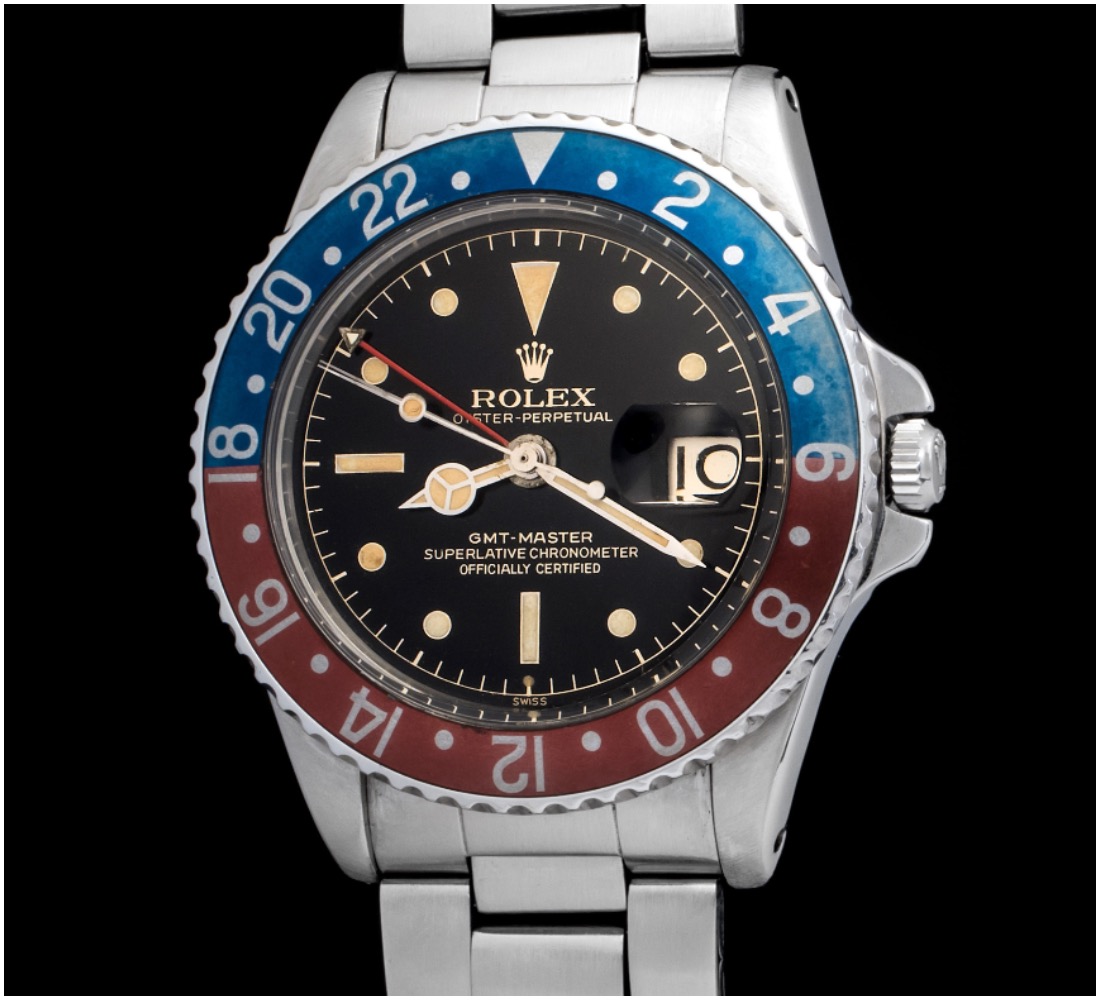
Chapter Ring bearing GMT’s are our favorites as they look so cool and in a way pay homage to their predecessor the 6542. For those unsure what a chapter ring is here’s a short lesson. A Chapter Ring is a line connecting the minute marks while separating the Swiss text located below the 6 o’clock. In vintage Rolex collecting the devil is always in the details and those intricacies that might seem insignificant to some mean the world of a difference to the staunchest of collectors.
Chapter ring dials will only be found on 1675 GMT’s belonging to serials between 503.000 and 1.140.000 or those manufactured throughout 1959 and 1964.
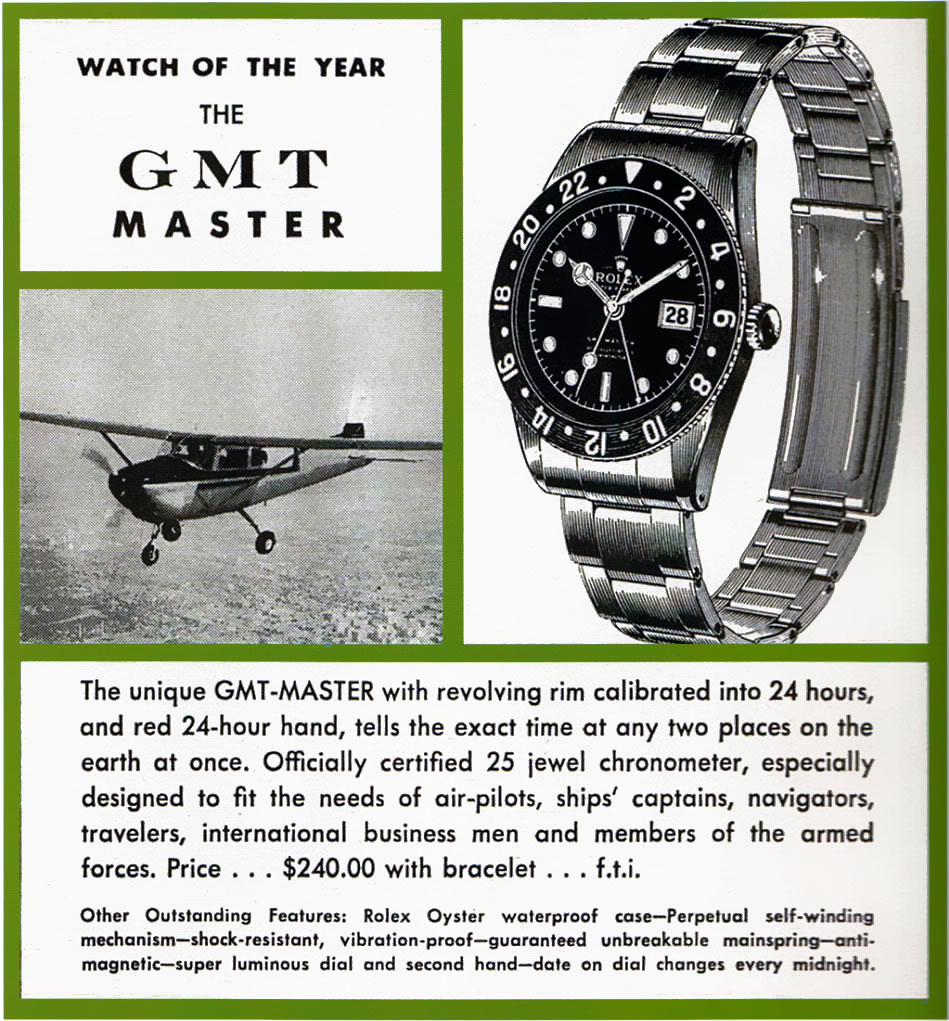
Swiss Dial
Like the Chapter Ring covered above Swiss dials too were original to the 6542. This lettering at the foot of the dial lasted from 1954 with the 6542 until 1964 when Rolex halted their production. For those wondering the significance of the Swiss designation here it is – Swiss dials indicate the presence of Radium as the source of the dial’s luminescence. For collectors and admirers of the brand early Swiss dials are important as they belong to an era when Rolex was just an outstanding tool watchmaker and not a luxury powerhouse.
These dials can be found on 1675’s belonging to serials between 503.000 and 1.140.000 or those manufactured throughout 1959 and 1964.
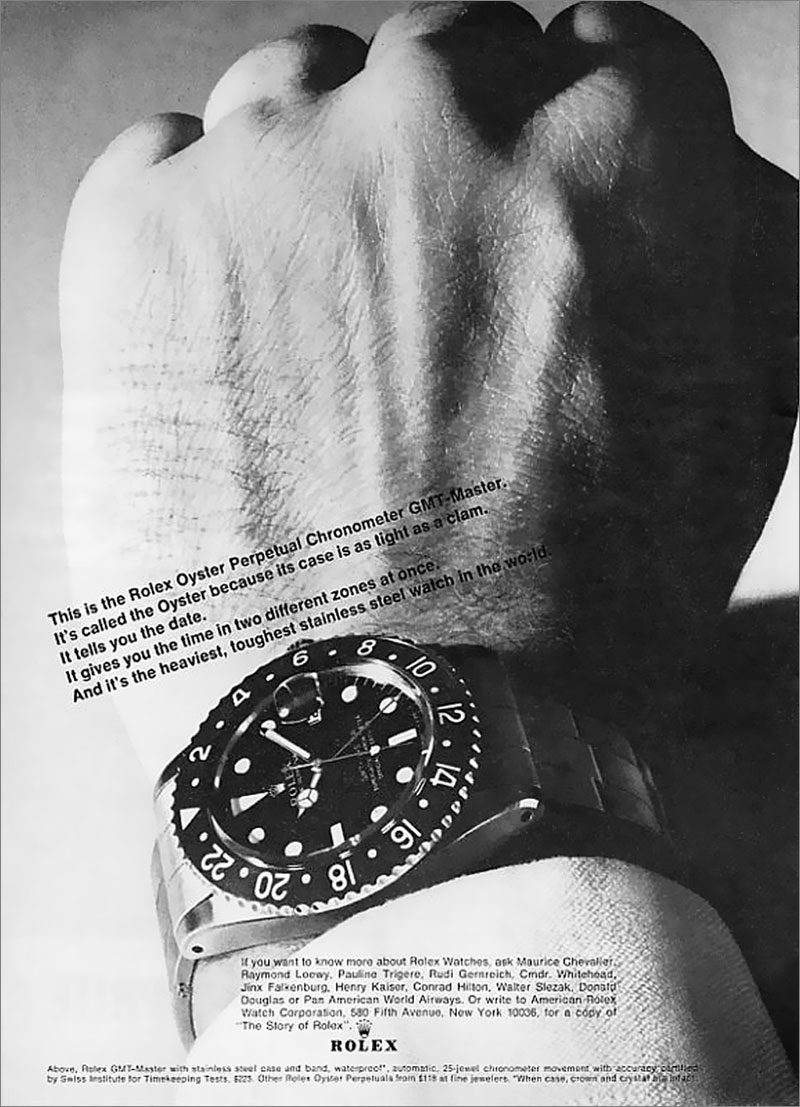
Double Swiss
For a very short period between 1963 and 1964 (Serials 950.000 and 1.140.000) Rolex printed a special set of dials marked with a double Swiss signature below the 6 o’clock mark. The first Swiss is immediately visible while the second can barely be seen as it’s located at the very edge of the dial.
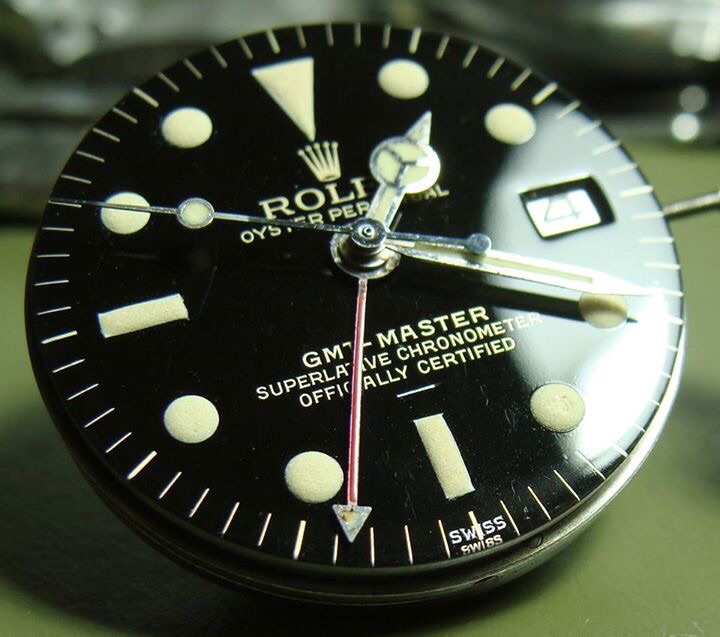
Exclamation Mark Dial
The famous Exclamation Mark dial came due to new international regulations, which limited the quantities of Radium allowed to be applied on dials. These special dials also belong on early GMT’s. After the regulations were made effective Rolex had no other choice than to comply. They did so by printing a very small exclamation mark place directly above “Swiss”. This showed people the dial still had Radium but lesser quantities.
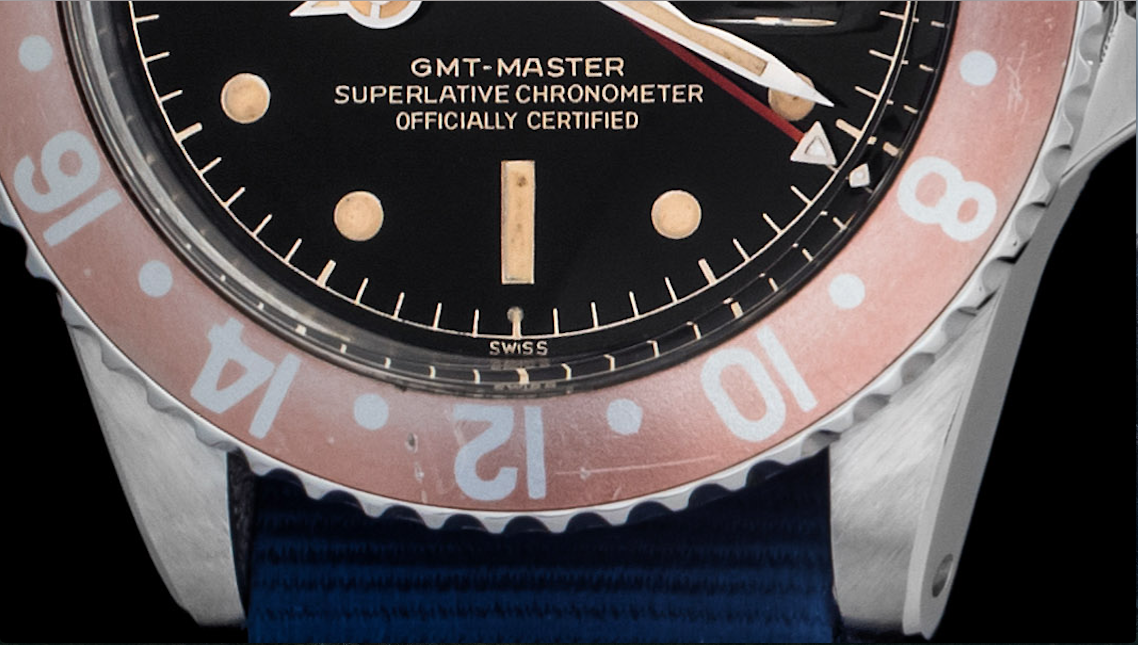
Underline Dial
Another show of compliance to the new international regulations was the Underline dial. This detail on the dial signified a complete change from Radium to a Tritium as the source of luminescence. Again, these dials are only found on early GMT’s and are seen as incredibly collectible as they were only printed for 1 year.
Underlines belong on GMT’s with serials between 950.000 and 1.140.000 or those manufactured in 1963 and 1964.
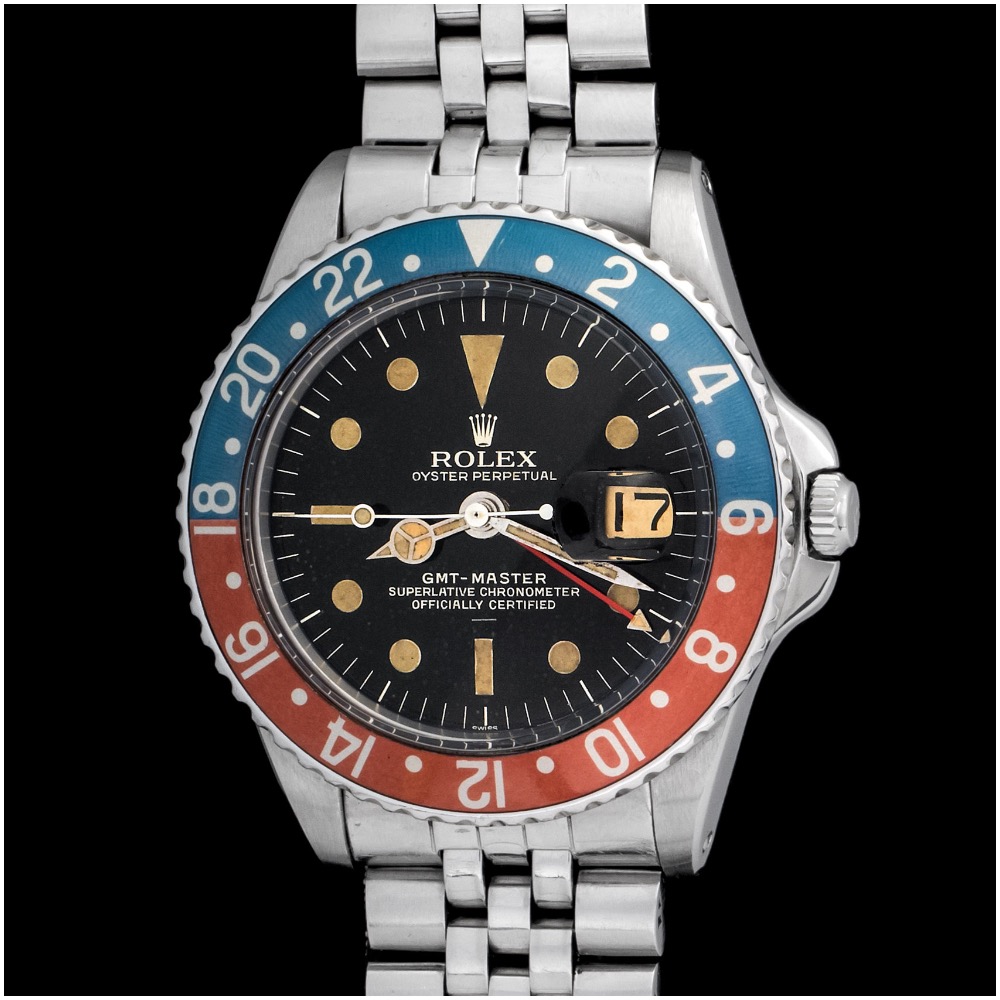
Gilt Dial
We enter into Gilt territory. This subject has been discussed in wide detail, as these types of dials were not just fitted on GMT’s but on every Rolex sports watch. Due to the complicated process of manufacturing Rolex stopped making them after the 60’s. For some context about what Gilt is and how they come about we have briefly highlighted their process of manufacture below:
Step 1
Gilt dials started off as circular copper plates
Step 2
Wordings and designations were later invisibly stamped onto the copper dial
Step 3
The copper dial was later dipped into a galvanic substance, which electrified the plate prompting the dial’s lettering to become visible
Step 4
Dials were later given a lacquer coat and applied with its respective luminous material
As time has passed the wording on these dials have taken a slight golden color hence the term gilt. Look for a gilt GMT dial on those with serials ranging from 503.000 to 1.720.000 or manufactured between 1959 and 1967. Also expect to pay a premium.
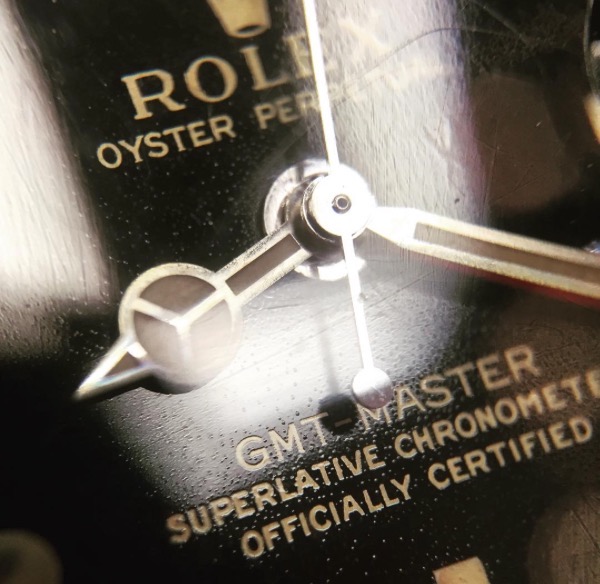
Tropical Dial
Out of every dial variation highlighted so far the Tropical dial remains the king. Reason is they are very easy to spot there is no need for a loupe to pin them down. Tropical dials were born black but due to chemical reactions on the lacquer coat the black color began to turn brown. The interesting aspect about these is that no two will ever be the same. Each Tropical dial has a certain detail that makes it special and unique.
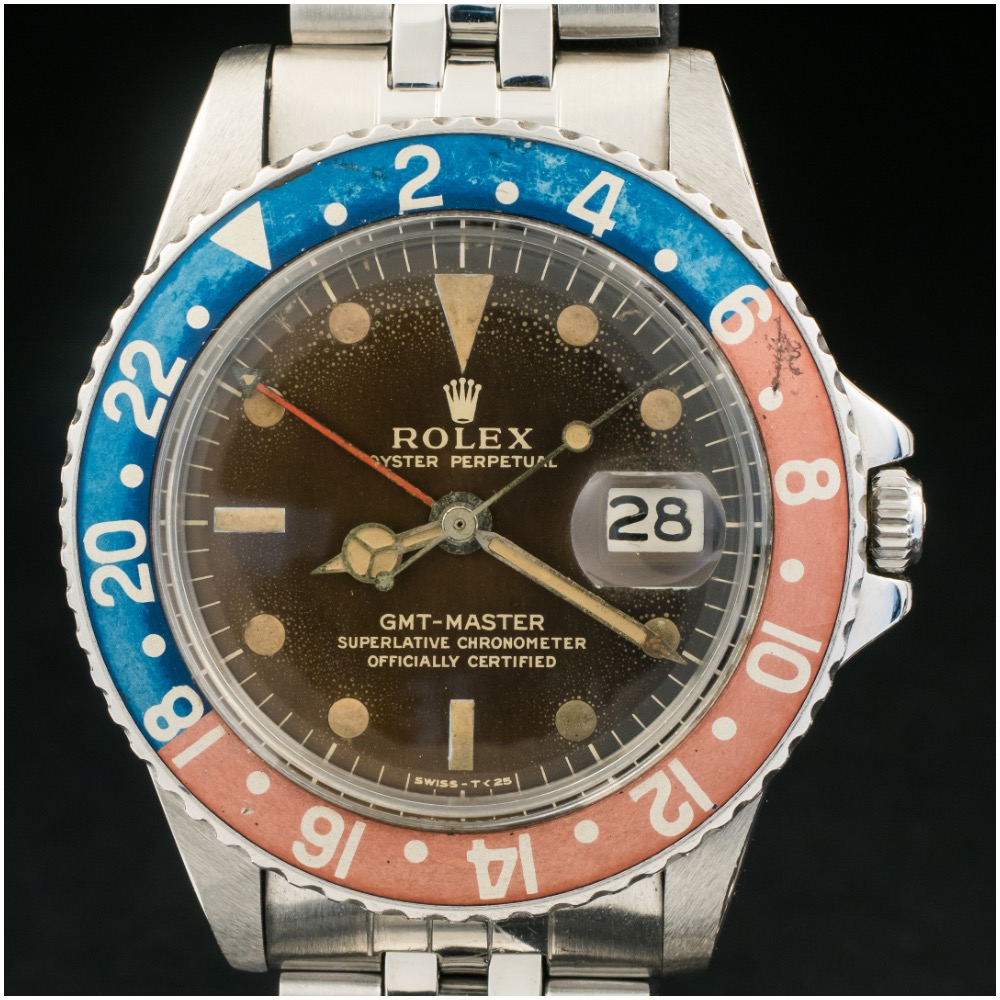
OCC Dial vs. SCOC Dial
Dials printed with certain words and designations command premiums we have covered various examples above. This brings us to GMT dials printed with the words “Officially Certified Chronometer” versus those with “Superlative Chronometer Officially Certified”. (We advise that before you delve into this section you read our short explanation of an OCC dial and a SCOC dial.)
For a period of 12 months (1959-1960) Rolex forgot to acknowledge the fact that the 1675 were powered by a SCOC certified 1565 caliber yet their dials were only claiming to be OCC certified. The 6542’s were the first and last GMT to have OCC calibers. Naturally 1675’s with OCC dials are incredibly difficult to find and those available will carry a steep premium. And for those wondering a 6542 dial cannot be fitted on a 1675 due to sizing constraints.
If you are looking to collect one these you should focus on 1675’s with serials ranging from 503.000 to 550.000 or those manufactured throughout 1959 and the middle of 1960.
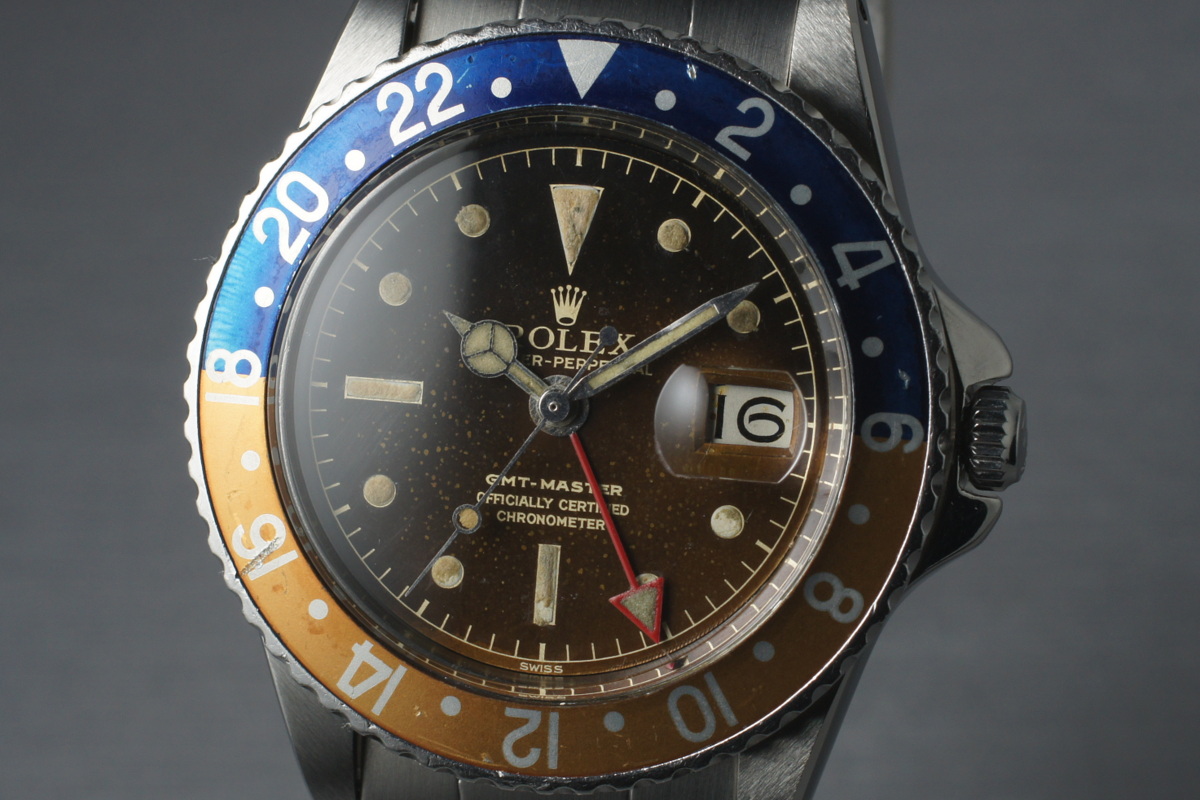
Technical Information
Check our selection of Rolex Vintage GMT for sale
Rolex Daytona 6262 “Transitional Cosmograph”
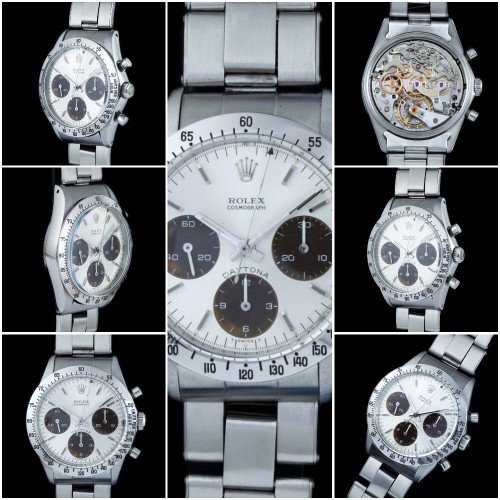
The Transitional Cosmograph
No other family of watches causes as much excitement as Valjoux powered Rolex Daytona’s. These chronographs are in a realm of their own as they can singlehandedly influence market trends. We were at Christies when 50 Daytona’s broke world records for auction prices causing a collectors frenzy in the process. Click here to browse through our Daytona collection for sale.

Car Racing Heritage
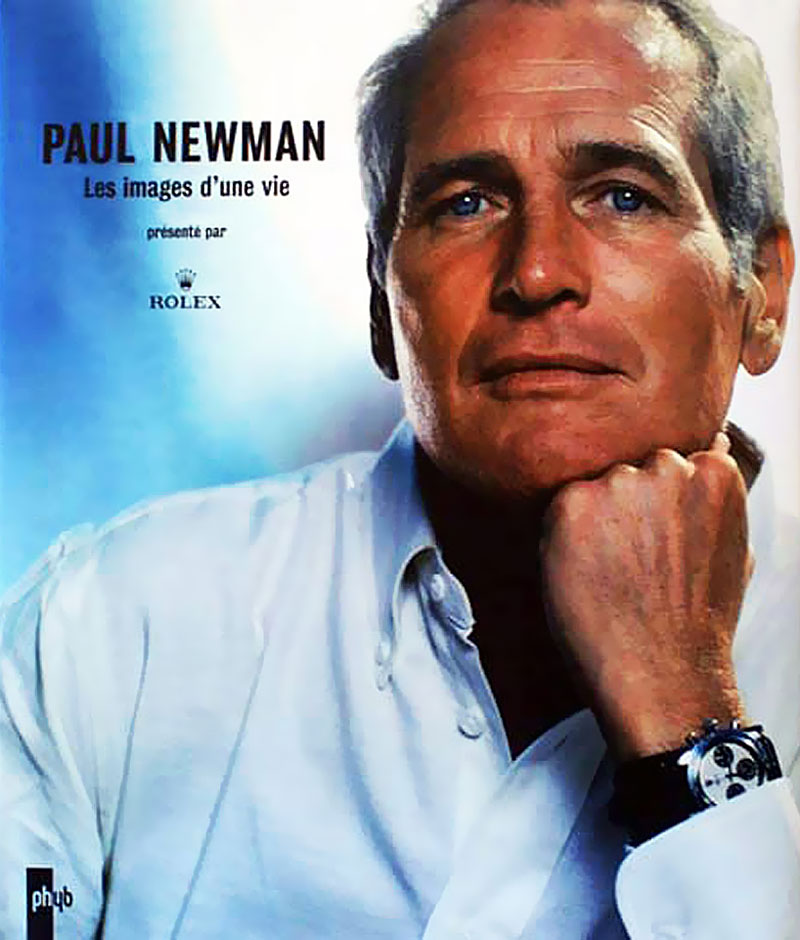
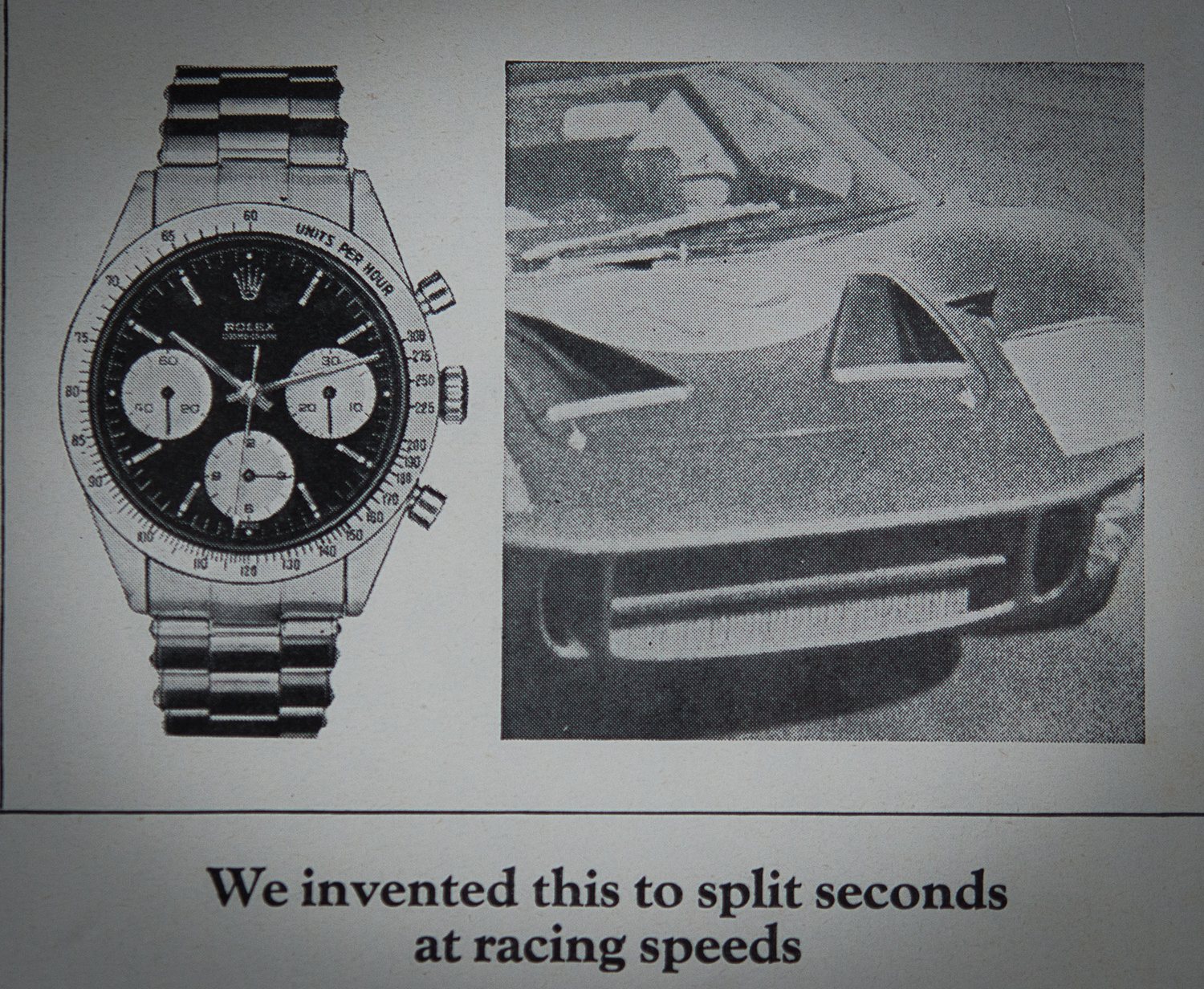
The Daytona is a watch that checks every box in the collector’s book. They embody what a vintage watch should be and look like. Valjoux Daytona’s have that quality feel that can never be replicated by a modern watch. Rolex conceived this chronograph to serve as a tool for car racing. Their status as reliable timing devices made them staples on the wrists of some of the coolest men to walk this planet, enter Mr. Paul Newman and Sir Jackie Stewart.
Daytona Lineup
The Daytona family is composed of the following references: 6239, 6240, 6241, 6262, 6264, 6265, 6263, and 6269/70. All are fascinating in their own right but we have a particular penchant for the elusive Rolex Daytona 6262.
This 6262 reference is known as the transitional Daytona as Rolex manufactured them for the span of one year (1969 to 1970), making them the least produced Daytona. Well let’s not consider the 6269/70 as that’s an outlier. Records estimate only 347,000 examples of the 6262 left the manufacture between the span of 1 year. These chronographs are found with serials ranging from 2.241.000 to 2.589.000, no more no less.
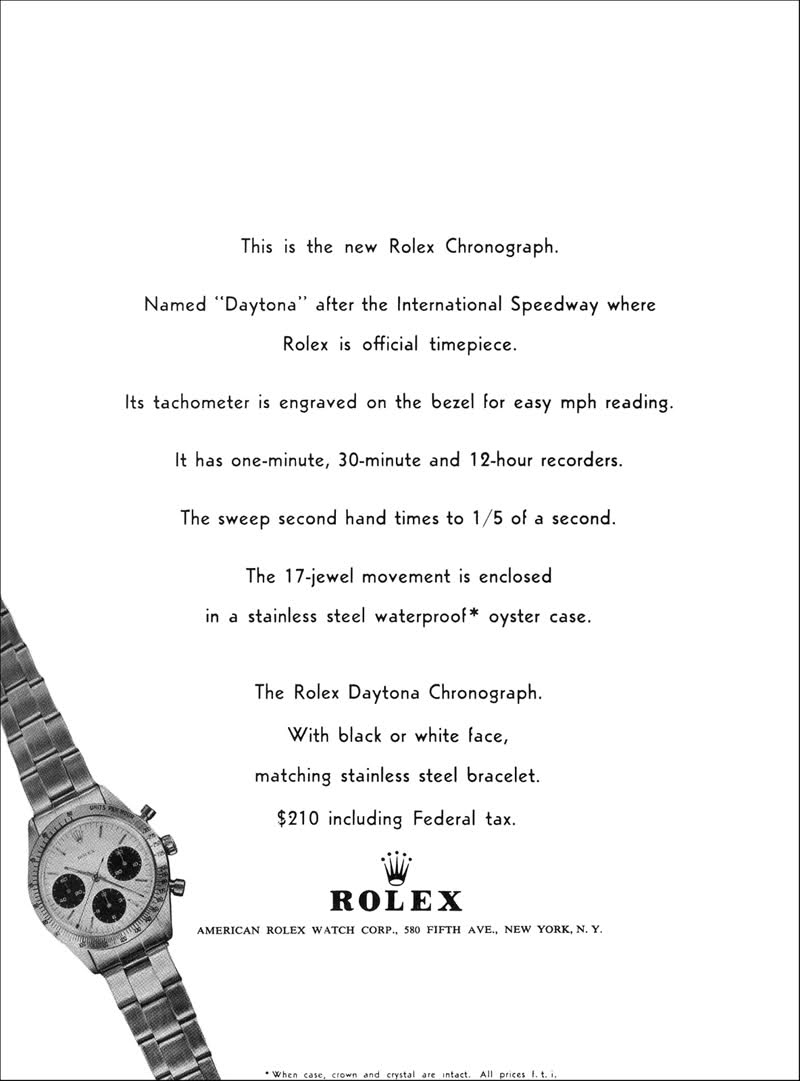
The Daytona 6239 is Given a Facelift
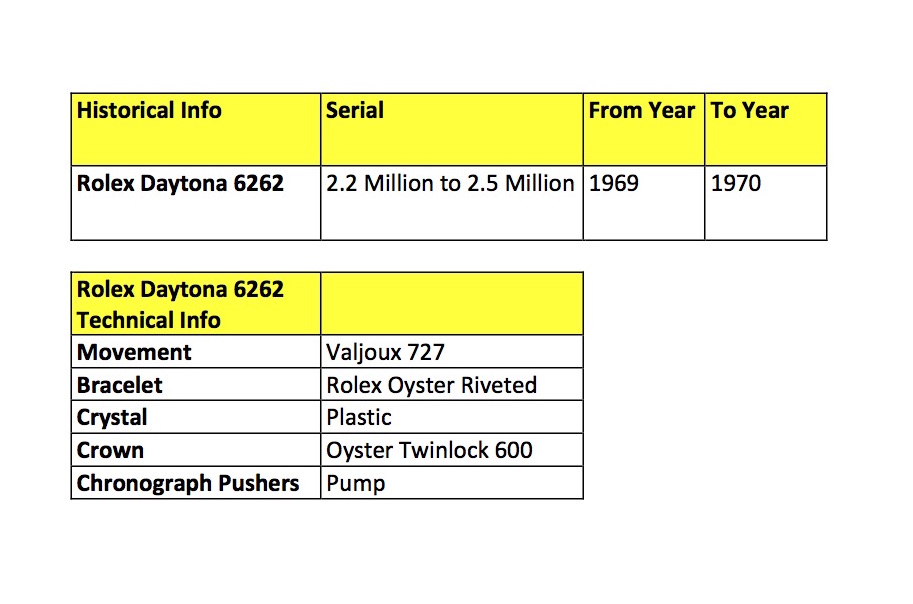
The reason to the “transitional” moniker is Rolex’s usage of the reference to test out several features and variants for future Daytona’s. For example the 6262 was the first watch to be equipped with the final and faster beating Valjoux 727 caliber, advancing from the prior Valjoux 722. The 727 became the last manual movement used by Rolex before shifting to the automatic Zenith in the late 80’s.
Rolex also modified its highly successful Oyster case with the 6262, an edit that brought more backlash than success. Reason was the case was thicker and prone to damaging the rather luxurious 17 jewels movement inside. Rolex fans took notice of these changes and accused the brand of deviating away from manufacturing tool watches and entering the era of sporty elegance.
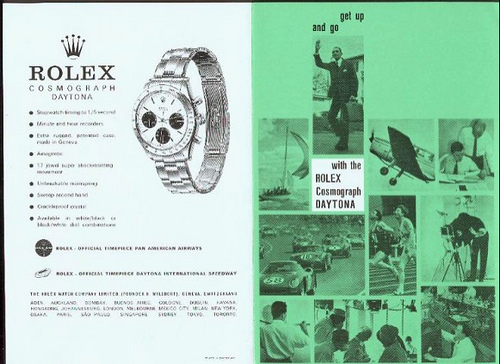
Magnificent but Short-Lived
The 6262 is seen as the direct counterpart of the 6265 as it has the same steel bezel graduated to 200 units, but lacks the screw down pushers prominently accentuating the 6265’s look. As a business move Rolex did not strike gold with the 6262. This failure has proven an advantage in the modern market as collectors now appreciate rare and low produced watches.
The Daytona 6262 can be found in three metal variants fitted with three dial types. Like any vintage tool watch the most common metal is steel. Rolex also manufactured a limited strand of 6262’s in 14K and 18K yellow gold. Now, finding a 6262 is not easy. Finding a 6262 in gold might be a near impossible feat. Assuming one is found you will need to be ready to break the bank, because it will cost a small fortune. Numbers put gold 6262’s at grand total of 30 examples made.
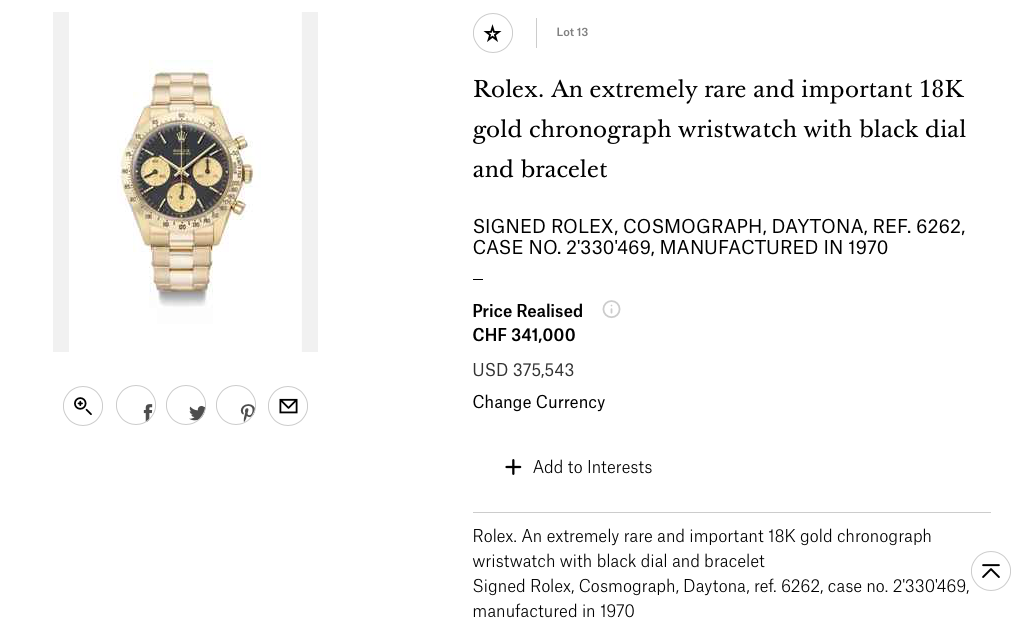
Dial Variations
The common dials found on 6262’s are the traditional two tones. Either black face with white sub dials or white face with black sub dials. Within those variants the most coveted is the black face, as they look much nicer on the wrist. The least common type of dial is the famed exotic dial AKA the Paul Newman. These are easy to spot as the sub dial demarcations are printed with art deco lettering.
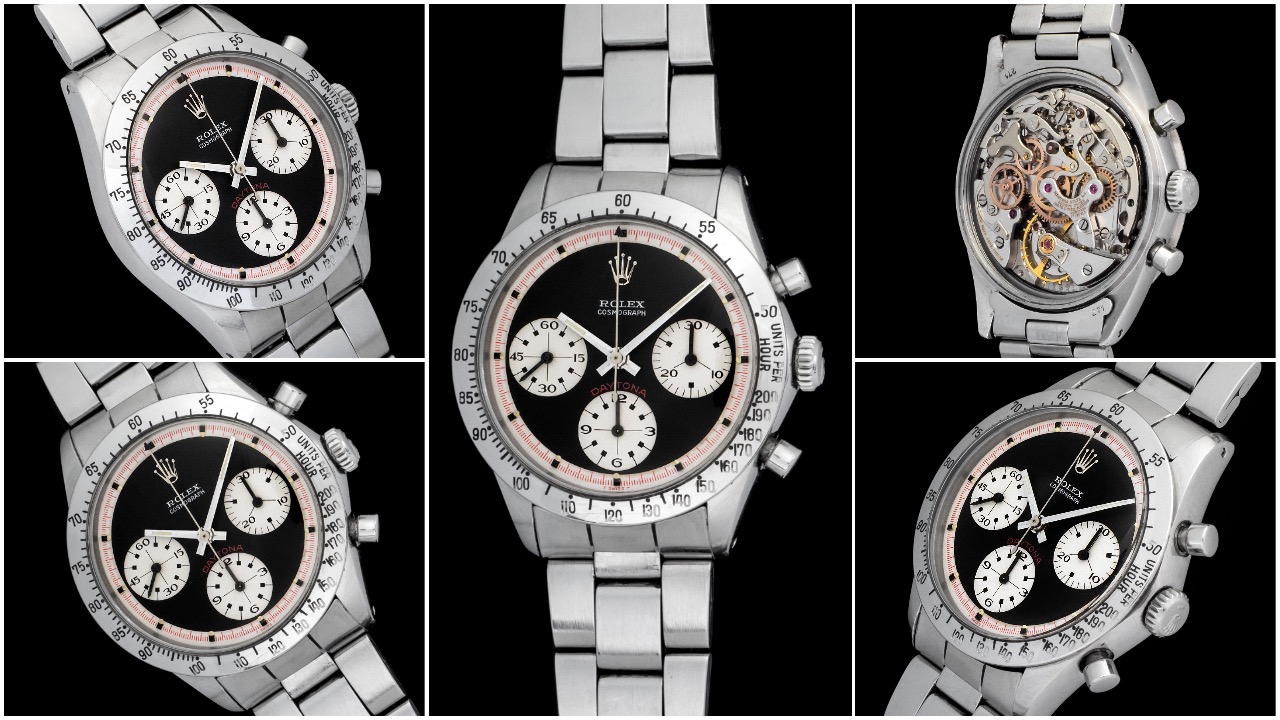
Blue Daytona
Within the dials offered in the catalogue is one that is not, as a matter of fact Rolex never foresaw this type of dial. We are talking about the blue dial. When these dials pop up at auctions or are offered by important international dealers they are referred to as Blue Daytona’s. Blues are only found on black dial Daytona’s. The way to spot them is to focus on the lettering which spells out Daytona commonly located arching above the hours sub dial. Rolex printed these letters in white but due to a chemical reaction in the paint the white turned into a blue hue. What was a Rolex error has now become a detail that commands a retail premium. Click here and here to see what a Blue Daytona looks like.
Technical Information
Our Rolex Daytona Collection for Sale
Click here to browse through our Daytona collection for sale.
Mercanteinfiera the Famous Parma Exposition

The Parma Exposition has Begun
 It’s that time of the year when every major watch dealer and collector come together to share their passion at the Mercanteinfiera show in Parma. This show takes place two times per year, once in the fall and then the spring. During these two occasions some of the world’s most important watches change hands. There are many watch shows taking place year round but none are as significant or influential as the Parma, because it is here where the passion for vintage watches was born.
The feeling of walking into the show is unparalleled, unlike any other show. The camaraderie felt amongst our peers be it collectors or dealers is simply beautiful as everyone is there to celebrate our shared passion.
Through Vintage Watches Miami and Milano we’ve had the pleasure to be expositors for the past 10 years, during this time we have retained the same spot: Pad 6 K43 – look for us there.
The Rolex Way – Made in Switzerland

There is no denying that Rolex is the king. Each and every Rolex encompasses a craftsmanship and history not replicated by any other manufacturer. It might seem easy to deviate from Rolex in the search for other types of watches but ultimately most collectors will return to the brand. Below is an official Rolex video, which captures the brand’s essence beautifully.
Patek Philippe Nautilus 3800 Platinum
Patek Philippe Shocks The World
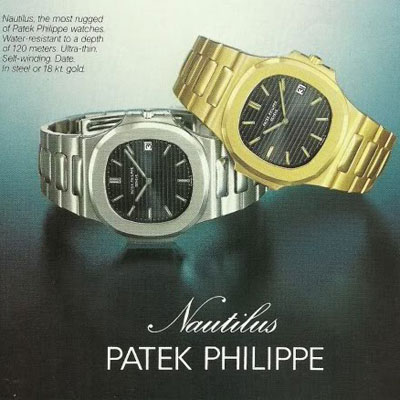
In 1976 Patek Philippe shocked the world with the launch of the first Nautilus model. During this time luxury sport watches had to be by default ultra thin and made from solid gold. No one dreamt a premier Swiss watch manufacturer to come out with a ship’s porthole inspired stainless steel watch capable of withstanding depth inversions of 120 meters.
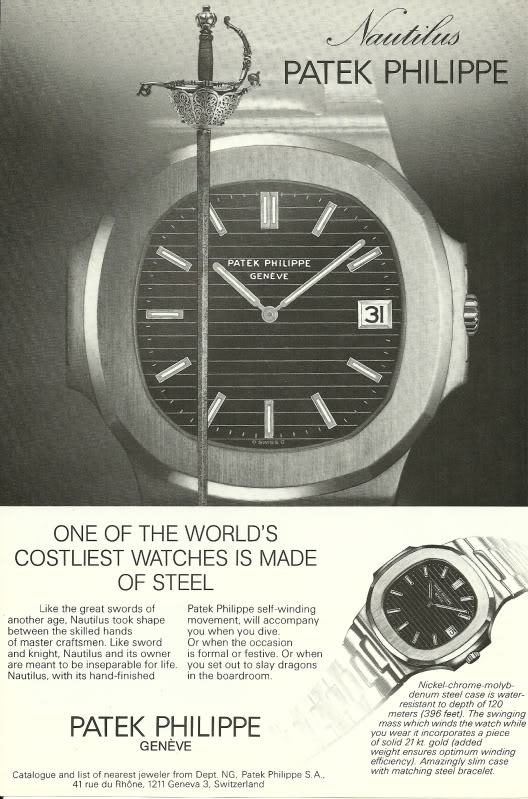
The Nautilus Momentum
Since 1976 the Nautilus has remained an icon of design and a classic. With books and auctions attributed to its existence the Nautilus has remained practically unchanged. Every Nautilus is beautiful but some examples are more special than others.
Nautilus 3700 Advertising
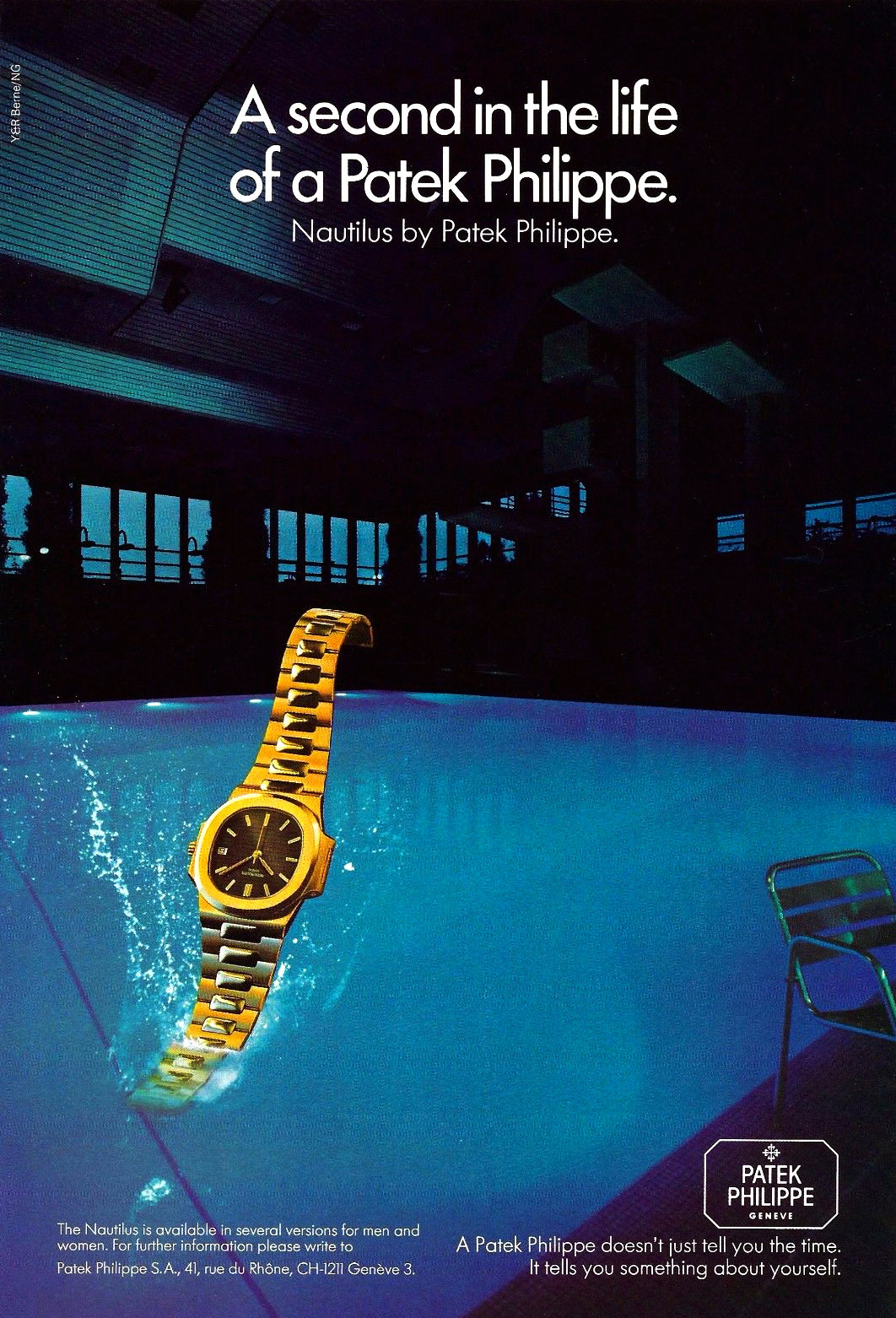
Some Are More Special Than Others
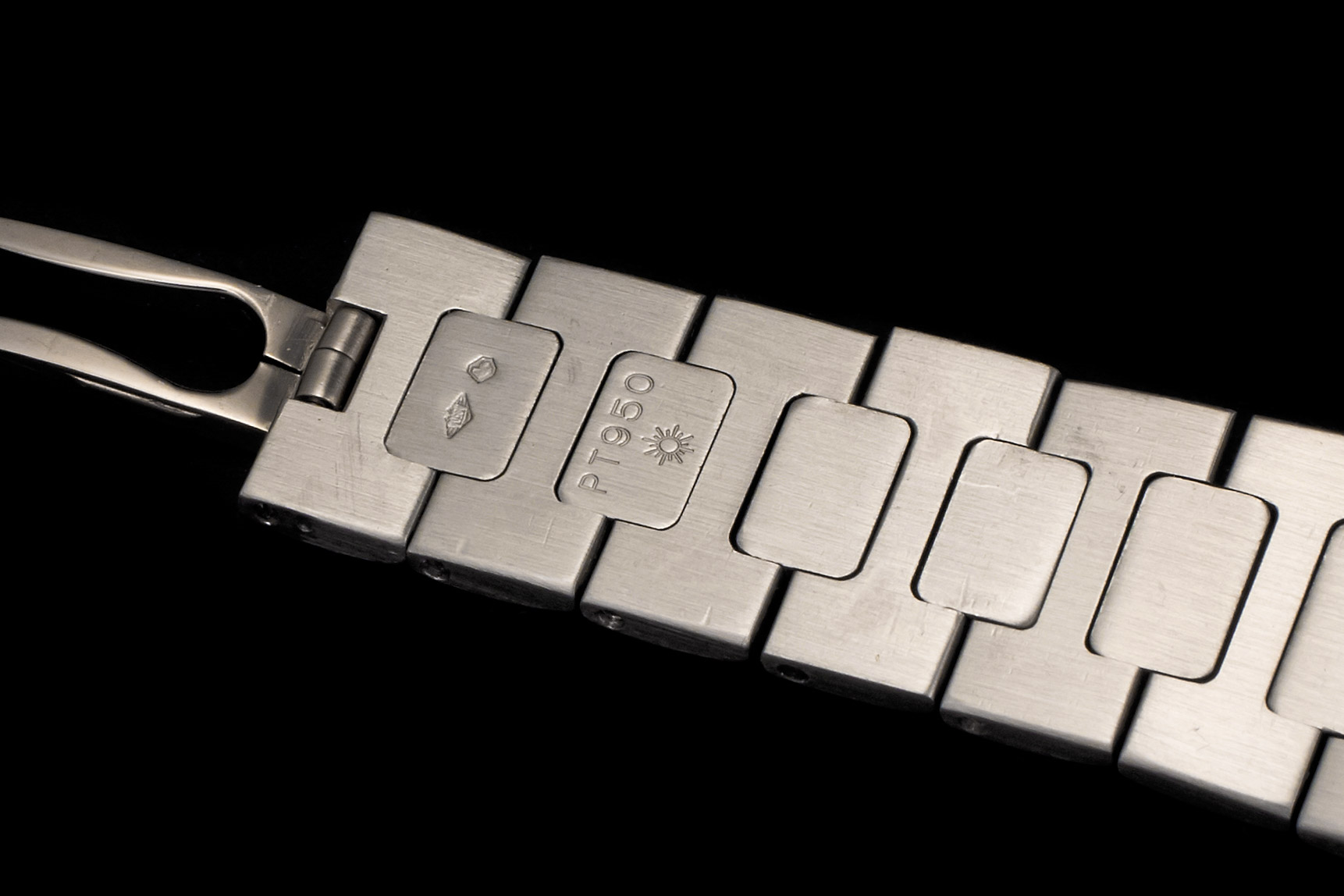
The Patek 3800 with diamond hour markers is a rare watch in and of itself. Not many were manufactured and out of those made not many are being offered at this moment.
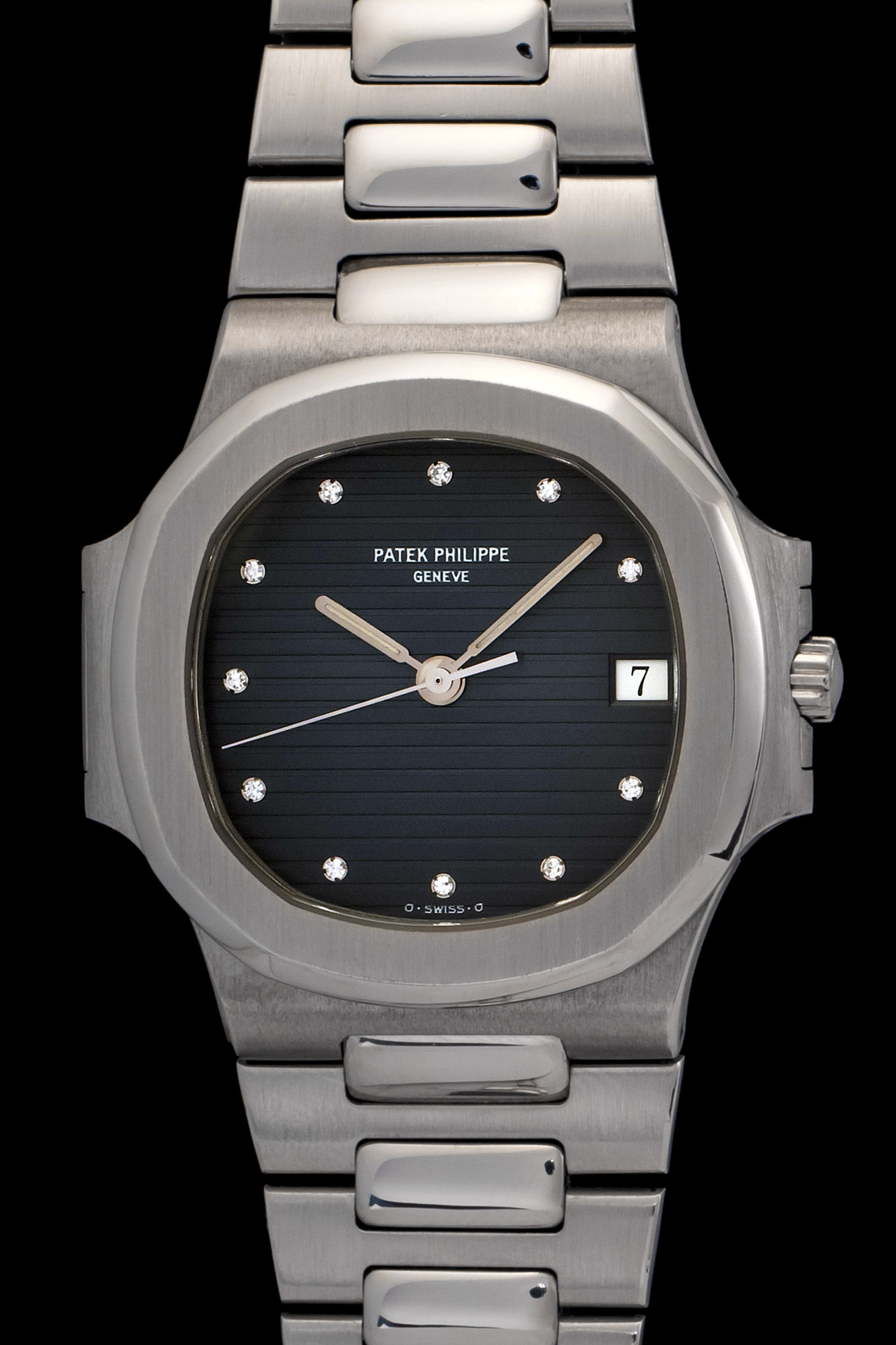
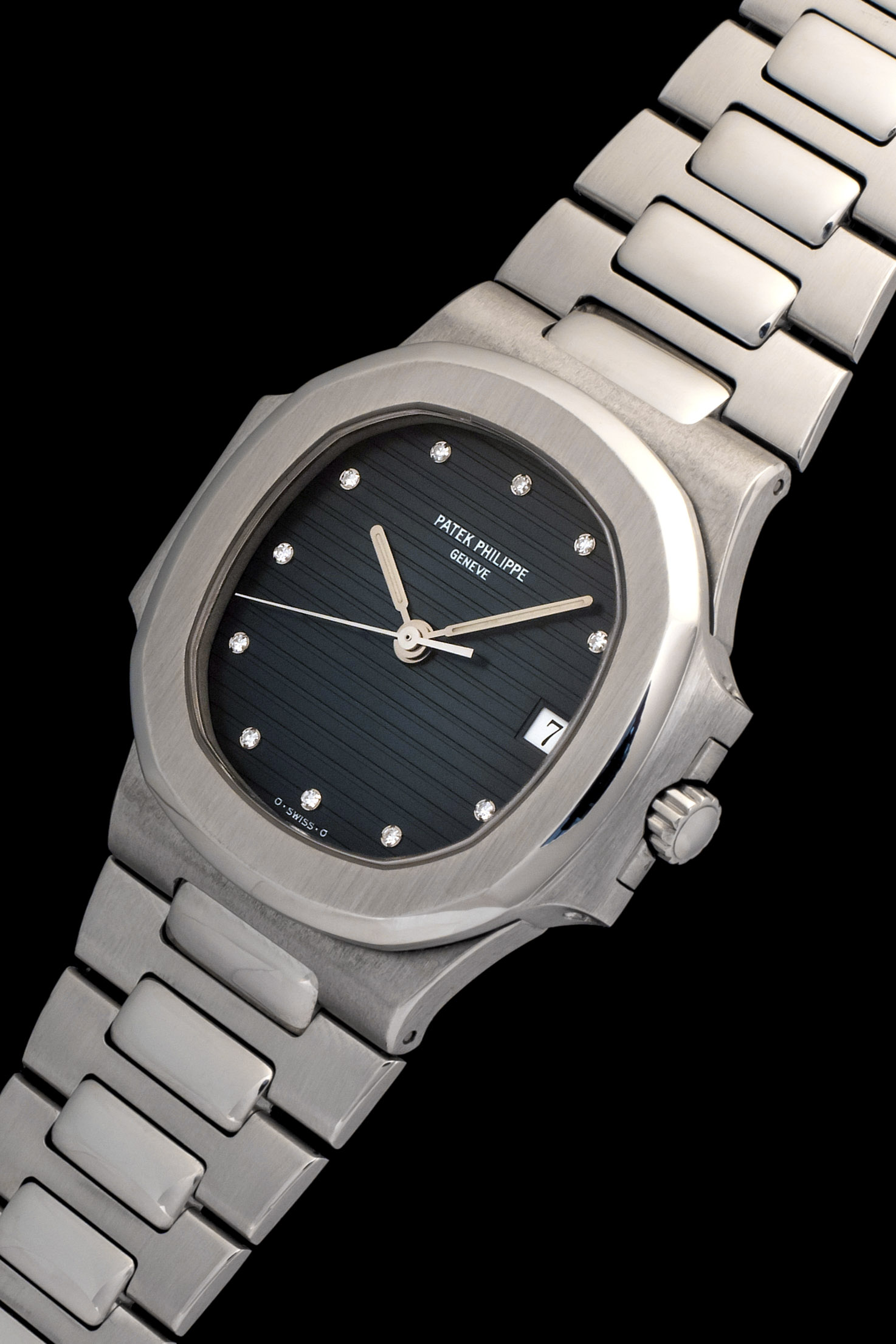
Within the rarity of the watch is another component that makes it even rarer and that is its platinum casing. The metal is not readily found on Patek sport models and those who want one sometimes have to personally request them directly from the manufacture in Geneva. Now, if that was not rare enough add the original box and papers to the mix. Here we have a perfect hat trick of a watch. Patek Philippe 3800 in platinum with its original box and papers.
Collectability
Not many were manufactured and out of those made not many are being offered at this moment. Within the rarity of the watch is another component that makes it even rarer and that is its platinum casing. The metal is not readily found on Patek sport models and those who want one sometimes have to personally request them directly from the manufacture in Geneva.
Availability
Article Number: 6622
Brand: Patek Philippe
Model: Nautilus
Reference: 3800
Serial Number: 302XXXXX
Year: 2002
Metal: Platinum
Dial Color: Blue
Dial Model: Diamond Index
Movement Type: Automatic
Strap / Bond: Platinum
Dimension: 36mm
Original Box: Yes
Warranty: Yes
Rolex Submariner-Date Ref. 1680/8
Rolex Submariner Date – The World’s First Elegant Diving Watch
Early Years
In 1967, 14 years after Basel’s release of the first Submariner Rolex introduced one of its finest creations the Submariner Date Ref. 1680. With this reference Rolex showed the world they could make equally as marvelous every day watches as they did tool watches.
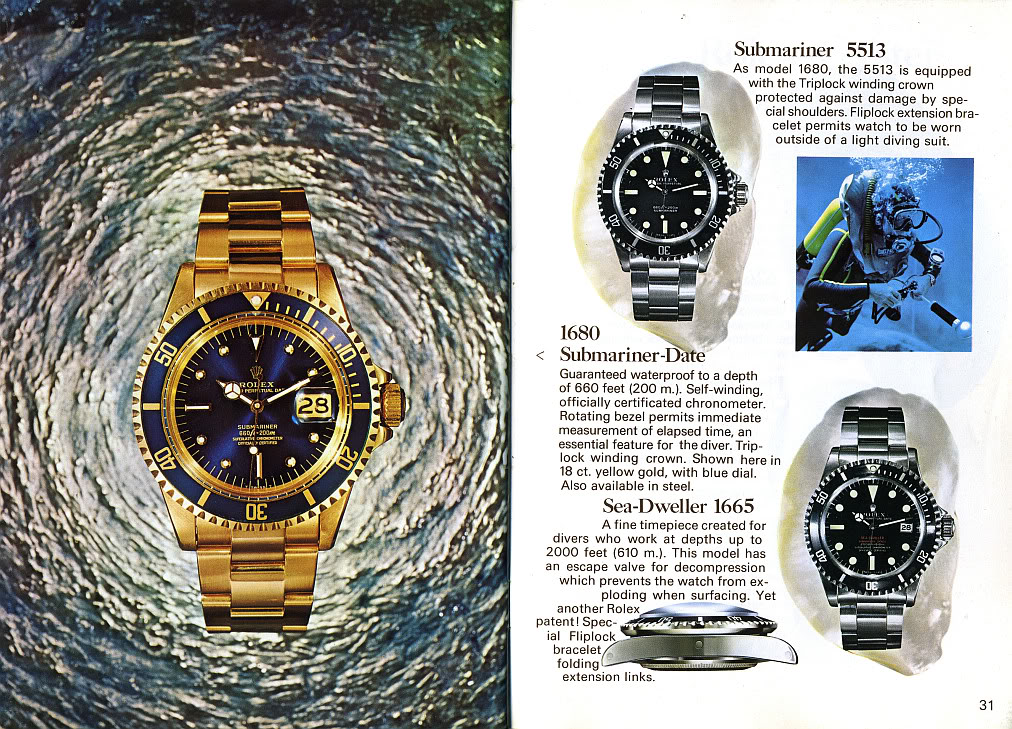
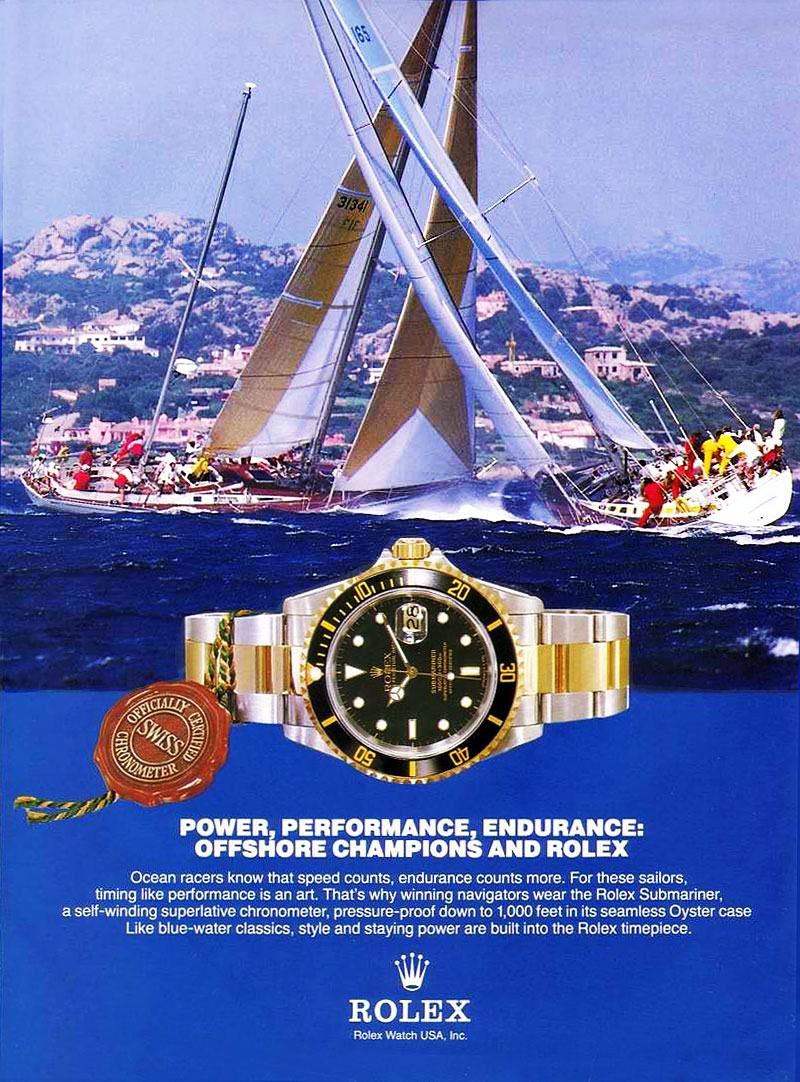
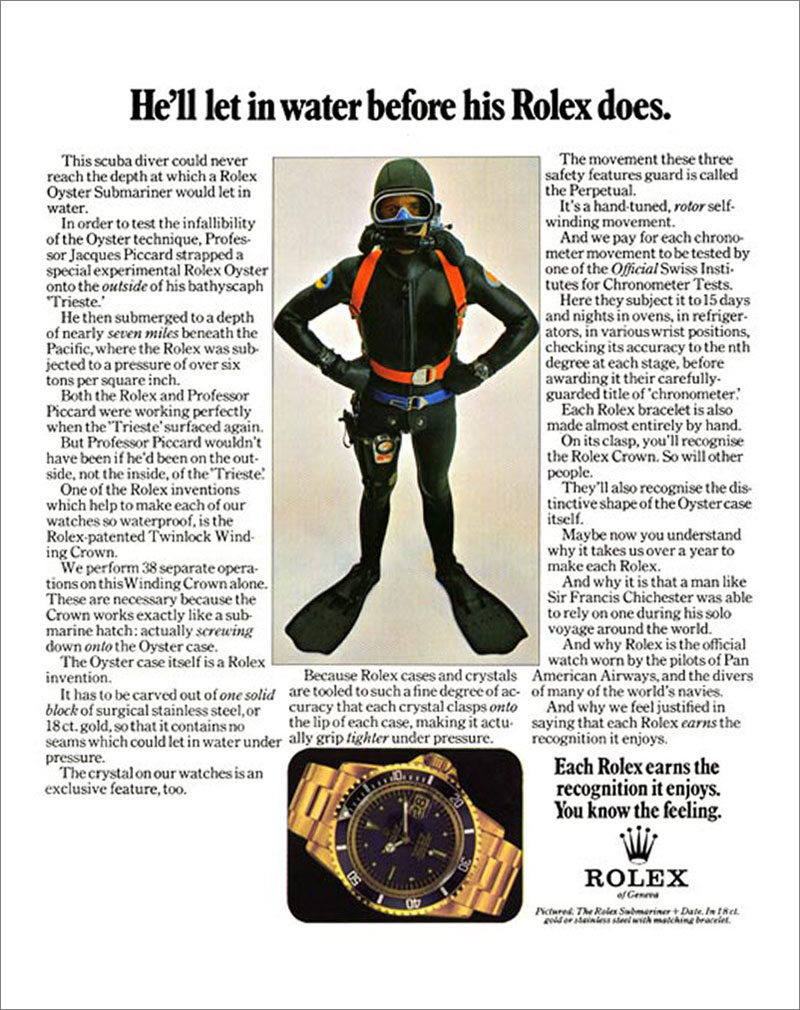
The 1680 was the first Submariner to feature a date function, which did not come in handy when diving but it made the world of a difference when worn on a casual setting. Rolex’s underlying message with the Submariner was: “now you can keep your Rolex on forever. Take it diving but also take it to the office”. Soon after its 1967 release the 1680 became the most wearable Rolex. The rapid success of the Submariner prompted Rolex to shock the world two years later with the release of the Submariner Date in 18K yellow gold. This new permutation of Submariner showed the market that Rolex had surpassed its standing as a tool watch manufacturer and become a dynamic watchmaker.
Dial Variations
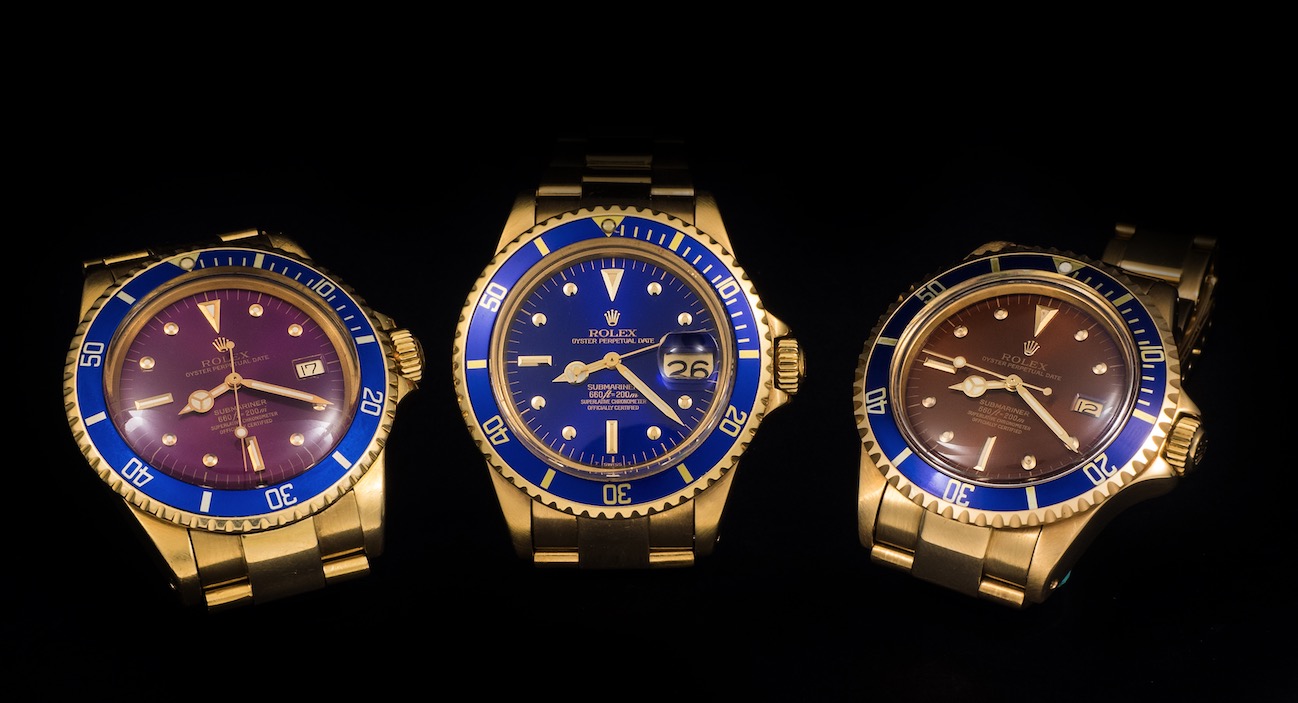
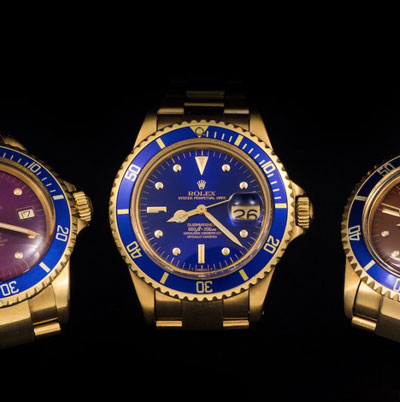
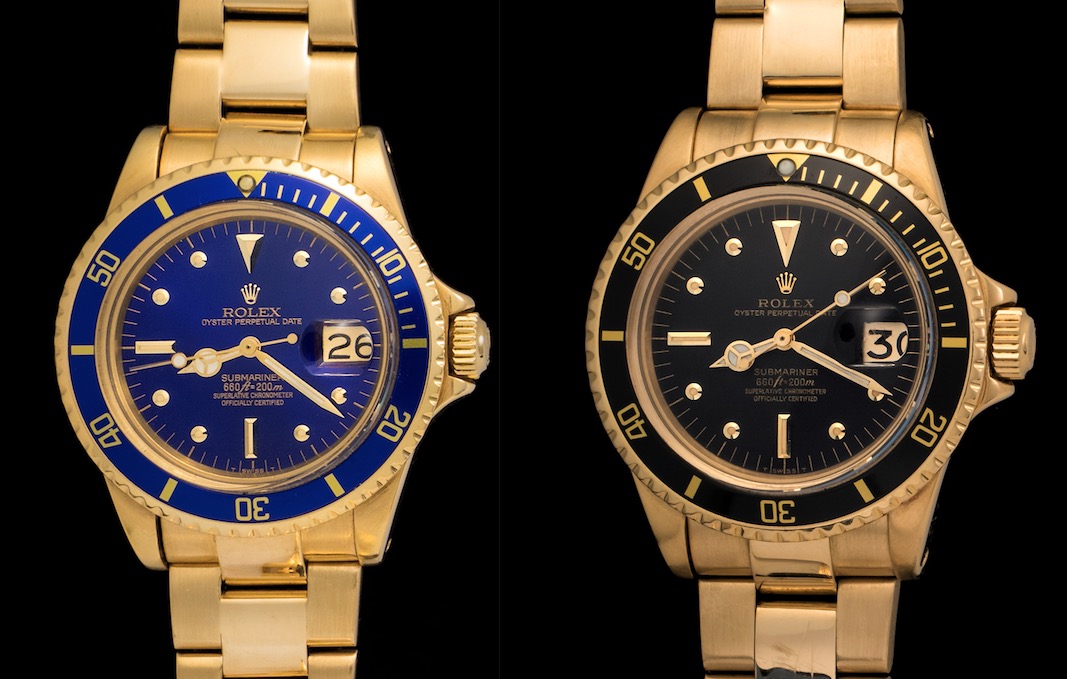
The 1680 from 1969 saw two dial variations, which will forever remain iconic. Rolex experimented with black dials and gold lettering as well as blue and gold lettering. Little did Rolex know that their blue dials would soon begin to change colors due to a pigmentation issue brought by the factory made dials. Some blue dials turned into a rich purple, others became brown, while others turned into a hue of navy blue.
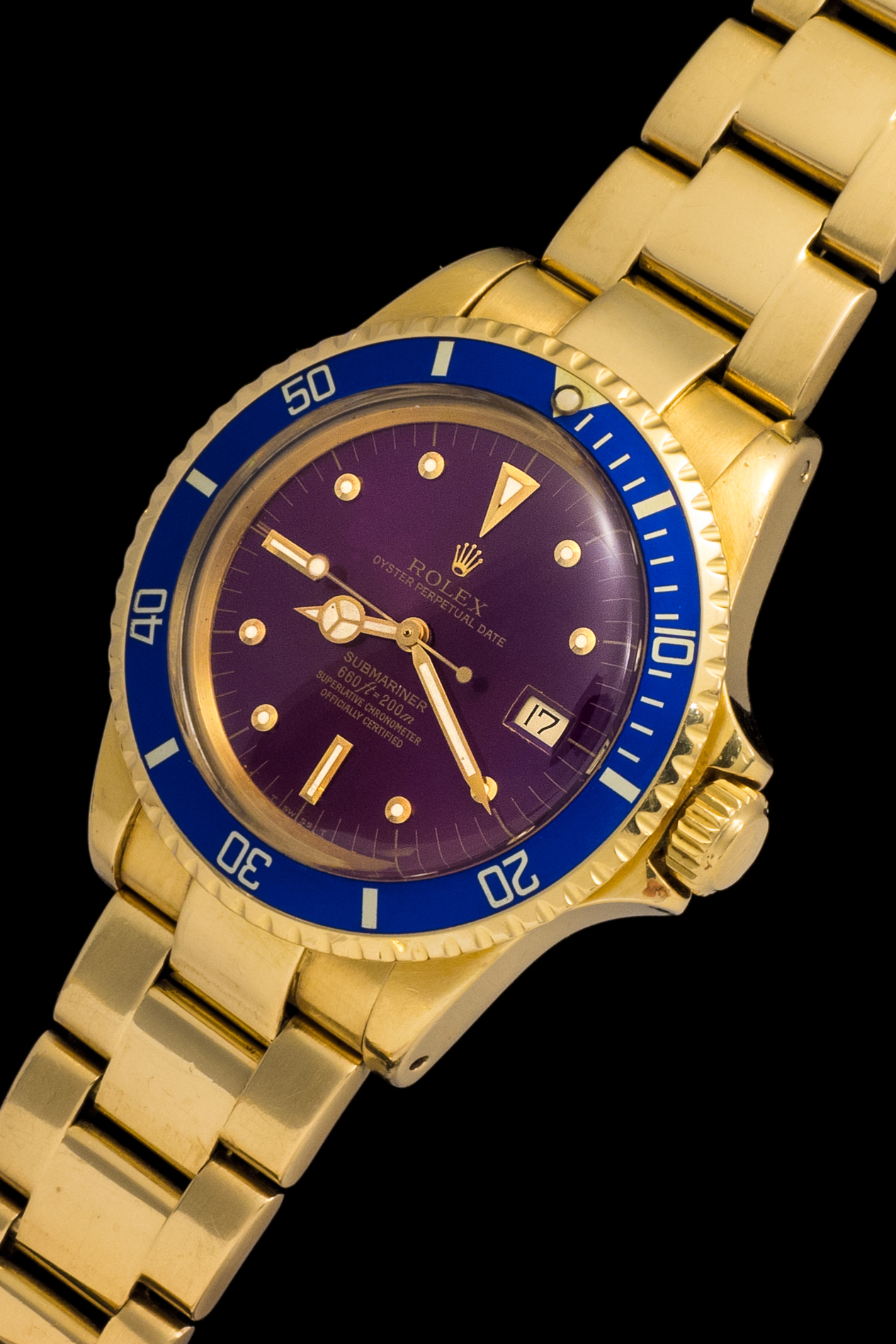
Rolex Submariner-Date ref 1680/8″ Purple”
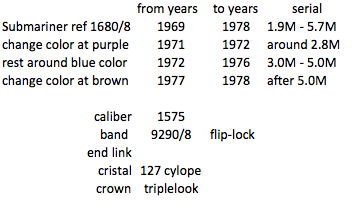
The first strand of discolored dials occurred with 1680’s manufactured around 1969. Submariners belonging to serials in the 2.8 million range turned into a strong purple color almost looking aubergine. Finding dials with this type of discoloration is very rare, as the occurrence was quickly reversed.
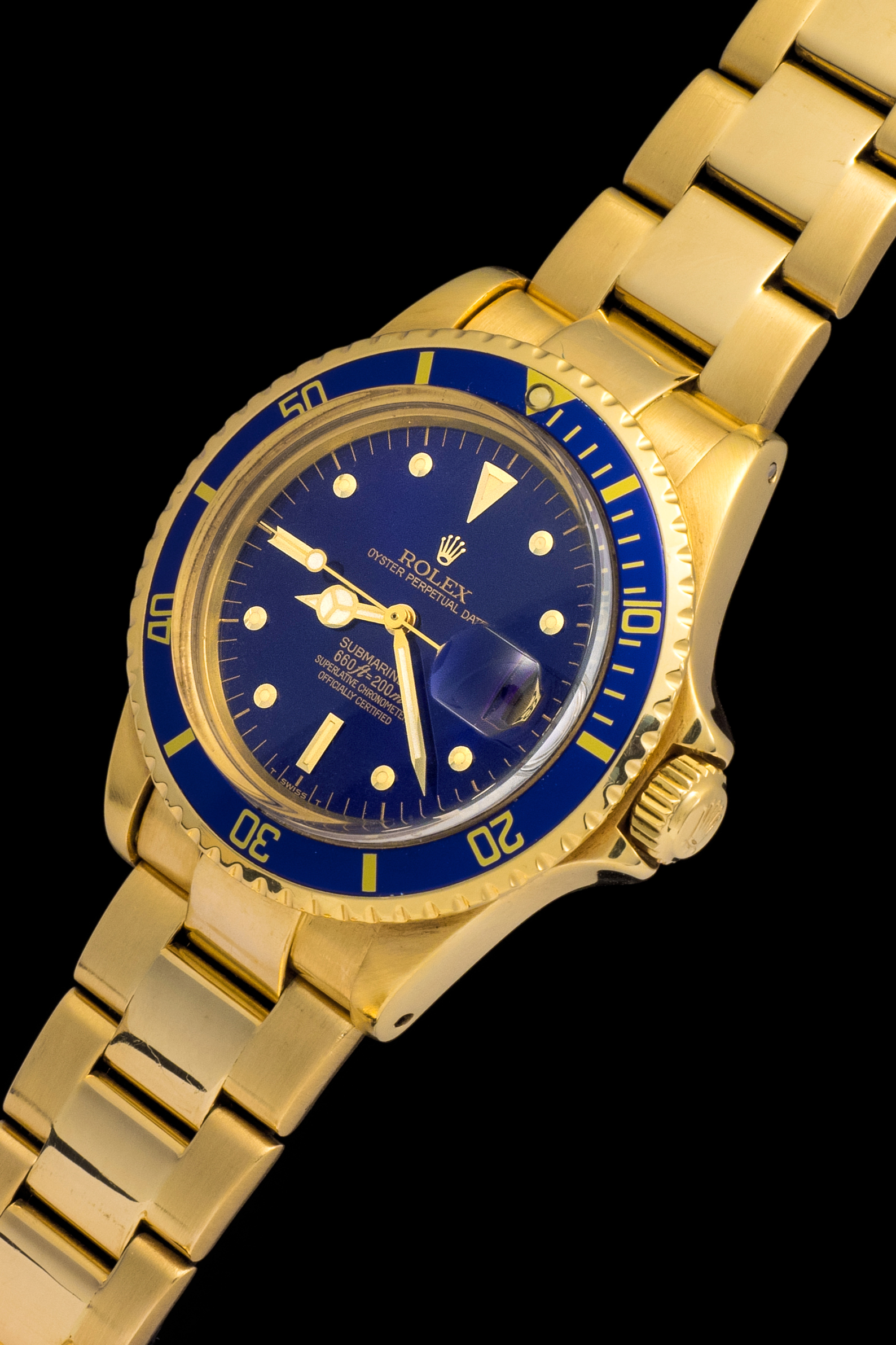
Rolex Submariner-Date Ref 1680/8 “blue Navy”
The second strand of discolored dials occurred with Submariners ranging from the 3 million to 5 million serials. The discoloration here was not as dramatic as the latter ones but they were equally as fascinating. These dials ranged from intense navy blue hues to others not showing strong blue colorations. Naturally navy blue dials fetch a premium whereas the others do not.
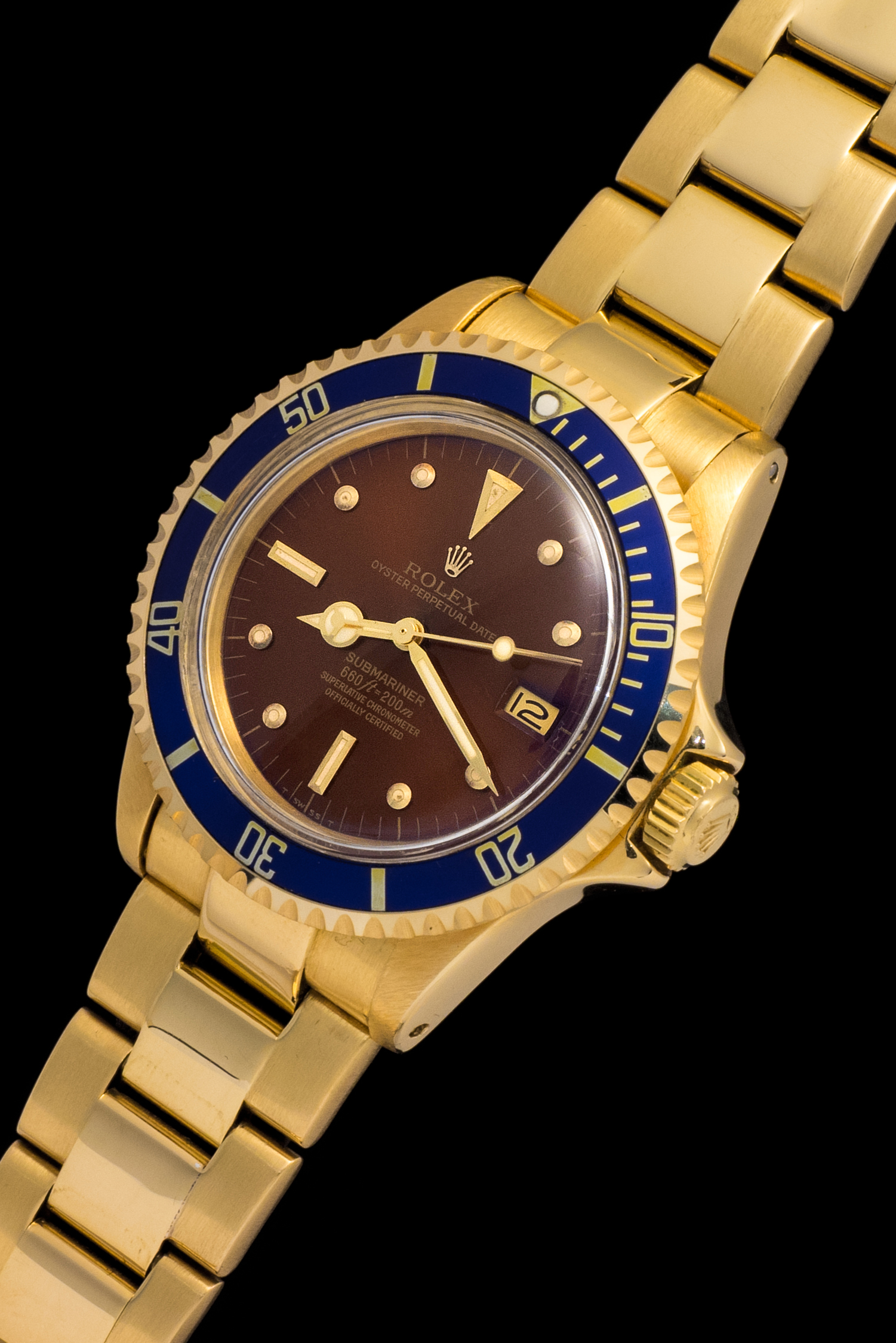
Rolex Submariner-Date Ref 1680/8 “tropical brown”
The third and last strand of discolored dials occurred with the last serial numbers belonging to the 1680, those in the 5 million range. In an effort to stabilize dial colorings Rolex decided to produce their last batch of dials using materials reserved for their new lines of upcoming sport models. The manufacture assumed that their newer dials were going to retain their factory made coloring. This notion of belief was quickly contradicted as those dials began to transform into a brownish color, the now revered Tropical dials. These dials will remain the most fascinating strand of dials ever produced by Rolex.
Collectability
The 1680 in yellow gold’s production span for nearly 10 years, ending on 1978 when Rolex introduced a newer model fitted with a sapphire crystal. Nonetheless the 1680 will remain an icon for eternity, as it was Rolex’s foray into the world of sporty/elegant watches. The key in collecting the special dials belonging to the 1680 era is to find examples with even coloring throughout the entire dial. Meaning purple dials are more sought after when the entire area is covered by the same tone of color. That being said it is important to understand that discolored Rolex dials are unique to their watch. Meaning that no two discolored dials will ever be the same. Collectors find this happening fascinating, as they appreciate the rarity of their Rolex 1680. After trial and error Rolex has only been able to master the coloring applied to dials fitted on sport models.
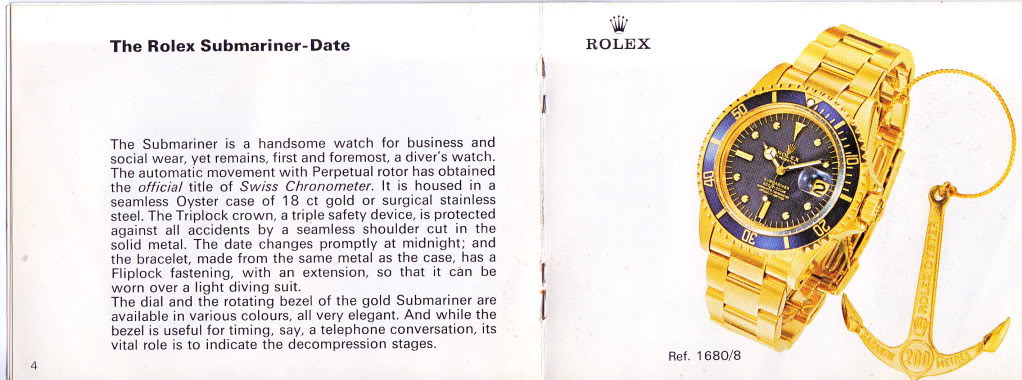
FROM ORIGINAL SUBMARINER BOOKLET:
The Submariner is a handsome watch for business and social wear, yet remains, first and foremost, a diver’s watch.
The automatic movement with perpetual rotor has obtained the official title of Swiss Chronometer. It is housed in a seamless ouster case 18ct gold or surgical stainless steel. the trip look crown, a triple safety device, is protected against all accident by a seamless shoulder cut in the solid metal. the date change promptly at midnight, and the bracelet ,made from the same metal as the case ,has a flip look fastening with an extension so that it can be worn over a light diving suit.
the dial and the rotating bezel of the gold submariner are available in various colours all very elegant And while the bezel is useful for timing say a telephone conversation its vital role is to indicate the decompression stages
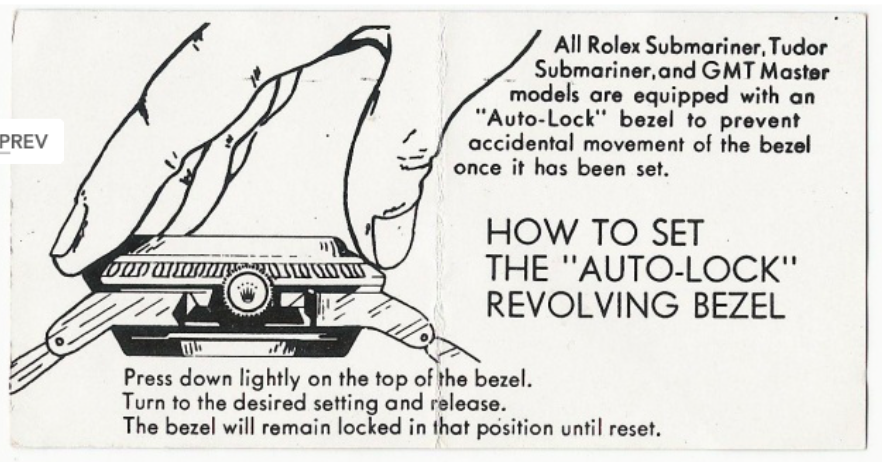
ISTRUCTION FOR USE REVOLVING BEZEL
Rolex Day-Date: The Original History of the President’s Watch
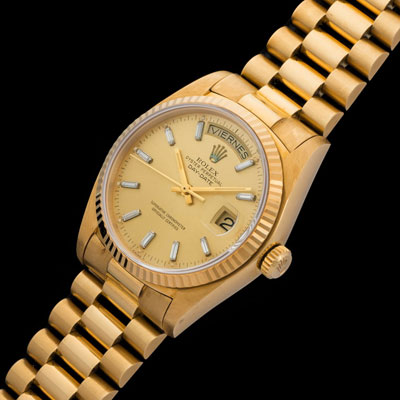
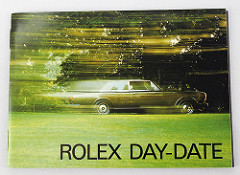
Rolex’s 6611 models that were waterproof up to 100 feet soon replaced the Day Date but it was still externally identical to the 6611. The 6611 featured the new caliber 1055 movement with its free sprung Micro-Stella balance, the first to be labeled “Superlative Chronometer Officially Certified” on the dial, and had a new accuracy standard guaranteed. The Day Date earned the nickname the “President” when Rolex apparently gave one to then President of the United States Dwight Eisenhower.
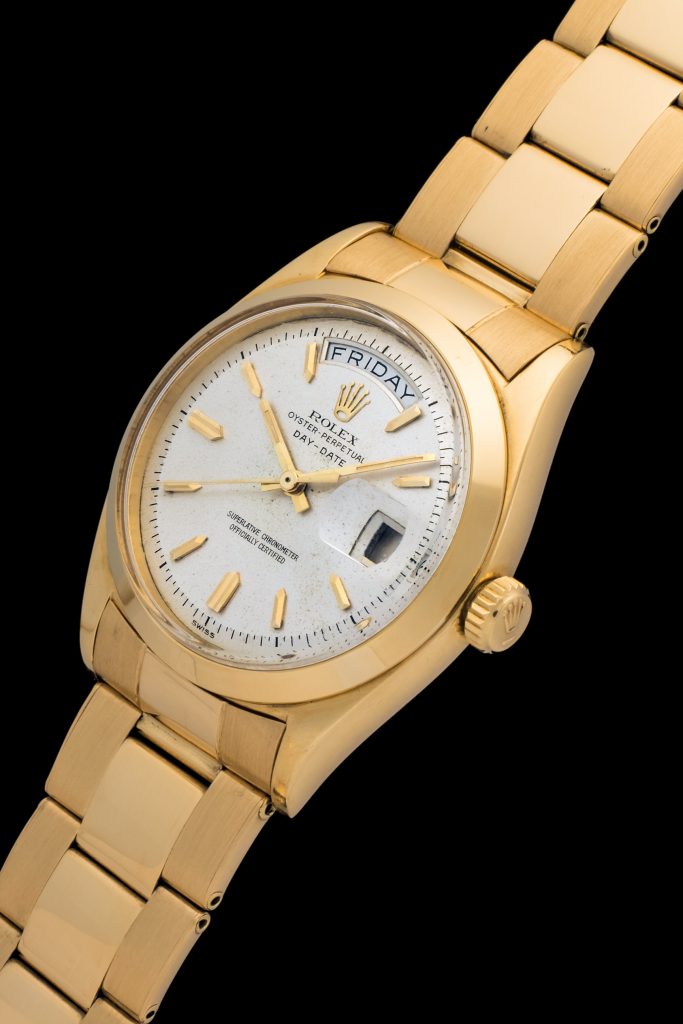
With only a few minimal changes in the case design over the years, the first large modification to the Day Date was the addition of the hack feature in 1972. This allowed the second hand to be stopped if you wanted to set the time to match an accurate source. At this time, the shape of the head was essentially the same as it is today. The “quick-set” feature solved one of the watches’ biggest problems. Introduced in the late 1970s, the quick-set was added to all Rolex models by 1983. Instead of turning the crown to speed time to change the date to the correct day, the wearer could now pull the button out half way and in an exclusive function, change the date until the correct date was displayed. The introduction of the quick-set feature also coincided with other progress for the Day Date. The inclusion of the sapphire crystal not only gave the watch a more attractive appearance but it also added to the durability of the watch. The sapphire crystal fitted tighter than the plastic glass used before and rendered the watch glass nearly scratch proof. Also in addition to the advancements structurally and internally, Rolex introduced a new number system that, for some models, is still in use for today. An extra digit was added to the model number.
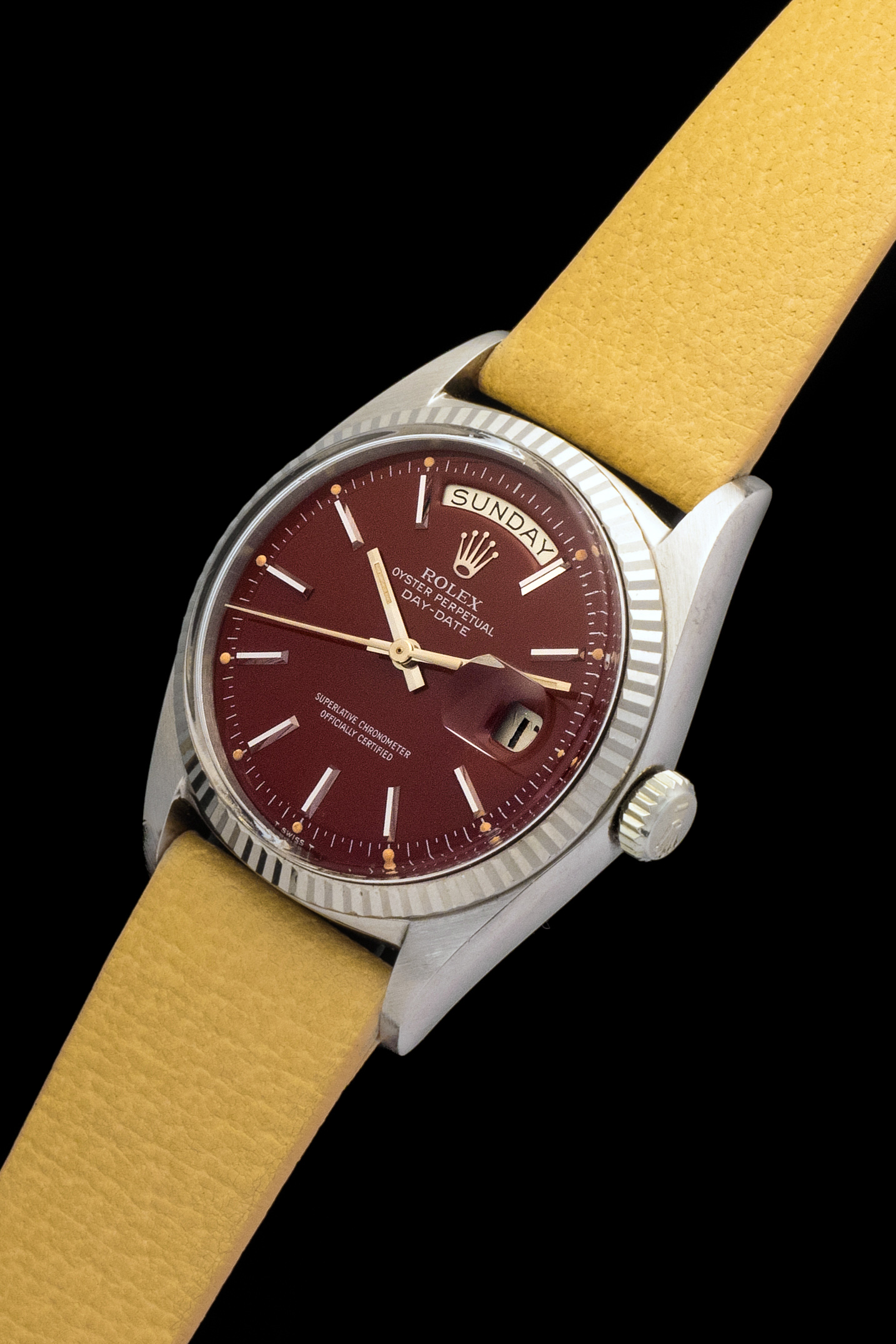
Introduced towards the end of 1990 was the “Double Quick-Set” watch, Rolex model number 18238. This model made the setting of the Day and Date even easier as they could both be set independently from each other and the time. Rolex also expanded their Crown Collection to include all types of precious stones, although they were available with diamonds on the bezel at their debut. At the end of 2000, Rolex reintroduced the Day Date in rose gold and also with a domed sapphire mineral glass.
The “day wheel” on the Day-Date President is available in the following 26 languages: English, Spanish, Arabic, German, Chinese, Danish, Basque, Catalan, Ethiopian, Finnish, French, Greek, Hebrew, Dutch, Indonesian, Italian, Japanese, Latin, Moroccan, Norwegian, Farsi, Polish, Portuguese, Russian, Swedish and Turkish. The Rolex Day Date, famously known at the Rolex President, has become an icon for class, style, and success. It is no doubt one of the most prestigious Rolex watches available today.
Miami Antique Show: The Best Vintage Watches
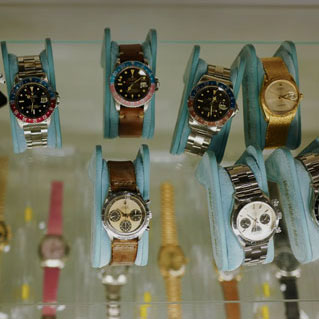
There are the antiques shows your grandparents go to, and then there is the Miami Antiques Show. Okay, who am I kidding, the Miami Antiques Show is the antiques show your grandparents go to. But, in spite of the overly air-conditioned, nothing-to-eat-but-Papa-John’s environment, the Miami show makes for some of the best vintage watch spotting this side of Parma. As always, we made our annual trek down South and here are some the best pieces we saw, broken down by provider.
credit : Hodinkee