When discussing the golden era of mid-century chronographs, the conversation inevitably turns to the “Holy Trinity” of Swiss watchmaking. While Patek Philippe often dominates auction headlines, astute collectors have long recognized that Vacheron Constantin produced some of the most aesthetically perfect and mechanically refined chronographs of the 20th century. At the very heart of this legacy sits the Reference 4072.
Introduced in 1938 and remaining in the catalog until the early 1970s, the reference 4072 is one of Vacheron Constantin’s most iconic and enduring chronograph designs. Despite its long production run, it remains an exceptionally rare timepiece. Total production across all metals over more than three decades reached only 1,178 examples. This scarcity, combined with its flawless proportions and exceptional movement finishing, makes the 4072 a true connoisseur’s choice.
2. Design and Dial Variations: A Study in Nuance
The reference 4072 is instantly recognizable by its elegant 34mm case, which, despite its modest dimensions by modern standards, wears with remarkable presence due to its elongated, slightly faceted lugs and thin bezel. The pushers are typically rectangular, though extremely rare early examples feature oval pushers — a detail that makes an already rare watch even more exceptional.
What truly sets the 4072 apart for collectors is the incredible variety of dial designs produced over its lifespan. A comprehensive study by horological scholars has identified at least six distinct dial variants.
The Six Dial Variants of Ref. 4072
Variant 1 (Late 1930s): Entirely printed dials with no applied hour markers. Often features sector-dial layouts, highly prized by collectors.
Variant 2 (1940s–1950s): The most common variant, featuring applied hour markers (bead or rectangular) with Arabic or Roman numerals at 12 and 6 o’clock. Outer scales often include tachymeter or telemeter.
Variant 3 (Circa 1948): The ultra-rare black enamel dial. Only a handful of examples are known to exist.
Variant 4 (Early 1940s–1950s): Features applied gold hour markers with Roman numerals XII and VI, an open seconds track, and notably larger sub-dials.
Variant 5 (The Doctor’s Watch): Defined by a unique snail scale (pulsometer and respirometer) at the center of the dial.
Variant 6: Similar to Variant 3 but with double applied hour markers at 12 and 6 o’clock and an applied gold Maltese cross.
Metal
Estimated Production
Rarity
Yellow Gold
~600 pieces
Rare
Rose / Pink Gold
~285 pieces
Very Rare
Stainless Steel
~200 pieces
Extremely Rare
Two-Tone (Steel/Gold)
< 100 pieces
Ultra Rare
3. The Heart of the Matter: Calibre 13’VZ 434
The mechanical soul of the reference 4072 is as impressive as its exterior. Vacheron Constantin utilized ébauches from Valjoux, specifically the Valjoux 22, which was heavily modified and finished to the manufacture’s exacting standards. This movement, designated as the Calibre 13’VZ 434 (and later the 13’VZ 492), represents the zenith of mid-century chronograph finishing.
Vacheron Constantin’s watchmakers applied straight graining to the flat surfaces of the steel levers, mirror-polished the screw heads and countersinks, and meticulously hand-beveled the angles of the bridges. The result is a movement that rewards close inspection with a loupe, revealing a level of artisanship rarely encountered outside of the very top tier of Swiss horology.
“This movement is based on a Valjoux 22, but has undergone the specific (very high) finishing standards of Vacheron Constantin… Having such a piece of history on the wrist is always fascinating, mainly because of what the watch represents… it has a soul!” — Monochrome Watches
4. The Allure of the Sector Dial
Among the various dial configurations of the reference 4072, the sector dial (often found in Variant 1) holds a special place in the hearts of collectors. Sector dials, characterized by concentric circles and distinct “sectors” for hours and minutes, were popular in the 1930s and 1940s. They offer a highly legible, almost scientific aesthetic that contrasts beautifully with the elegant case of the 4072.
The sector dial variants are incredibly rare, representing the earliest production years of the reference. Finding a reference 4072 with an original, unrestored sector dial is a significant event in the vintage watch market. The combination of the complex dial layout, the elongated lugs, and the exceptional movement makes these specific examples some of the most desirable chronographs ever produced by Vacheron Constantin.
the sector dial Ref. 4072
5. Buying Guide: Evaluating a Reference 4072
Acquiring a vintage Vacheron Constantin reference 4072 requires careful consideration and a deep understanding of the model’s nuances. Here are the key factors to evaluate.
Dial Authenticity and Condition
The dial is the most critical component of any vintage watch. For the 4072, it is essential to verify that the dial variant matches the production era of the case and movement. Many dials have been washed, reprinted, or replaced over the decades. Look for crisp printing, correct typography (especially the ampersand in “Vacheron & Constantin”), and appropriate aging. An original, untouched dial, even with some patina, is vastly preferable to a poorly executed redial.
Case Integrity
The 34mm case of the 4072 is defined by its sharp facets and elegant proportions. Over-polishing is a common issue that can ruin the watch’s aesthetic appeal. Examine the lugs carefully; they should retain their distinct shape and not appear overly rounded or thin. The hallmarks on the caseback and lugs should be visible, though some wear is expected on a watch of this age.
Movement Originality
The Calibre 13’VZ 434 should exhibit the high-level finishing characteristic of Vacheron Constantin. Ensure that all components are original and that the movement is free from significant corrosion or damage. The serial numbers on the movement and case should correspond to the correct production period.
Extract from the Archives
Whenever possible, obtain an Extract from the Archives from Vacheron Constantin. This document confirms the original configuration of the watch, including the case material, dial type, and production date, providing invaluable peace of mind for the collector.
6. The Collector’s Verdict
The Vacheron Constantin reference 4072 is not a watch for the novice. It requires a discerning eye to appreciate the subtle variations in dial typography, the crispness of the case facets, and the unparalleled finishing of the movement. For the advanced collector, acquiring a 4072 — particularly an early example with a sector dial or a rare pink gold variant — is a milestone. It represents an era when chronographs were transitioning from pure utilitarian tools to objects of immense elegance and prestige.
7. Discover the Reference 4072 at Luca Musumeci
At Vintage Watches Milano & Miami, we are thrilled to offer two exceptional examples of this legendary reference, catering to the highest echelons of vintage collecting:
Vacheron & Constantin Ref. 4072 First Series Chronograph with Sector Dial — An incredibly rare early execution (Variant 1) featuring the highly sought-after sector dial layout.
Vacheron Constantin Chronograph Pink Gold Ref. 4072 — A stunning example in the highly desirable and rare pink gold case.
Analysis of the Patek Philippe Reference 2552 in Platinum
1. Introduction to the Patek Philippe Reference 2552 in Platinum:
The Patek Philippe reference 2552, affectionately nicknamed the “Flying Saucer” due to its distinctive case shape reminiscent of a flying saucer, represents an icon of twentieth-century watchmaking. Produced between 1954 and 1960, this automatic model stands out for its elegance and design that was modern for its time. While the reference 2552 was made in various metal options, including yellow, white, and rose gold, it is the platinum version that holds particular fascination for collectors due to its extreme rarity. The nickname “Flying Saucer” is widespread among enthusiasts, as evidenced by numerous online sources and watchmaking forums. This common designation suggests that the case design, characterized by a stepped bezel and curved lugs, was perceived as remarkably innovative or unusual at the time of its introduction.
This report aims to provide an in-depth analysis of the Patek Philippe reference 2552 in its precious platinum variant. The objective is to explore its history, technical specifications, presence in the auction and retail market, discussions among collectors, its current market value, and, finally, its high degree of collectibility.
2. Historical Overview and Technical Specifications:
The reference 2552 appeared on the watch market between 1954 and 1960. Its introduction occurred during a period when public preferences were evolving towards watches with a slimmer profile, and the 2552 was conceived as a sleeker alternative to the previous reference 2526, which featured a thicker enamel dial. This evolution in design reflected a broader trend in the watchmaking sector towards cleaner and more discreet lines.
The beating heart of the reference 2552 is the caliber 12-600 AT, the first self-winding movement developed by Patek Philippe, introduced in 1953. This caliber not only marked a milestone for the Geneva-based manufacturer but was also used in other references of great importance, such as the aforementioned 2526. The 12-600 AT is renowned for its exquisite craftsmanship and its technically advanced features for the era, including 30 jewels, the Gyromax balance, a guilloché gold rotor, and the prestigious Geneva Seal certification. Some examples intended for the American market bear the “HOX” hallmark on the movement, further evidence of their history. The reputation of this caliber as a “legendary” and “superb” movement underscores its historical and watchmaking importance, significantly contributing to collectors’ desire for the reference 2552.
The platinum case of the reference 2552 typically has a diameter of 36 mm. Its distinctive shape is characterized by a well-defined stepped bezel and elegantly curved and downward-facing lugs. The case back is screwed down, ensuring a degree of water resistance for the time. Hallmarks attesting to the purity of the platinum and identifying the case maker, Wenger, whose mark is number 1, are often present on the sides of the case and on the lugs. It is interesting to note that Wenger was the case maker for the reference 2552, unlike Baumgartner, who made the cases for the reference 2526. This subtle distinction highlights the differences between these two closely related references.
The dials of the platinum examples of the reference 2552 are generally silvered. In some particularly rare versions, the dial is embellished with applied diamond indices. A subsidiary seconds counter is classically positioned at 6 o’clock. Below the 6 o’clock index, the inscription “Swiss” can be found. It is crucial to emphasize that platinum examples of the reference 2552 with diamond-embellished dials are considered exceptionally rare, with only four known examples in this specific configuration.
The estimated total production of the reference 2552 in all its metal variants is around 650 pieces. Of these, the number of platinum examples made is extremely limited, with estimates indicating the presence of only 7 or 8 known pieces, including variants with baton dials and those with diamond indices. This discrepancy between the total production and the scarcity of the platinum version, which represents about 1% of the total, underscores the exceptional rarity of this variant, a primary factor that determines its high collectibility and potential market value.
Patek Philippe Reference 2526: An In-depth Analysis of a Vintage Watchmaking Icon
The Patek Philippe manufacture is universally recognized as a bastion of haute horlogerie, celebrated for creating timepieces of exquisite craftsmanship and profound historical significance. Among its numerous creations, the reference 2526 holds a place of particular importance. Introduced in 1953, this model marked a fundamental step in the brand’s history, representing its first self-winding wristwatch. This innovation, combined with an elegant design and meticulous execution, has made the 2526 a highly desirable piece for collectors and a symbol of watchmaking excellence. This report aims to provide an in-depth analysis of the Patek Philippe reference 2526, exploring its historical context, technical specifications, design characteristics, rarity, market value, opinions of the collector community, and the importance of its provenance.
Genesis of an Icon: Historical Context and Development
The reference 2526 made its appearance at the Basel Fair in 1953, a period of significant evolution for the watchmaking industry, characterized by a growing focus on automatic movements. In this context, Patek Philippe, while maintaining its reputation for the highest quality manual-winding movements, recognized the importance of embracing this emerging technology. The result of this vision was the development of the caliber 12-600 AT, the first automatic movement entirely designed and manufactured by the company. This caliber represented a remarkable technical achievement for Patek Philippe, testifying to its commitment to innovation and independence. The choice to develop an in-house automatic movement, rather than relying on external suppliers, allowed Patek Philippe to maintain its high quality standards and exercise complete control over the production process.
It is interesting to note that the introduction of an automatic movement by Patek Philippe occurred at a time when automatic winding technology had already been present on the market for several decades. Rolex’s patent on the “perpetual” movement with a 360-degree rotor, filed about twenty years earlier, may have represented a legal constraint for other watchmaking houses. However, evidence suggests that Patek Philippe had already begun working on its own automatic movement for years, meticulously perfecting it while awaiting the expiration of the Rolex patent. This strategy demonstrates Patek Philippe’s philosophy, oriented towards quality and technical precision, rather than the hasty introduction of a product not yet up to its standards. The wait and subsequent introduction of the caliber 12-600 AT confirmed Patek Philippe’s dedication to watchmaking excellence.
Anatomy of a Classic: Design and Technical Specifications
Case Construction and Materials
The case of the reference 2526 typically featured a three-part construction, with a screw-down case back designed to ensure a certain degree of water resistance. This feature, innovative for the time, contributed to the robustness of the watch and made it more suitable for everyday use. The 2526 was produced in various precious metal versions: 18-karat yellow gold (the most common), 18-karat rose gold, 18-karat white gold, and platinum. The availability in all four noble metals underscores the luxurious nature of this timepiece. The case dimensions generally hovered around 35-36 mm in diameter, a size that was considered quite generous at the time and gave the watch a notable presence on the wrist.
The Distinctive “PP” Crown
An iconic detail of the reference 2526 is its cast gold crown, characterized by the intertwined “PP” logo. This particular crown not only facilitated manual winding and time setting but also became a distinctive element highly appreciated by collectors, often associated with the era of the caliber 12-600 AT. Its presence adds a touch of refinement and recognizability to the overall design of the watch.
The Revolutionary Caliber 12-600 AT
The beating heart of the Patek Philippe reference 2526 is the caliber 12-600 AT. This self-winding movement, awarded the prestigious Geneva Seal, was composed of 30 jewels and featured a Gyromax balance and an 18-karat gold rotor finely decorated with a guilloché pattern. The caliber 12-600 AT was not only technically advanced for its time but also beautifully finished, reflecting Patek Philippe’s commitment to haute horlogerie. The innovative automatic winding mechanism was the subject of a Swiss patent, number 289758, granted in 1953, testifying to the originality of the technology developed by Patek Philippe.
The Enamel Dial: A Masterpiece of Craftsmanship
Characteristics of the Double-Fired Enamel Dial
One of the most distinctive elements of the reference 2526 is its enamel dial. Made using the “double-fired on sterling silver disc” technique, this type of dial was conceived to offer greater beauty and durability, resisting color change and scratches. The typical hue of many enamel dials of the 2526 is a cream or ivory white, a shade that has become a hallmark of the vintage model and is particularly appreciated by collectors. The earliest versions of the dial featured applied 18-karat gold baton indexes riveted or fixed with pins.
First Series vs. Subsequent Dials
A significant difference between the first series and subsequent dials concerns the method of fixing the indexes. In the first series dials, the indexes were inserted into the enamel through pins, a process that left subtle “dimples” visible on the surface of the dial. In later series, this technique was abandoned, and the indexes were glued directly onto the enamel surface. The first series dials, with indexes fixed with pins, are often considered more desirable by collectors for their rarity and for being a testament to an initial production technique later abandoned.
The Rarity of Black Enamel Dials
Another peculiarity that significantly increases the value of the reference 2526 is the presence of a black enamel dial. Examples with a black dial are extremely rare and highly sought after by collectors, fetching significantly higher prices at auction due to their scarcity. The difficulty in producing perfect black enamel dials contributed to their limited distribution.
The Fragility of Enamel Dials
Despite their beauty and presumed durability, enamel dials are inherently fragile and susceptible to cracks or damage, especially in the event of shocks. Therefore, the condition of the dial is a crucial factor in the evaluation of a vintage Patek Philippe 2526. Collectors pay particular attention to the absence of cracks or chips, as even a small defect can significantly affect the value of the watch.
Rarity and Variations: Exploring Different Metals and Series
Production Numbers and Metal Rarity
Estimates of the total production of the reference 2526 hover around 2500 examples, distributed among the different metal variants. Yellow gold is considered the most common metal, with an estimated production of around 2400 examples. Rose gold is significantly rarer, with approximately 360 examples produced. White gold and platinum are the rarest variants, with an estimated production of around 70 examples each. This scarcity makes the white gold and platinum versions particularly coveted by the most discerning collectors. Some sources suggest that, despite the estimated production number being the same for white gold and platinum, white gold examples are even harder to find on the market today.
Distinctive Features of Different Series/Generations
Over the course of its production, the reference 2526 underwent some evolutions, giving rise to different series or generations. Although the differences may be subtle, collectors hold them in high regard. Generally, four main series are distinguished. The first series is characterized by a domed screw-down case back and an enamel dial with applied indexes fixed with pins. The second series also features a domed screw-down case back and an enamel dial with inlaid indexes. The third series is identical to the second but with a practically flat screw-down case back. Finally, the fourth series has a flat screw-down case back and an enamel dial with inlaid luminescent indexes. Understanding these differences between the series helps collectors identify the specific characteristics and relative rarity of each example.
The Auction Block: Tracing Market Value and Notable Sales
The Patek Philippe reference 2526 is a highly sought-after watch in the vintage and collectible watch market, and its performance in international auctions reflects this interest. The prices achieved vary considerably depending on the case metal, dial color, condition, and the presence of any special features such as the signature of a prestigious retailer or the completeness of the original accessories.
Table 1: Notable Auction Results for the Patek Philippe Reference 2526
Auction House
Date
Reference (Metal/Dial)
Realized Price (Currency)
Estimated Price (Currency)
Notable Features
Christie’s
May 2012
Ref. 2526 Rose Gold/Enamel
HKD 524,000
HKD 240,000 – 380,000
Extract from the Archives
Sotheby’s
October 2024
Ref. 2526 Platinum/Enamel (Serpico Y Laino)
HKD 5,700,000 (approx. USD 732,690)
HKD 1,200,000 – 2,400,000
Retailed by Serpico Y Laino
Christie’s
November 2017
Ref. 2526 Yellow Gold/Black Enamel (Gobbi Milano)
CHF 100,000
Not specified
Signed by Gobbi Milano, Black Dial Certified Original
Sotheby’s
November 2024
Ref. 2526 Yellow Gold/Enamel
CHF 20,000 – 30,000
Not specified
With Patek Philippe box
Sotheby’s
April 2023
Ref. 2526 Yellow Gold/Enamel (First Series)
Not specified
Not specified
Extract from the Archives
Sotheby’s
December 2024
Ref. 2526 Yellow Gold/Enamel (First Series)
USD 25,000 – 50,000
Not specified
Extract from the Archives, Service Box
Sotheby’s
October 2024
Ref. 2526 Platinum/Enamel (Serpico Y Laino)
HKD 1,200,000 – 2,400,000
Not specified
Signed by Serpico Y Laino, Extract from the Archives
Antiquorum
November 2007
Ref. 2526 Yellow Gold/Enamel (Third Generation)
CHF 13,000 (Hammer Price)
CHF 8,000 – 12,000 (Estimate)
Extract from the Archives
Antiquorum
November 2007
Ref. 2526 Rose Gold/Enamel (Hausmann & Co.)
CHF 64,900 (Hammer Price)
CHF 60,000 – 70,000 (Estimate)
Patek Philippe rose gold bracelet, Extract from the Archives
First Patek Philippe automatic wristwatch, Sold to J.B. Champion
The analysis of auction results highlights how platinum examples, especially those signed by prestigious retailers such as Serpico Y Laino, tend to fetch the highest prices. Examples with the rare black enamel dial also achieve significantly higher prices due to their scarcity. The overall condition of the watch, particularly that of the delicate enamel dial, and the presence of original accessories, such as the box and papers, play a fundamental role in determining the final hammer price.
Voices of Collectors: Opinions from Forums and Online Communities
The Patek Philippe reference 2526 is held in high regard by the vintage watch collector community. On specialized forums such as Rolex Forums, WatchProSite, and WatchUSeek, there is a general appreciation for its historical importance as the brand’s first automatic watch, for its refined design, and for the exceptional quality of the caliber 12-600 AT and the enamel dial.
A recurring theme in discussions is the fragility of the enamel dial. Collectors are aware of its vulnerability to cracks and emphasize the importance of carefully examining the condition of the dial before a potential purchase. The search for examples with immaculate enamel dials is a priority for many enthusiasts.
Some collectors believe that the reference 2526 is an “underrated” model in the landscape of vintage Patek Philippe watches. Despite its historical significance and horological value, its market price may not always fully reflect its importance compared to other iconic models of the brand. This aspect makes it, for some, an interesting opportunity to acquire a piece of watchmaking history at a relatively accessible price.
Navigating the Market: Retailer Listings and Availability
The Patek Philippe reference 2526 is available for purchase through various channels, including retailers specializing in vintage watches and online platforms such as Chrono24. The presence of the model on different platforms offers collectors a variety of acquisition options but also requires careful research and due diligence.
The prices requested by retailers can vary significantly depending on the case metal, dial variant, condition, and the presence of original accessories. For example, a Patek Philippe 2526J Vintage Hausmann Automatic Calatrava Watch from the years 1954-5 was found for sale on Patekmonger at a price of $52,900.00 1. Several listings for the reference 2526 are present on Chrono24, including an 18-karat yellow gold version with an enamel dial from 1955 2.
Often, retailers highlight particularly desirable features such as “first series,” “enamel dial,” or the signature of a renowned retailer in their listings to attract experienced buyers. The presence of these specifications can significantly influence the asking price.
The Significance of Provenance: Retailer Signatures and Historical Documentation
The presence of a retailer’s signature on the dial, such as Tiffany & Co., Gobbi Milano, Serpico Y Laino, and Hausmann & Co., can add significant value and increase the historical importance of a vintage Patek Philippe 2526 4. These signatures testify to the partnership between Patek Philippe and internationally renowned jewelers and confer an aura of exclusivity to the watch.
Equally crucial for collectors is the presence of original documentation, particularly the Extract from the Archives of Patek Philippe 8. This official document certifies the authenticity of the watch, its production date, and its original specifications, providing a fundamental guarantee for collectors. The availability of the original box and papers, although not always possible for watches of this age, further contributes to the completeness and collectible value of the timepiece.
Conclusion: The Enduring Legacy of the Patek Philippe 2526
In summary, the Patek Philippe reference 2526 represents a milestone in the history of watchmaking as the first self-winding wristwatch produced by Patek Philippe . Its timeless design, the technical brilliance of the caliber 12-600 AT, and the enduring appeal of the enamel dial make it a piece of great value for collectors . The rarity of certain variants, particularly those in white gold, platinum, and with a black enamel dial, is reflected in their high prices in the auction market . For collectors, the condition, provenance, and presence of signatures from prestigious retailers are factors of primary importance in evaluating an example . The Patek Philippe 2526 remains a highly collectible and historically significant watch, testifying to a crucial moment in the evolution of Patek Philippe and automatic watchmaking .
chronological overview of the styles, trends, technical features, and influences that have shaped watchmaking over the past 100 years, from the 1920s to the present day:
1920s: Art Deco and the Rise of the Wristwatch
* Style: Art Deco. Geometric lines, stylized patterns, use of precious materials like platinum, diamonds, and enamel. Rectangular, tonneau (barrel), and cushion shapes.
* Fashion and Influences: Art Deco reflected the optimism and modernity of the post-World War I era. The wristwatch, previously considered a feminine accessory, became a status symbol for men as well, gradually replacing the pocket watch.
* Technical Features: Manually wound mechanical movements, small and flat to fit the reduced size of wristwatches.
* Trends: Elegant and refined watches designed for special occasions. The Cartier Tank and Jaeger-LeCoultre Reverso are iconic examples from this period.
1930s: The Great Depression and Functionality
* Style: More sober and functional design, with clean lines and legible dials. Use of stainless steel and less expensive metals to keep prices down.
* Fashion and Influences: The Great Depression influenced watch design, making watches more practical and accessible. Aviation and exploration inspired the creation of robust and reliable watches.
* Technical Features: Development of chronograph watches and pilot’s watches with useful functions such as world time and the measurement of time intervals.
* Trends: Durable and reliable watches for everyday use, such as the Rolex Oyster and Omega CK2129.
1940s: War and Military Watches
* Style: Utilitarian and robust design, with high-legibility black dials and luminous hands. Cases in stainless steel or chrome-plated metal.
* Fashion and Influences: World War II led to the mass production of military watches for the armed forces. These watches had to be reliable, accurate, and easy to read in any condition.
* Technical Features: Shock-resistant and water-resistant mechanical movements. Luminous hands and markers with radium (later replaced with less dangerous materials).
* Trends: Military watches with precise specifications, such as the “Dirty Dozen” (12 watches supplied to the British Army by various Swiss manufacturers).
1950s: The Golden Age of Sports Watchmaking
* Style: Sporty and elegant design, with stainless steel cases, rotating bezels, and colorful dials.
* Fashion and Influences: The passion for water sports and motor racing inspired the creation of diving watches and sports chronographs.
* Technical Features: Improved water resistance, automatic movements, and chronographs with useful complications such as the date and tachymeter.
* Trends: Diving watches like the Rolex Submariner and Blancpain Fifty Fathoms, and sports chronographs like the Omega Speedmaster and Rolex Daytona.
1960s: Technical Innovation and Modern Design
* Style: Modern and minimalist design, with clean lines and simple dials. Use of new materials such as brushed stainless steel and plexiglass.
* Fashion and Influences: Space exploration inspired the creation of watches with futuristic design and innovative functions.
* Technical Features: Introduction of more precise and reliable automatic movements, and new shock-resistant and water-resistant materials.
* Trends: Elegant and sporty watches like the Patek Philippe Calatrava and Rolex Datejust, and sports chronographs like the Heuer Carrera.
1970s: The Quartz Crisis and the Explosion of Design
* Style: Bold and experimental design, with geometric shapes, bright colors, and unusual materials such as plastic and titanium.
* Fashion and Influences: The quartz crisis led to a diversification of production, with the creation of inexpensive quartz watches and luxury watches with innovative design.
* Technical Features: Spread of quartz technology, which offered greater accuracy and reliability at a lower cost.
* Trends: Inexpensive quartz watches and luxury watches with iconic design like the Audemars Piguet Royal Oak and Patek Philippe Nautilus.
1980s: The Return to Luxury and the Renaissance of the Mechanical Watch
* Style: Classic and luxurious design, with gold cases and decorated dials. Return to traditional watchmaking and craftsmanship.
* Fashion and Influences: The economic recovery led to a renewed interest in luxury mechanical watches, considered symbols of status and refined taste.
* Technical Features: Revival of mechanical watchmaking, with the production of complicated and high-quality movements.
* Trends: Classic and luxurious watches like the Patek Philippe Perpetual Calendar and Breguet Tourbillon.
1990s: Complication and Transparency
* Style: Design that showcases the internal mechanics of the watch, with skeletonized dials and transparent case backs.
* Fashion and Influences: The passion for mechanical watchmaking led to the creation of watches with sophisticated complications such as the tourbillon, minute repeater, and perpetual calendar.
* Technical Features: Development of automatic movements with advanced complications and new materials such as silicon to improve accuracy and reliability.
* Trends: Watches with sophisticated complications like the A. Lange & Söhne Datograph and Franck Muller Crazy Hours.
2000s and 2010s: Personalization and Material Innovation
* Style: Increasingly customizable design, with the ability to choose from a wide range of materials, colors, and finishes.
* Fashion and Influences: The influence of the fashion and luxury world led to the creation of watches with original design and innovative materials such as carbon, ceramic, and titanium.
* Technical Features: Development of automatic movements with extended power reserve and new scratch-resistant and wear-resistant materials.
* Trends: Luxury watches with personalized design like the Hublot Big Bang and Richard Mille RM 011.
2020s: Sustainability, Technological Integration, and the Return to Vintage
* Style: Greater attention to sustainability, with the use of recycled materials and eco-friendly production processes. Return to vintage aesthetics, with the re-edition of iconic models from the past. Minimalist and functional design, with a focus on legibility and usability.
* Fashion and Influences: Growing environmental and social awareness, with an impact on the design and materials used. Influence of social media and vintage culture, with a renewed interest in watches of the past. Integration of smart technologies, such as Bluetooth connectivity and health monitoring functions.
* Technical Features: Development of automatic movements with greater energy efficiency and durability. Use of new ecological and sustainable materials. Integration of smart technologies, such as Bluetooth connectivity and activity sensors.
* Trends: Watches with recycled materials and high-efficiency movements. Modern reinterpretations of iconic vintage watches. Hybrid watches that combine traditional aesthetics with smart features.
In summary, over the past 100 years, watchmaking has been influenced by a variety of factors, including fashion, historical events, technological innovations, and social trends. Each decade has seen the emergence of new styles, materials, and technical features, which have helped to shape modern watchmaking.
The Audemars Piguet Royal Oak Offshore reference 25721, one of the most exciting watches of the past decades made its official debut at the 1993 Baselworld to a bewildered unexpecting crowd. Since then the Offshore has gone on to become an extraordinarily recognizable watch with countless variations and an array of ambassadors ranging from businessmen to athletes to Hollywood types.
1993 – BEAST IS BORN
Lovingly deemed “The Beast” for its eccentric beefed up design and dimensions. It is a watch that strayed away from the known Audemars Piguet mold. It was initially “test run” on a very small batch of 100 examples to serve as a pilot program to gauge demand. The telling trait of this small batch can be clearly seen on the case back as the word “Offshore” is absent. Each watch is individually numbered (#32 belongs to the Audemars Piguet museum).
THE ORIGINAL “BEAST” – AVAILABLE AT VINTAGE WATCHES MIAMI
Pictured is Offshore ref. 25721 and number 51 hailing from 1993 and accompanied by a box and its original extract of archives from Audemars Piguet. Available in mint condition and fitted with a beautiful crisp dial that showcases grey and blue hues.
FIRST EDITION OFFSHORE & FIRST EDITION BRACELET
Alongside the absence of the word “Offshore” our first edition is fitted with a first edition bracelet, which further completes the watch. This special bracelet was available on the first 500 examples, it is characterized by its double folding clasp. This type of bracelet was later replaced and is continued to be used on the contemporary Offshore’s.
THE FIRST 500
It is no secret the Offshore became a massive commercial hit for Audemars Piguet and following the first 100 came the first 500 examples. Audemars Piguet had settled on the name Offshore, which now graced the case back as “Royal Oak Offshore” continuing detail from the previous 100 was the ever cool double-folding clasp and blue dial.
THE FIRST 500 – AVAILABLE
Available at our shop is one of the first 500 examples made, ours is numbered 471 and is accompanied by its box, papers, and service records from renowned dealer Bucherer. Furthermore the watch is put together by a first series bracelet and fantastic blue dial.
Early sketch two years prior to the official release of the Offshore! Signed by head designer Emmanuel Gueit.
D-SERIES OFFSHORE
The first official series of the Offshore is the D-Series, which lasted from 1993 to roughly 1995 and is the most sought after iteration of the model. These early models were fitted with a blue dial referred too as “petite tapisserie” Featured is a 1995 example of a mint condition D-series Offshore accompanied by its box and paperwork from dealer Wempe. Fitted with a magnificent deep blue petite tapisserie dial and put together by a second series bracelet.
E-SERIES OFFSHORE
The E-series Offshore’s followed from 1995 to 1999, the new series now incorporated a re-designed bracelet as well as a new set of dial variations with more pronounced blue hues. Titanium was also offered, which gave the Offshore a lighter and sportier feel.
TITANIUM E-SERIES OFFSHORE – AVAILABLE
The titanium Offshore is noticeably lighter and more comfortable as a daily watch. Still carries 100% of the Beast DNA. Available at our shop is an E-series grey dialed Offshore.
With the end of production of the D and E series came the F series. Still very much kept the original Offshore DNA but incorporated better finished purple-like and non-degrade prone dials.
F-SERIES YELLOW GOLD OFFSHORE – AVAILABLE
Available at our shop, The yellow gold Offshore also known as “The Pounder” is a beast in its own right. This beauty is heavy and just gorgeous. The combination of solid yellow gold with a near purple dial is just out of this world.
“THE POUNDER”
The yellow gold version of the Offshore also known as “The Pounder” for its heft! Ours is accompanied by its Audemars Piguet Extract of Archives document.
OFFSHORE EMBRACES COMPLICATION WITH THE QUANTIEME PERPETUAL
As the Offshore continued to gain momentum in the 1990’s Audemars Piguet decided it was time to add complications to their already successful new line. And in 1997 the manufacture announced its foray into the Offshore Quantieme Perpetual territory with the reference 25854.
The Offshore Perpetual was launched in steel, rose gold, and titanium. Pictured above is a very important early example of the rose gold and titanium versions.
Our titanium example is accompanied by its box & paperwork from Audemars Piguet
Our rose gold example is accompanied by its box & paperwork from Audemars Piguet
F-series Perpetual Calendar Offshore in titanium available
Arguably the rarest Quantieme Perpetual made. The incredibly early D-series rose gold Offshore available
RARE & LIMITED OFFSHORE
The success of the Offshore, which spans 27 years and change has yielded an array of models. From titanium to steel to platinum to many more. But there have been a few editions that simply stray away from the pack and become instant icons.
ONE OF FOUR EVER MADE
The reference 25721SA which is featured in a steel case and bracelet but fitted with a gold bezel is believed to have been produced in a grand total of four examples.
Pictured is our example of ref. 25721SA, which bears a D-series serial and is accompanied by an original Audemars Piguet Extract of Archives document
Given the rarity and provenance of this watch a further detail that just makes the Offshore jump is its oxidized gold bezel. Demonstrates the overall condition of the watch and hints at the fact that it was probably worn a handful of times.
THE ULTIMATE BEAST: THE 25TH ANNIVERSARY LIMITED EDITION (25 PIECES MADE) IN FULL PLATINUM
On the 25thanniversary of the Offshore Audemars Piguet one upped the game and came out with the ultimate Beast! A full platinum (case, bracelet, bezel) beauty. Featured is our example, which aside from being brand new is also accompanied by its original full set, which includes an additional Audemars Piguet strap and buckle.
Weighing in an astonishing 430 grams the reference 26470PT is certainly a watch that will makes its self-known and felt.
Aside from its physical presence the all platinum Offshore is fitted with what is probably one of the most beautiful dials with a cobalt – navy blue – purple like hues. It is certainly a dial one can stare in awe for hours.
With newly worked ceramic pushers and crown that have by now replaced the rubber like Dupont made “therban” pushers and crown.
The ever cool and hefty platinum bracelet secures with no problem to the wrist thanks to its twin fold double trigger release clasp, which will ensure the bracelet does not accidentally open unless consciously activated.
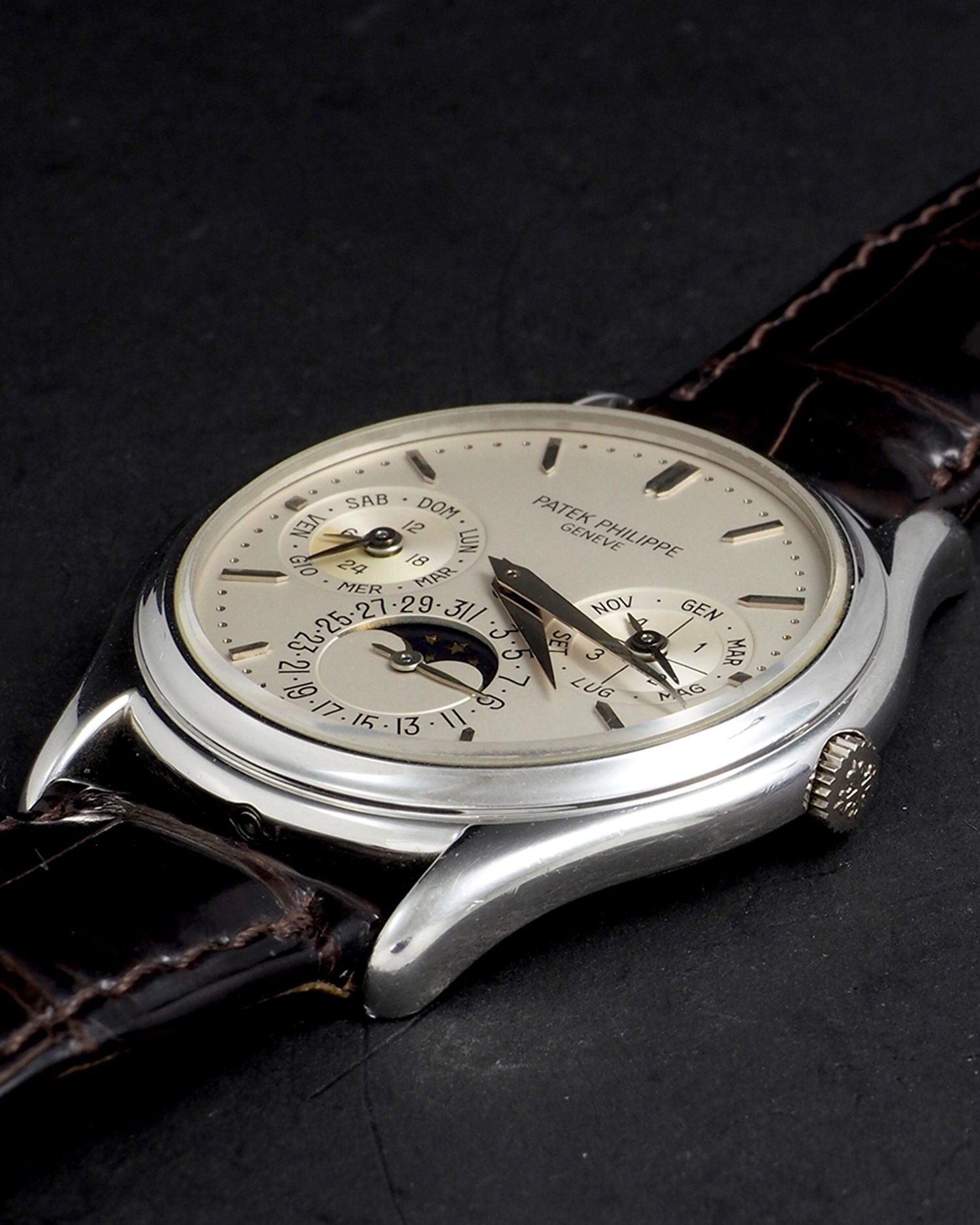
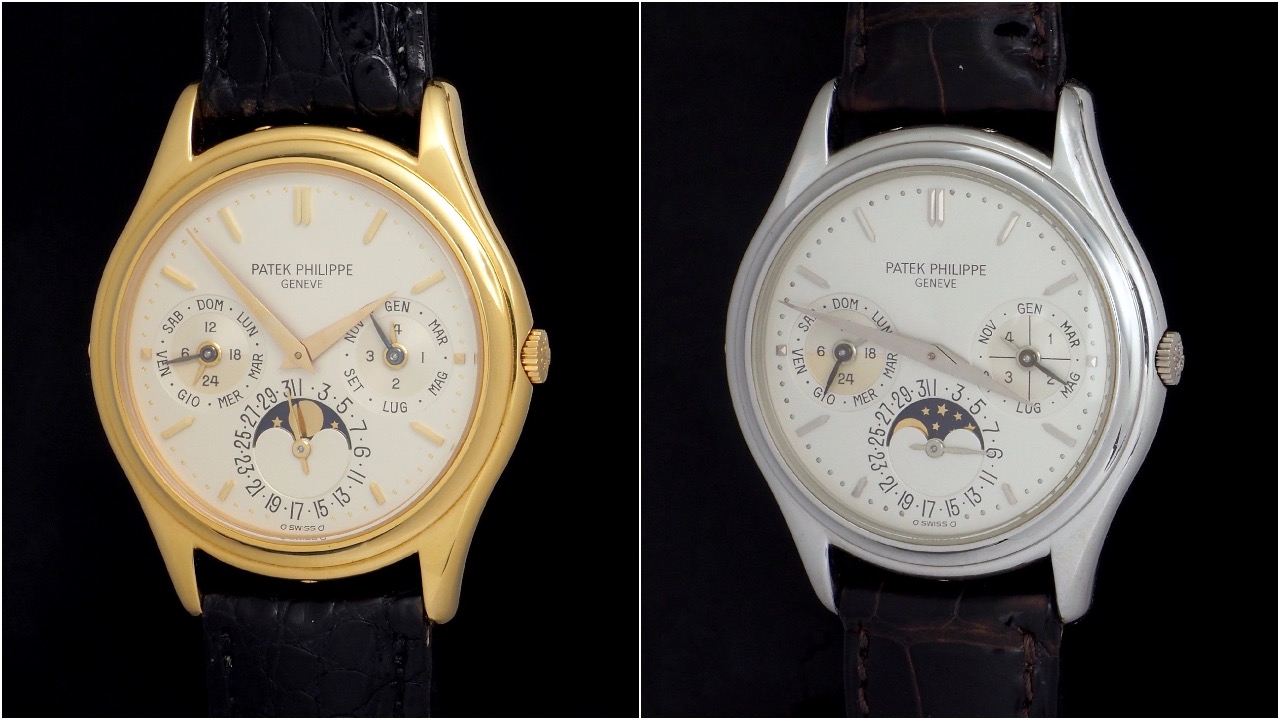
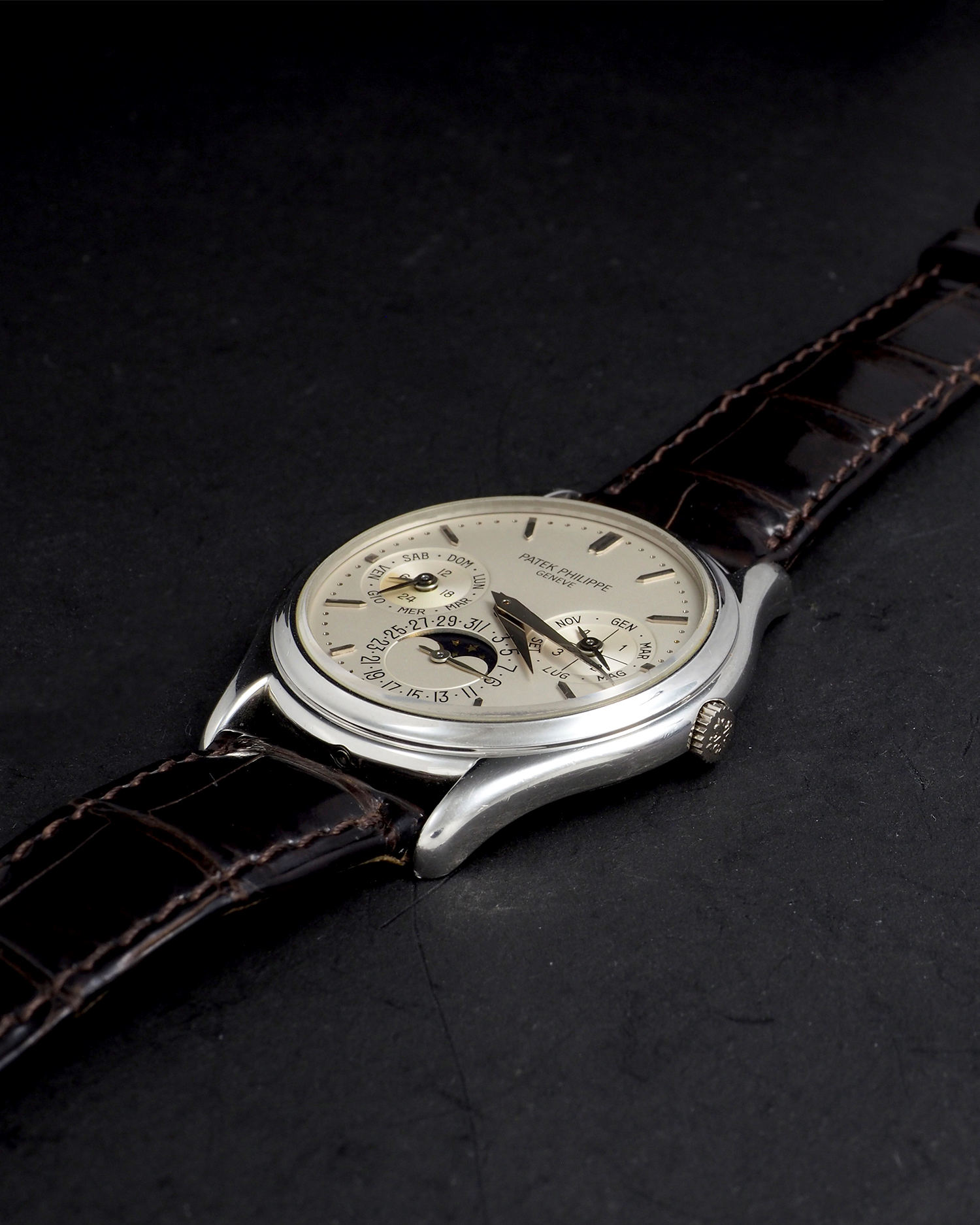
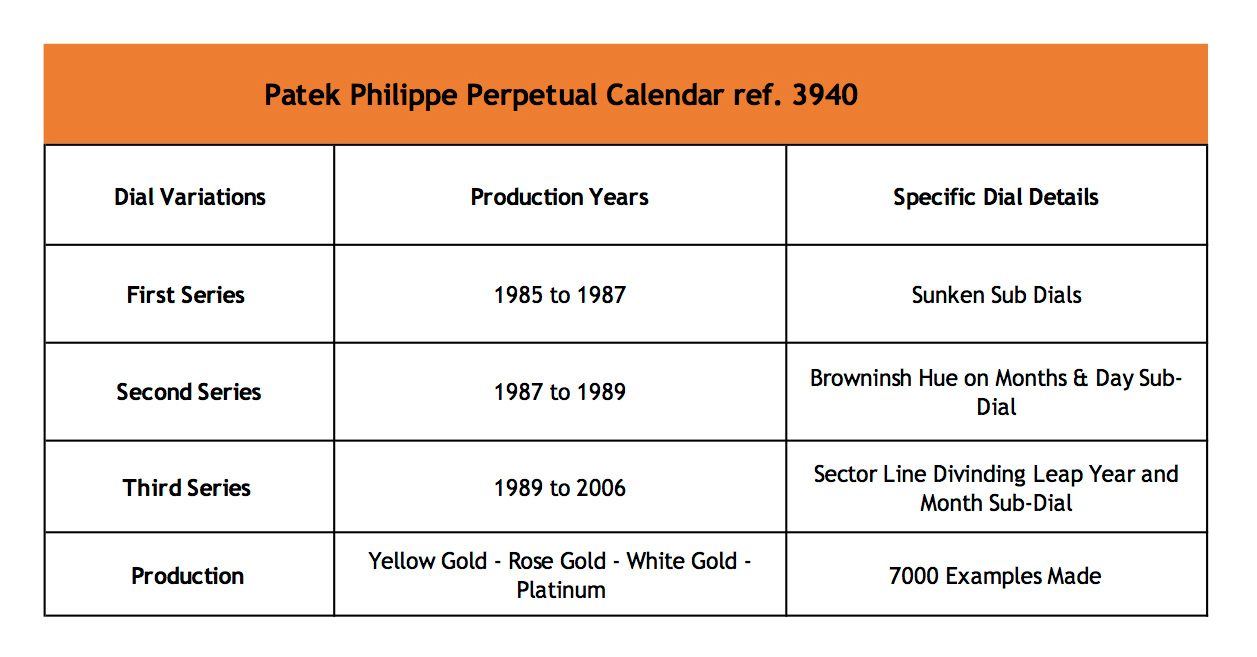
The Patek Philippe Perpetual Calendar ref. 3940 is a watch that nears absolute perfection. There is no simpler way to say it. This watch is downright fantastic. First released in 1985 during tough times but despite the adverse times the 3940 became a rapid success, which led it to a healthy 20 year production span ending in 2006.
Genius During Times of Turmoil
The reference 3940 was created to replace the outgoing ref.3450 “Padellone”, a masterpiece in its own right. Originally offered in yellow, white, and rose gold as well as in limited amounts in platinum. As tales go it is said the 3940 became Philippe Stern Patek Philippe’s head at the time go to watch. He was often seen wearing one and was even featured in an ad with the perpetual calendar in his hand.
Quartz Crisis
The Perpetual Calendar ref. 3940 was introduced during one the most trying times for the Swiss watch industry. The decade of the 1980’s was saw the rise of the highly controversial quartz movements. The very being of the quartz takeover in Switzerland nearly destroyed the industry. It is estimated that during this time the industry saw its workforce shrink from 90,000 to 28,000 people.
Why It’s Special
The design of the Patek Philippe 3940 is perfect from an aesthetic to a mechanical point of view. Consider that it was Patek’s most complicated serially produced watch at the time. For the lack of technology at the time it would have been thought such complicated watch would have needed a thick and oversized case. However despite everything this was not the case. As a matter of fact the 3940 incorporated all its charm and complication inside a very slim, incredibly comfortable 36mm case.
Micro Rotor
The aesthetic perfection of the 3940 was facilitated thanks to the revolutionary movement inside. Powering the watch was one of the most influential calibers made. The 240-Q automatic perpetual calendar fitted with an extra heavy 22k yellow gold micro-rotor to ensure additional momentum thus more efficient power.
Importance of Details
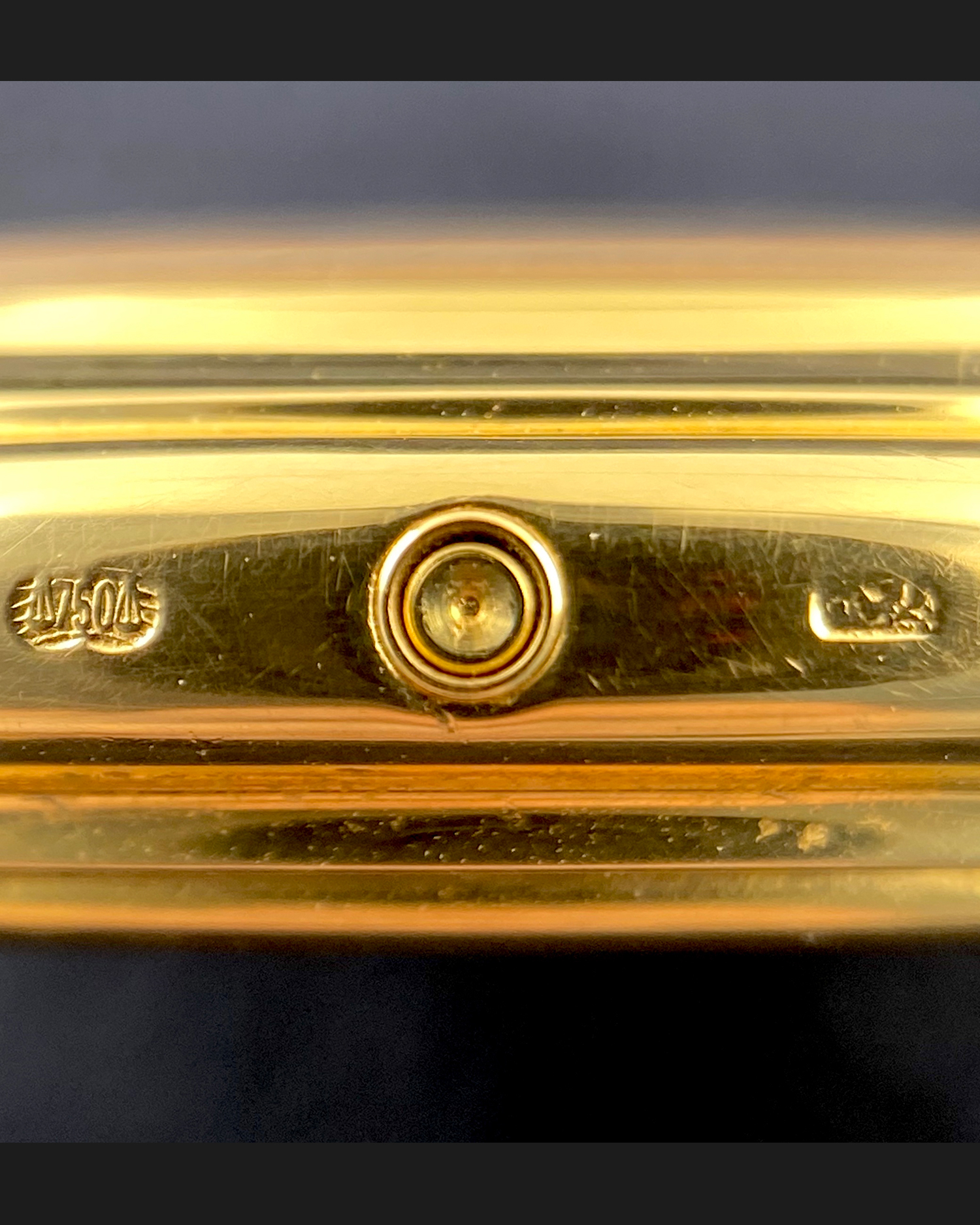
In the twenty years of production Patek manufactured many 3940’s and even though various examples can be found at the moment not all are equal. Like with any vintage watch condition is the key and the best way to know if a 3940 is in top condition is by examining the state of the hallmarks. They are noticeably positioned on the side of the case. A strong hallmark indicates the watch has received minimal to zero polishing.
Collection at Vintage Watches Miami
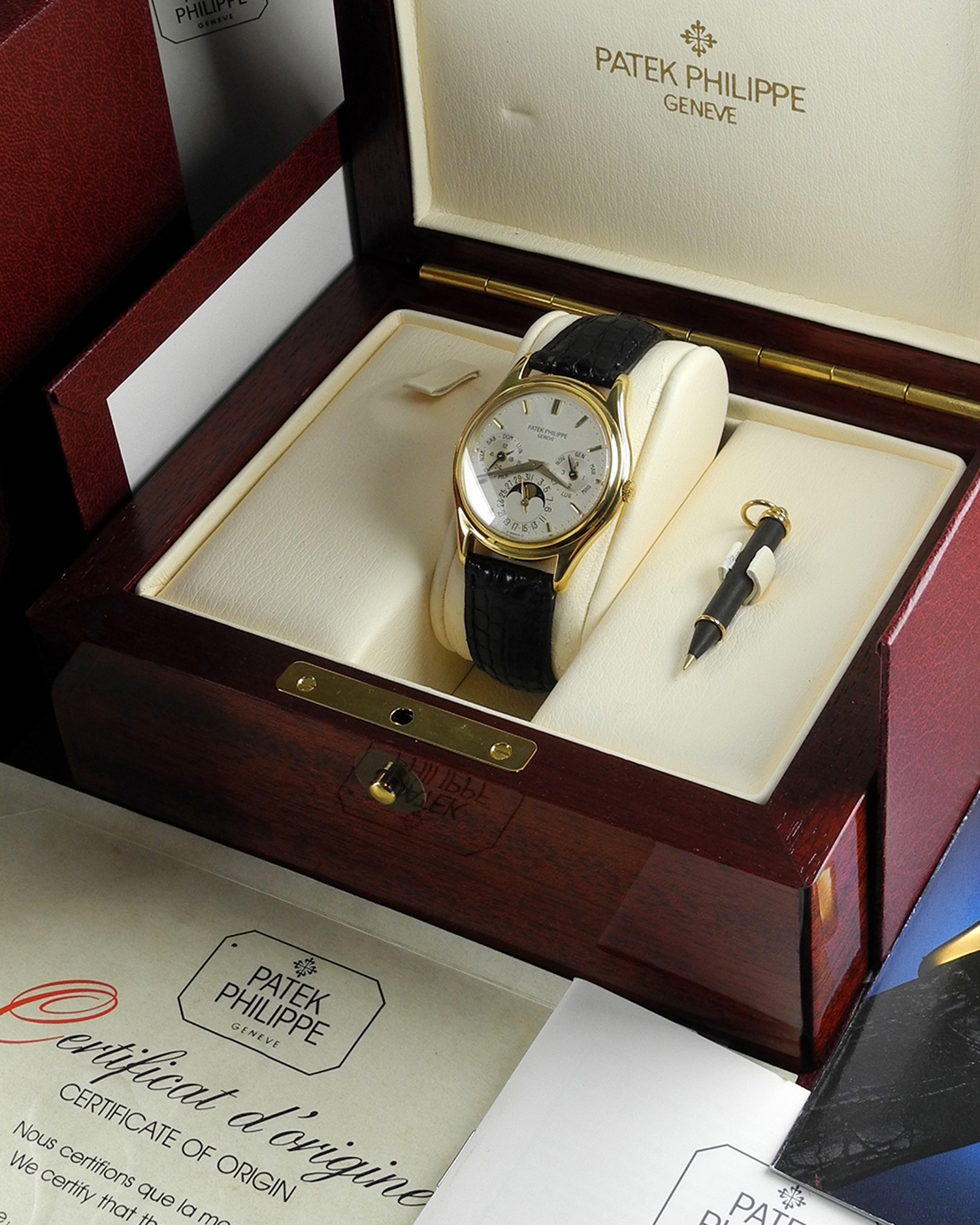
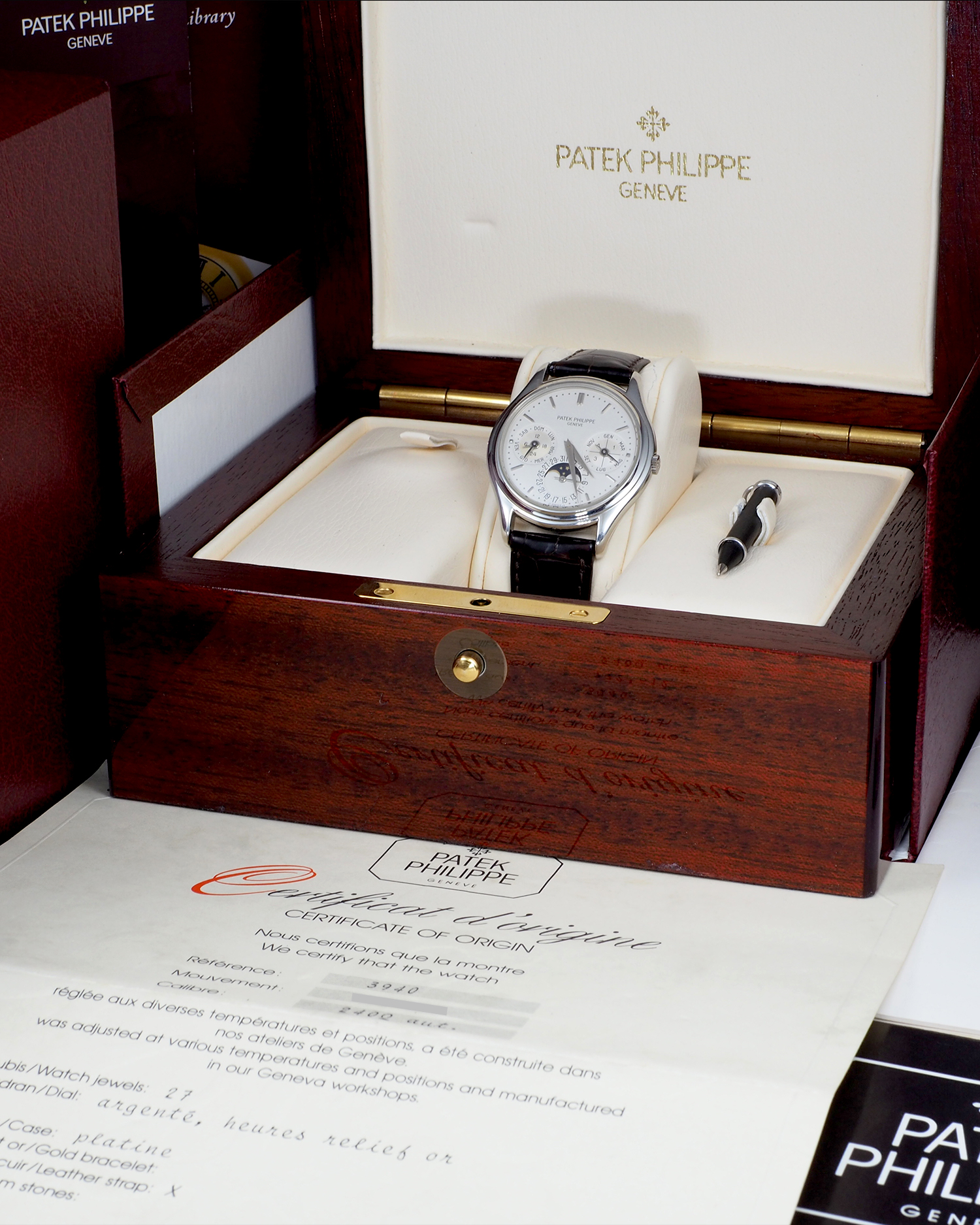
Available at Vintage Watches Miami are two mint full set examples of the Patek Philippe 3940. One is in yellow gold and the other in platinum.
Yellow Gold 3940
Platinum 3940
Additional Collection of Complicated Patek Philippe
To browse through our collection of complicated Patek Philippe visit:
The Audemars Piguet Jules Metropolis 25919 in Platinum: Undervalued Masterpiece
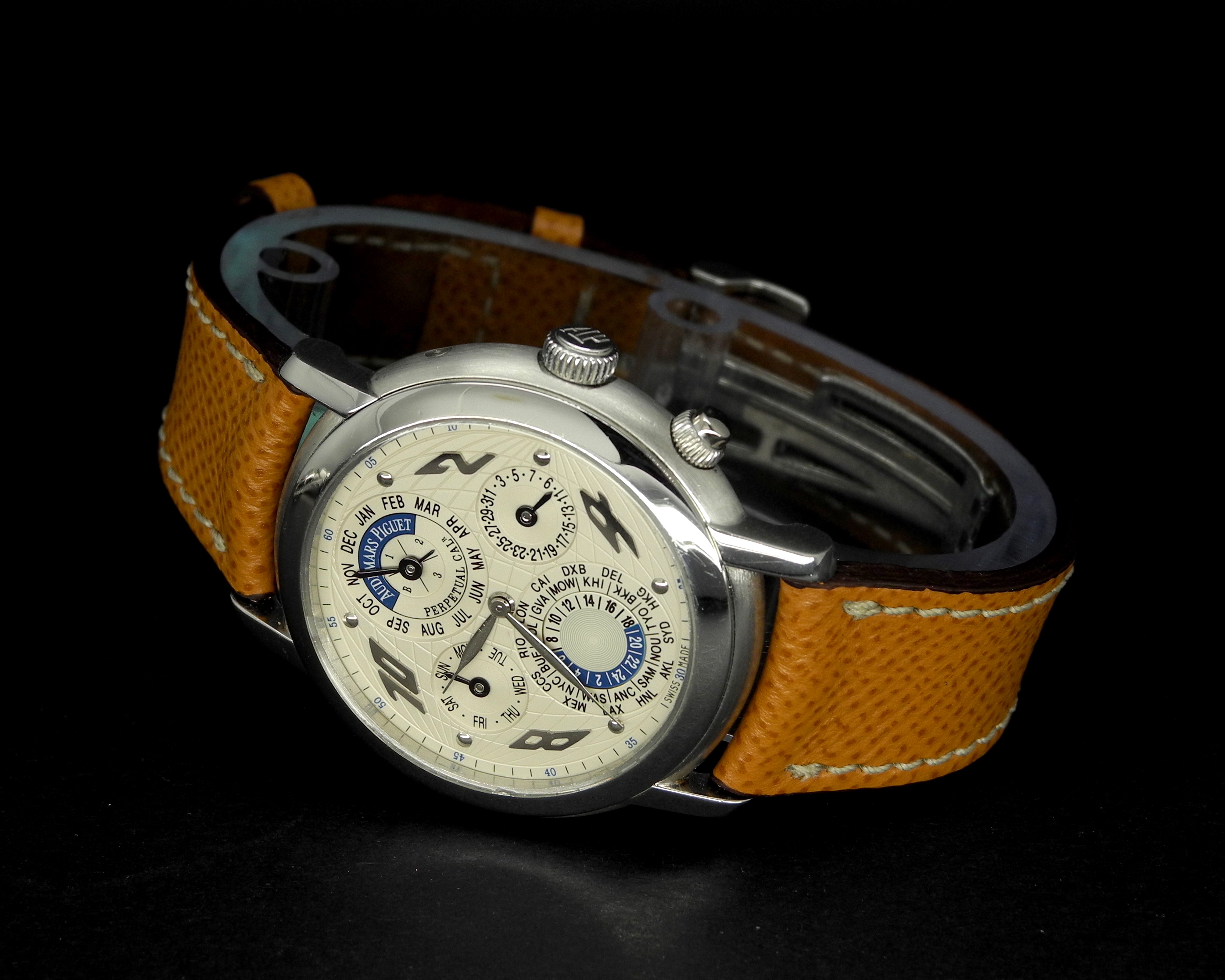
First introduced in 2001, the Jules Audemars Metropolis wristwatch indicates the local time in all 24 time zones without the need for any calculations. The present reference 25919 features a perpetual calendar with universal time indication. This associated perpetual calendar mechanism indicates the date, day, month and leap year.
Highly Complicated and Highly Undervalued
The Audemars Piguet Jules Metropolis reference 25919 is arguably one of the most beautiful and distinguished modern AP’s.
Elegant yet Casual
Slim, properly sized and downright spectacular. The Metropolis was released in 2001 and was offered in an array of metals with platinum being the sought after one.
Artfully Designed
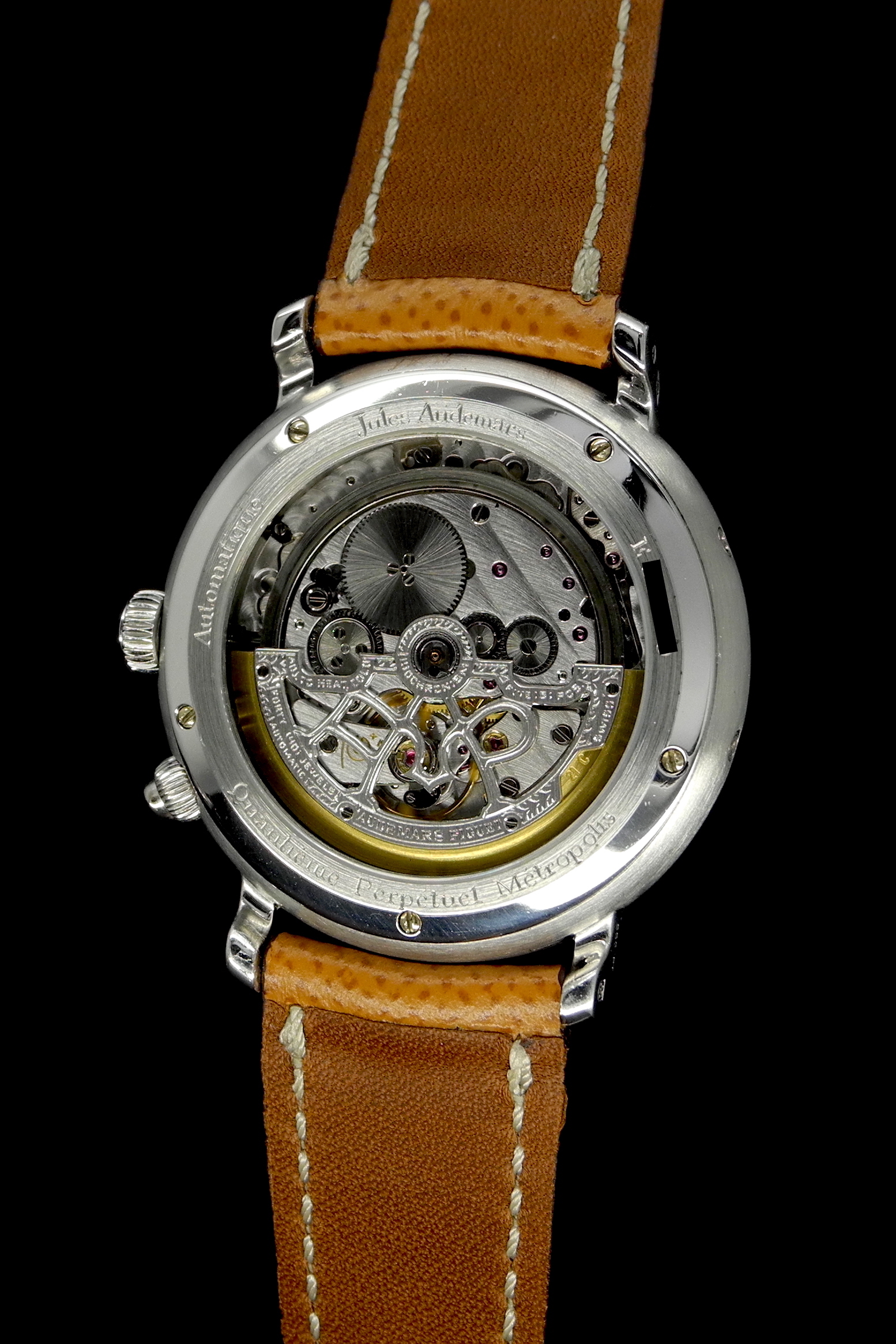
The beauty of the case design coupled with its highly complicated functions and ultra thin automatic movement make for an outstanding, rare, and undervalued watch.
Find it at Vintage Watches Miami
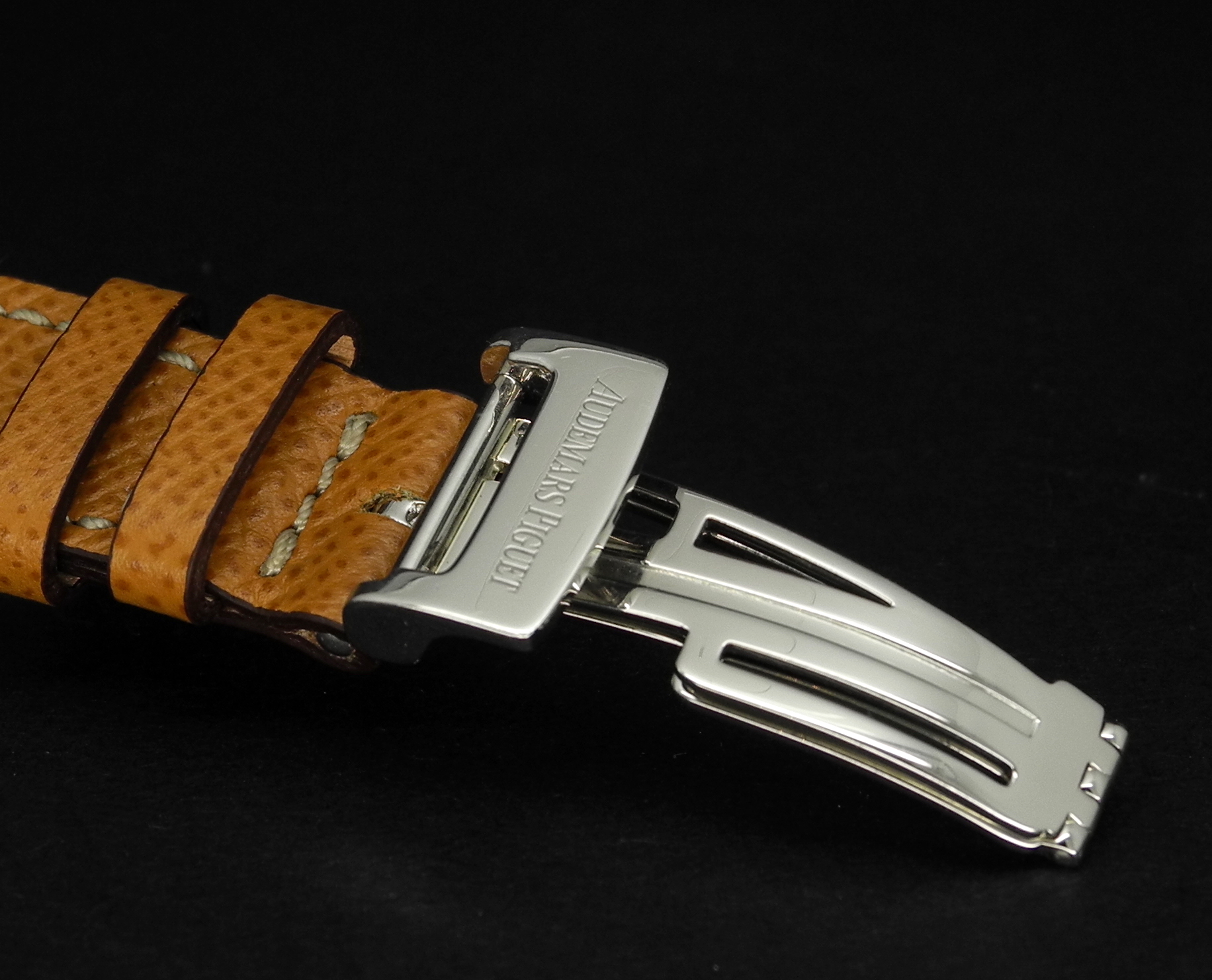
The reference 25919 is a perpetual calendar which indicates date, day, month as well as leap year. Ours is cased in platinum. Put together by a brown leather strap, which is fitted with an Audemars Piguet deplo buckle. Accompanied by an extract of archives from AP.
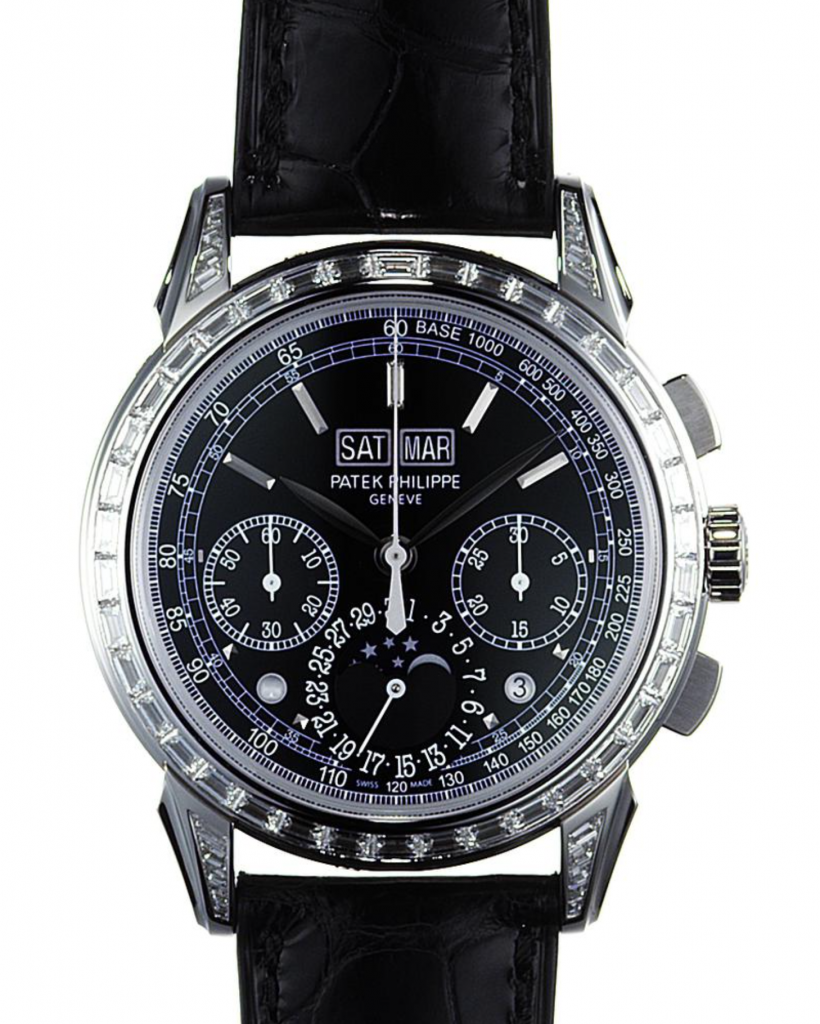
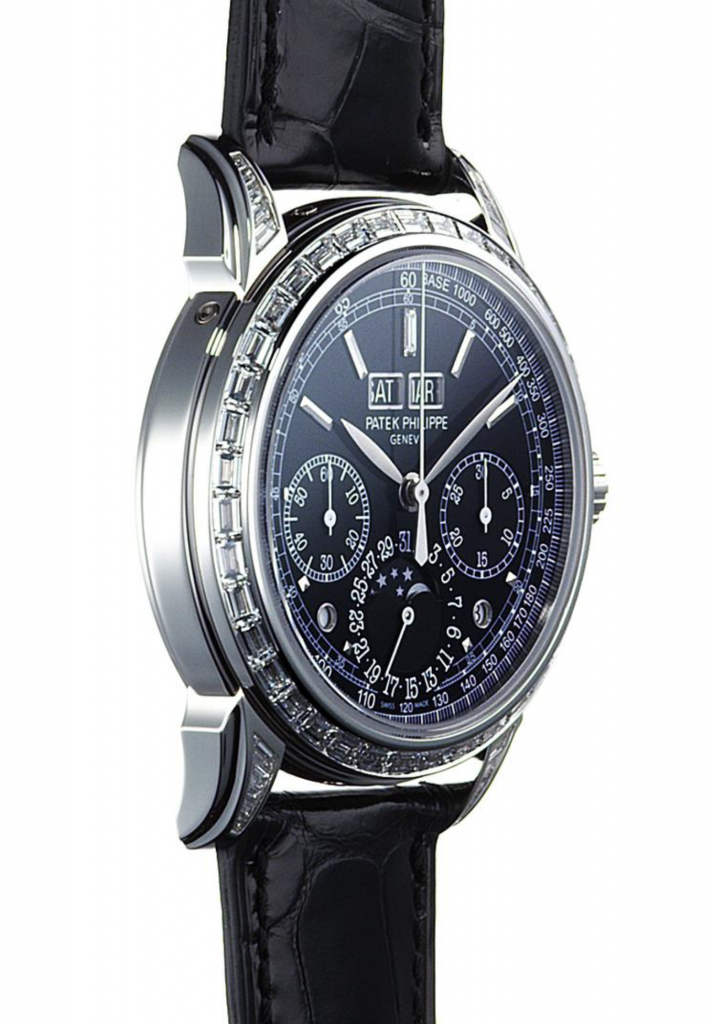
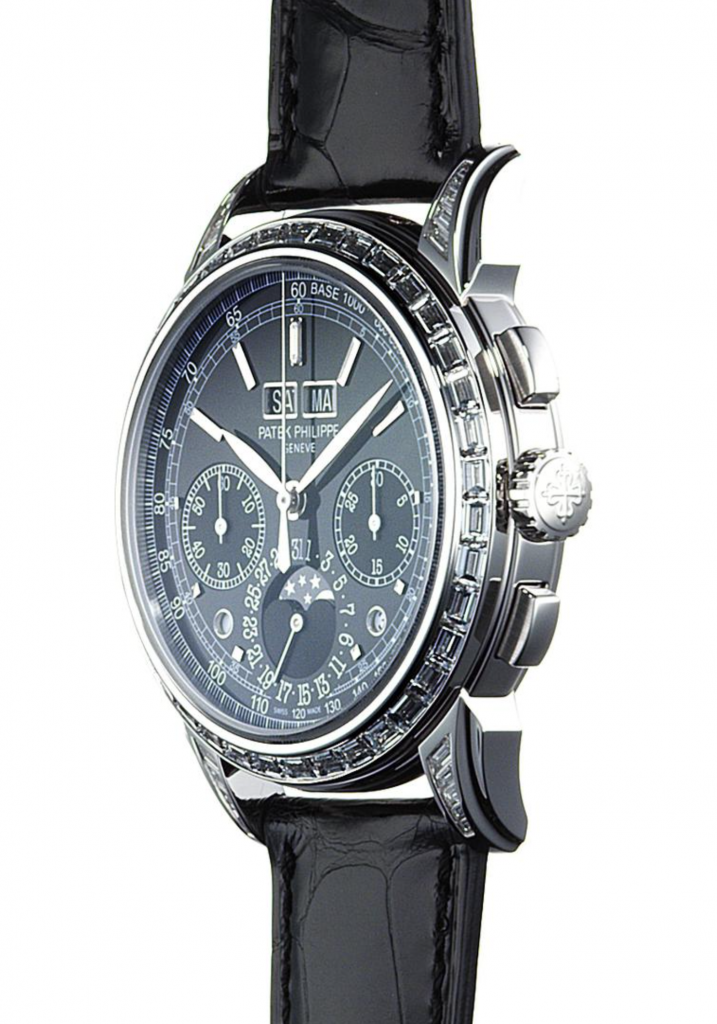
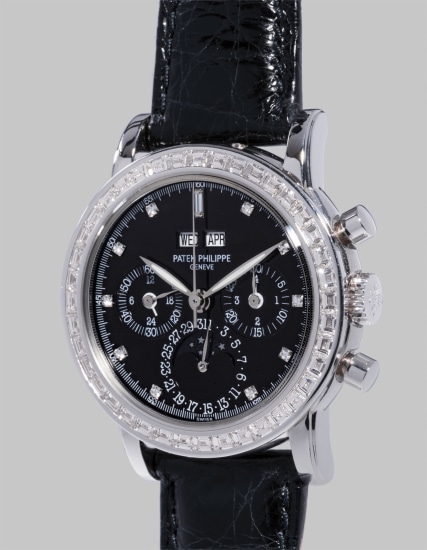
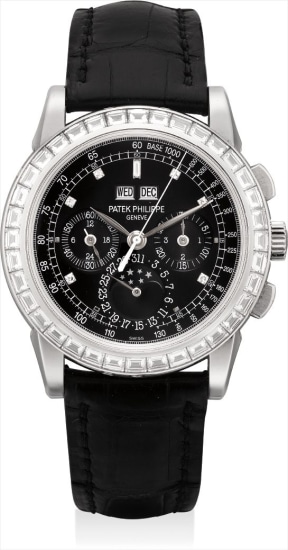
Patek Phillipe 5271P Perpetual Chronograph in Platinum with Diamond Case
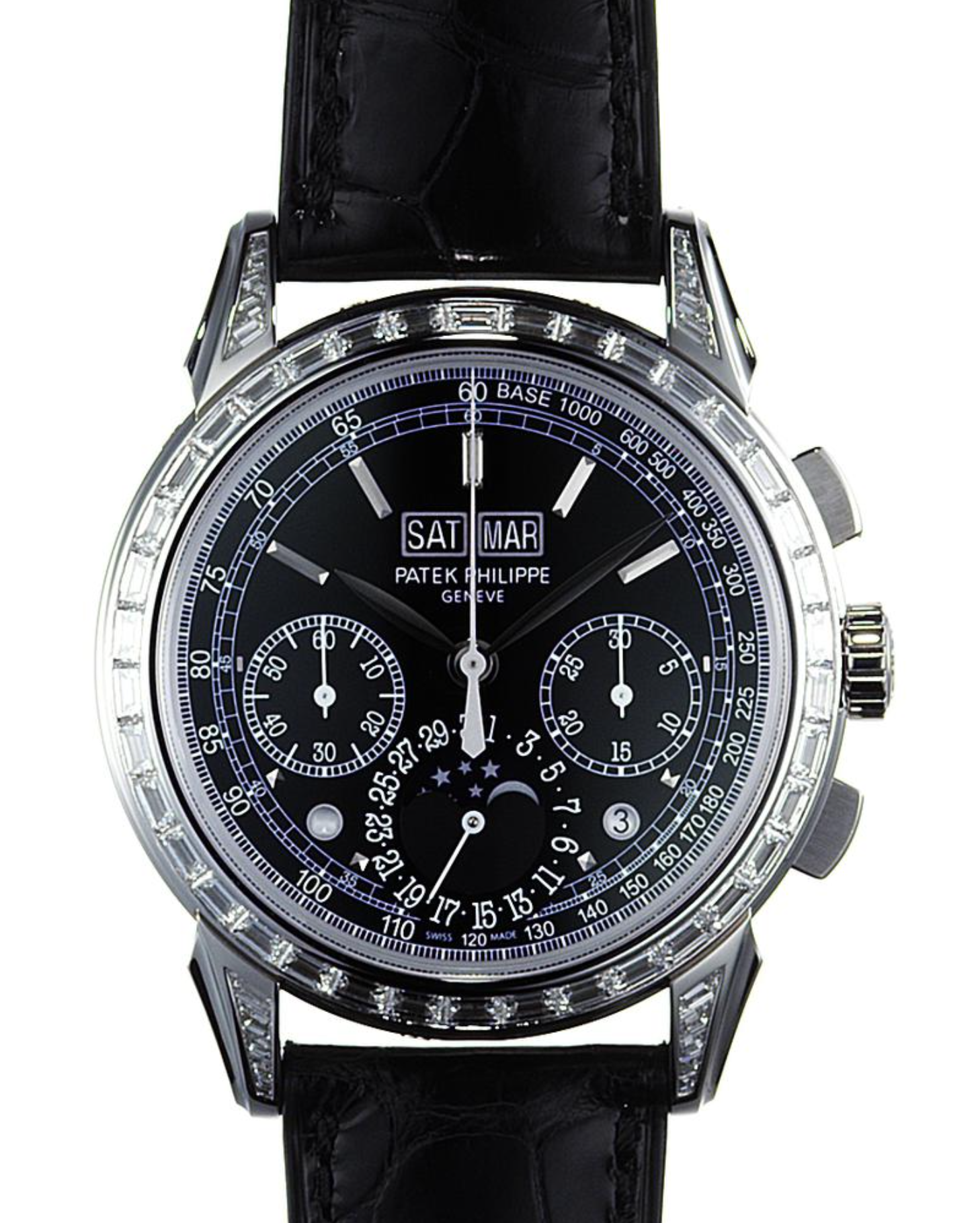
The Patek Philippe 5271P is a watch that will not be everyone’s cup of tea, but no one will deny its absolute charisma and standing as a modern mega watch.
It is a highly complicated watch that encompasses an in-house manufactured perpetual calendar coupled with a chronograph movement, the ultimate in Patek Philippe. Furthermore, is cased in the most noble of metals, which is platinum and is also adorned by diamonds on the case and lugs.
Fitted with a spectacular black dial containing 12-layers of lacquer, which creates a fantastic glossy look. Furthermore, the mix of black with the grey chronograph counters gives the watch a look not seen previously within the complicated Patek lineup.
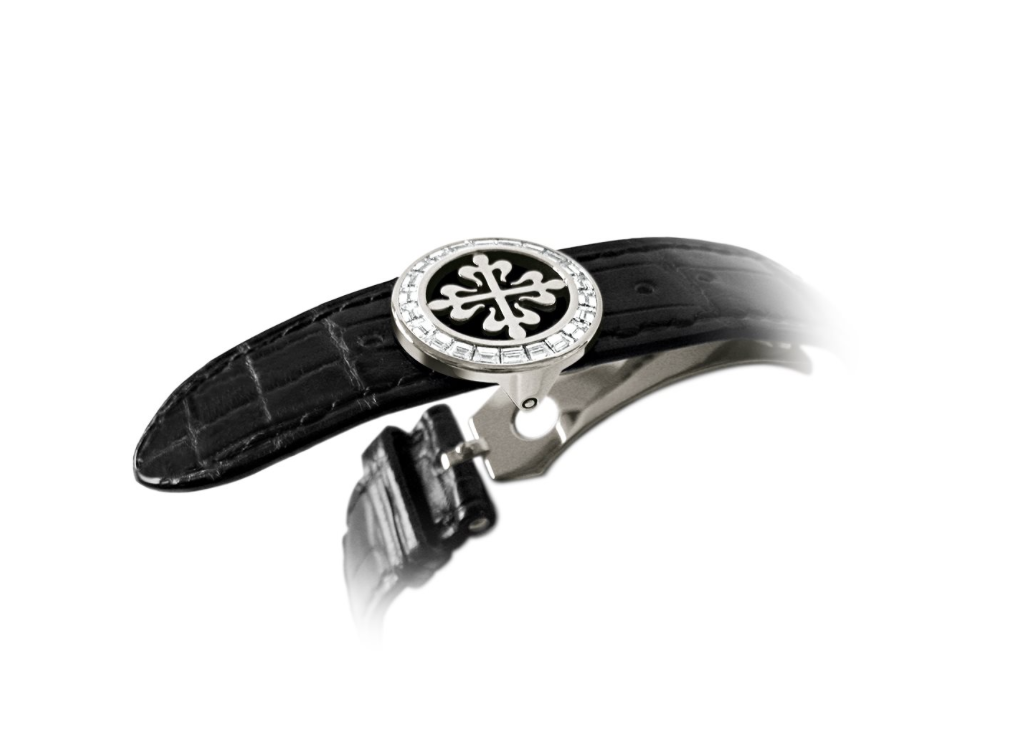
A noteworthy finishing touch pertaining to the beauty that is the ref. 5271 is found on the deployment buckle, which is fully adorned by diamonds. What shows the lengths taken to create a wholesome masterpiece.
A bright future awaits the Patek 5271P and we cannot wait to see it go as far as possible. The reason to this is because the previous two models did not prove to be nearly as attractive as the 5271. For example the ref. 3990 based on the ref. 3970 had a rather unappealing mix of a diamond bezel coupled with a diamond index dial.
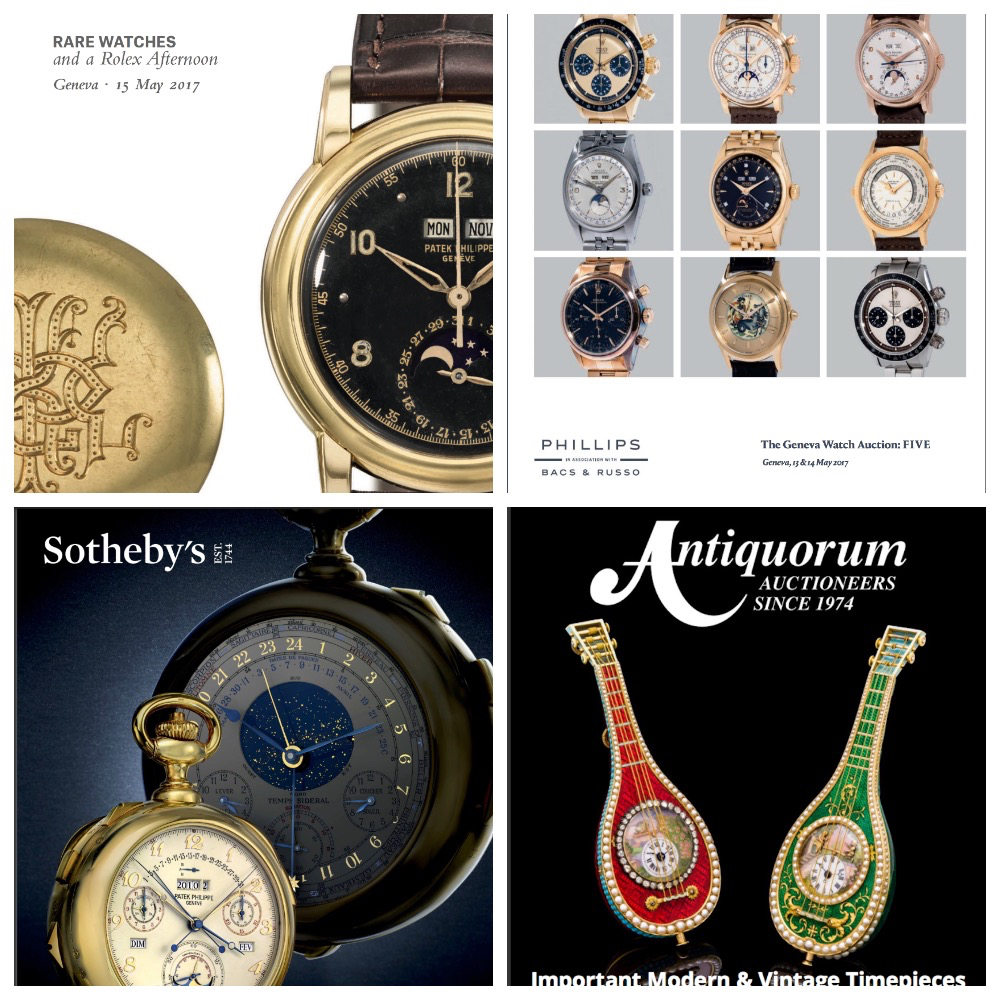
Lot 154 from Phillips The Geneva Watch Auction: Five
The same went for the ref. 5971 based on the ref. 5970, a reference with tremendous potential but that was sadly also fitted with a diamond index dial. A major plus for the ref. 5271 is the absence of a diamond index dial.
Lot 857 from Phillips The Hong Kong Watch Auction: Five
There is no vintage watch topic that does not touch on the prevalence of the Rolex Daytona. Lets all face it, it’s a watch that brings about an unchartered amount of curiosity and lore. Written below we will delve into a brief and very condensed overview of the Daytona family lineup. It will allow you to differentiate one model from another. We will explain where all these terms come from and what they actually mean.
The Red Daytona
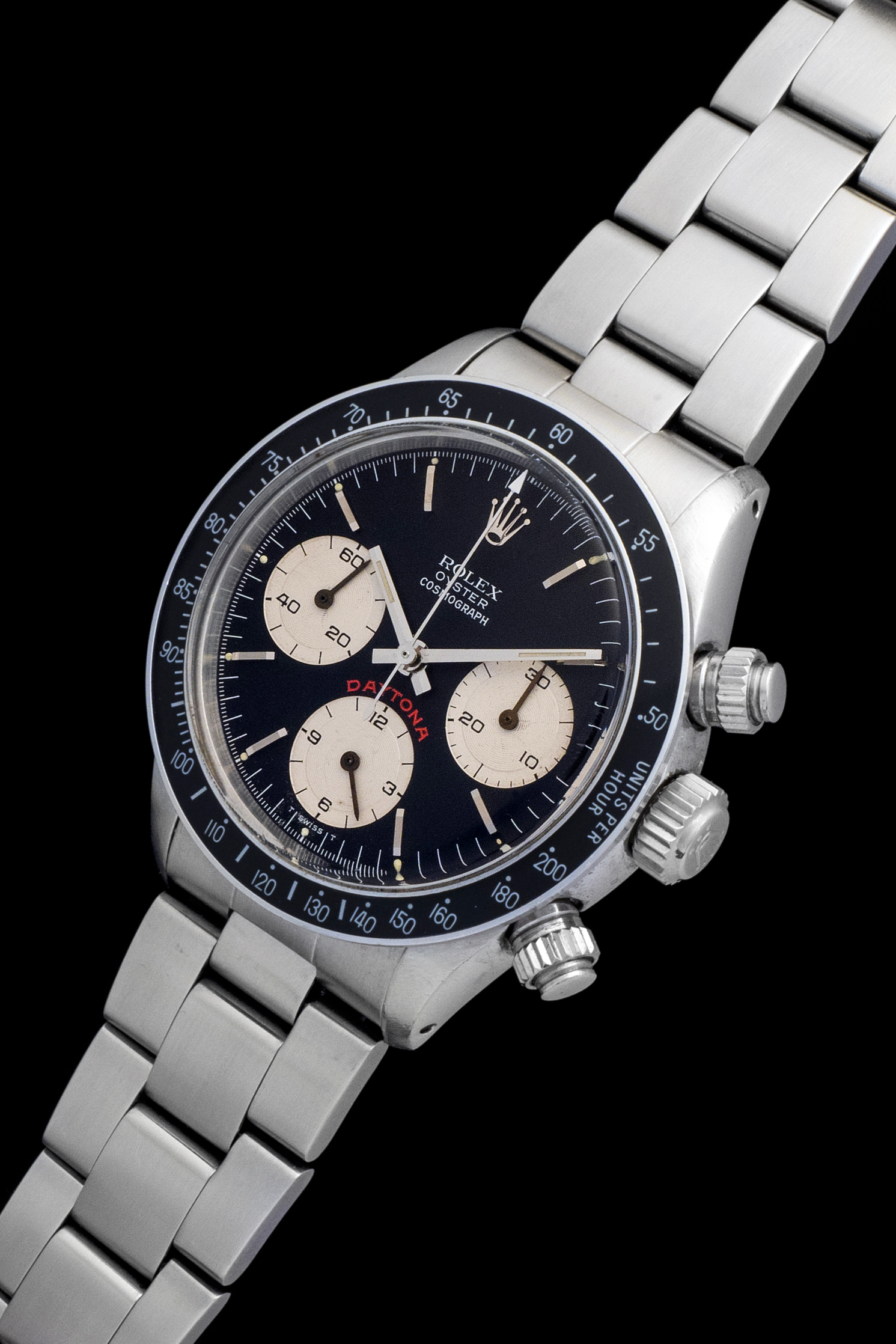
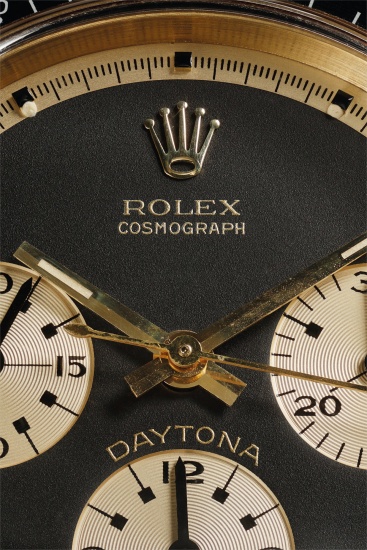
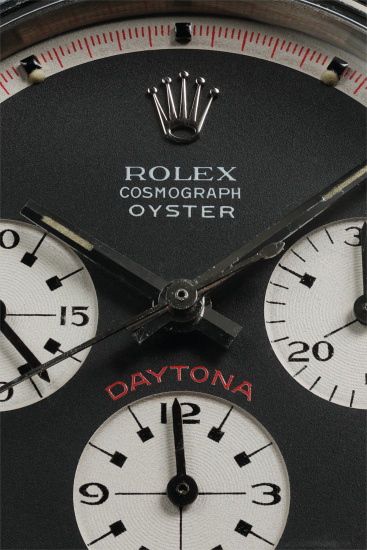
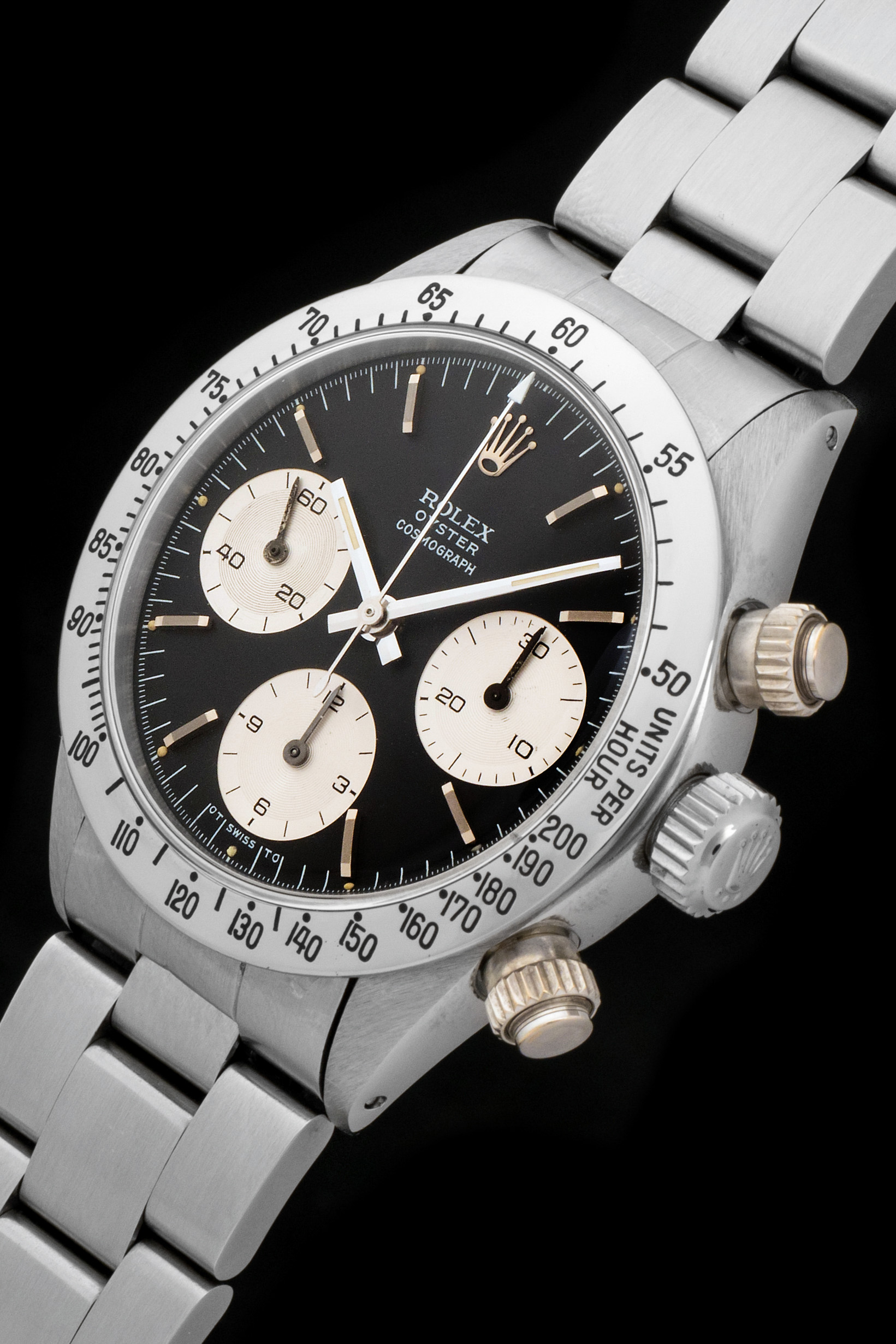
The ever-cool signature found on the dial above the six o’clock sub-dial. Distinctive recognition due to its oversized red color printed “Daytona”. This feature is found on references 6263 and 6265.
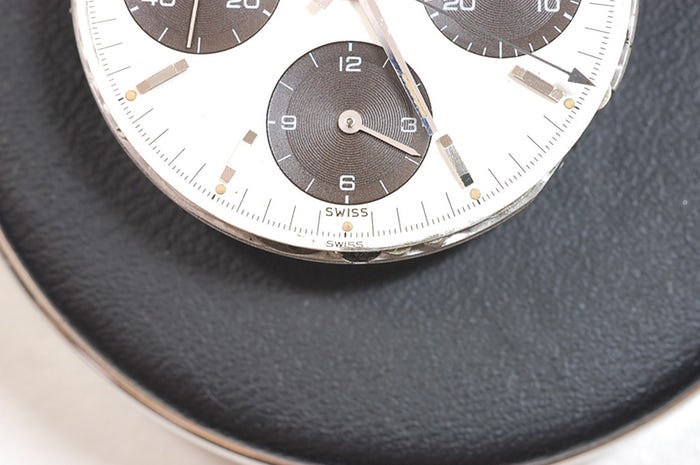
Double Swiss
Found on early Daytona’s and features a double printed “Swiss” on the six o’clock sector of the dial. This occurrence came about due to the presence of a large bezel that covered the lower part of the dials. As per regulation Rolex had to re-print these dials with an additional “Swiss”. A double Swiss print on a dial is coveted and carries a substantial premium price tag.
Image via 10PastTen
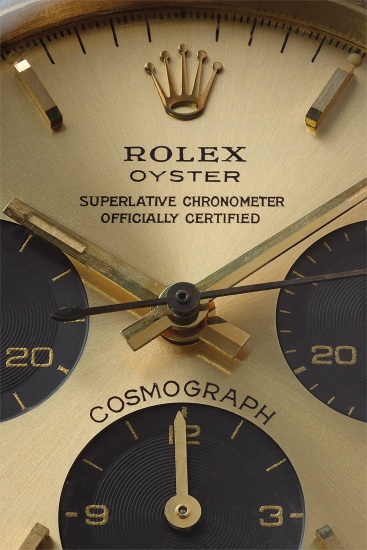
Floating Cosmograph
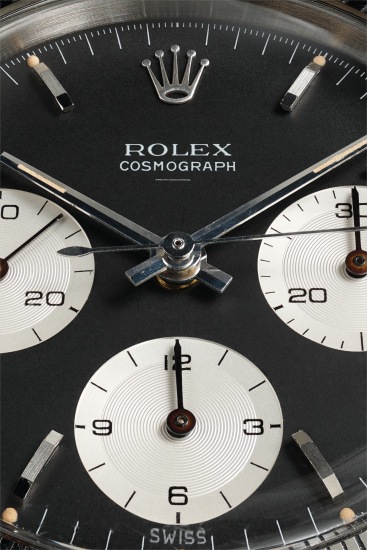
Rolex vocab is applied when a line of text is floating or suspended below the text or above the chronograph sub dial. Really cool detail to see in person.
Oyster First Series
Another form of “floating” occurrence where there are gaps between multiple lines of text. This detail is prevalent on some gold screw down Daytona’s such as the ref. 6263 and 6265. An Oyster split Daytona is incredibly rare.
Lot 4 from Phillips Daytona Ultimatum Auction
John Player Special
The highly lauded JPS Daytona is found on yellow gold models and is fitted on black dialed “Exotic Paul Newman’s” and text is printed in gold lettering. Named John Player Special after its similarity with the color schemes of the 1970’s John Player Special car racing team. There was never an affiliation between the team and the Rolex manufacture.
Lot 24 from Phillips Daytona Ultimatum Auction
Oyster Sotto
Is seen on Daytona’s with the “Oyster” print located beneath the “Cosmograph” print. Oyster Sotto’s are found on early batches of the exotic dialed screw down chronographs. Sotto’s are amongst the most coveted variations and those who own them know exactly what they are doing.
Lot 14 from Phillips Daytona Ultimatum Auction
Panda Chronograph
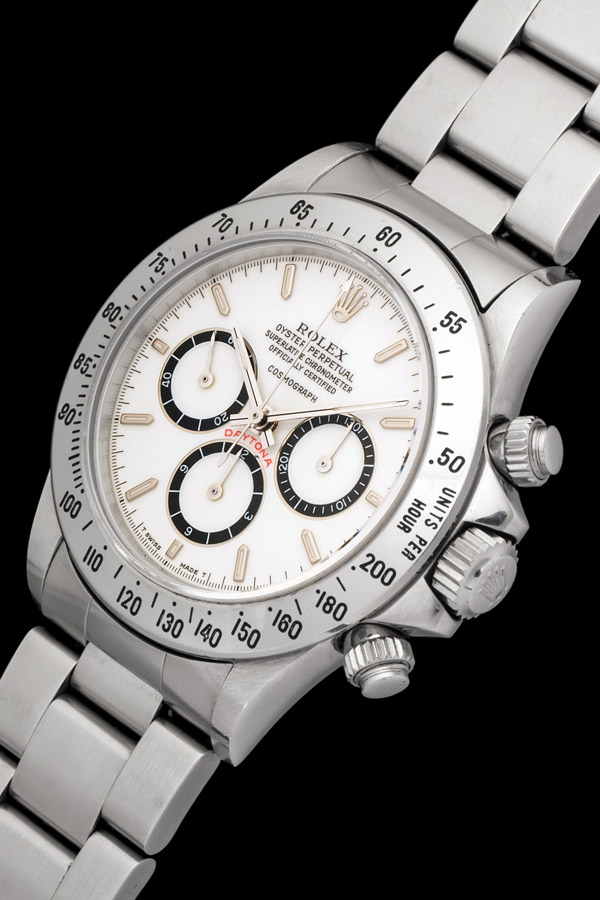
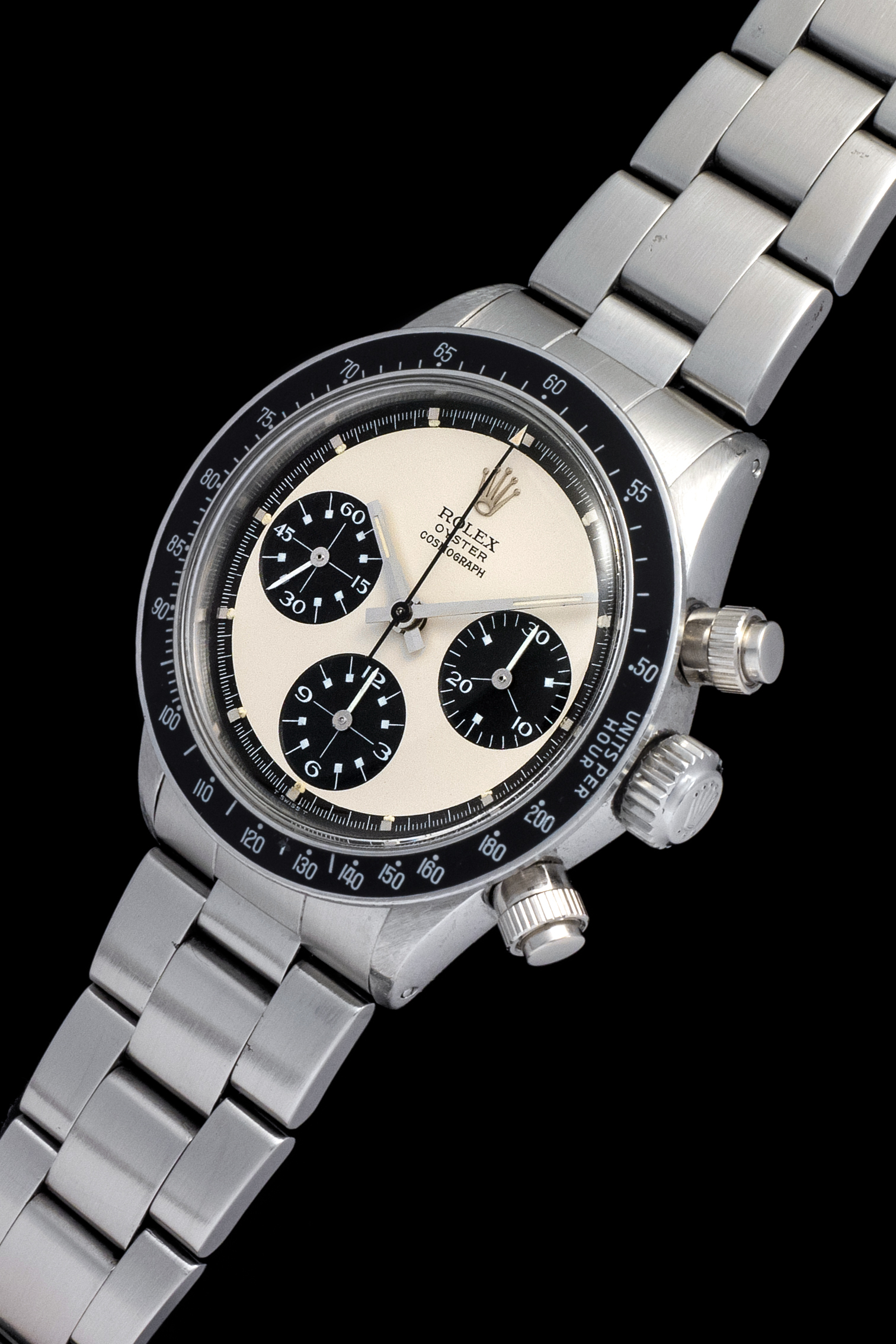
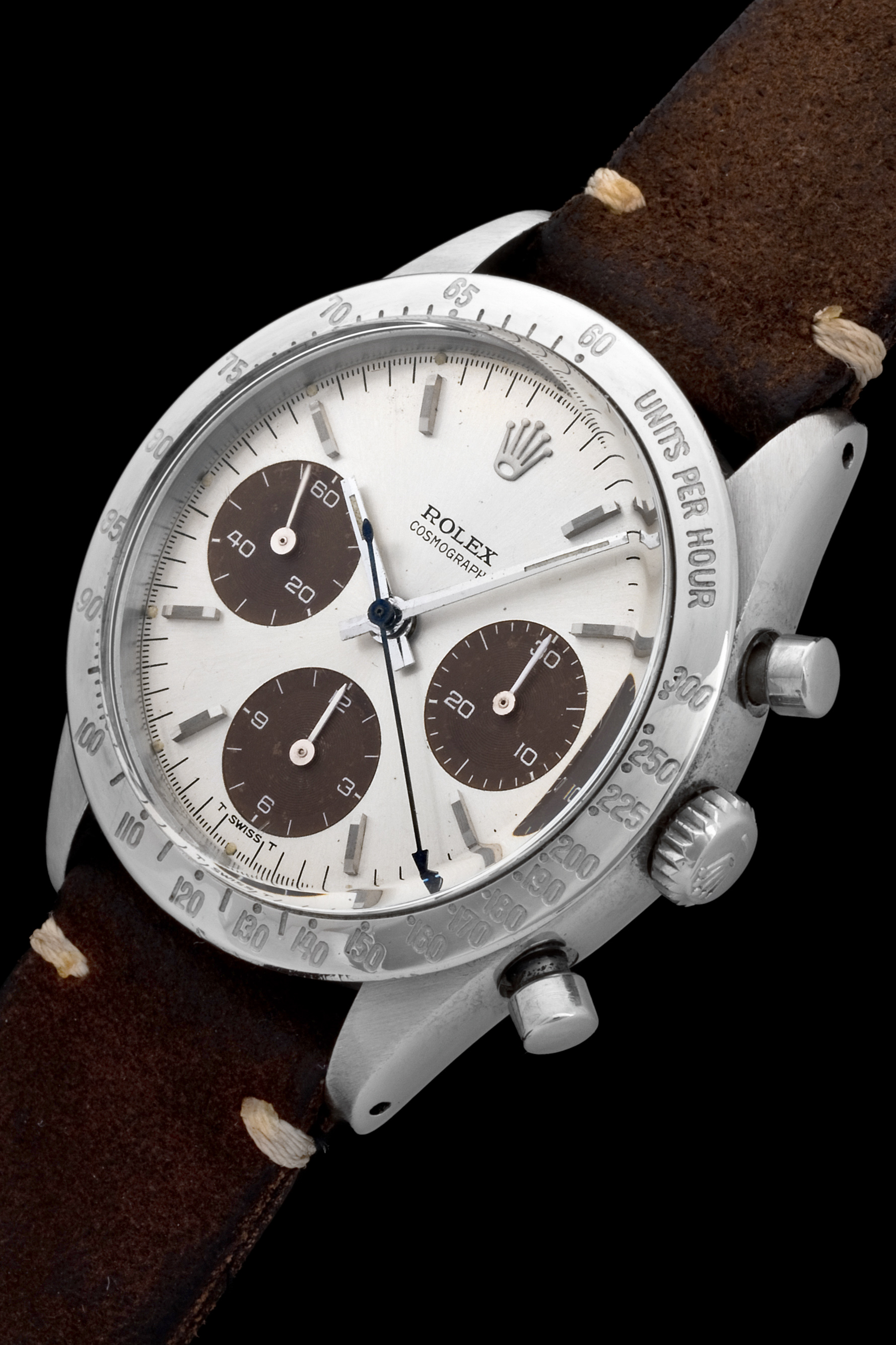
Is a Daytona fitted with a white dial accompanied by black sub dials. Much like a panda bear.
Double Stamped Daytona
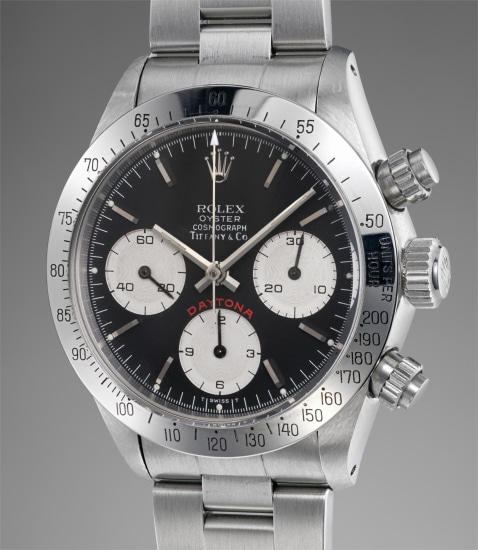
A double stamped Daytona is the dream for many a collector. A twice stamped dial features the Rolex name but also the name of the retailer that originally sold the watch. Tifanny & Co. remains to the day the most significant partner of the Swiss manufacturer. It is common for double stamped Daytona’s to feature a hand engraved inventory number inscribed on the back side of the case lug.
Lot 171 from Phillips The Geneva Watch Auction: Seven
Sigma Daytona
Are those dials that feature solid white gold indexes and hands. These types of dials are found on both steel and gold models, and they represent an additional step taken in the quality control. A Sigma dial can be identified by observing the small Greek sigma letters printed below the six o’clock mark.
Tropical Daytona
Is a dial that has become brown from its original black color. This phenomenon is caused by an error in pigmentation coupled with exposure to UV rays. An evenly brown dial on a Daytona is an unbelievable sight and a detail that drives collectors and auction houses afire.
Underline Daytona
Dial features a short line underneath the text at 12 o ‘clock or 6 o’clock. Rolex introduced as a measure to indicate their transition from using radioactive radium with tritium as the source of dial luminescence. The underline Daytona ceased after dials incorporated the tritium indicating wording conveniently located below the six o’clock marking.
Around the mid-1980s, Rolex has implemented a 3 number coded system to categorize their stock according to the destined country of the timepiece, after its final production in Switzerland. There was never an official list of country codes published by Rolex SA. The list of country codes below is the collective result of worldwide Rolex watch owners.
On All Rolex Garantie, there are typically 2 sets of printed or punched numbers at the top row of the certificate. The right number is the watch’s serial number , and the left 3-digit number denotes the country code.
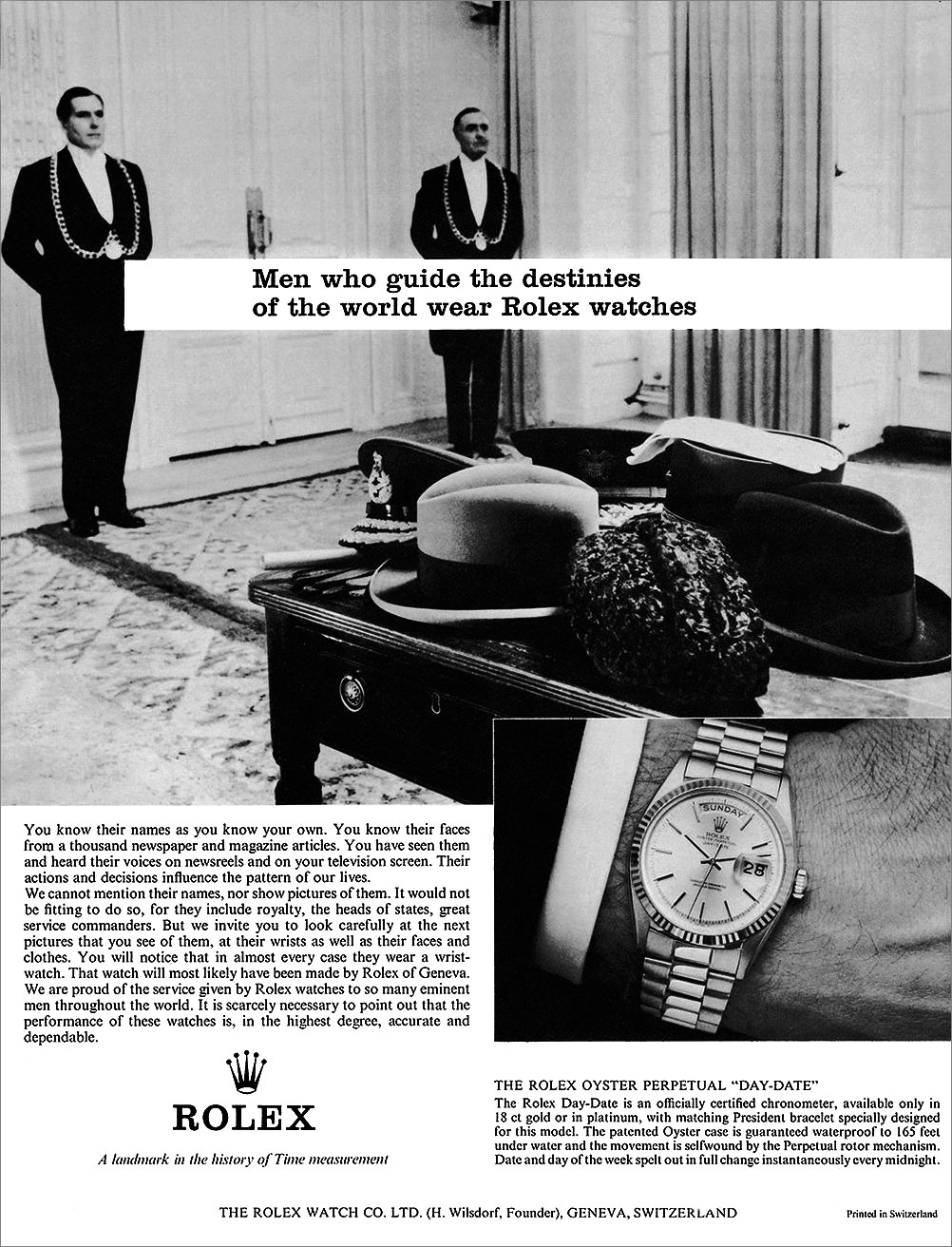
In 1956 Rolex introduced the Day-Date and its doing ensured its relevance for perpetuity. The release of the Day-Date was as magnificent as it was bewildering to its fans, some still attempting to embrace the reference 8171 “Padellone” that had just ceased production and the charm of the newer reference 6062 at the same time. The Day-Date brought about an era that celebrated luxury and elegance, and it joined the 6062 to show the world that Rolex could do luxury watches just as well as it did tool watches. The novelty behind the Day-Date was its capability of displaying both the day and the date, and to add an additional degree of luxury the watch was only to be cased in precious metals such as gold and platinum. Note: handful of examples in steel were made for special Rolex clients.
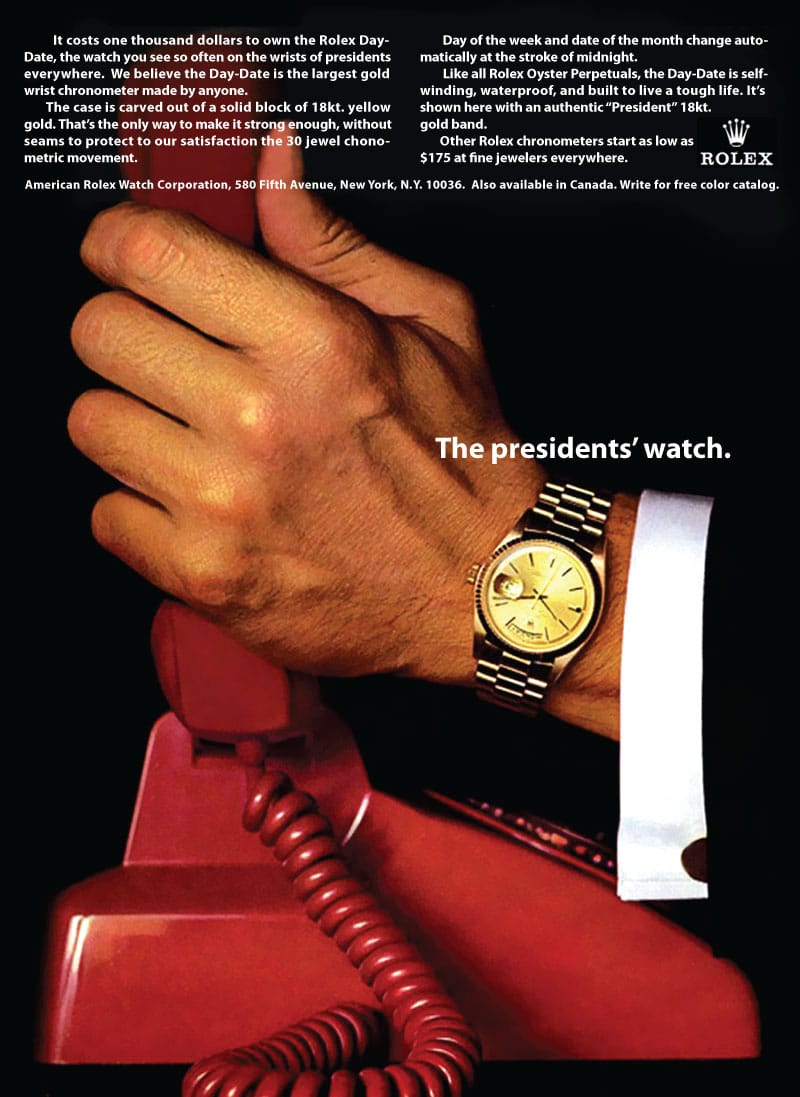
The Day-Date put Rolex in an unbeatable path through brilliant manufacture practices and forward thinking advertising. Early Day-Date adverts remain as cool today as they were back then. The fact that the Day-Date would go on to become President Lyndon B. Johnson’s go-to watch played right into Rolex’s brilliant marketing plan. Through unofficial spokesmen the Day-Date snowballed into success and Rolex into a household name. Now that modern times have rolled in and symbolic references have ceased production the Day-Date continues to be an intrinsic symbol of elegance, power, and distinction. In our collection are some of the most beautiful and rare Day-Dates available to the public. Read on to learn more about the Rolex Day-Date.
Rolex Day-Date 6611B
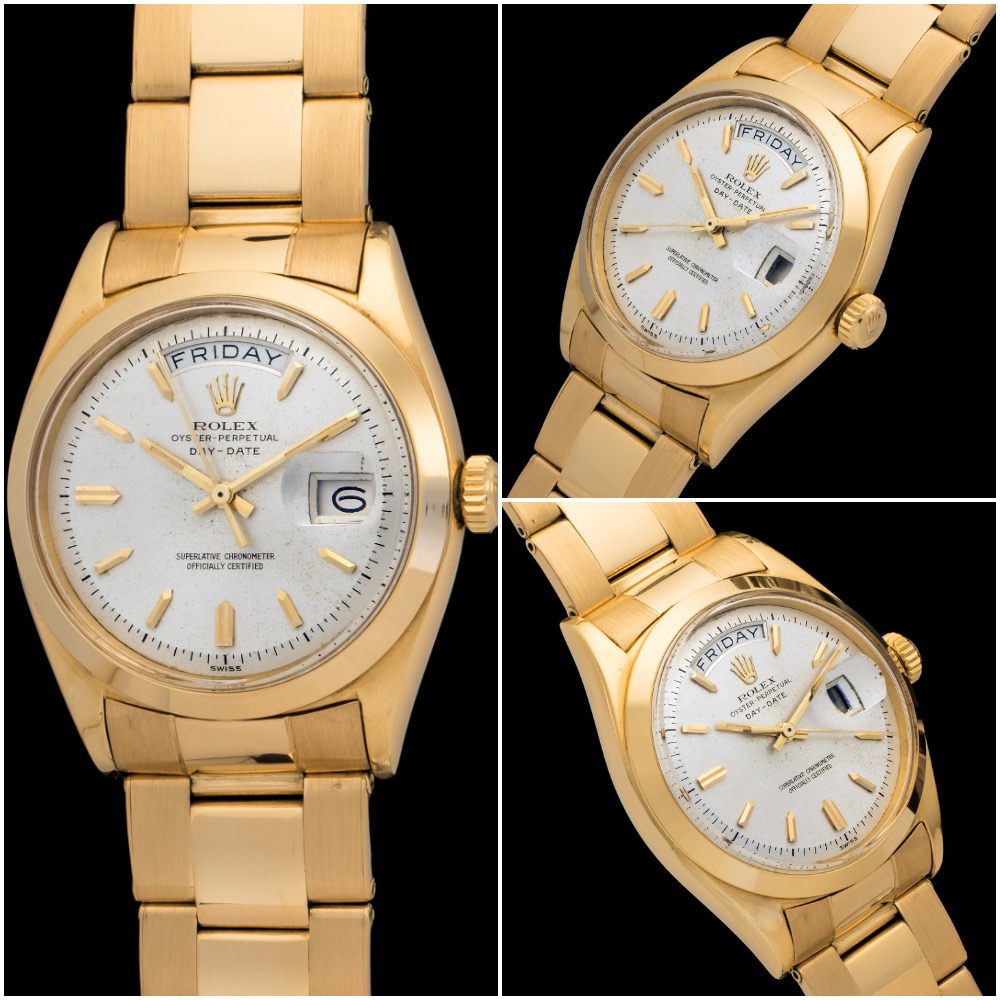
Following the reference 6611B came an equally as beautiful model, the Day-Date 6612 (see ours pictured) Along with a re-designed watch came two additional novelties: a smooth bezel and a slightly better movement. Our Day-Date 6612B from 1959 is put together by an 18K yellow gold oyster rivet band, which is an incredibly rare detail as Day-Dates were sold with jubilee bands, very select few were sold with gold oyster rivets.
Rolex Day-Date 1803
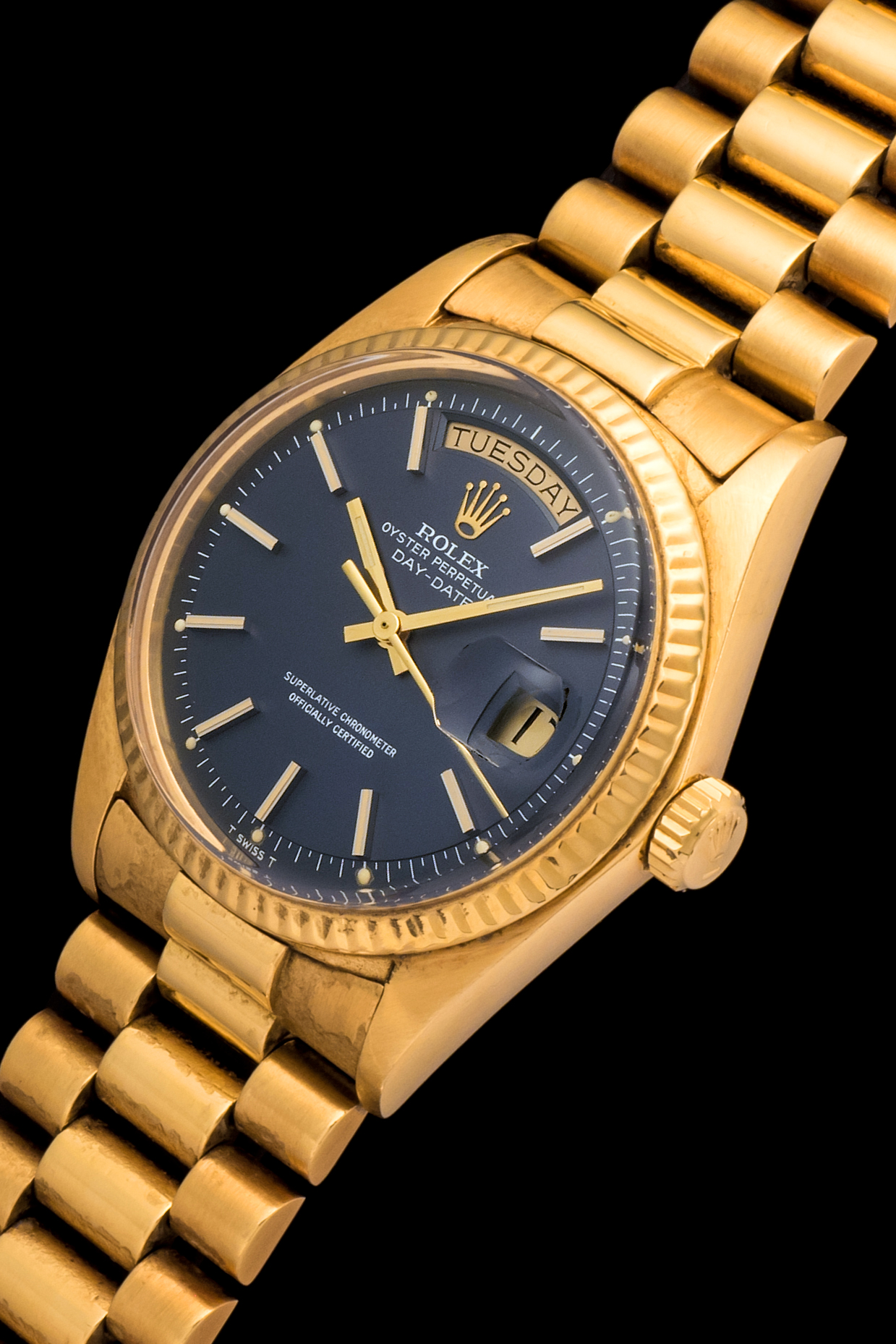
The reference 1803 came out in 1961 with an array of details that earned it a decades long production period. The first three references allowed Rolex to make changes and technological advances, which eased in the design and launch of the Day-Date 1803. This was the model that became a staple on the wrists of the worlds most powerful men. With the reference 1803 the Day-Date adapted its identity and pedigree that is palpable today. From 1961 to 1968 the Day-Date 1803 stayed its course with no features added or taken, although during this time Rolex did introduce a wide array of dial variations. However in 1969 Rolex introduced a detail that would forever become synonymous with the model and that was the hidden clasp bracelet later deemed the Presidential bracelet. The moniker comes about thanks to United States president Lyndon B. Johnson as he was pictured wearing his reference 1803, which included the new bracelet style. In our collection are two special full sets 1803’s. One is fitted with a doorstop dial and the other An 1803 manufactured in 1962 and accompanied by its original box and papers. A nice detail aside from its complete set is its doorstop dial. If you notice the indexes positioned at 6 o’clock and 9 o’clock resemble a doorstop. This watch comes with a leather band and not a hidden clasp gold bracelet. Pictured is another 1803 fitted with a hidden clasp bracelet and accompanied by box and papers. The papers denote a full Rolex service done to the watch in Saudi Arabia.
Rolex Day-Date 18038
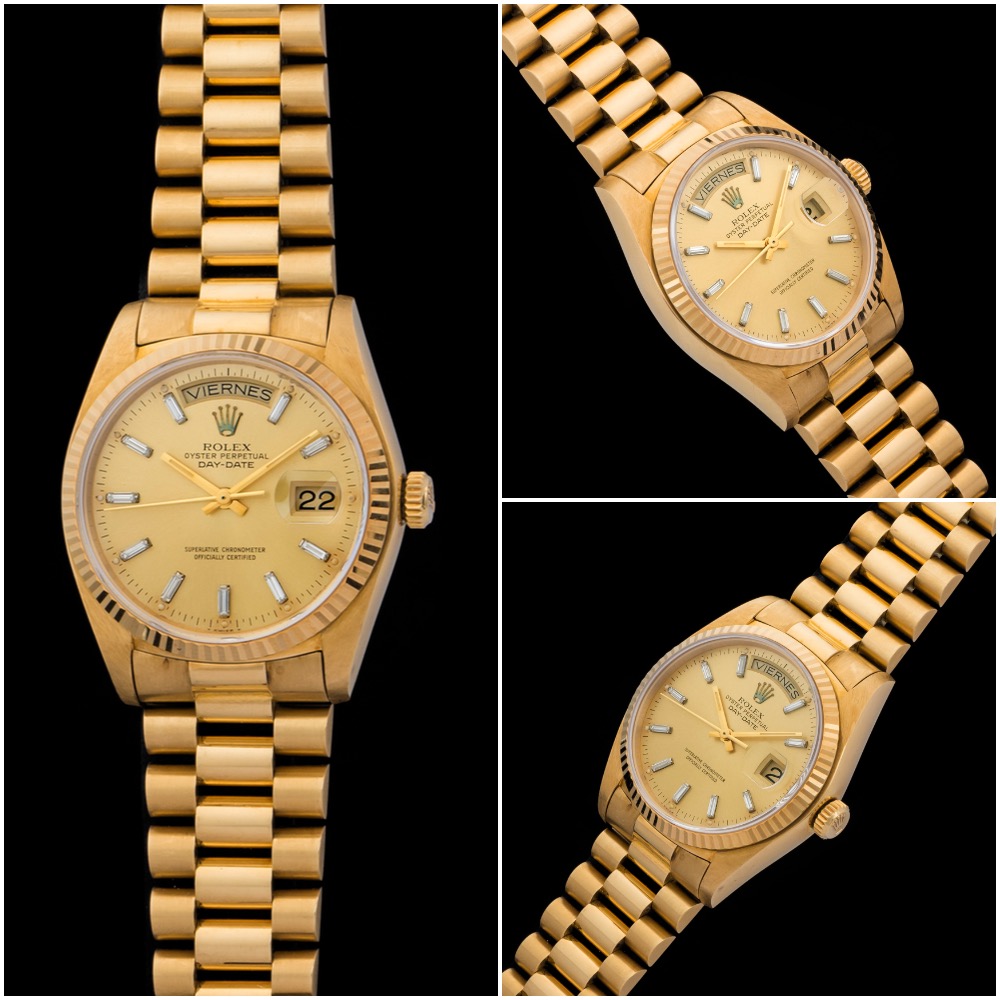
The successful Day-Date 1803 was replaced in 1977 with the reference 18038. This new reference introduced two details that are now staples on modern Day-Dates. The sapphire crystal replacing the plexiglass and the quick-set capable movement. Pictured is an early iteration of the reference, this one being manufactured in 1977 and fitted with a rare champagne colored baguette diamond index dial. An added plus is the Spanish calendar.
Rolex Day-Date 18048
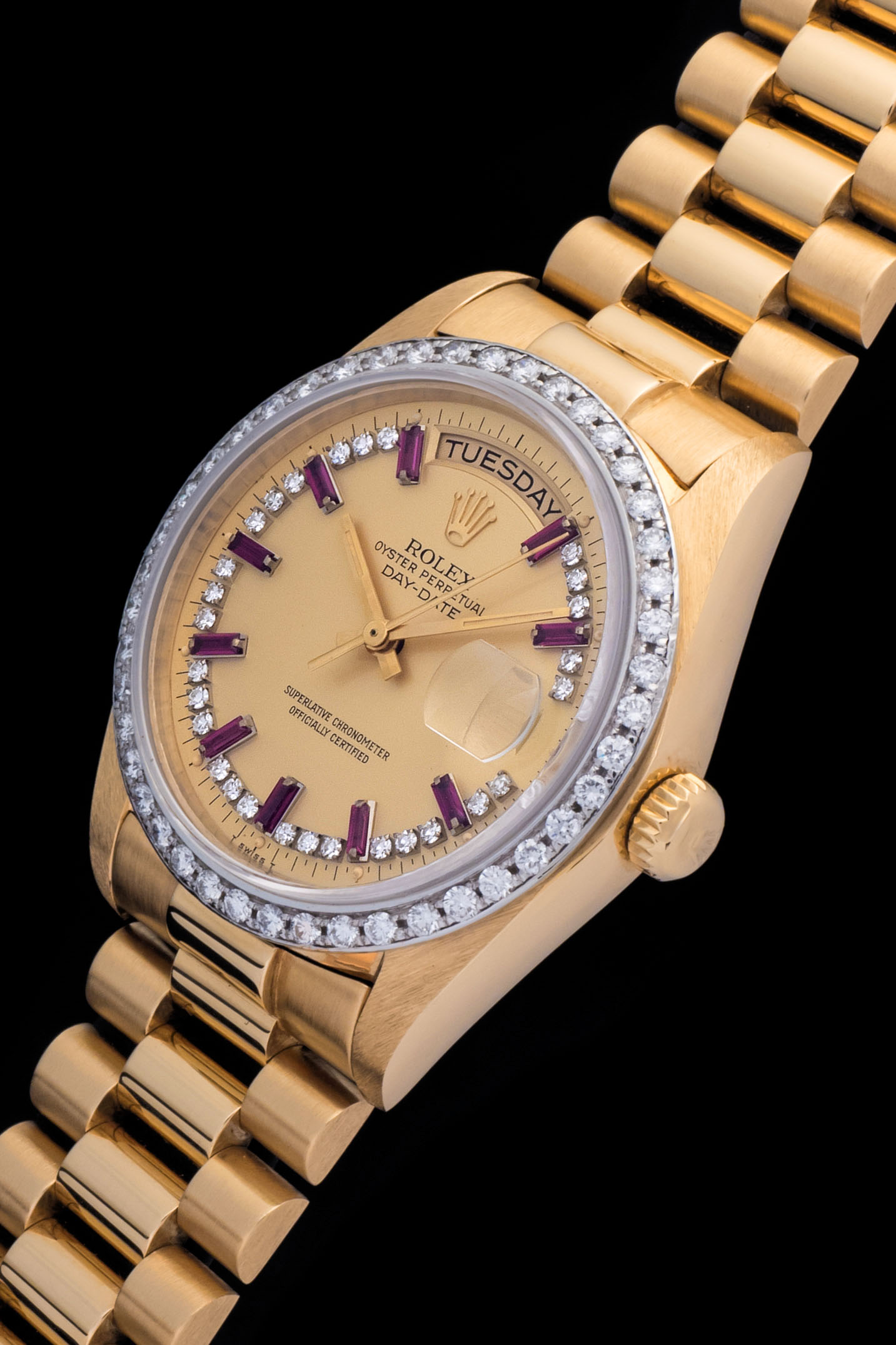
The Day-Date reference 18048 is an interesting reference as it incorporates highly luxurious details. This says a lot considering the Day-Date is altogether synonymous with luxury. A glance at this beautiful example will provide understanding as to why the watch is not like its contemporaries. Pictured is a Day-Date manufactured in 1981 and fitted with a diamond bezel and diamond & rubies stringed dial. This watch embodies luxury at its finest.
Rolex Day-Date 18238
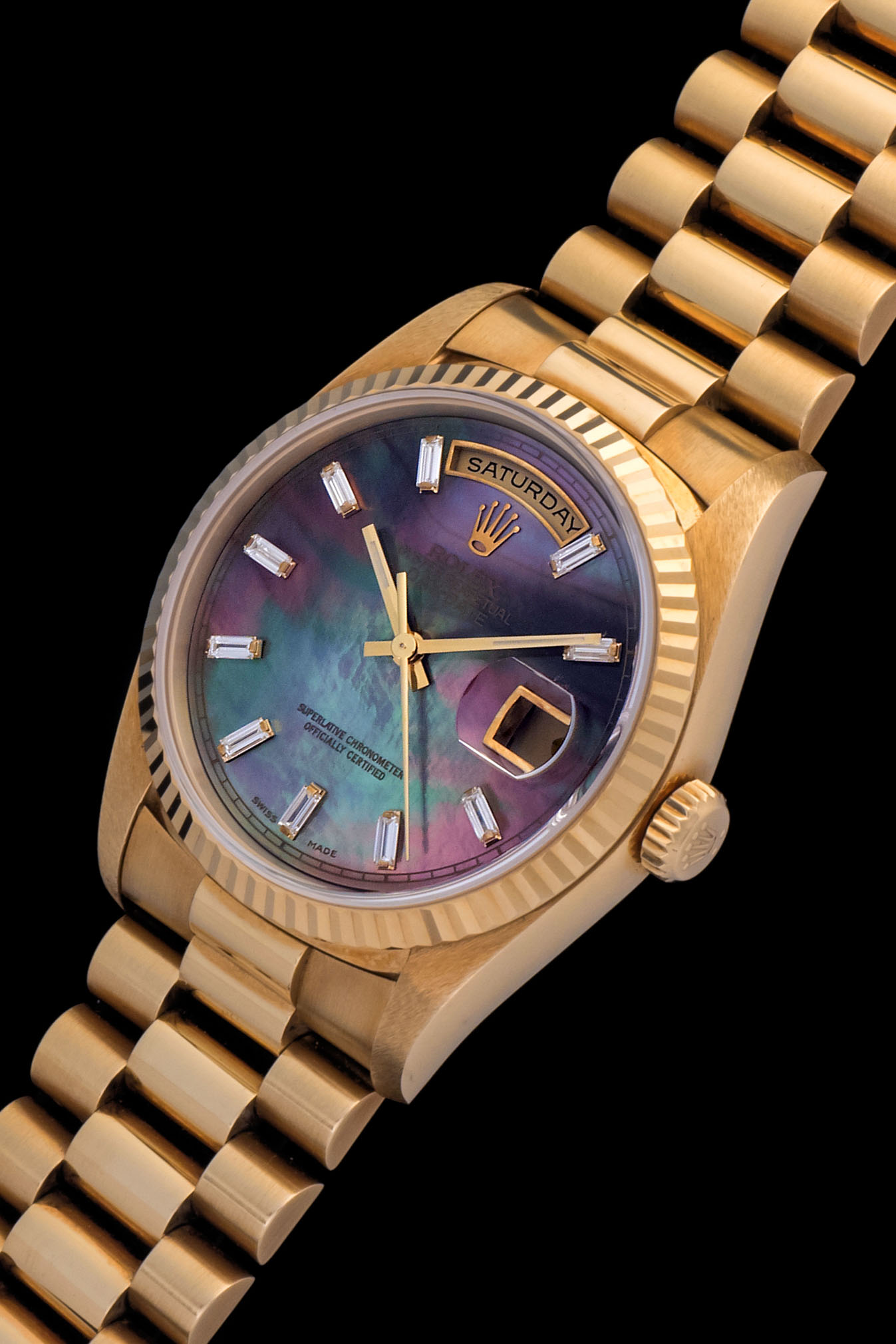
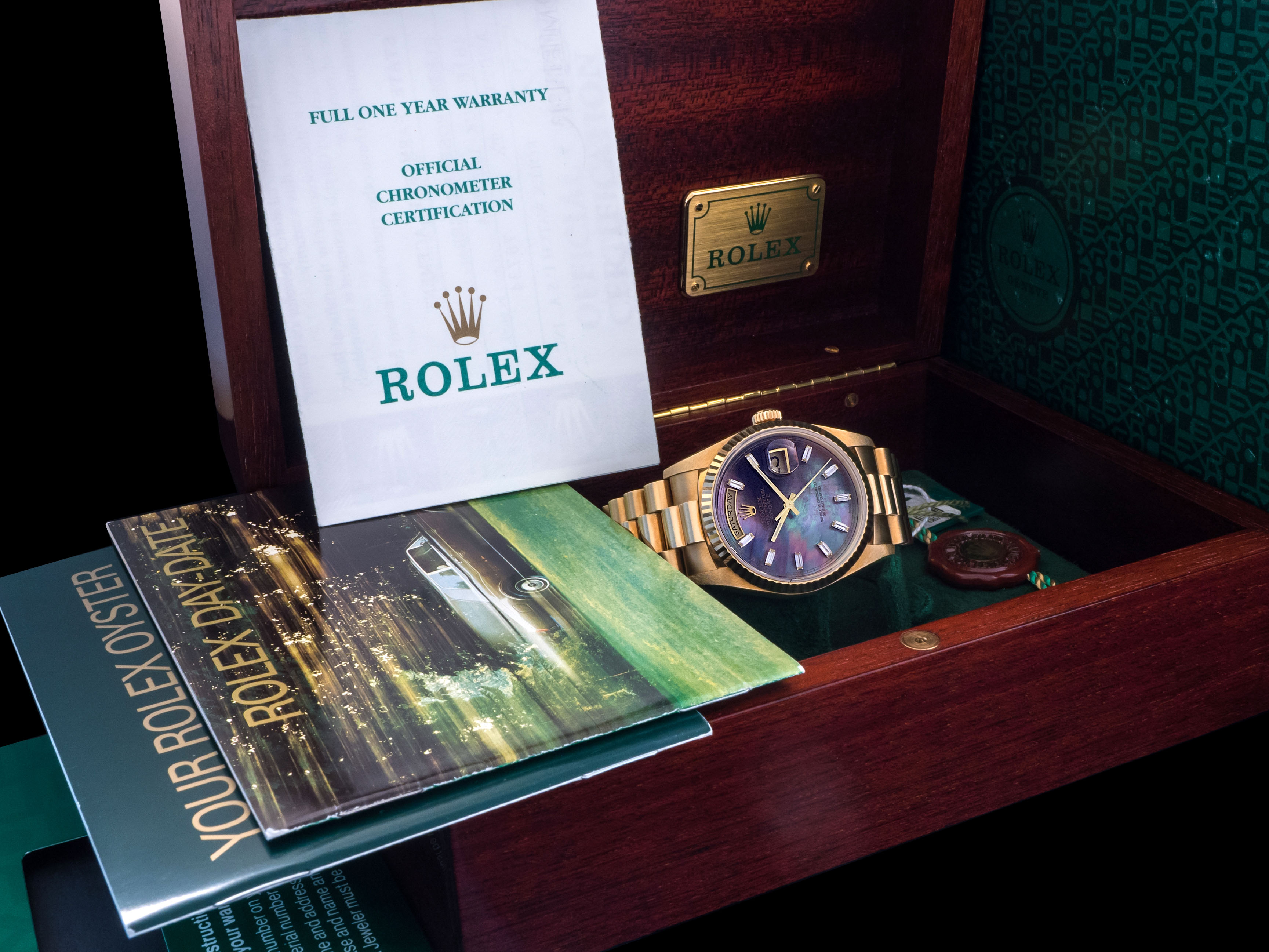
The reference 18238 added a new novelty to the Day-Date family in the form of the double quick-set. This new movement update allows the user to change both the date and day with more ease. Aside from that function the reference retains its standard details such as sapphire crystal and concealed buckle bracelet. Bear in mind not all 18238’s were made the same. Pictured is a special iteration. A never worn full set Day-Date fitted with an ultra rare Tahitian mother of pearl and diamond baguette dial. The look and feel of this watch is fantastic.
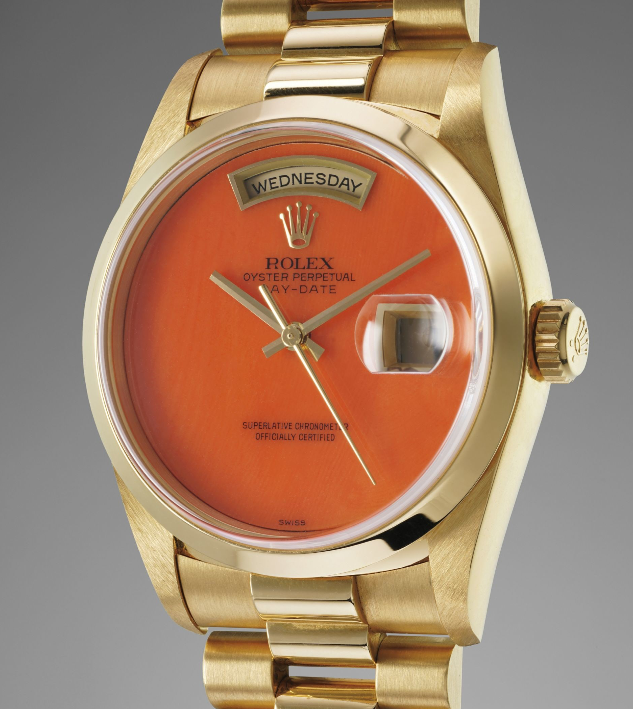
Rolex Day-Date 18206
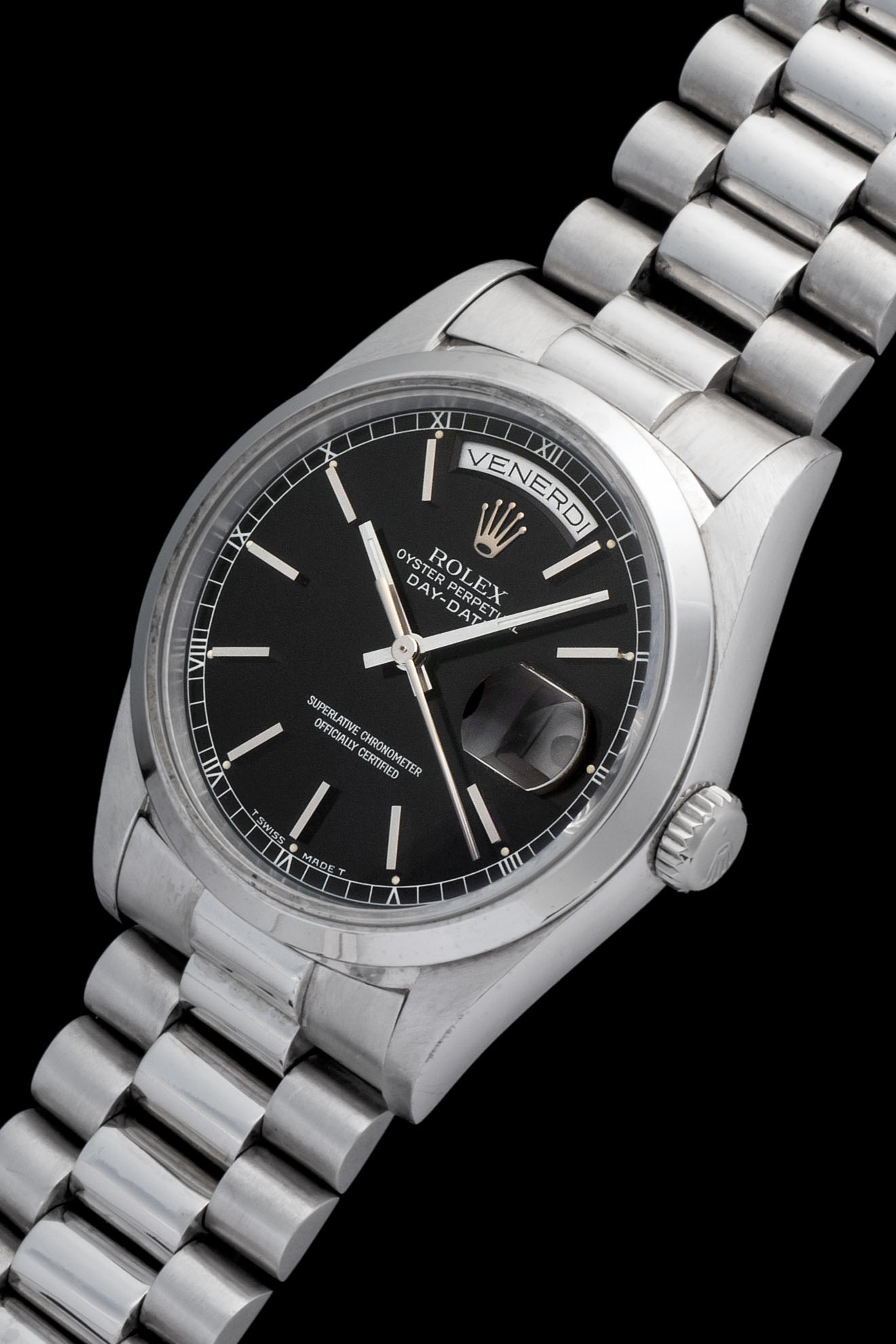
The reference 18206 is arguably one of the most beautiful models in the Day-Date family. This watch is elegance at its purest. It strays away from the luxurious gold case and array of dial variations with a clean dial fitted on a hefty platinum case. A lot can be said about the 18206 but it would not make it proper justice. The watch is best appreciated when worn. In our collection are two examples of the Day-Date 18206. One’s fitted with a blue dial and another fitted with a black dial.
Rolex Day-Date 18296
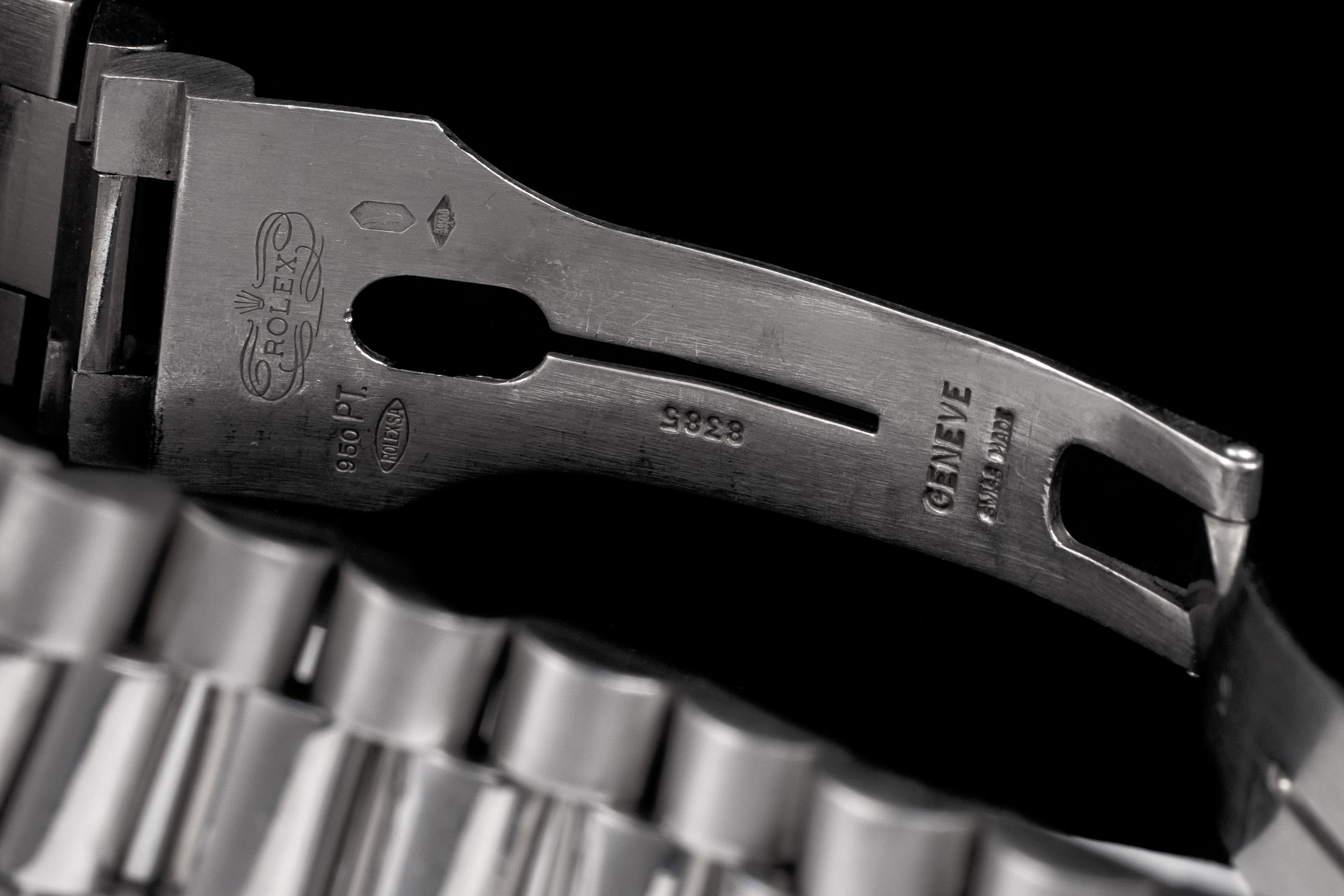
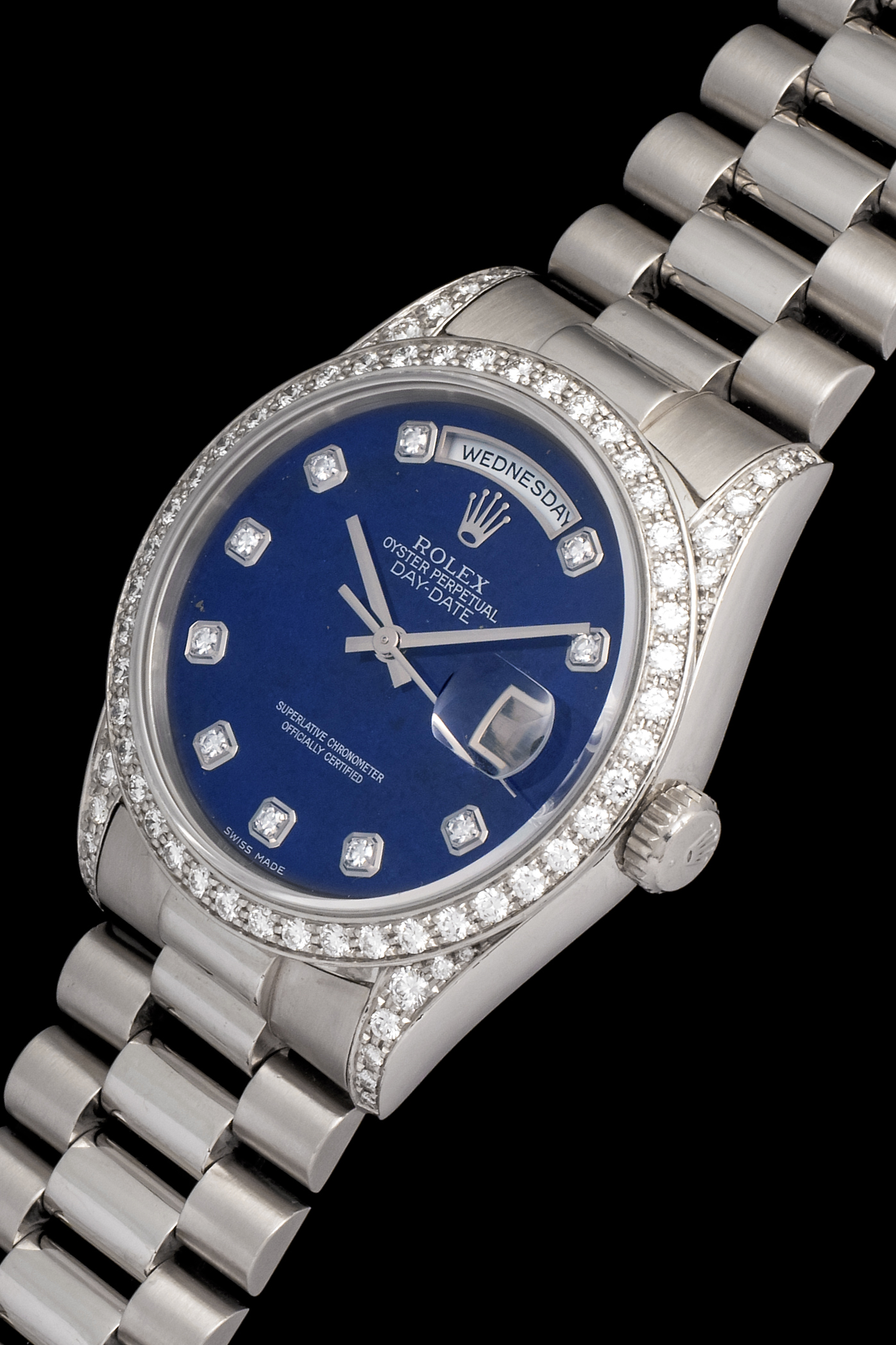
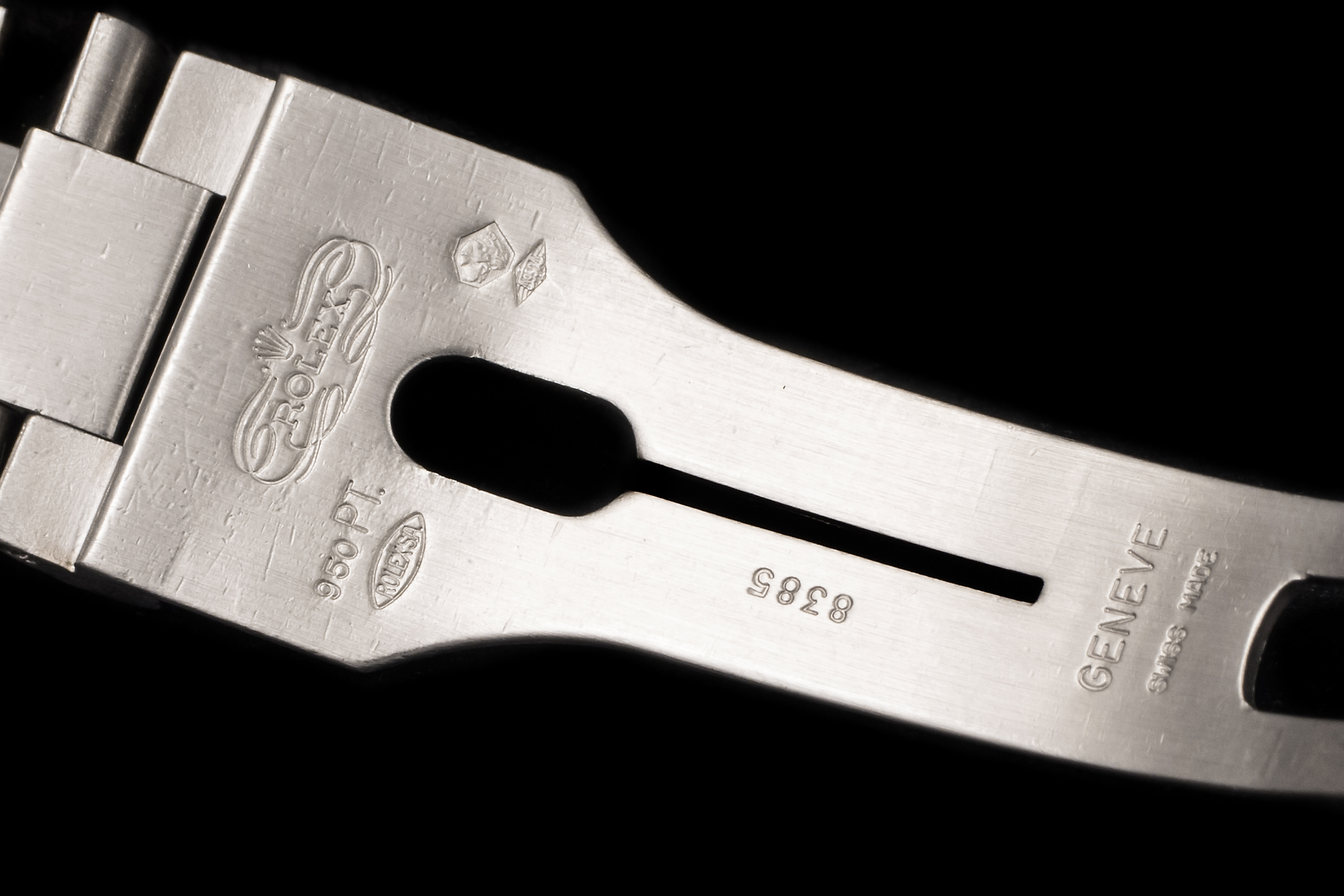
Unlike the previous mentioned reference, our 18296 is an amalgamation of elegance, rarity, and an example of Rolex’s attention to detail. Pictured is a watch that is seldom seen, a watch with so many rare details that only a handful have appeared publicly. For starters this Day-Date is cased in platinum with lugs and bezels adorned with factory diamonds and fitted with a Lapis Lazuli dial coupled with diamond indexes. If the Day-Date family had a hierarchy this watch would be at the top.
Collectability
The Rolex Day-Date is rich in history and is without a doubt slated to be a part of the Rolex lineup for decades to come. But note that with endless references available and with an immeasurable amount of dial variations bear in mind not every Day-Date is created equal. There are highly rare and collectible examples that deserve greater attention and pursuit. The Day-Dates highlighted in this article are on a level of their own. They are the special kind of outliers we collectors travel the world to find.
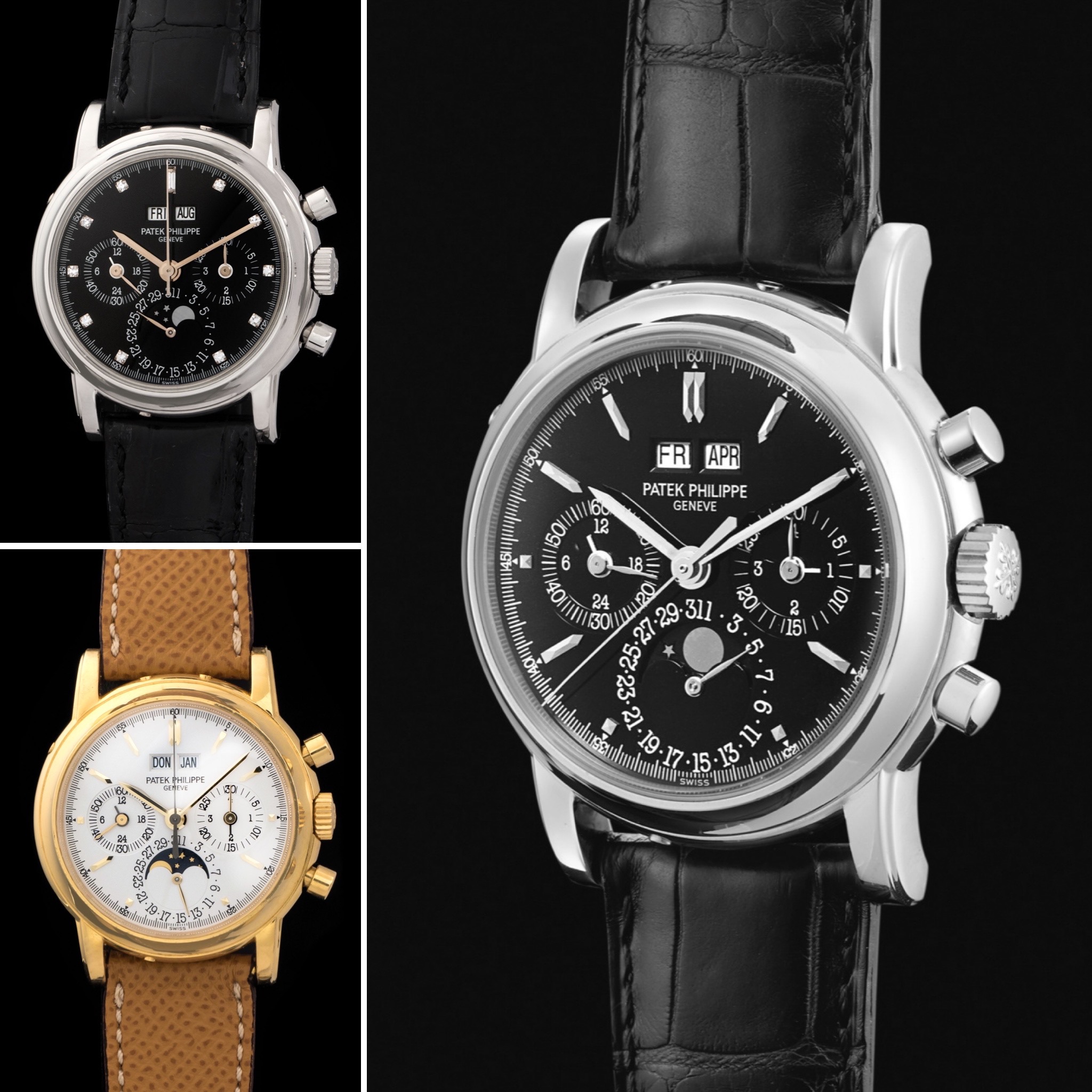
There is real opportunity with the Patek Philippe 3970, people are not really aware of that fact. It has long been agreed that the 3970 is perhaps the world’s most undervalued perpetual chronograph. Explanation? No one really knows. The balance of the watch is absolutely incredible, at 36mm it wears like a charm and the way it looks is just beautiful. Very much a classical Patek Philippe. Here is a thought: The 3970 is the child of the ref. 2499 and the father of the ref. 5970.
Click Image for Info
Production
Patek Philippe first released the ref. 3970 in 1986, at the tail end of the ref. 2499 and continued its manufacture for 18 years until capping production in 2004. The reference was available in 4 metals (yellow gold, rose gold, white gold, and platinum) – steel version/s are not documented, but if we have learned anything from Patek these past years we might be in for a surprise.
Click for More Info
Caliber
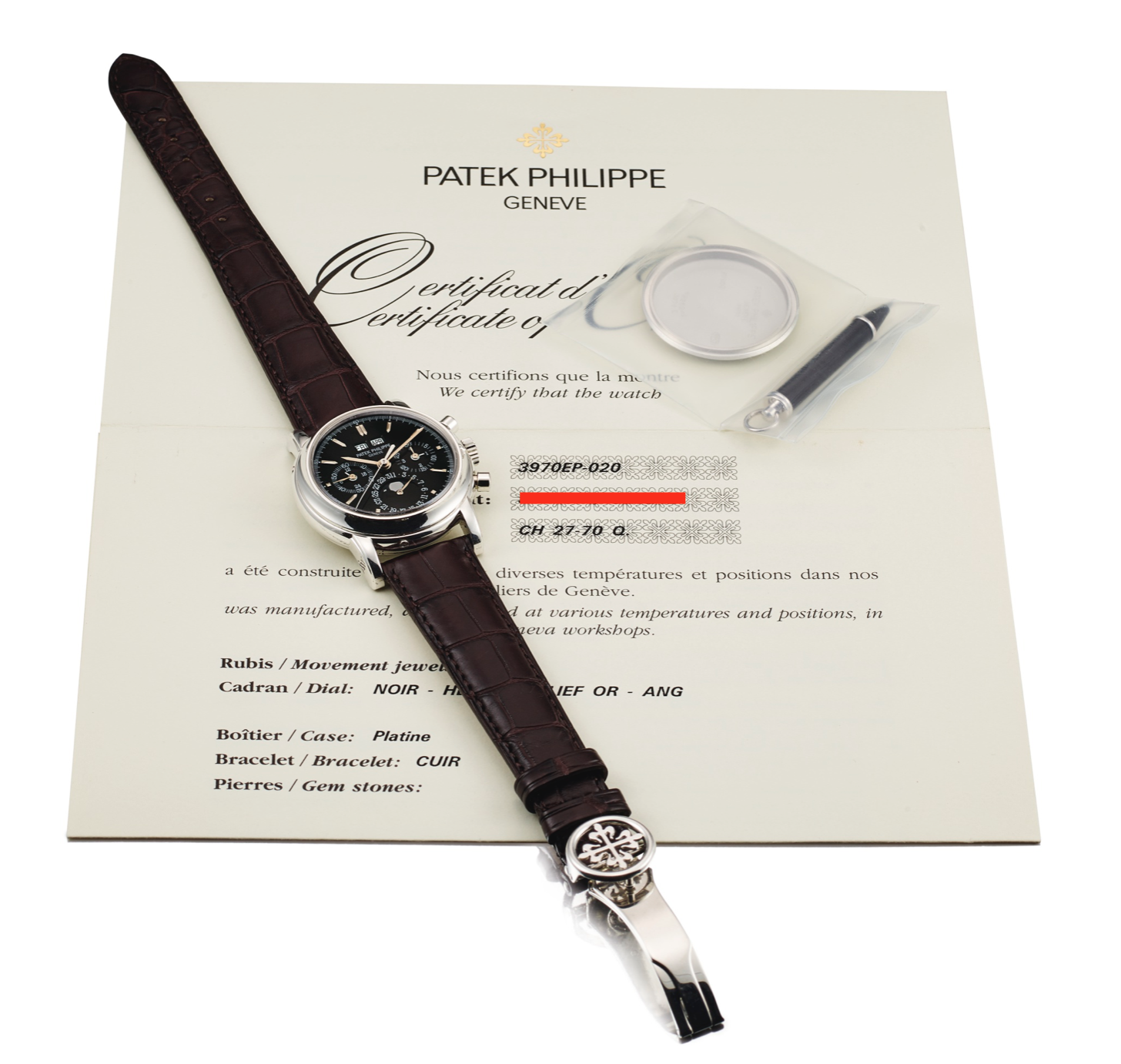
The caliber inside the ref. 3970 was a first for Patek as they chose a reworked Lemania 2310 movement. The laureled caliber quickly ascended in the ranks to become one of the most important movements ever made. The cal. 2310 is built on the foundations of the cal. 321, the very movement used on the original Omega Speedmaster. Of course true to Patek fashion a lot of re-finishing was done to later carry the designation CH 27-70Q.
OLYMPUS DIGITAL CAMERA
Wearability
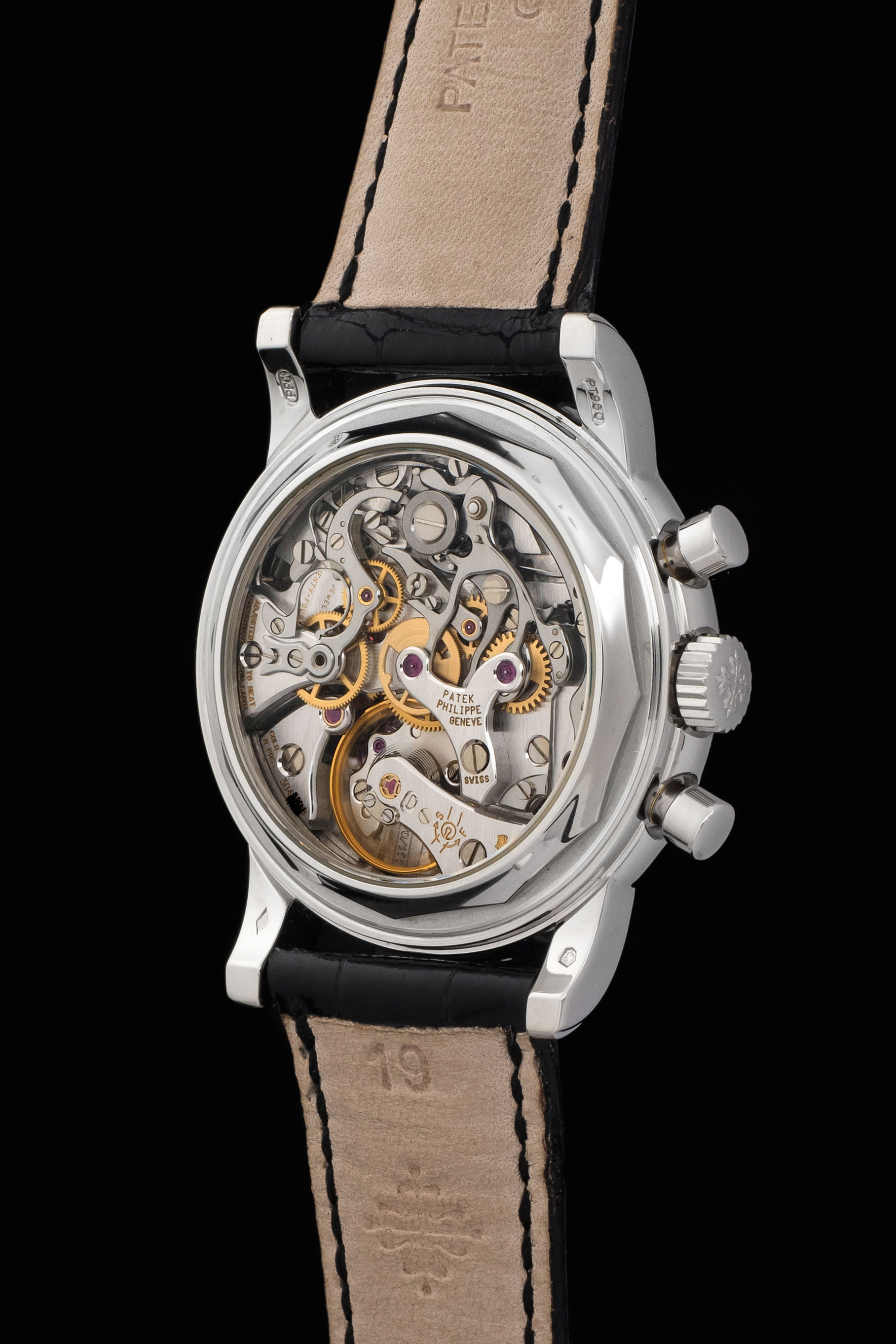
The 3970 is a perpetual chronograph that fits perfectly as an everyday watch, it is that good. Its movement is as reliable as they come, while its design is executed to look classic yet sporty. Also, on second and third series 3970’s the case back comes in sapphire, exposing the movement inside.
Patek Philippe 3970P Available Here
Patek Philippe 3970 in 18K Yellow Gold
Pictured is an example cased in yellow gold. The condition of the watch is mint plus and it comes accompanied by an official extract. A yellow gold watch can be worn on a daily basis, the pleasure it will bring you will be forever lasting. This particular 3970 was manufactured in 2002 and belongs to the third and final series. The sapphire back exposes the beautifully finished manual movement.
Patek Philippe 3970 Available Here
Patek Philippe 3970 in Platinum with Black Dial (with & without Diamonds)
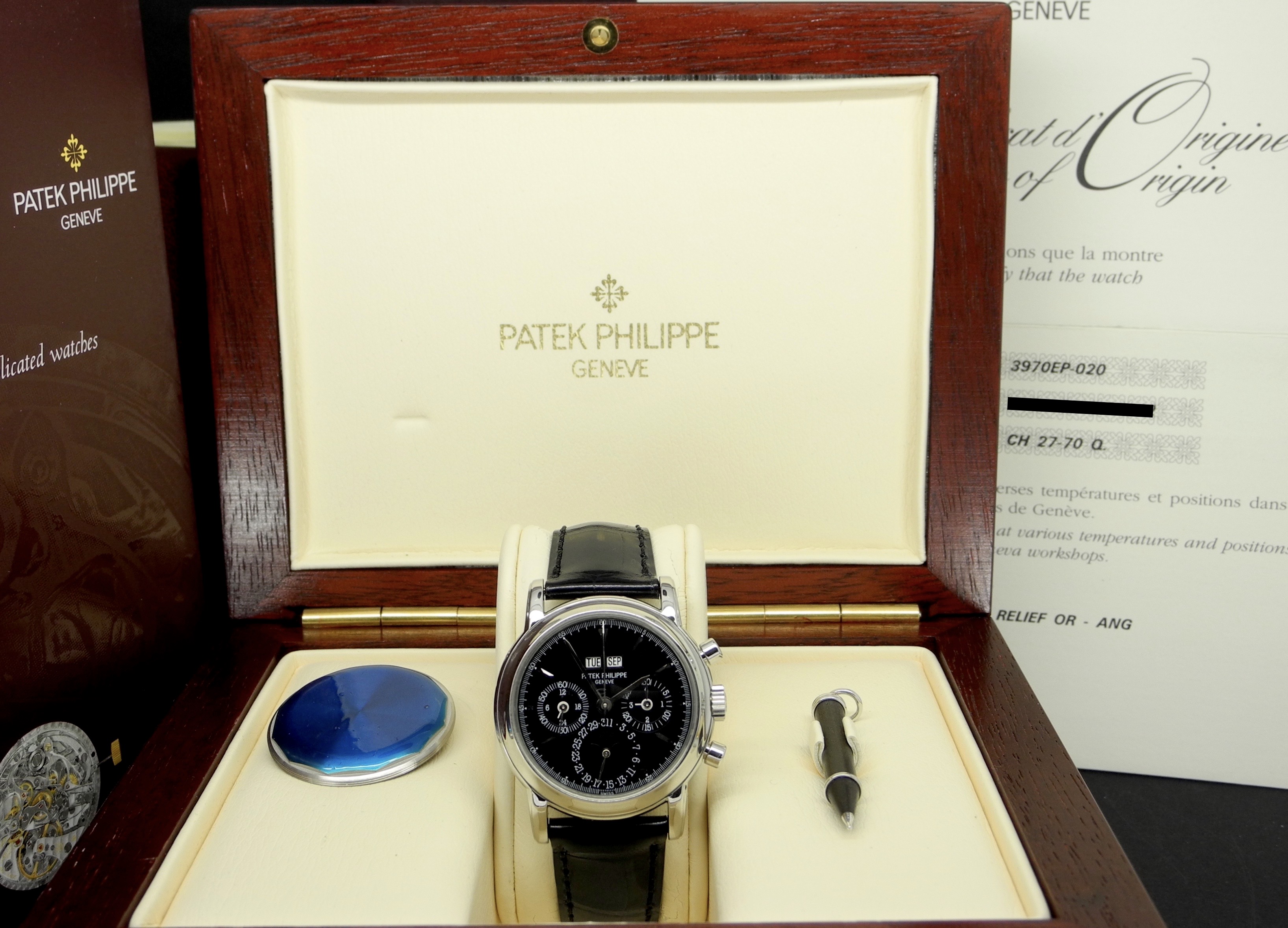
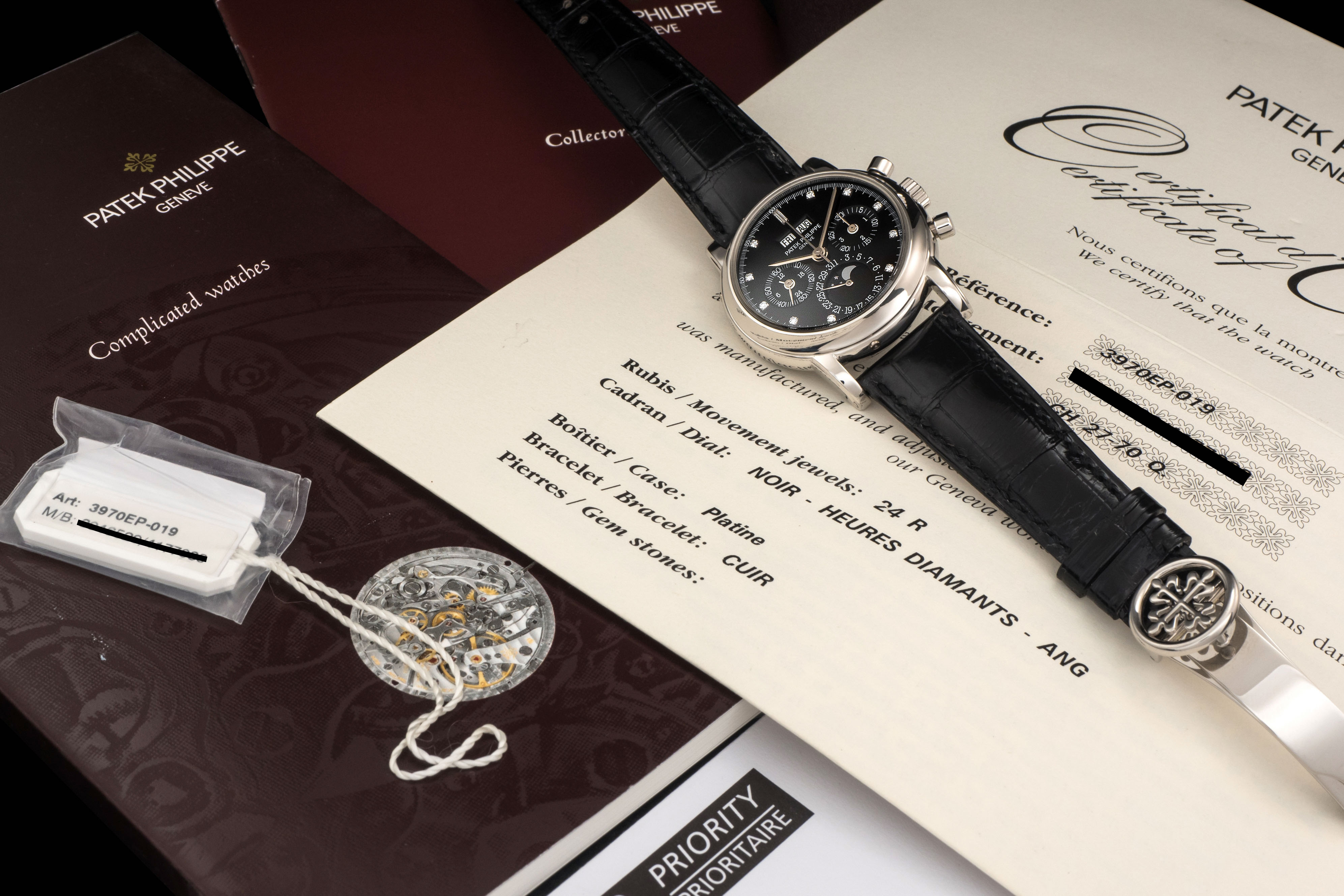
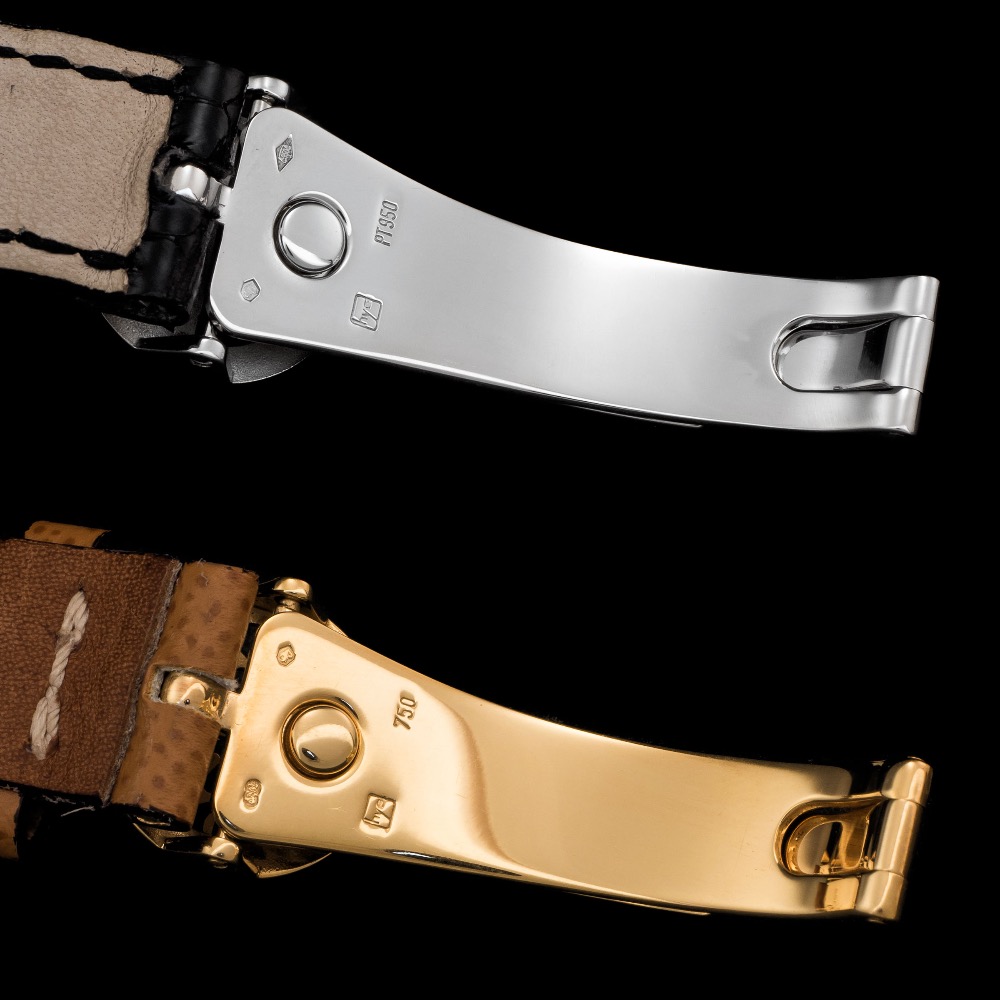
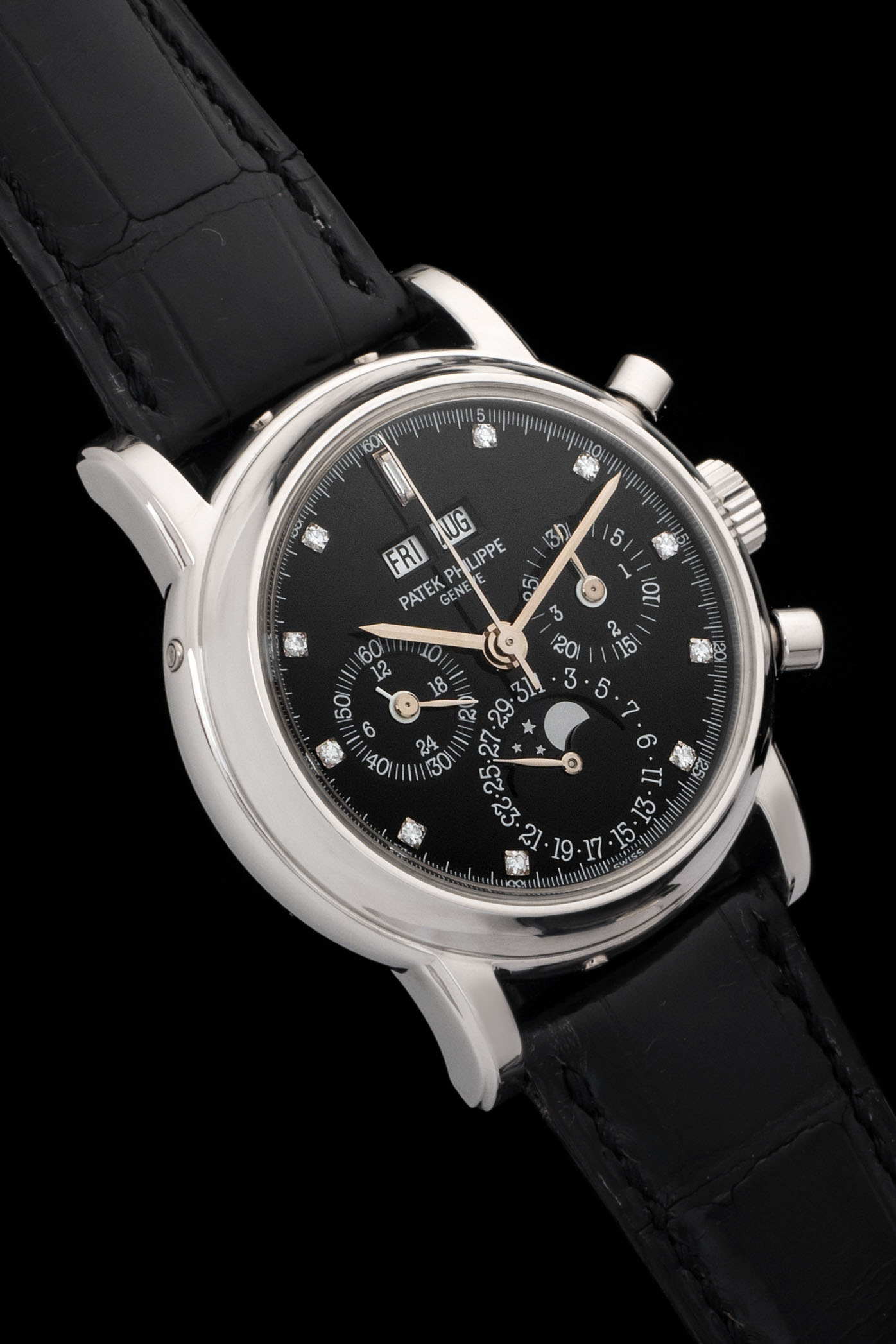
Platinum is regarded as a white metal and when it comes to Patek Philippe there is a premium attached to it. This particular ref. 3970 comes accompanied by its original paperwork, box, and solid case back. A true full set. Two important features come together with this platinum version. A diamond index dial and a platinum case and buckle deployant. The dial is remarkable to look at while the platinum’s heft is unmatched by the other metals. A much rarer version of the 3970 in platinum is the one that is fitted with a black dial but without diamonds. These were made in exceedingly low quantities
Patek Philippe 3970P Available Here
Collectability
At the current moment the Patek Philippe 3970 is the only perpetual chronograph that offers the most bang for the buck. No other complicated world-class Patek can be found at these price ranges. The ref. 3970 is a truly under appreciated watch but based on recent auctions we might start to see them performing the way they should. The vintage and important watch market is unpredictable and we believe now is the time to buy a 3970. The current prices are at their lowest point, but indicators show that will not be the case for much longer.
The Patek Philippe ref.3448 is one of the most beautifully designed watches in existence. Records indicate 580 examples were made between 1962 and 1981 (Our 3448 hails from 1971.)
Click Image for Details on ref. 3448
Design
When the watch was released in 1962 critics described it as an elegant yet futuristic watch because it strayed away from what was a normal Patek. The ref.3448 is known by collectors as the “Padellone” and the “Disco Volante”, or “Flying Saucer” in English.
Click Image for Details on ref.3448
Perpetual Movement
A beautifully striking feature about this watch is its integrated crown to the case. The movement inside the watch is also very significant as it was Patek’s first automatic movement capable of carrying a perpetual calendar. The movement in question is the 27-460 Q (Q is the designation given to Perpetual Calendars).
The genius behind Rolex is that even though they manufacture droves of watches per year they don’t half ass at anything. They put the same amount of love and care into the Datejust as they do into the Daytona Platinum Pave Diamond Dial. The best part about it is the manufacture has been true to its practice ever since it was a small brand headquartered in the United Kingdom.
Hard-Stone Dials
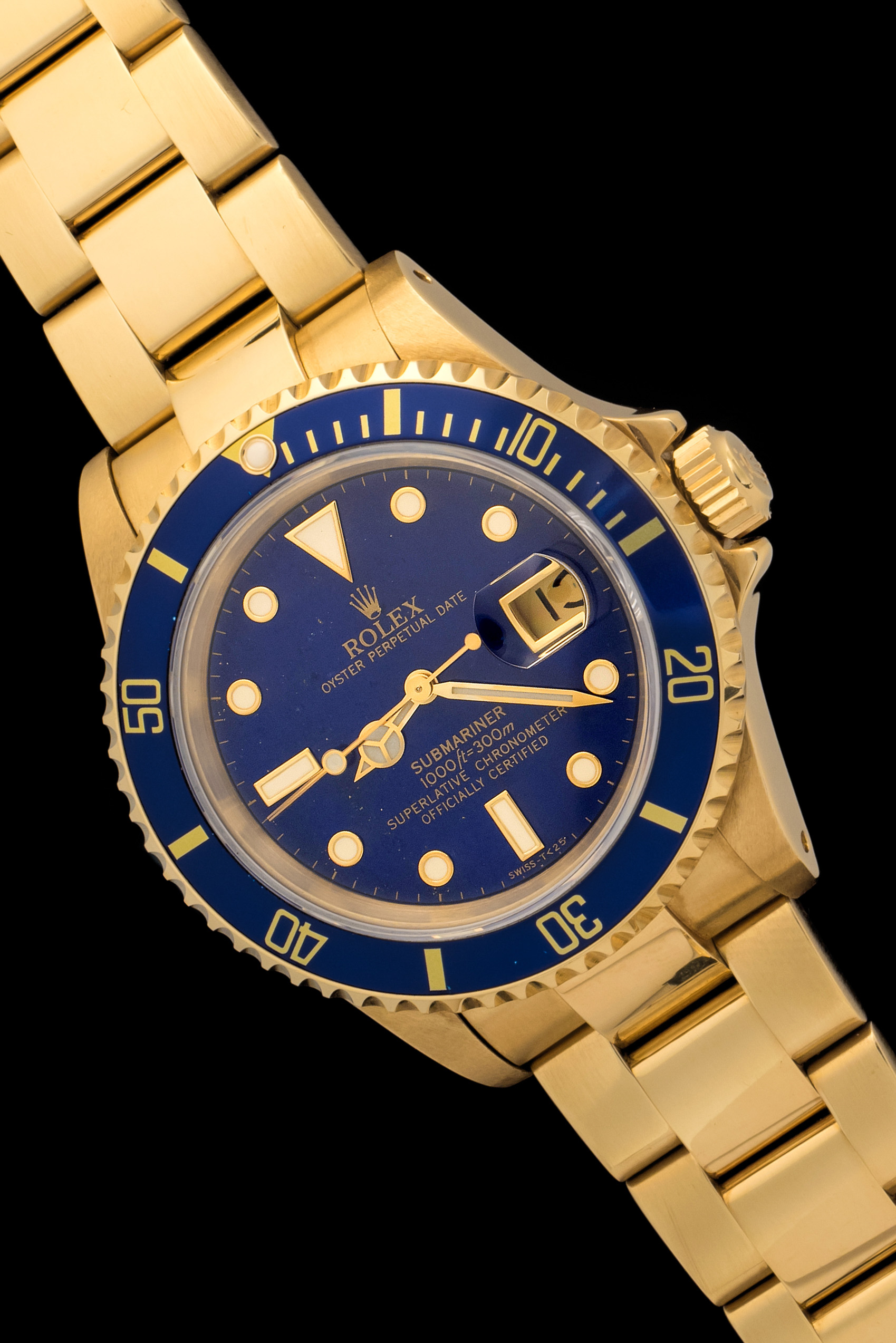
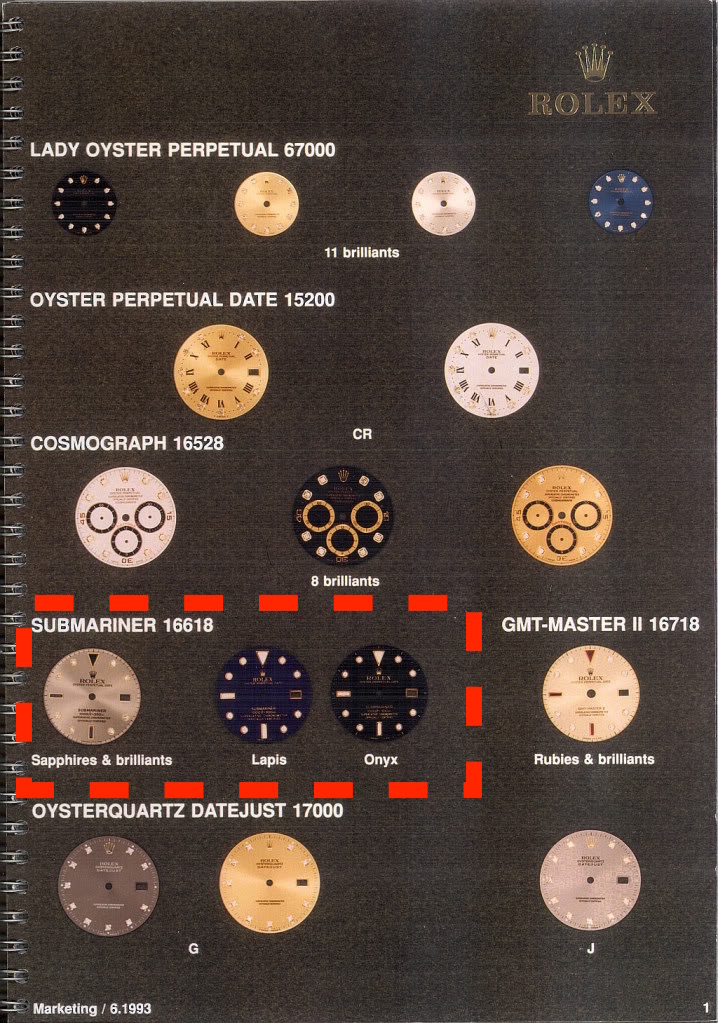
Rolex is known for its founding role in the tool watch department with the introduction of the first Submariners and GMT’s, but their role in the sporty-elegance department is also worthy of much attention. Here we’ll cover two watches that are as unique as they are wearable. The Onyx Dial Submariner Ref.16618 and the Lapis Dial Submariner Ref.16618.
Subamariner Lapis and Onyx Dials
90’s Innovation
The 90’s were an inventive era for Rolex as they began to merge various types of hard-stones with dial production. Take the 1997 Rolex Submariner 16618 Onyx dial as an example. Rolex watchmakers delved into the process of trimming a 1-kilogram the rock into a 0.20mm piece to later be mounted onto the copper dial plate.
Click For More Information
Rolex Submariner Onyx Dial
This process of manufacture was so complicated that it’s estimated that out of 10 dials only 2 made it past the rigorous Rolex inspection phase. The rejection ratio was unfathomable but the dials that made it through made it all worth it. Since Onyx rocks cannot be man made no two dials will ever be the same, which is astonishing for a company like Rolex.
Identifying an original Rolex Onyx dial is simple as they all have a small golden frame surrounding the date function. Do not trust a dial that does not have this detail.
Click For More Information
Rolex Submariner Lapis Lazuli Dial
The Rolex Submariner with Lapis dial is another work of art, and it’s without a doubt Rolex’s most elusive dial as its production was incredibly sporadic. The manufacturing process of this dial is the same as that of the Onyx dial. A large portion of the stone is needed to then trim it down to a small circular 0.20mm piece.
Click For More Information
Rarest Dial Variation
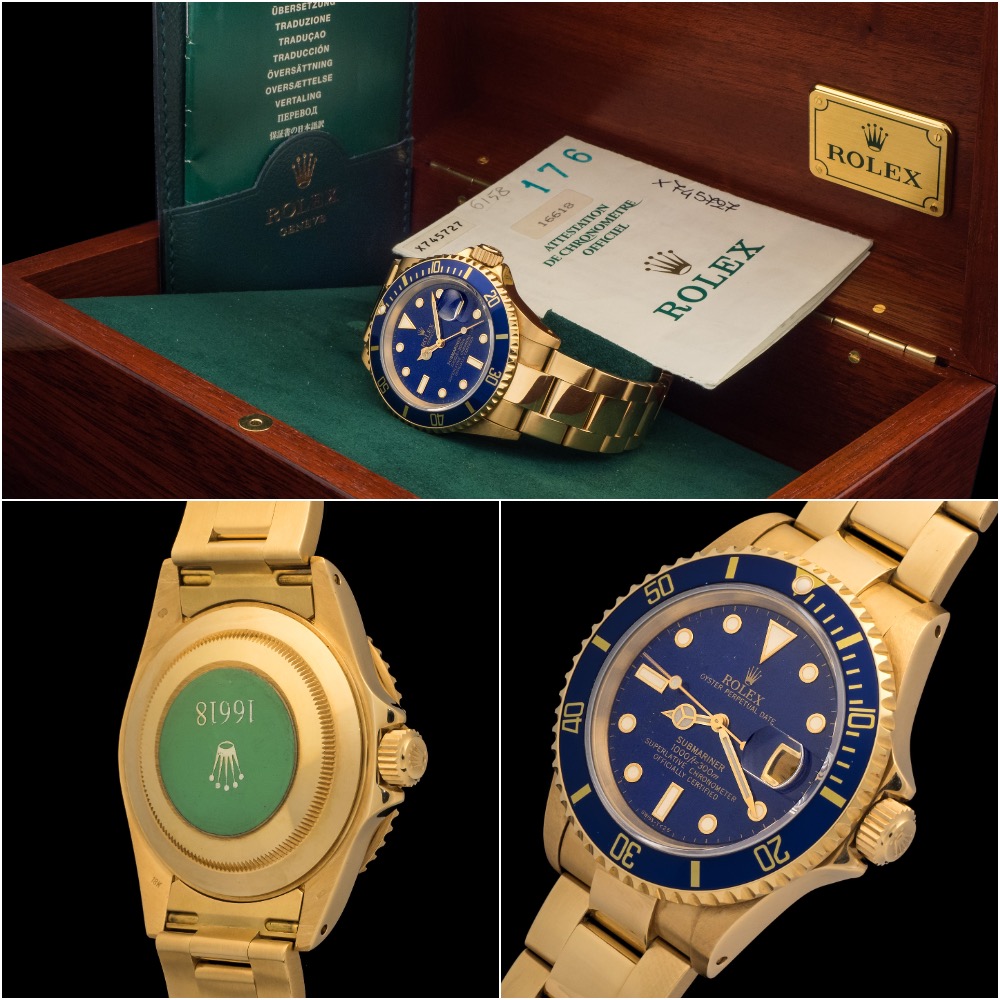
The Lapis stone is entirely blue but it also has specks of green, white, and gold when seen in the light. The look of the dial on a gold Submariner leaves us without words. These are watches that are hardly found and we are not exaggerating. In our 32 years of experience we have only seen a handful pop up.
Click For More Information
Lapis Lazuli & Onyx Dials
Our 16618 is a magnificent example as it’s in new old stock conditions and is accompanied by its original papers and box, a true collection item.
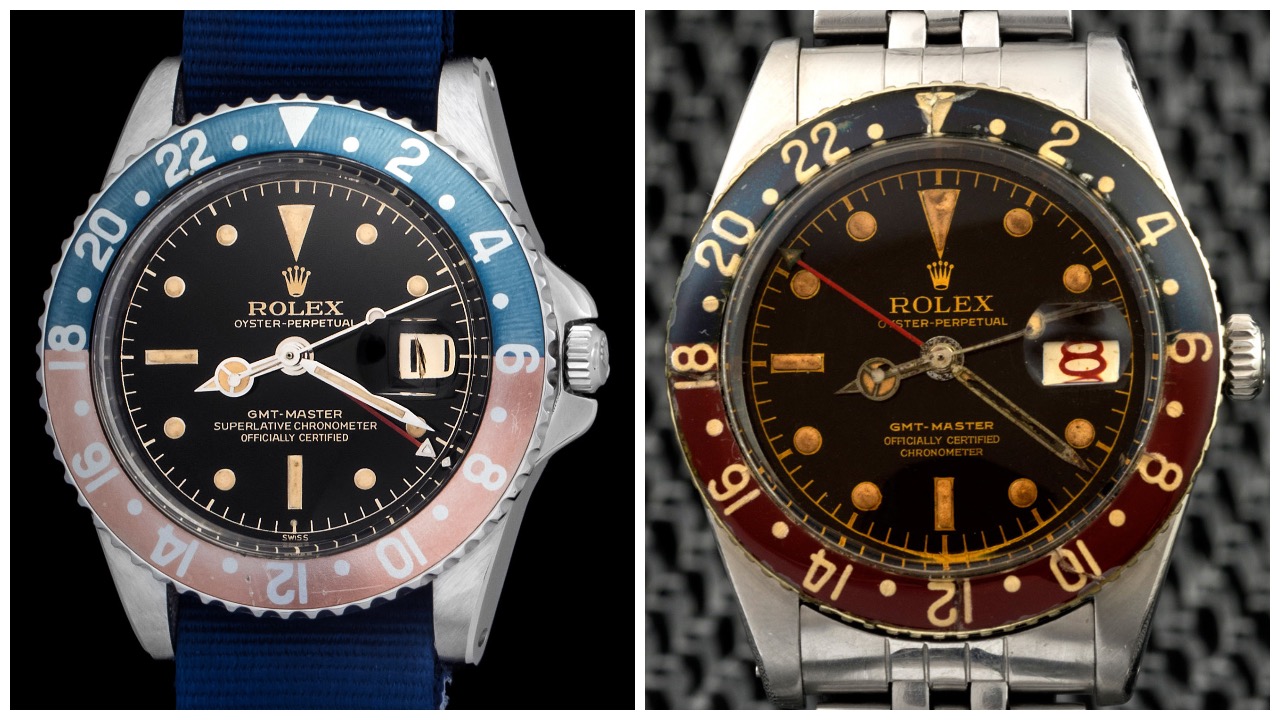
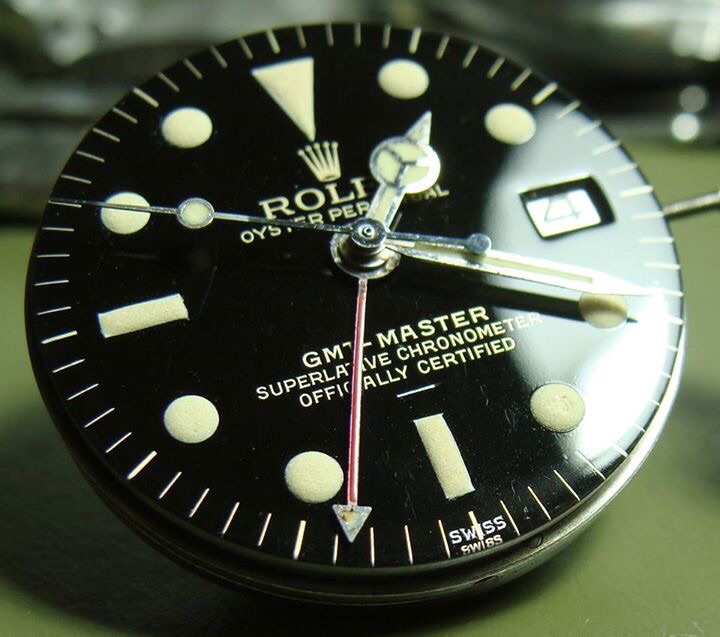
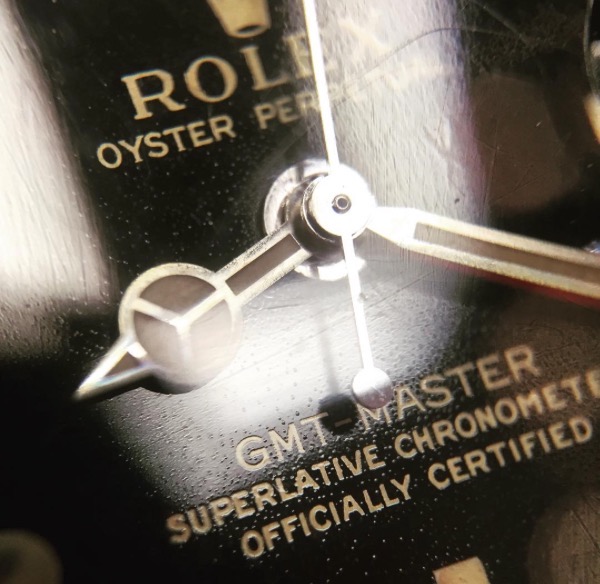
OCC stands for Officially Certified Chronometer while SCOC stands for Superlative Chronometer Officially Certified. A seemingly insignificant wording on the dial will make a world of a difference to a seasoned and informed collector.
Rolex GMT-Master Collection
An OCC movement is one, which has successfully passed a test conducted by the Swiss Official Chronometer Testing Institute or COSC.
The test consists of testing a watch for 15 days and 15 nights putting it through five positions and 3 types of temperatures (normal, oven-heat, and refrigerator). OCC movements feature a regulator, which allow the wearer to manually adjust the movement to run faster or slower. The process of manually adjusting a movement can be cumbersome and inefficient.
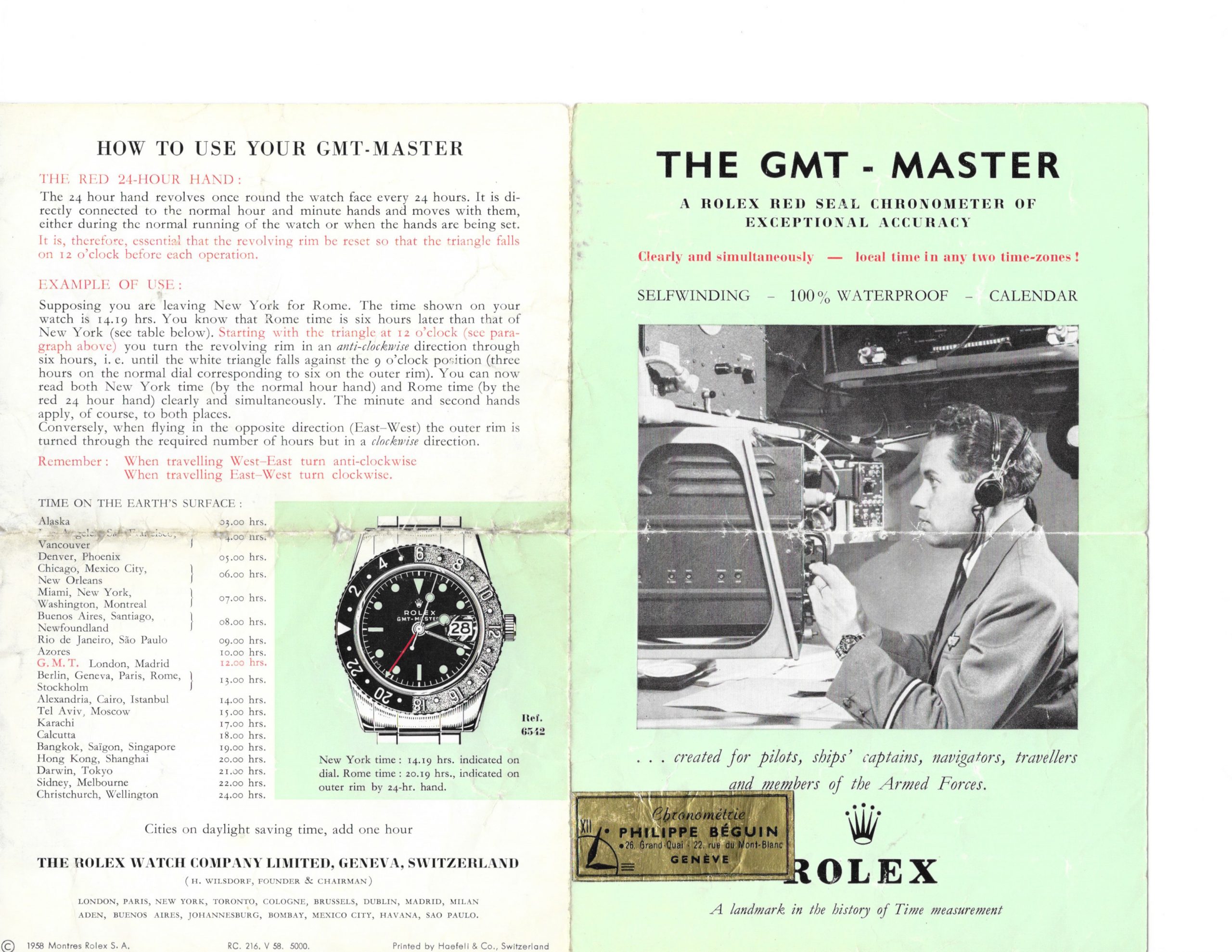
Vintage Rolex GMT-Master Booklet
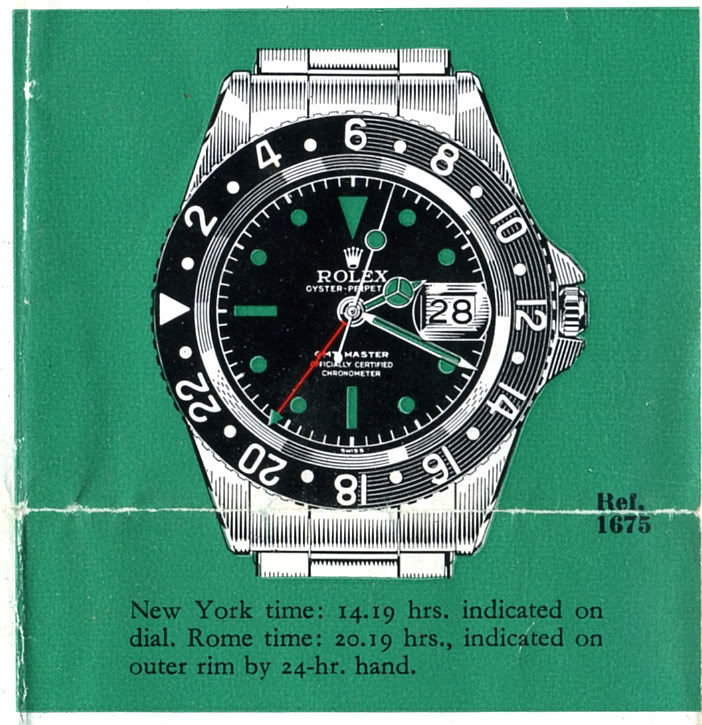
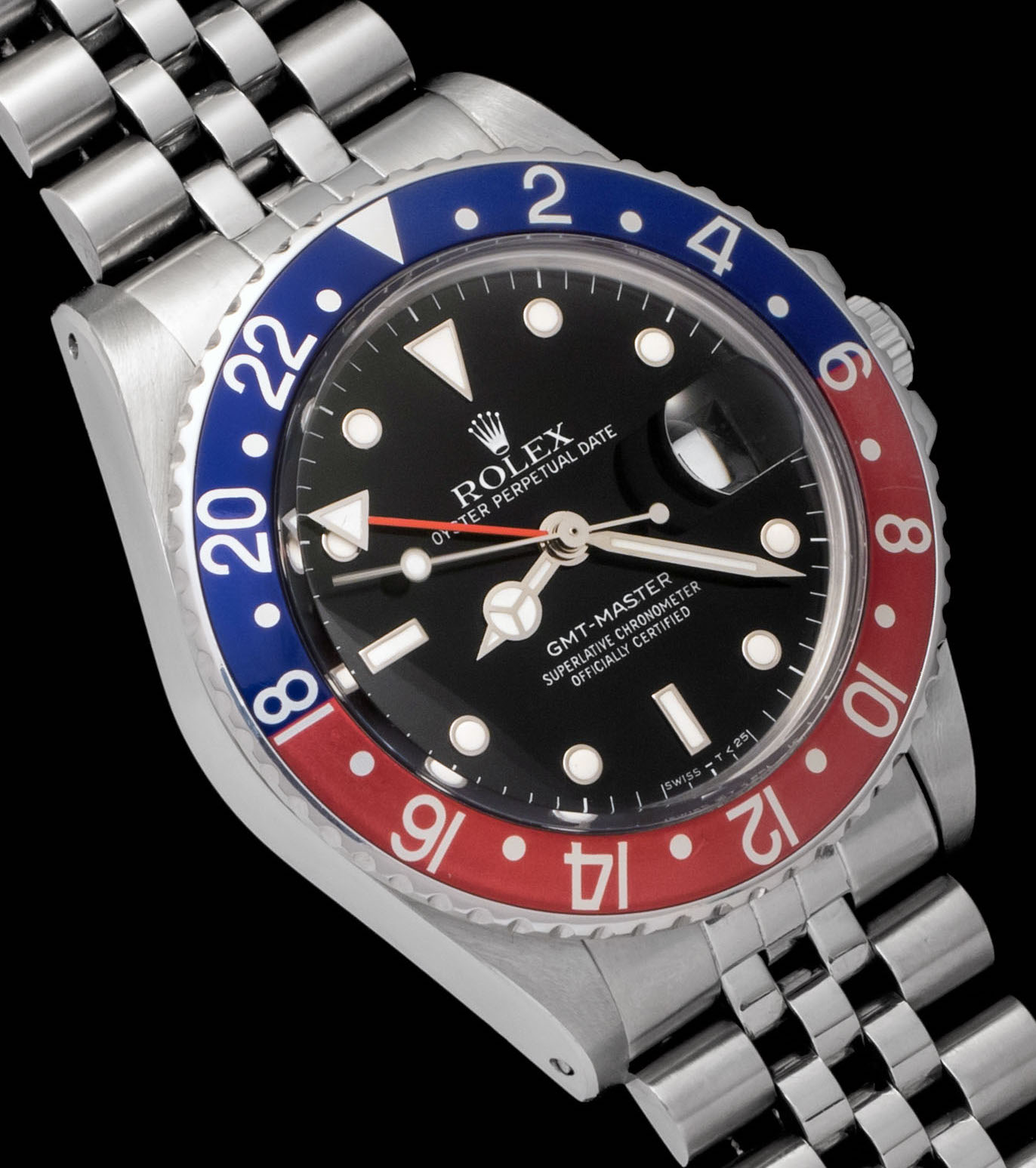
The Rolex GMT-MASTER Ref. 6542 for example was fitted with an OCC movement while its successor the 1675 was not. These ones were fitted with SCOC movements.
A SCOC movement is an upgrade from the OCC. These movements have also passed the rigorous COSC testing but are not fitted with regulators, and this allows them to keep accurate timing for much longer.
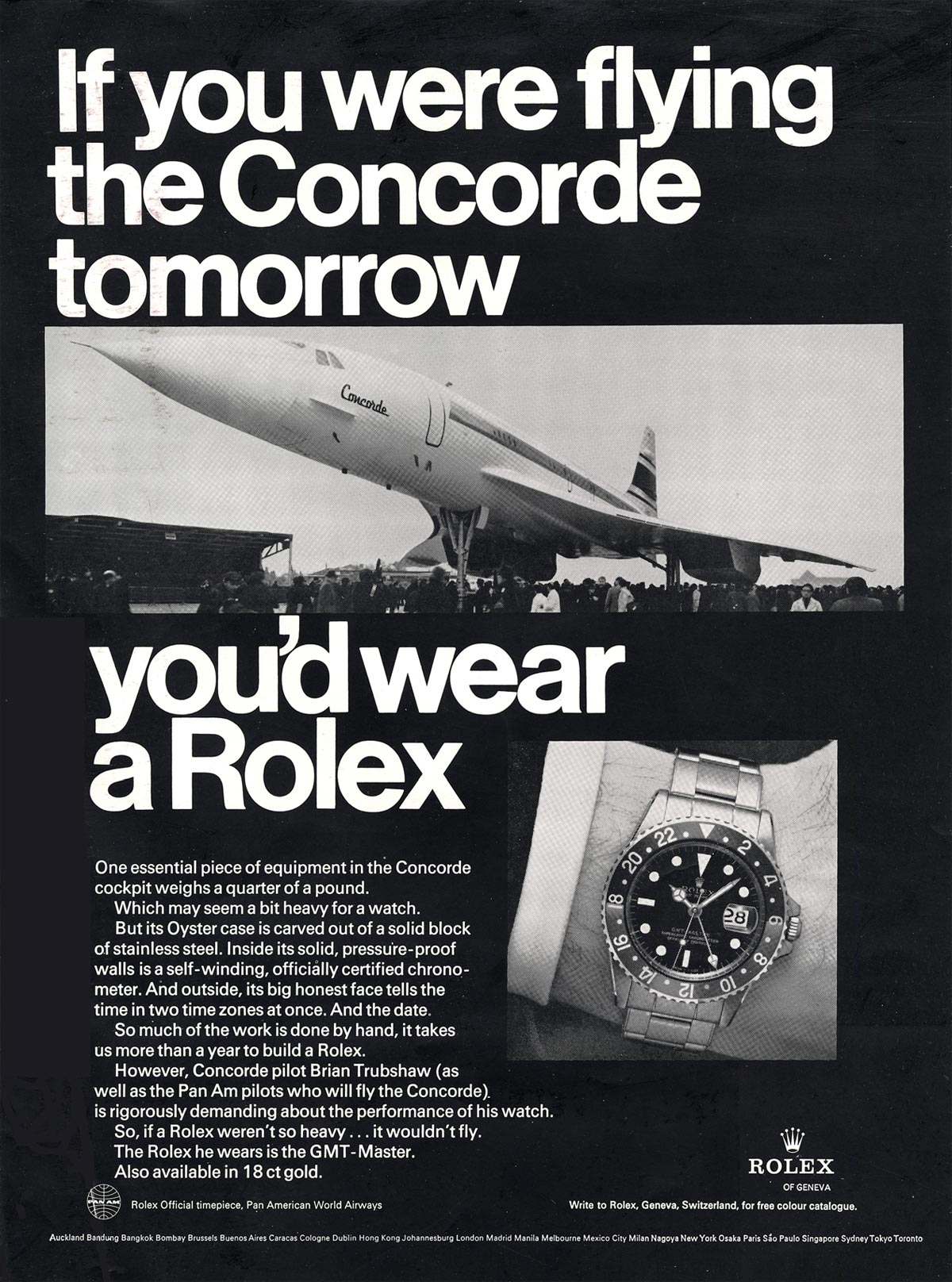
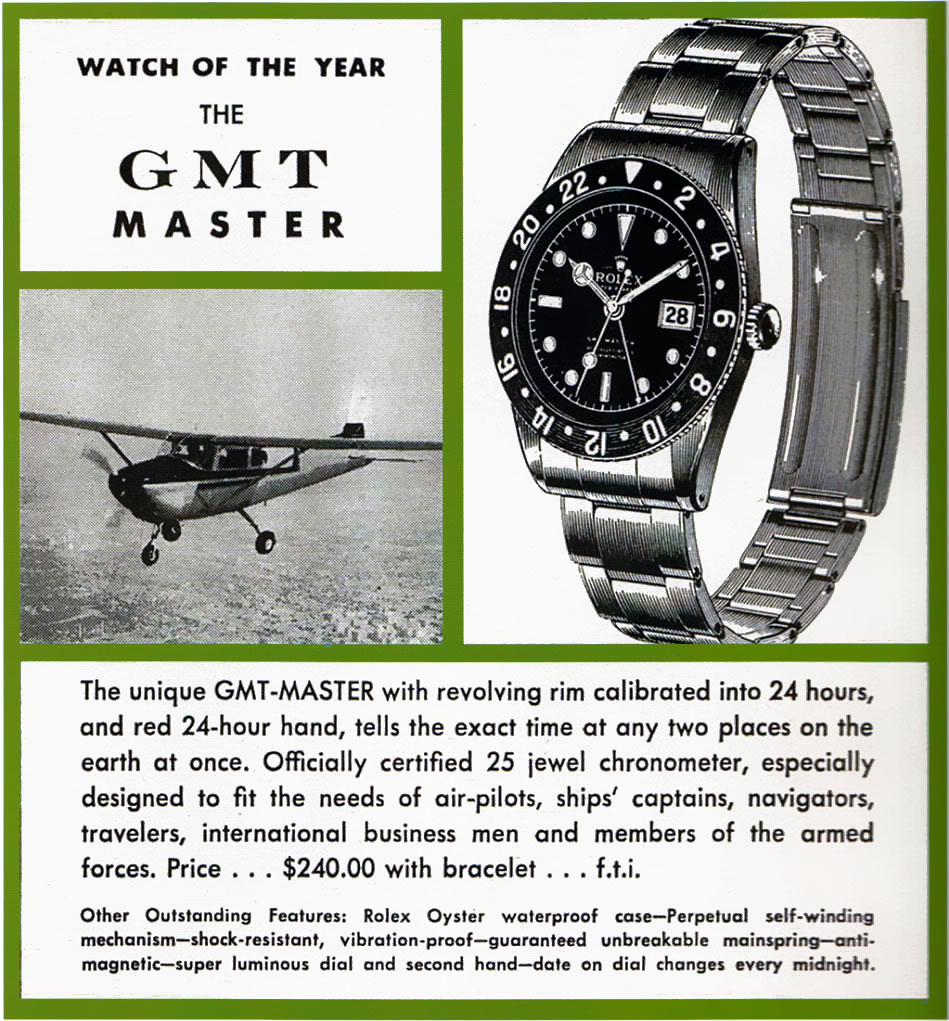
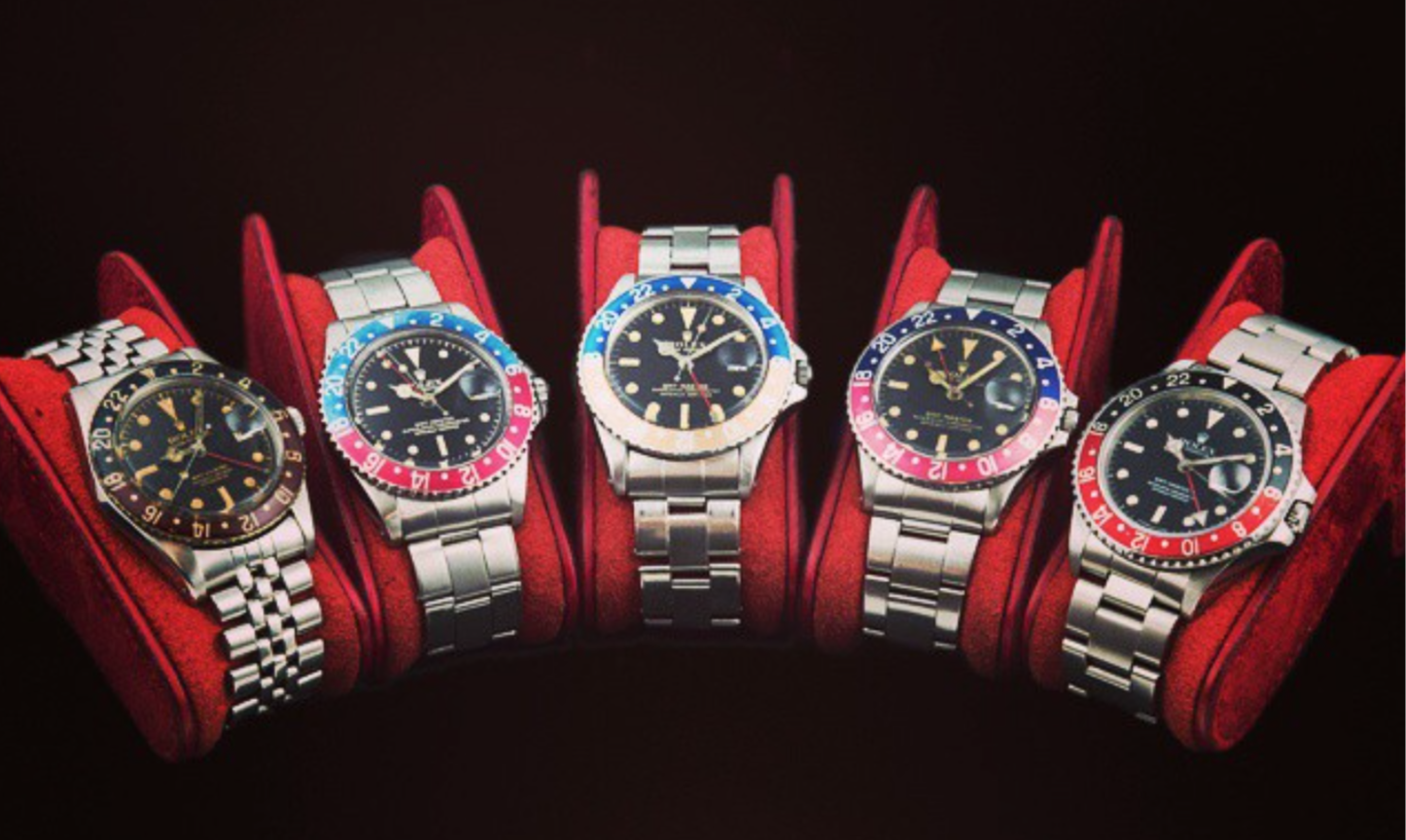
The late 50’s and 60’s era brought about a boom in globalization that enabled people to travel farther allowing the airline business to flourish as the demand for long haul flights skyrocketed. This new trend led to one of the worlds most famous corporate collaborations – the Pan Am and Rolex project. In an effort to better equip its pilots with reliable tools Pan Am approached Rolex to develop a watch capable of keeping track of two time zones. Rolex being the world’s most influential tool watch manufacturer delivered with the creation of the GMT-Master.
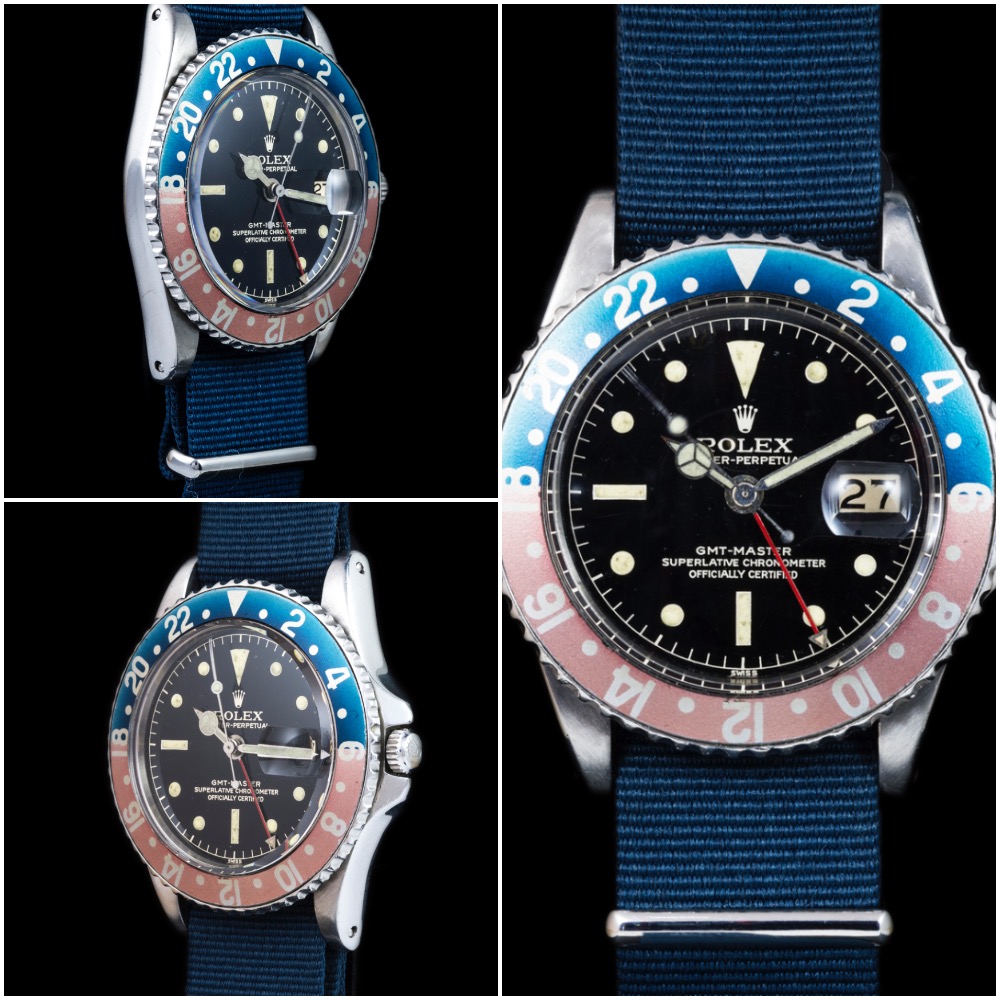
The first GMT was the reference 6542, also known as the Bakelite for its plastic blue and red colored bezel. The dual colors enabled pilots to distinguish nighttime from daytime hours, a simple yet important feature. Although revolutionary the Bakelite did not come without flaws. Being plastic, the bezel tended to crack easily thus compromising the watch’s integrity. While the absence of crown guards hampered the case’s waterproofness.
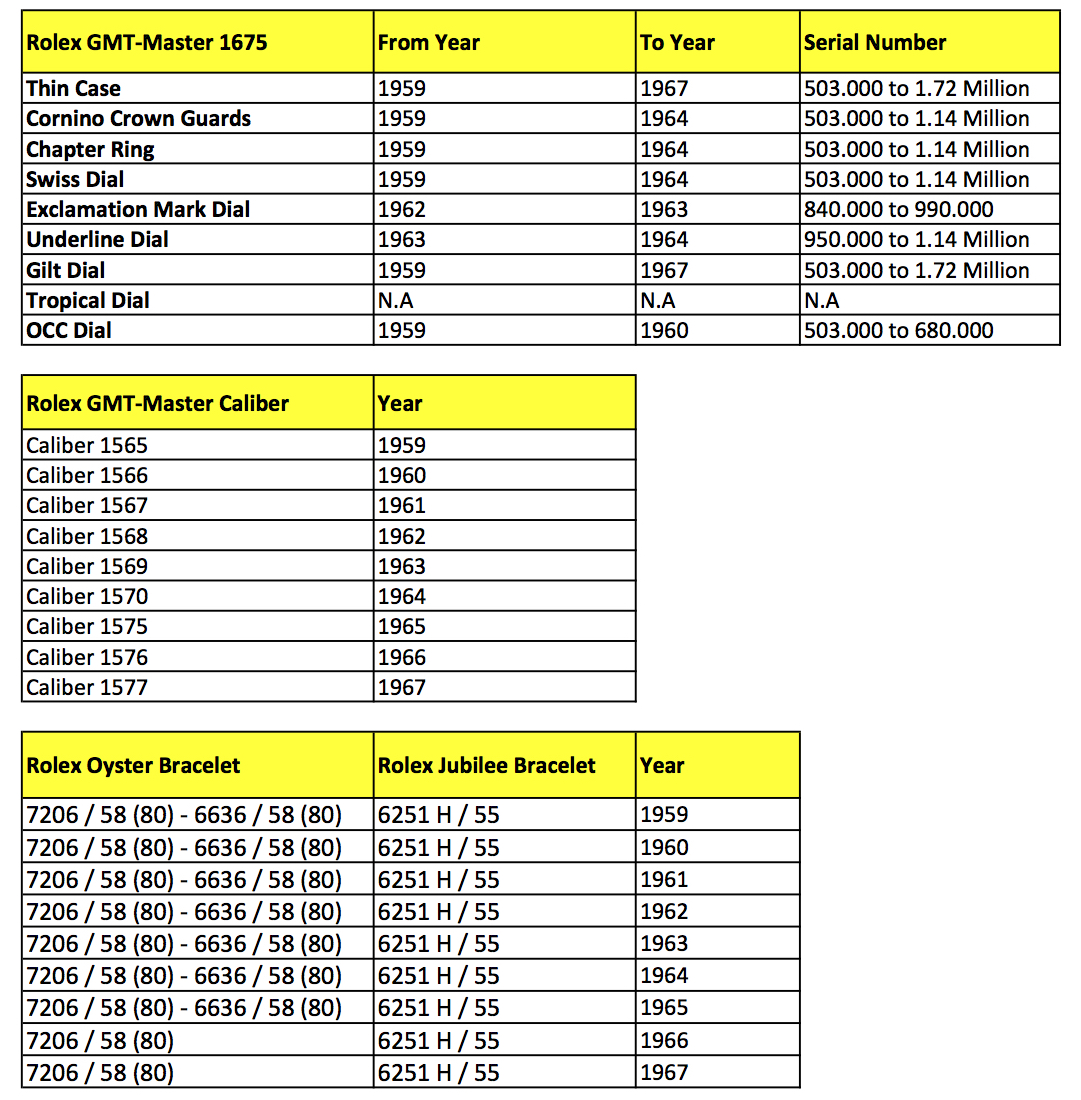
The 6542 series had a production run of 5 years (1954 to 1959) they were then replaced by our beloved 1675’s. These post 6542’s knocked it out of the park, most specifically those manufactured between 1959 and 1967 (serials ranging from 503.000 and 1.720.000).
Early executions of the GMT will remain our favorites as they came with certain intricacies no longer found and celebrated.
Thin Case
Early GMT’s were manufactured in thin metal casings, only later would Rolex shift to the beefier cases that are now commonly seen. Sadly Rolex phased these out rather quick as they were seen as structurally flawed. But gladly they produced them long enough to allow us to collect and share them with our peers. Thin cased GMT’s have a distinguished look best appreciated when observing the watch from its sides. They are also phenomenally comfortable. Look for GMT’s manufactured between 1959 and 1967.
Click to Inquire about this GMT-Master
Cornino Crown Guards
The famed Cornino crown guards are as beautiful as they are sought after. Cases with these guards were only manufactured from 1959 to 1964, which in Rolex numbers is incredibly limited. The incorporation of crown guards came as a result of a desire to make sturdier GMT’s, as 6542 although beautiful proved to be fragile. The term Cornino came about due to their resemblance to bull horns. Rolex later replaced these guards with thicker squared shaped ones.
Click to Inquire about this GMT-Master
Chapter Ring Dial
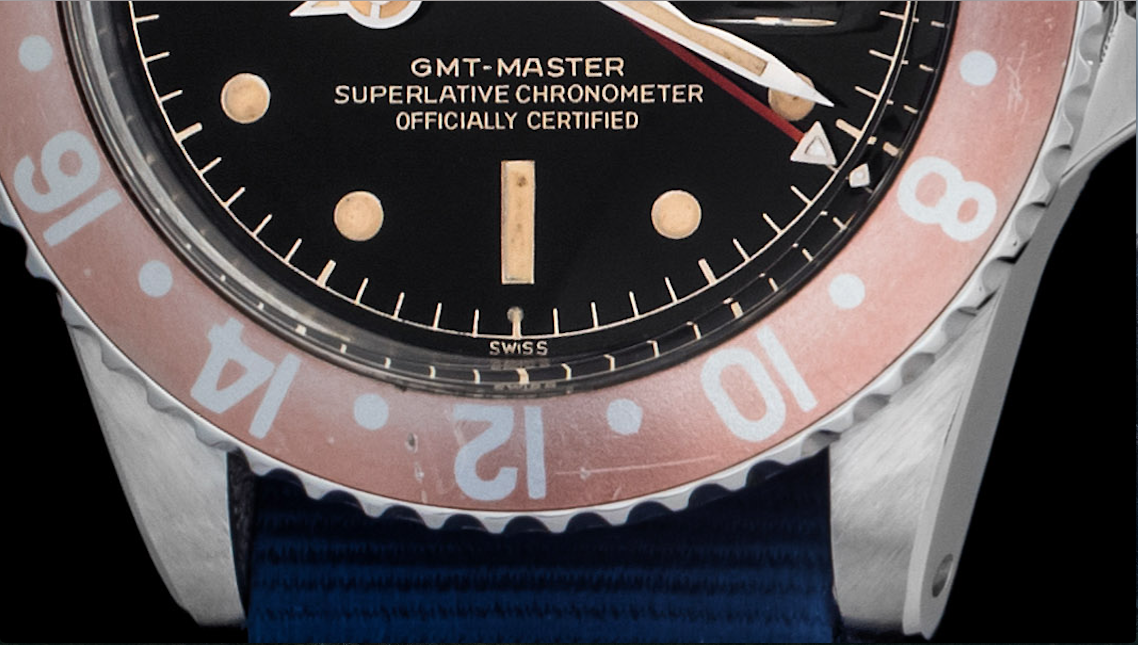
Chapter Ring bearing GMT’s are our favorites as they look so cool and in a way pay homage to their predecessor the 6542. For those unsure what a chapter ring is here’s a short lesson. A Chapter Ring is a line connecting the minute marks while separating the Swiss text located below the 6 o’clock. In vintage Rolex collecting the devil is always in the details and those intricacies that might seem insignificant to some mean the world of a difference to the staunchest of collectors.
Chapter ring dials will only be found on 1675 GMT’s belonging to serials between 503.000 and 1.140.000 or those manufactured throughout 1959 and 1964.
Official Rolex Advertising from late 1950’s
Swiss Dial
Like the Chapter Ring covered above Swiss dials too were original to the 6542. This lettering at the foot of the dial lasted from 1954 with the 6542 until 1964 when Rolex halted their production. For those wondering the significance of the Swiss designation here it is – Swiss dials indicate the presence of Radium as the source of the dial’s luminescence. For collectors and admirers of the brand early Swiss dials are important as they belong to an era when Rolex was just an outstanding tool watchmaker and not a luxury powerhouse.
These dials can be found on 1675’s belonging to serials between 503.000 and 1.140.000 or those manufactured throughout 1959 and 1964.
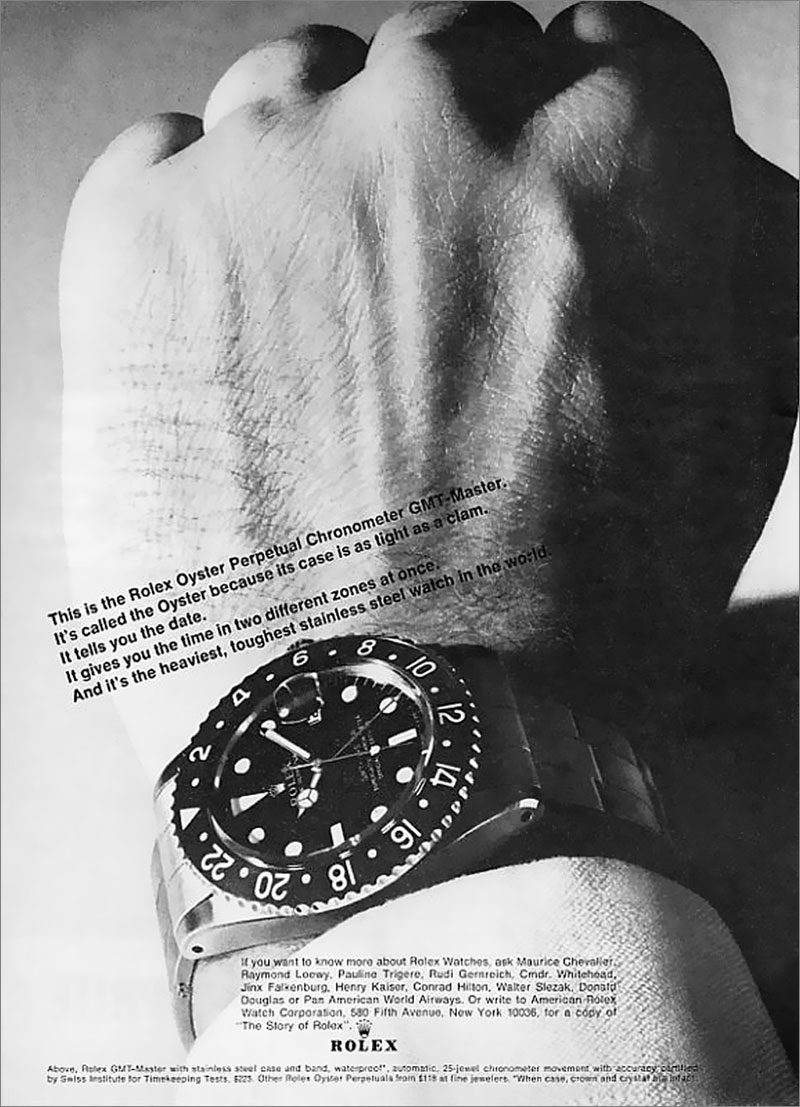
Official Rolex Advertising from 1966
Double Swiss
For a very short period between 1963 and 1964 (Serials 950.000 and 1.140.000) Rolex printed a special set of dials marked with a double Swiss signature below the 6 o’clock mark. The first Swiss is immediately visible while the second can barely be seen as it’s located at the very edge of the dial.
Image Courtesy of Le Mond Edmond
Exclamation Mark Dial
The famous Exclamation Mark dial came due to new international regulations, which limited the quantities of Radium allowed to be applied on dials. These special dials also belong on early GMT’s. After the regulations were made effective Rolex had no other choice than to comply. They did so by printing a very small exclamation mark place directly above “Swiss”. This showed people the dial still had Radium but lesser quantities.
Click to Inquire about this GMT-Master
Underline Dial
Another show of compliance to the new international regulations was the Underline dial. This detail on the dial signified a complete change from Radium to a Tritium as the source of luminescence. Again, these dials are only found on early GMT’s and are seen as incredibly collectible as they were only printed for 1 year.
Underlines belong on GMT’s with serials between 950.000 and 1.140.000 or those manufactured in 1963 and 1964.
Click to Browse through our GMT-Master Collection
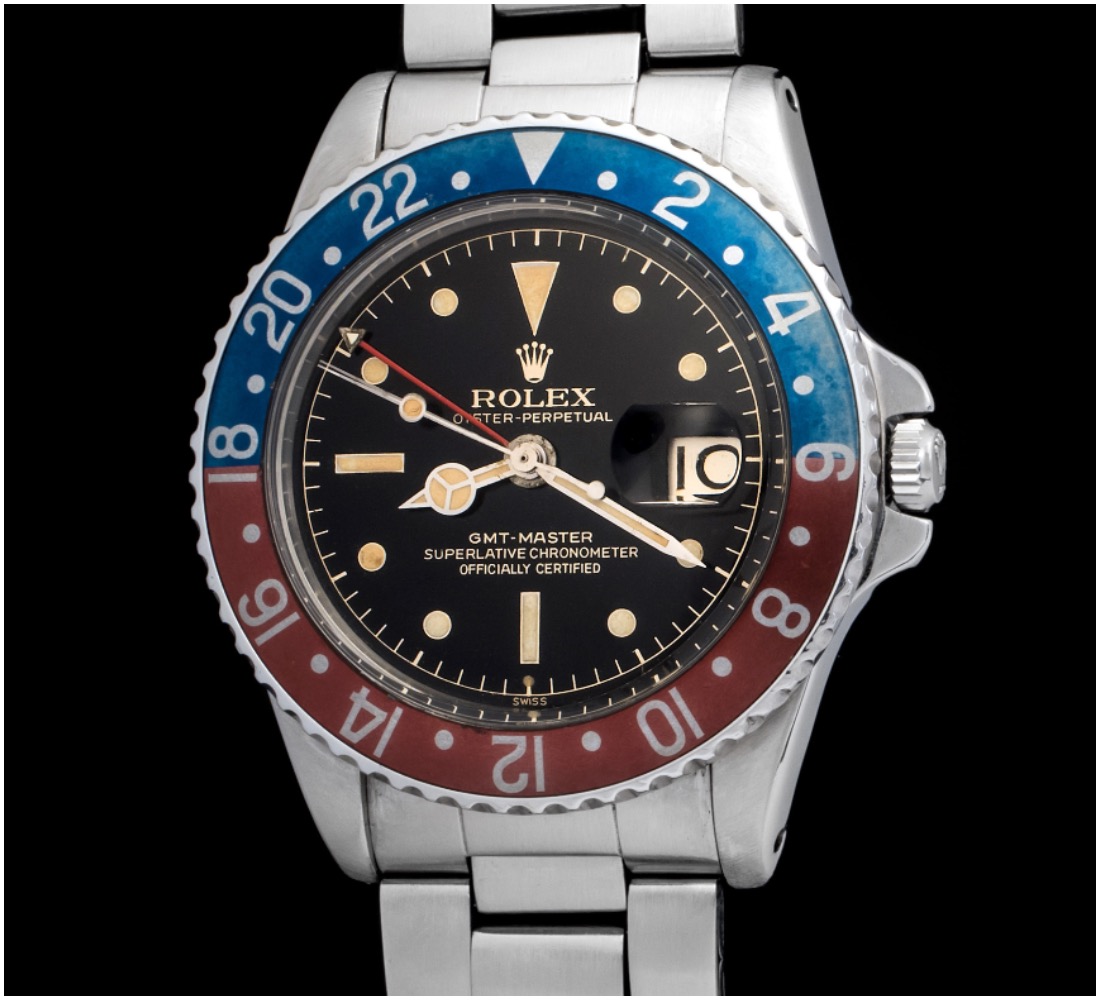
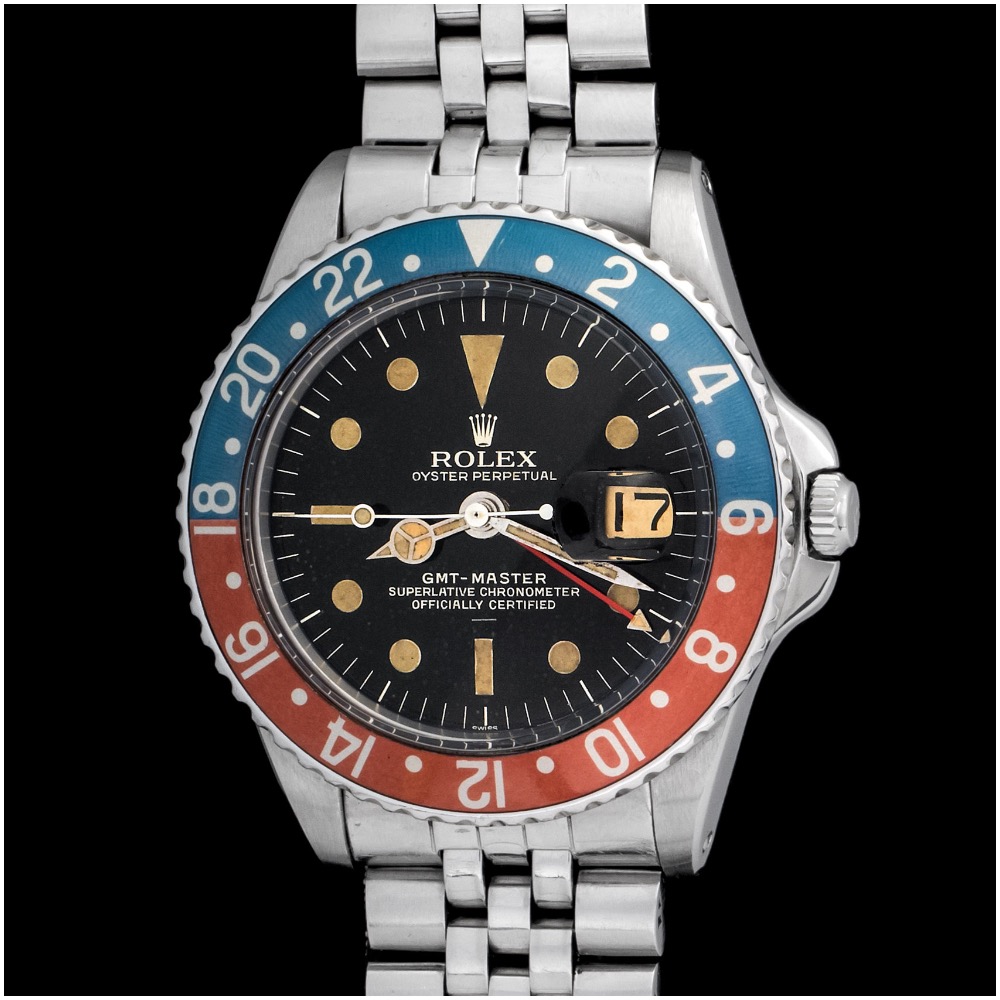
Gilt Dial
We enter into Gilt territory. This subject has been discussed in wide detail, as these types of dials were not just fitted on GMT’s but on every Rolex sports watch. Due to the complicated process of manufacturing Rolex stopped making them after the 60’s. For some context about what Gilt is and how they come about we have briefly highlighted their process of manufacture below:
Step 1
Gilt dials started off as circular copper plates
Step 2
Wordings and designations were later invisibly stamped onto the copper dial
Step 3
The copper dial was later dipped into a galvanic substance, which electrified the plate prompting the dial’s lettering to become visible
Step 4
Dials were later given a lacquer coat and applied with its respective luminous material
As time has passed the wording on these dials have taken a slight golden color hence the term gilt. Look for a gilt GMT dial on those with serials ranging from 503.000 to 1.720.000 or manufactured between 1959 and 1967. Also expect to pay a premium.
Tropical Dial
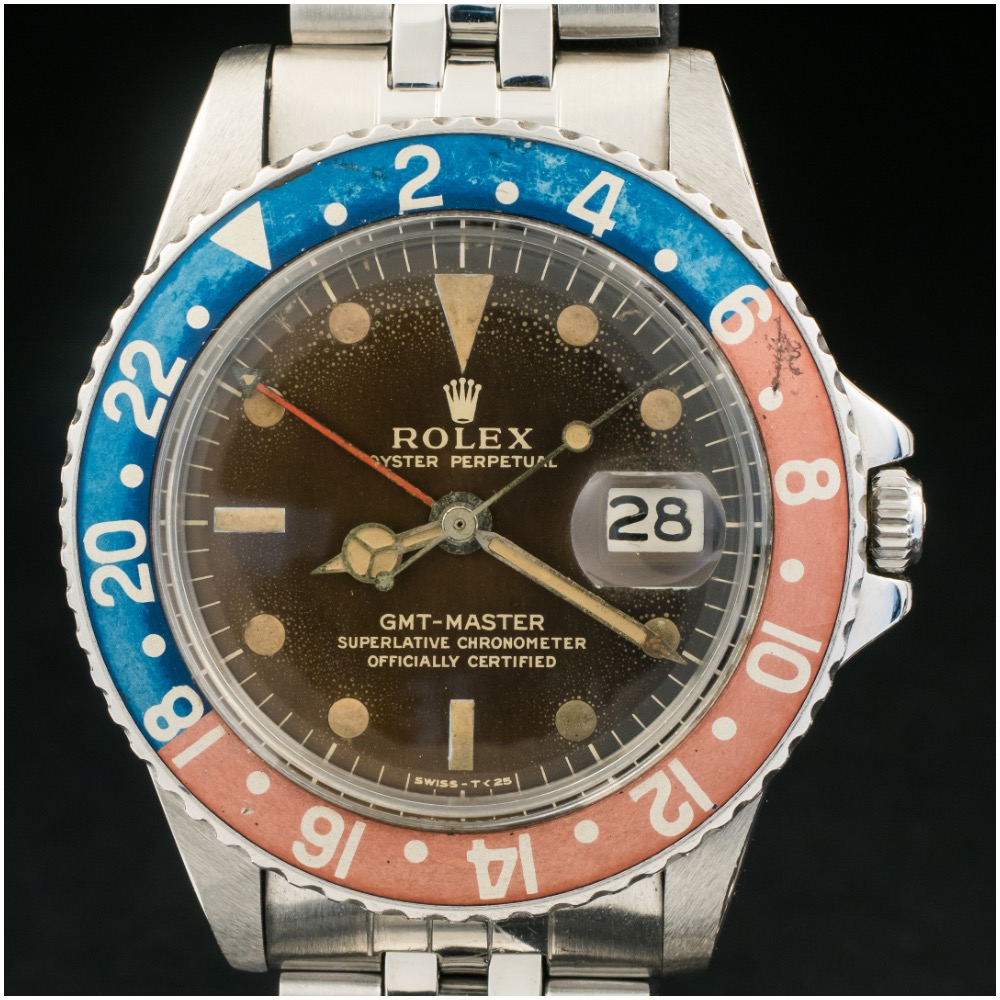
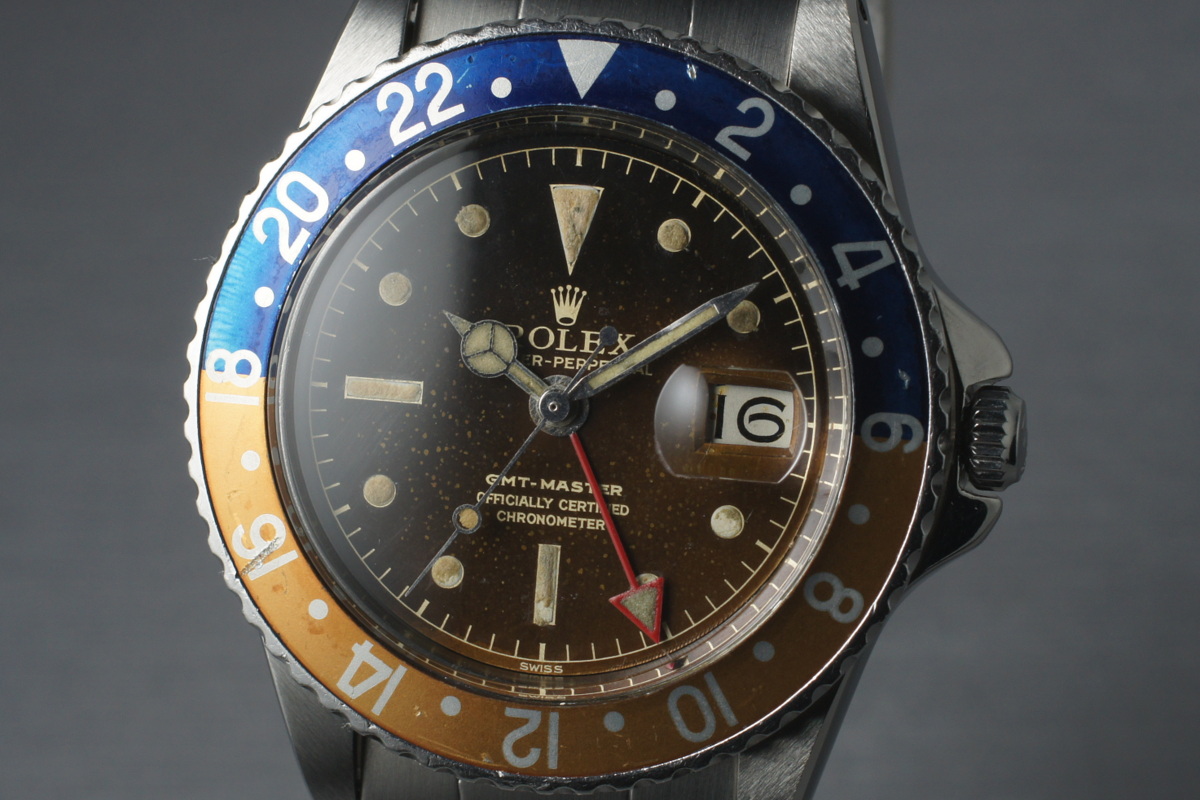
Out of every dial variation highlighted so far the Tropical dial remains the king. Reason is they are very easy to spot there is no need for a loupe to pin them down. Tropical dials were born black but due to chemical reactions on the lacquer coat the black color began to turn brown. The interesting aspect about these is that no two will ever be the same. Each Tropical dial has a certain detail that makes it special and unique.
Click to Browser through our GMT-Master collection
OCC Dial vs. SCOC Dial
Dials printed with certain words and designations command premiums we have covered various examples above. This brings us to GMT dials printed with the words “Officially Certified Chronometer” versus those with “Superlative Chronometer Officially Certified”. (We advise that before you delve into this section you read our short explanation of an OCC dial and a SCOC dial.)
For a period of 12 months (1959-1960) Rolex forgot to acknowledge the fact that the 1675 were powered by a SCOC certified 1565 caliber yet their dials were only claiming to be OCC certified. The 6542’s were the first and last GMT to have OCC calibers. Naturally 1675’s with OCC dials are incredibly difficult to find and those available will carry a steep premium. And for those wondering a 6542 dial cannot be fitted on a 1675 due to sizing constraints.
If you are looking to collect one these you should focus on 1675’s with serials ranging from 503.000 to 550.000 or those manufactured throughout 1959 and the middle of 1960.
No other family of watches causes as much excitement as Valjoux powered Rolex Daytona’s. These chronographs are in a realm of their own as they can singlehandedly influence market trends. We were at Christies when 50 Daytona’s broke world records for auction prices causing a collectors frenzy in the process. Click here to browse through our Daytona collection for sale.
Rolex Daytona “Lesson One” Record Breaking Auction
Car Racing Heritage
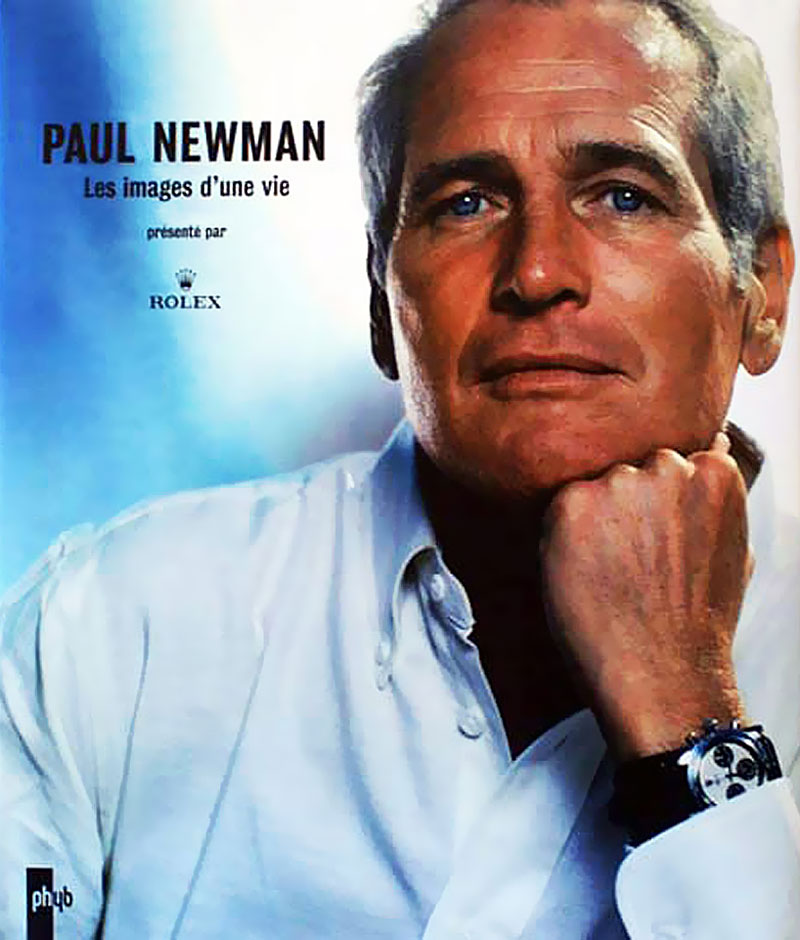
The Daytona is a watch that checks every box in the collector’s book. They embody what a vintage watch should be and look like. Valjoux Daytona’s have that quality feel that can never be replicated by a modern watch. Rolex conceived this chronograph to serve as a tool for car racing. Their status as reliable timing devices made them staples on the wrists of some of the coolest men to walk this planet, enter Mr. Paul Newman and Sir Jackie Stewart.
www.rolexmagazine.com
Daytona Lineup
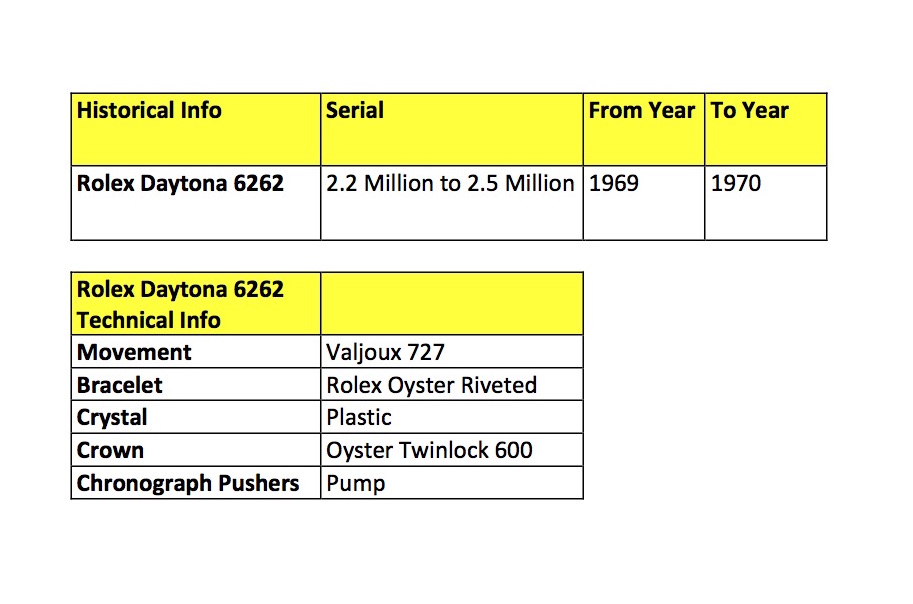
The Daytona family is composed of the following references: 6239, 6240, 6241, 6262, 6264, 6265, 6263, and 6269/70. All are fascinating in their own right but we have a particular penchant for the elusive Rolex Daytona 6262.
This 6262 reference is known as the transitional Daytona as Rolex manufactured them for the span of one year (1969 to 1970), making them the least produced Daytona. Well let’s not consider the 6269/70 as that’s an outlier. Records estimate only 347,000 examples of the 6262 left the manufacture between the span of 1 year. These chronographs are found with serials ranging from 2.241.000 to 2.589.000, no more no less.
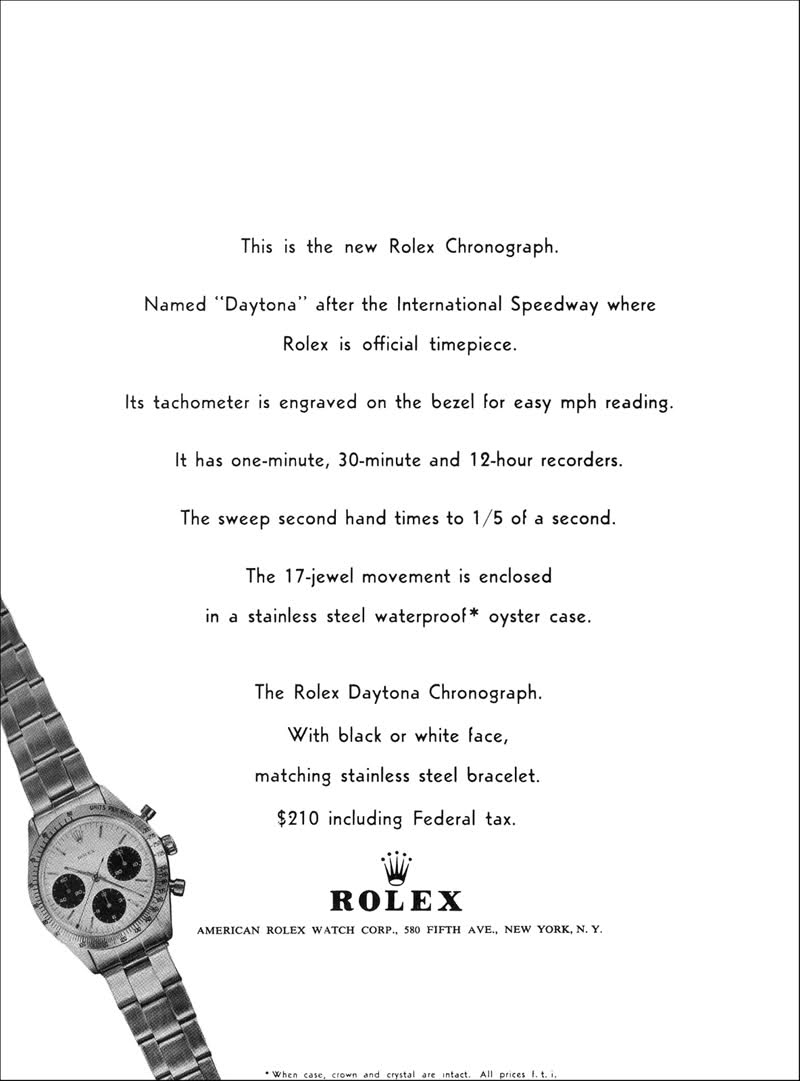
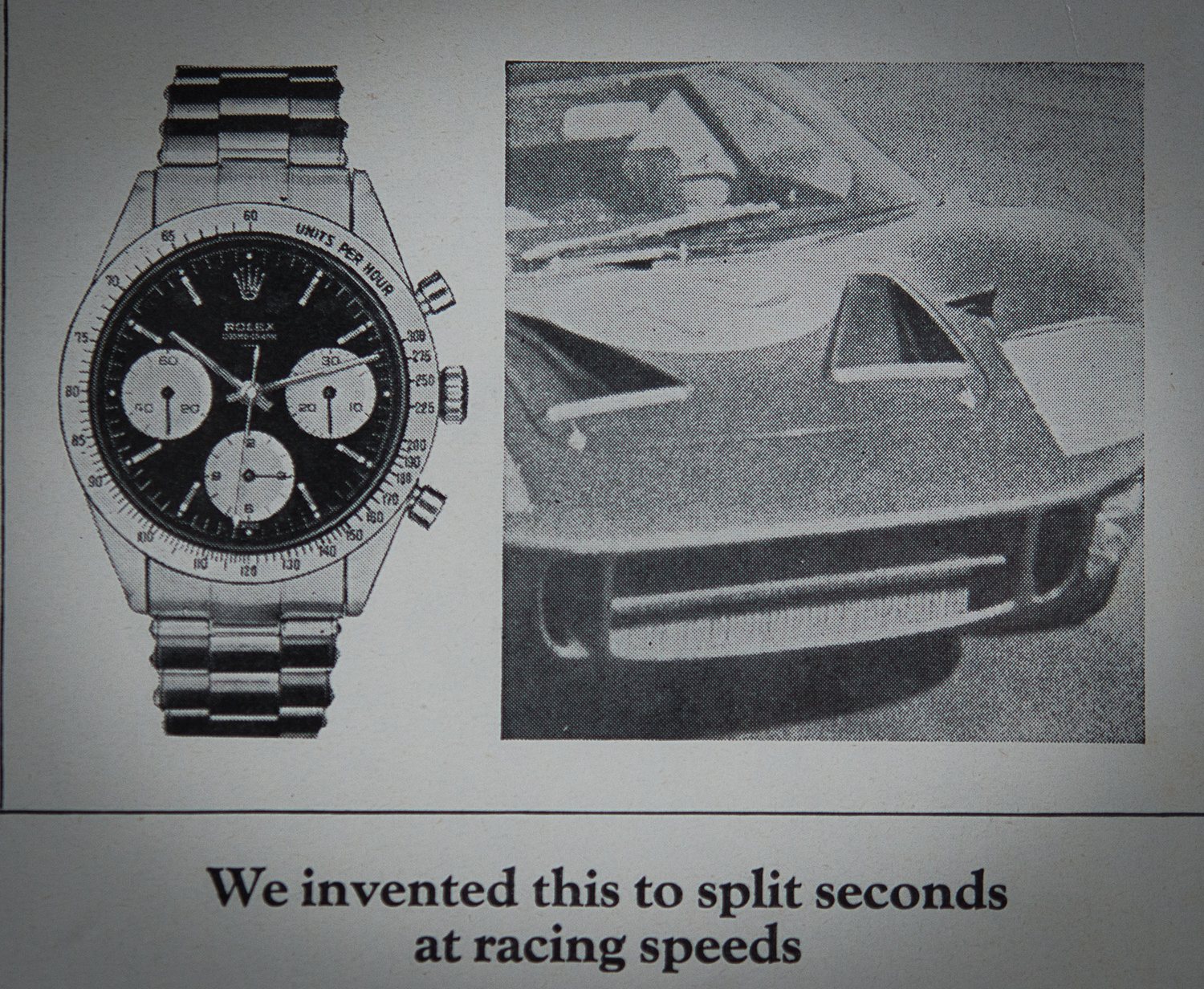
Official 1965 Rolex Advertising
The Daytona 6239 is Given a Facelift
The reason to the “transitional” moniker is Rolex’s usage of the reference to test out several features and variants for future Daytona’s. For example the 6262 was the first watch to be equipped with the final and faster beating Valjoux 727 caliber, advancing from the prior Valjoux 722. The 727 became the last manual movement used by Rolex before shifting to the automatic Zenith in the late 80’s.
Rolex also modified its highly successful Oyster case with the 6262, an edit that brought more backlash than success. Reason was the case was thicker and prone to damaging the rather luxurious 17 jewels movement inside. Rolex fans took notice of these changes and accused the brand of deviating away from manufacturing tool watches and entering the era of sporty elegance.
Official Vintage Rolex Advertising
Magnificent but Short-Lived
The 6262 is seen as the direct counterpart of the 6265 as it has the same steel bezel graduated to 200 units, but lacks the screw down pushers prominently accentuating the 6265’s look. As a business move Rolex did not strike gold with the 6262. This failure has proven an advantage in the modern market as collectors now appreciate rare and low produced watches.
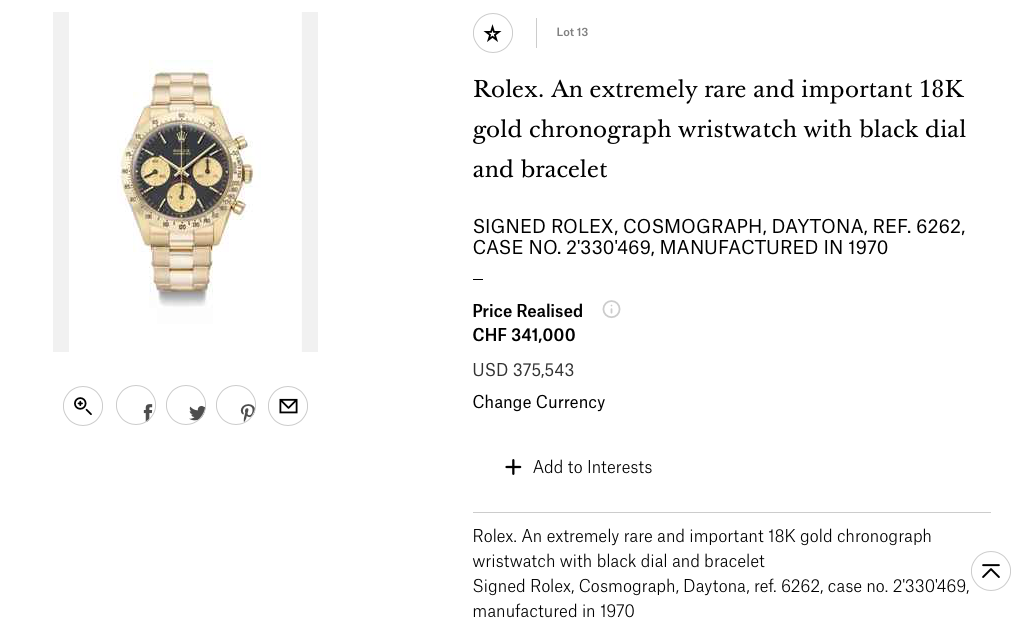
The Daytona 6262 can be found in three metal variants fitted with three dial types. Like any vintage tool watch the most common metal is steel. Rolex also manufactured a limited strand of 6262’s in 14K and 18K yellow gold. Now, finding a 6262 is not easy. Finding a 6262 in gold might be a near impossible feat. Assuming one is found you will need to be ready to break the bank, because it will cost a small fortune. Numbers put gold 6262’s at grand total of 30 examples made.
Lot 13 from Christie’s Lesson One Auction
Dial Variations
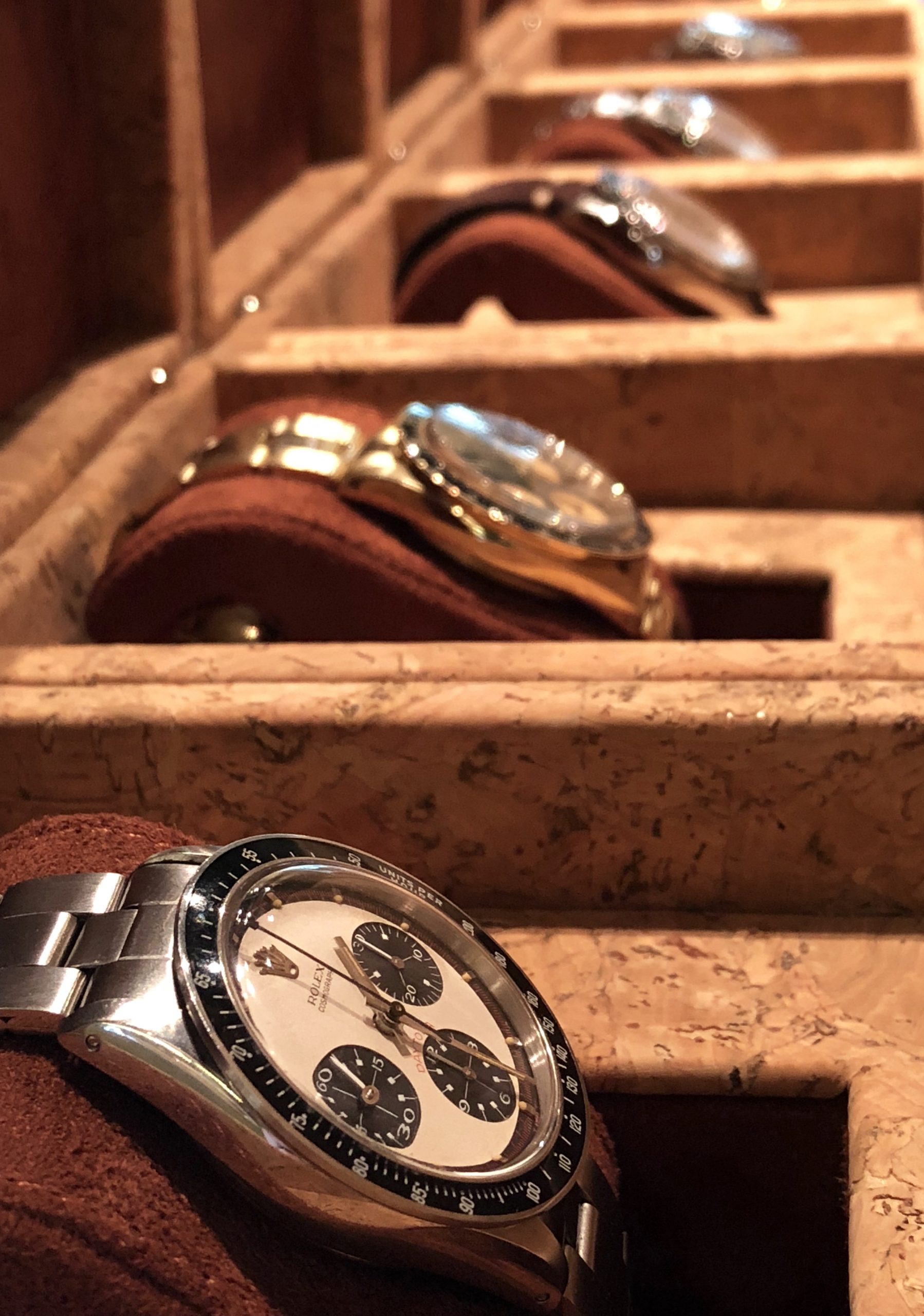
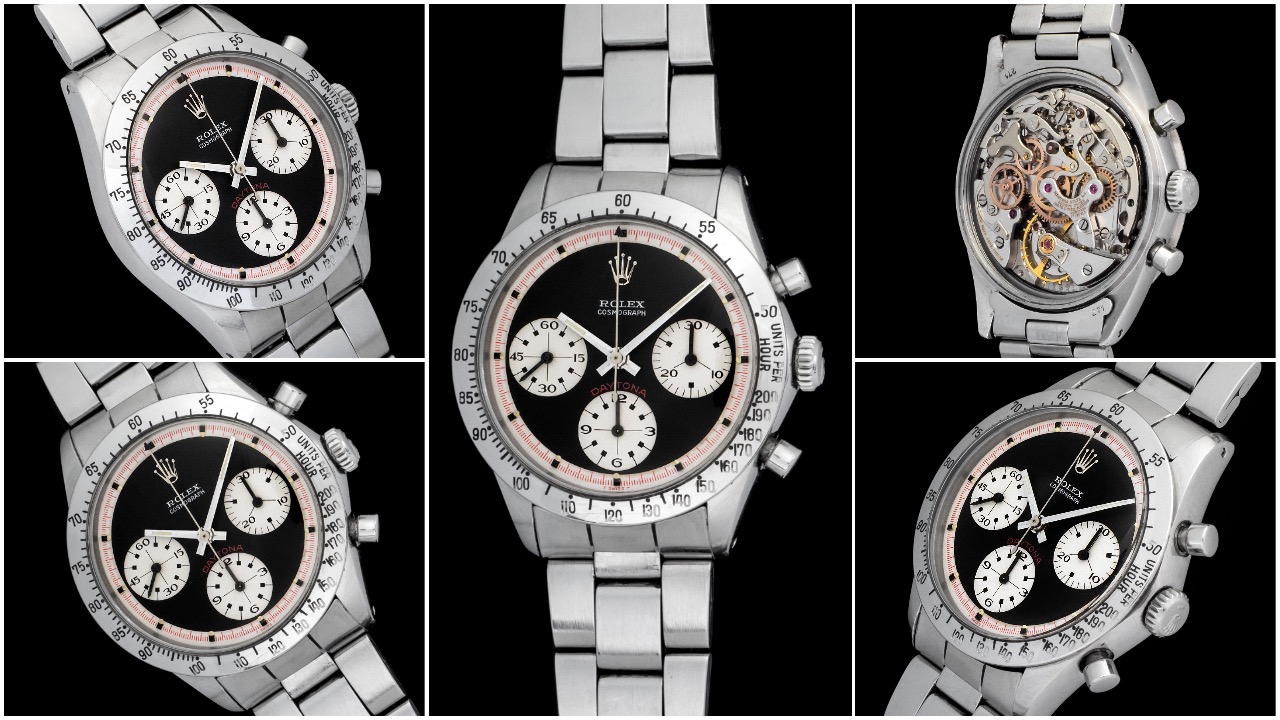
The common dials found on 6262’s are the traditional two tones. Either black face with white sub dials or white face with black sub dials. Within those variants the most coveted is the black face, as they look much nicer on the wrist. The least common type of dial is the famed exotic dial AKA the Paul Newman. These are easy to spot as the sub dial demarcations are printed with art deco lettering.
Daytona 6262 Paul Newman from Vintage Watches Miami
Blue Daytona
Within the dials offered in the catalogue is one that is not, as a matter of fact Rolex never foresaw this type of dial. We are talking about the blue dial. When these dials pop up at auctions or are offered by important international dealers they are referred to as Blue Daytona’s. Blues are only found on black dial Daytona’s. The way to spot them is to focus on the lettering which spells out Daytona commonly located arching above the hours sub dial. Rolex printed these letters in white but due to a chemical reaction in the paint the white turned into a blue hue. What was a Rolex error has now become a detail that commands a retail premium. Click here and here to see what a Blue Daytona looks like.
It’s that time of the year when every major watch dealer and collector come together to share their passion at the Mercanteinfiera show in Parma. This show takes place two times per year, once in the fall and then the spring. During these two occasions some of the world’s most important watches change hands. There are many watch shows taking place year round but none are as significant or influential as the Parma, because it is here where the passion for vintage watches was born.
The feeling of walking into the show is unparalleled, unlike any other show. The camaraderie felt amongst our peers be it collectors or dealers is simply beautiful as everyone is there to celebrate our shared passion.
Through Vintage Watches Miami and Milano we’ve had the pleasure to be expositors for the past 10 years, during this time we have retained the same spot: Pad 6 K43 – look for us there.
There is no denying that Rolex is the king. Each and every Rolex encompasses a craftsmanship and history not replicated by any other manufacturer. It might seem easy to deviate from Rolex in the search for other types of watches but ultimately most collectors will return to the brand. Below is an official Rolex video, which captures the brand’s essence beautifully.


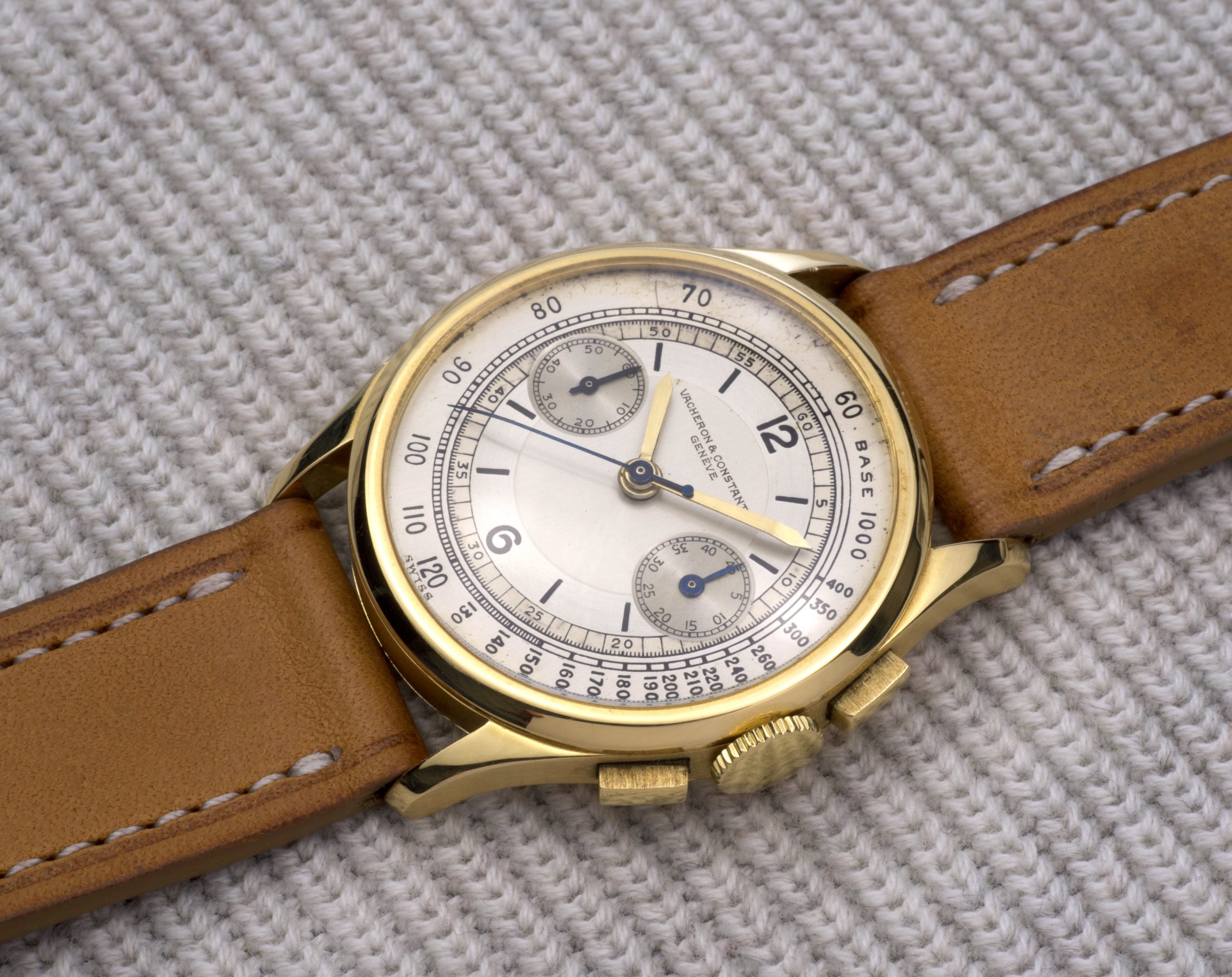
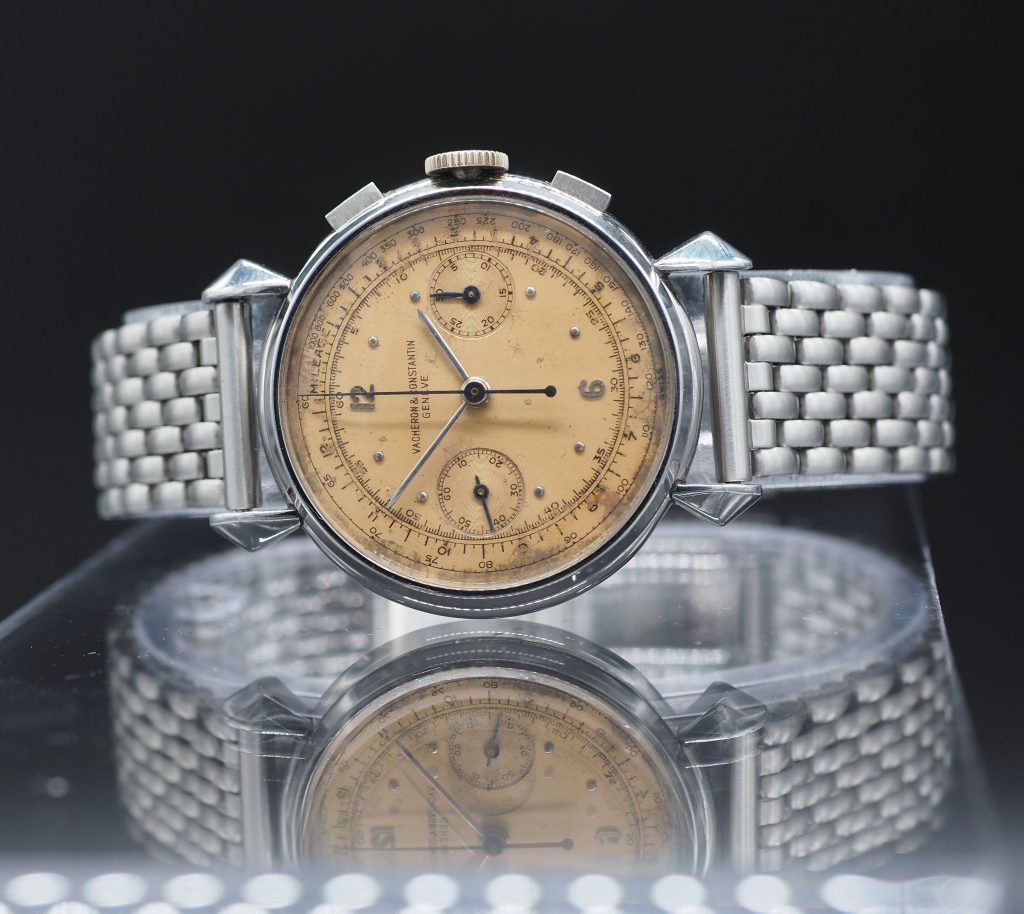
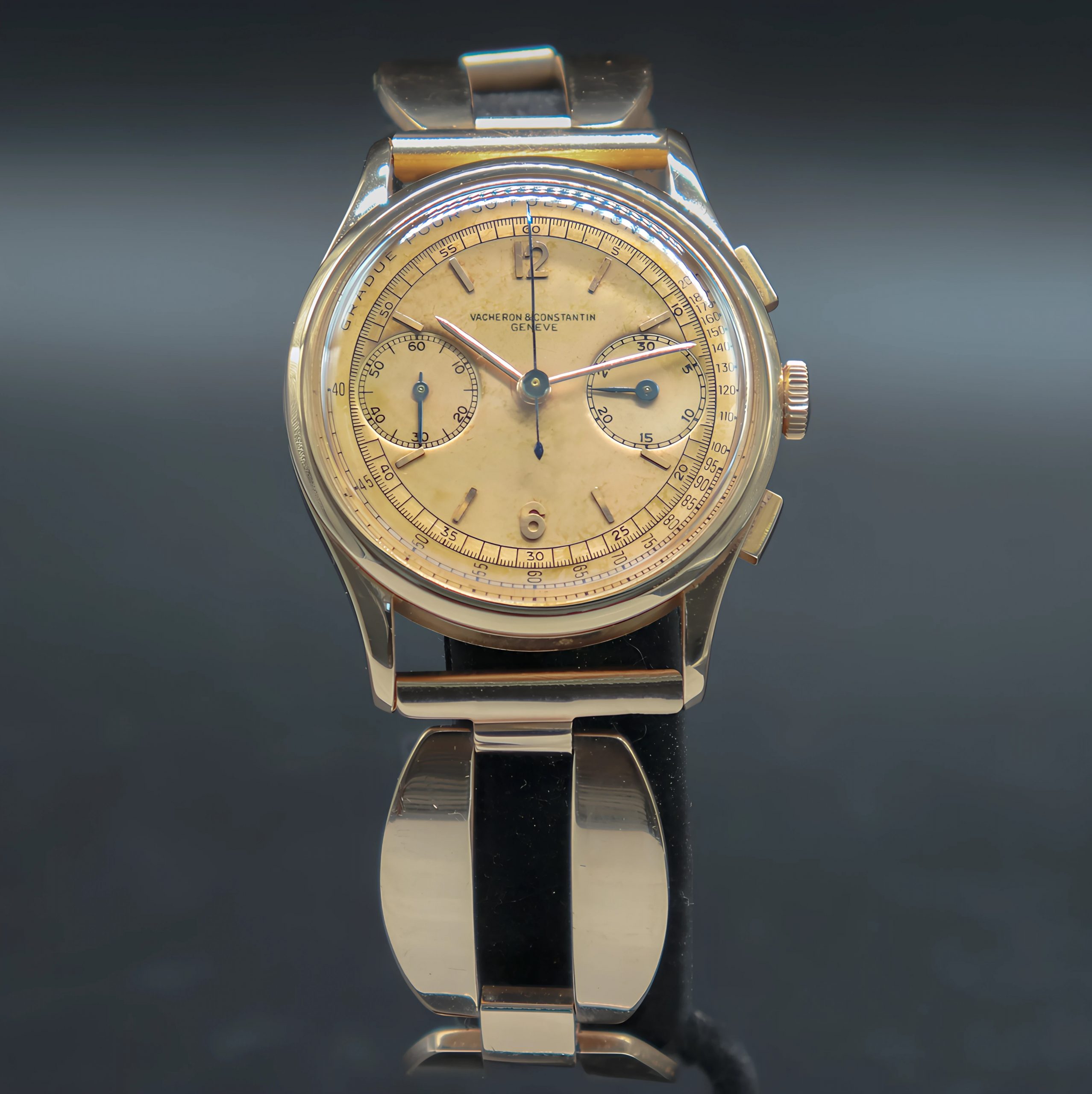
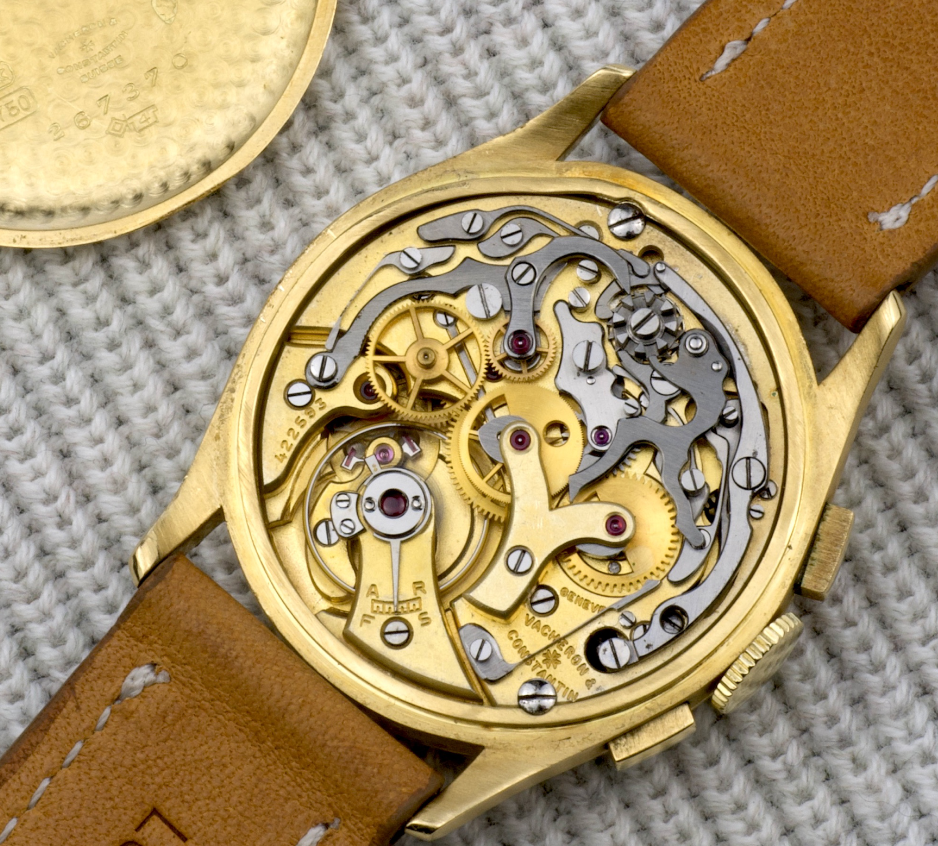
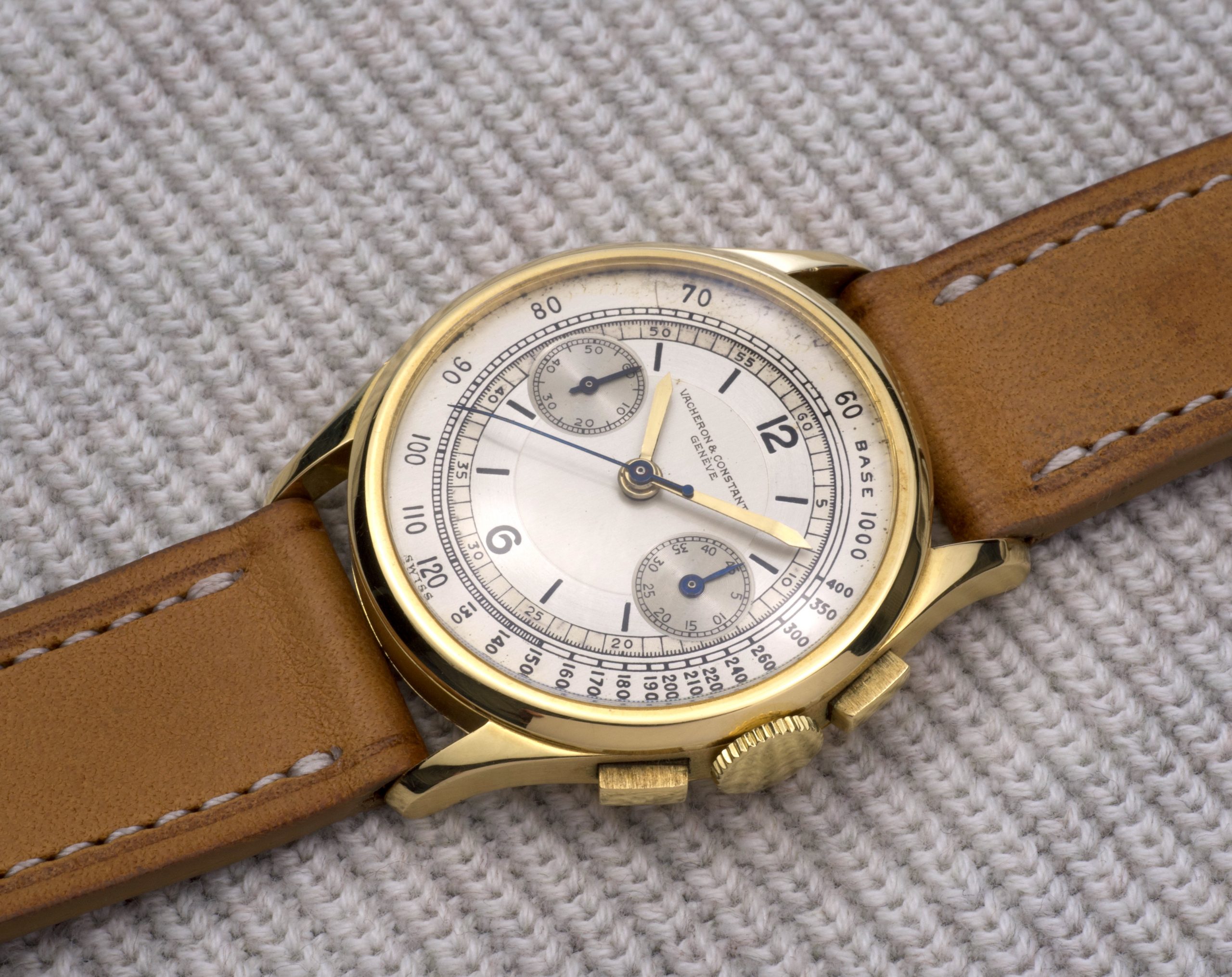
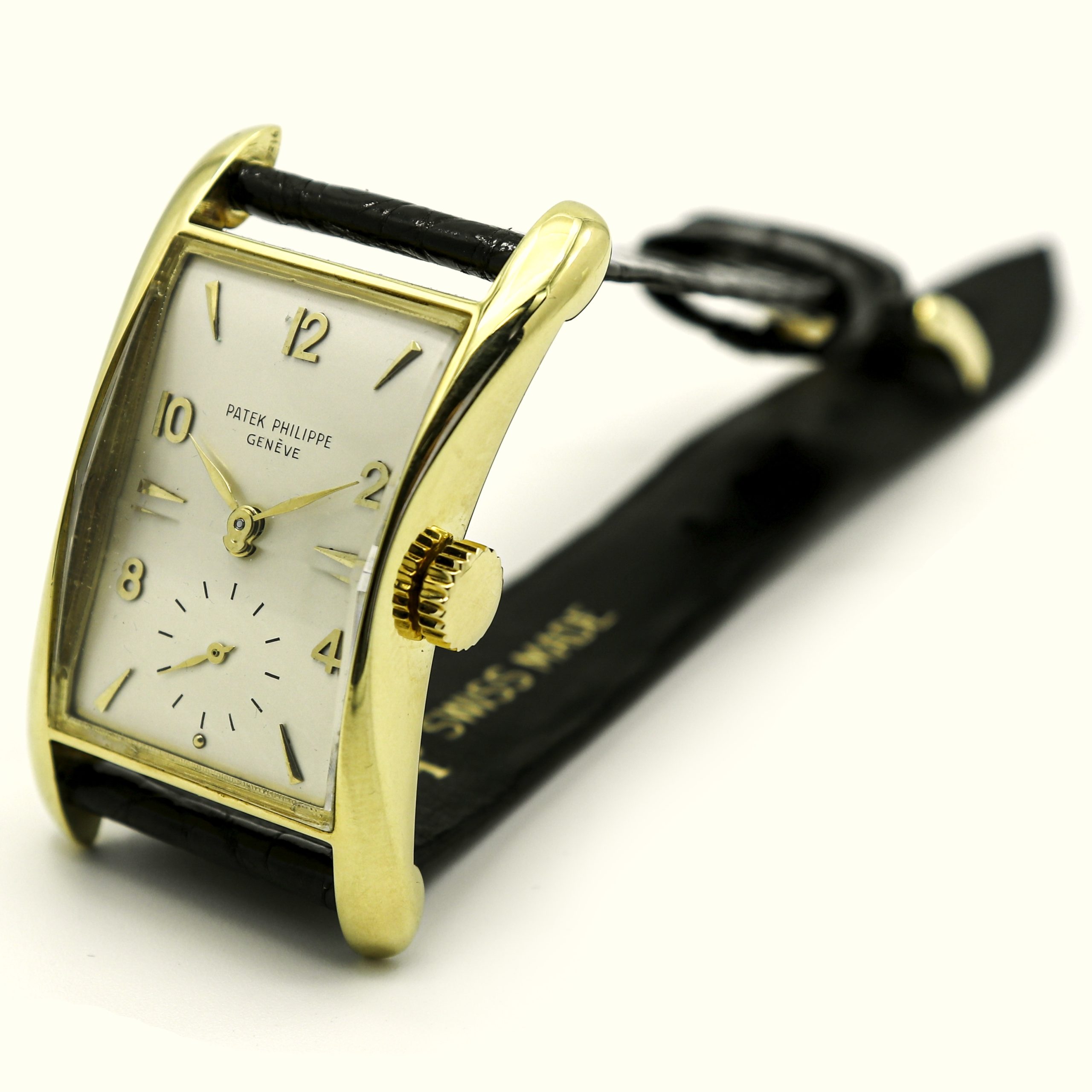 1930s: The Great Depression and Functionality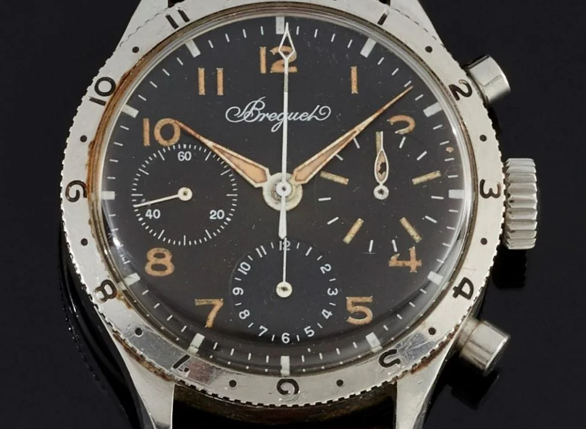
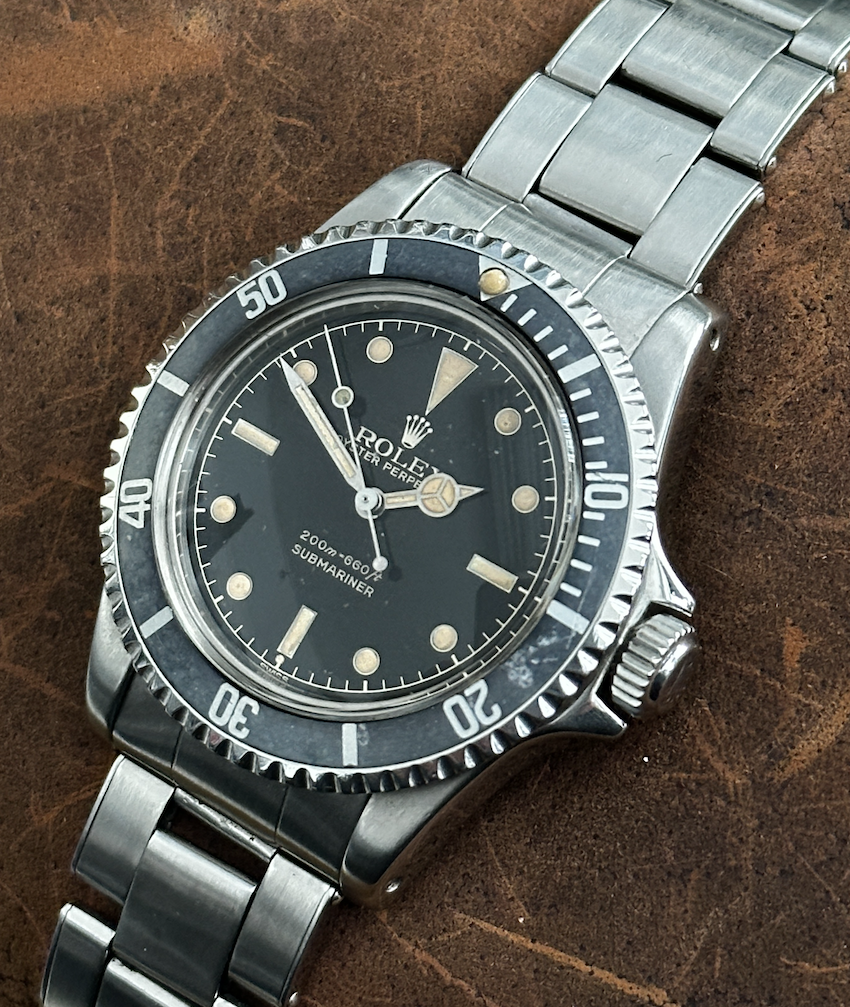 1950s: The Golden Age of Sports Watchmaking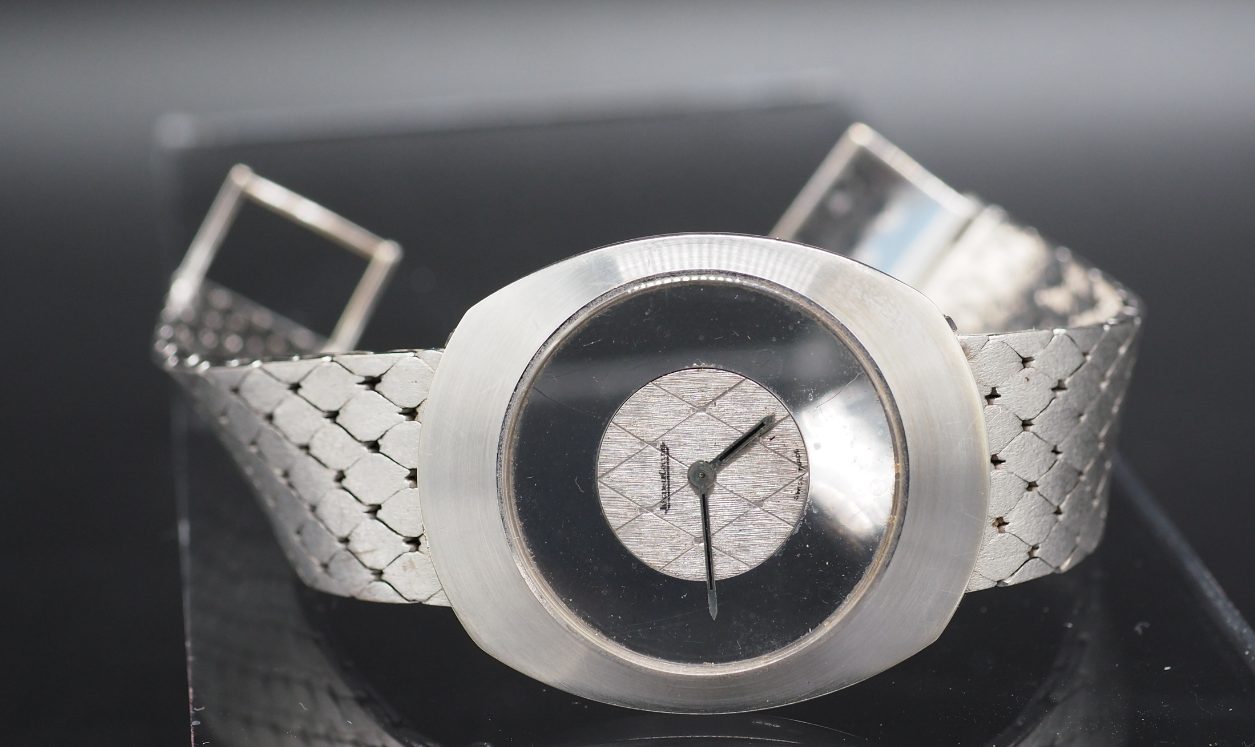
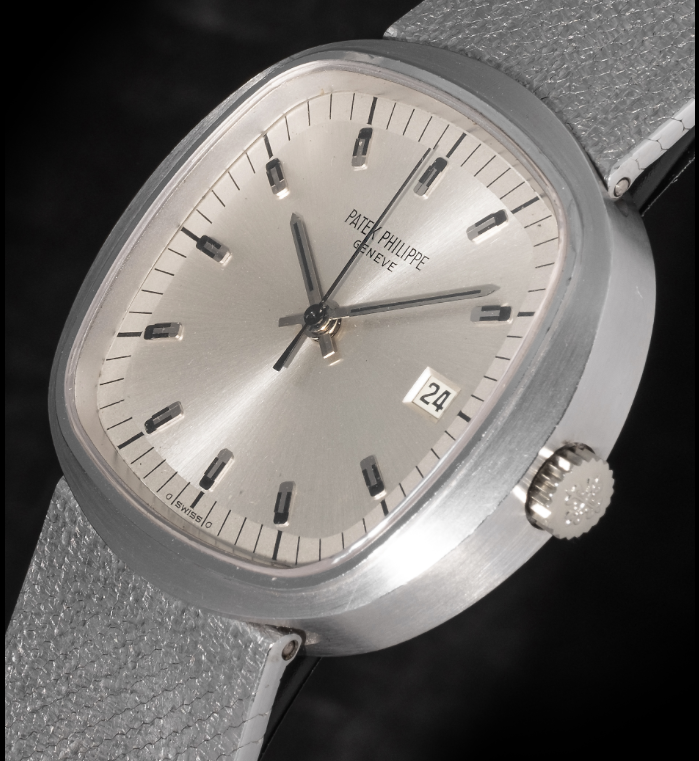 1970s: The Quartz Crisis and the Explosion of Design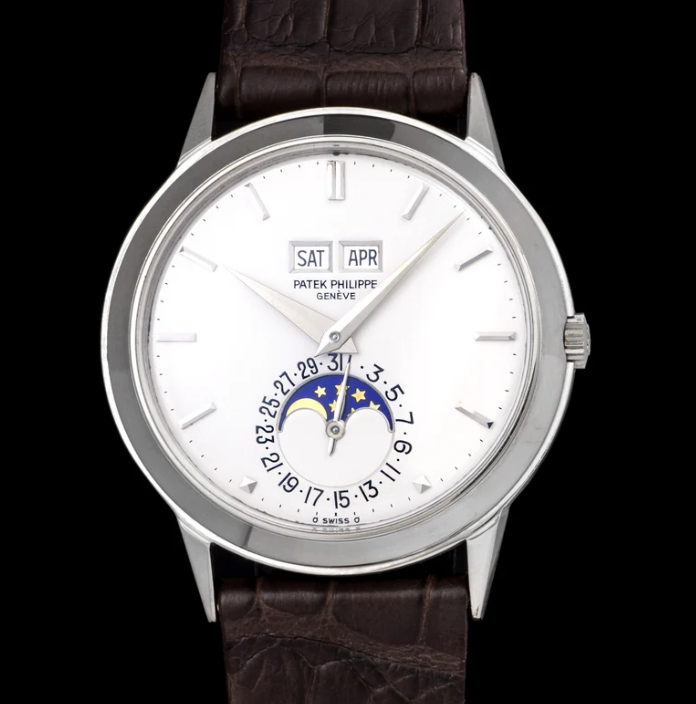
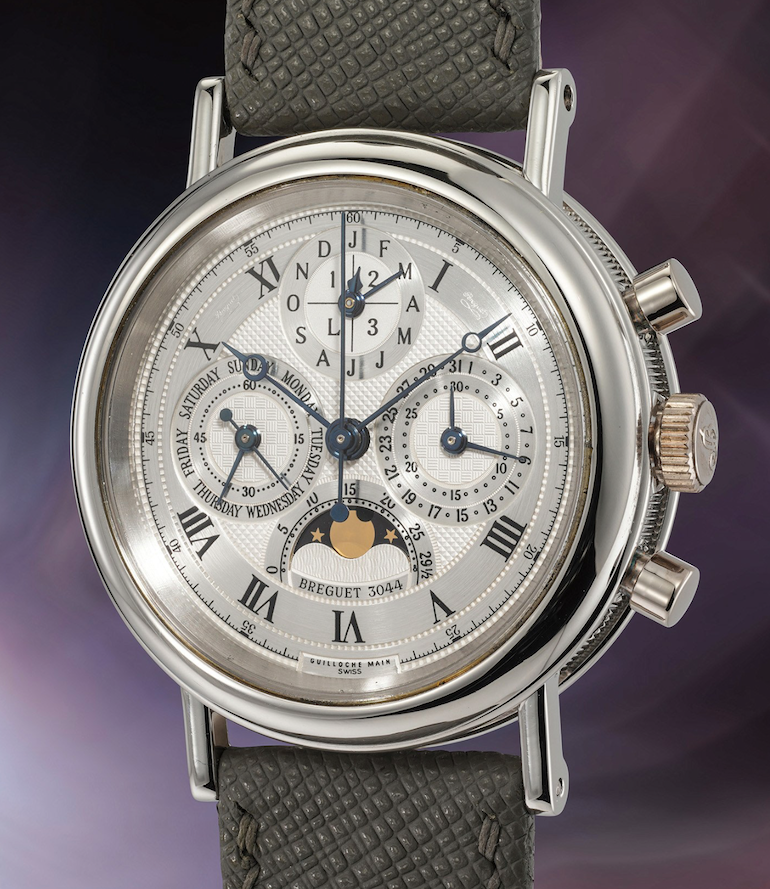 1990s: Complication and Transparency