Shopping Bag
No products in the cart.
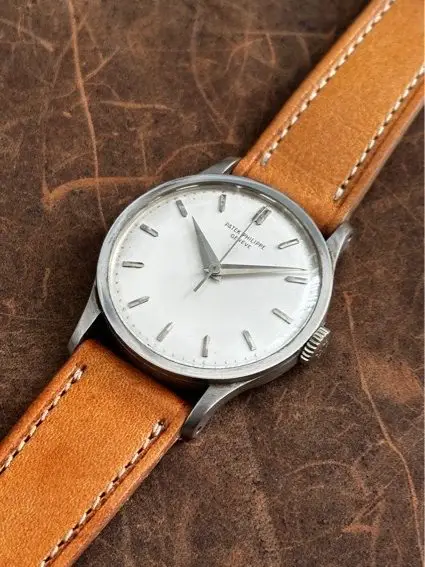
The Patek Philippe manufacture is universally recognized as a bastion of haute horlogerie, celebrated for creating timepieces of exquisite craftsmanship and profound historical significance. Among its numerous creations, the reference 2526 holds a place of particular importance. Introduced in 1953, this model marked a fundamental step in the brand’s history, representing its first self-winding wristwatch. This innovation, combined with an elegant design and meticulous execution, has made the 2526 a highly desirable piece for collectors and a symbol of watchmaking excellence. This report aims to provide an in-depth analysis of the Patek Philippe reference 2526, exploring its historical context, technical specifications, design characteristics, rarity, market value, opinions of the collector community, and the importance of its provenance.
The reference 2526 made its appearance at the Basel Fair in 1953, a period of significant evolution for the watchmaking industry, characterized by a growing focus on automatic movements. In this context, Patek Philippe, while maintaining its reputation for the highest quality manual-winding movements, recognized the importance of embracing this emerging technology. The result of this vision was the development of the caliber 12-600 AT, the first automatic movement entirely designed and manufactured by the company. This caliber represented a remarkable technical achievement for Patek Philippe, testifying to its commitment to innovation and independence. The choice to develop an in-house automatic movement, rather than relying on external suppliers, allowed Patek Philippe to maintain its high quality standards and exercise complete control over the production process.
It is interesting to note that the introduction of an automatic movement by Patek Philippe occurred at a time when automatic winding technology had already been present on the market for several decades. Rolex’s patent on the “perpetual” movement with a 360-degree rotor, filed about twenty years earlier, may have represented a legal constraint for other watchmaking houses. However, evidence suggests that Patek Philippe had already begun working on its own automatic movement for years, meticulously perfecting it while awaiting the expiration of the Rolex patent. This strategy demonstrates Patek Philippe’s philosophy, oriented towards quality and technical precision, rather than the hasty introduction of a product not yet up to its standards. The wait and subsequent introduction of the caliber 12-600 AT confirmed Patek Philippe’s dedication to watchmaking excellence.
The case of the reference 2526 typically featured a three-part construction, with a screw-down case back designed to ensure a certain degree of water resistance. This feature, innovative for the time, contributed to the robustness of the watch and made it more suitable for everyday use. The 2526 was produced in various precious metal versions: 18-karat yellow gold (the most common), 18-karat rose gold, 18-karat white gold, and platinum. The availability in all four noble metals underscores the luxurious nature of this timepiece. The case dimensions generally hovered around 35-36 mm in diameter, a size that was considered quite generous at the time and gave the watch a notable presence on the wrist.
An iconic detail of the reference 2526 is its cast gold crown, characterized by the intertwined “PP” logo. This particular crown not only facilitated manual winding and time setting but also became a distinctive element highly appreciated by collectors, often associated with the era of the caliber 12-600 AT. Its presence adds a touch of refinement and recognizability to the overall design of the watch.
The beating heart of the Patek Philippe reference 2526 is the caliber 12-600 AT. This self-winding movement, awarded the prestigious Geneva Seal, was composed of 30 jewels and featured a Gyromax balance and an 18-karat gold rotor finely decorated with a guilloché pattern. The caliber 12-600 AT was not only technically advanced for its time but also beautifully finished, reflecting Patek Philippe’s commitment to haute horlogerie. The innovative automatic winding mechanism was the subject of a Swiss patent, number 289758, granted in 1953, testifying to the originality of the technology developed by Patek Philippe.
One of the most distinctive elements of the reference 2526 is its enamel dial. Made using the “double-fired on sterling silver disc” technique, this type of dial was conceived to offer greater beauty and durability, resisting color change and scratches. The typical hue of many enamel dials of the 2526 is a cream or ivory white, a shade that has become a hallmark of the vintage model and is particularly appreciated by collectors. The earliest versions of the dial featured applied 18-karat gold baton indexes riveted or fixed with pins.
A significant difference between the first series and subsequent dials concerns the method of fixing the indexes. In the first series dials, the indexes were inserted into the enamel through pins, a process that left subtle “dimples” visible on the surface of the dial. In later series, this technique was abandoned, and the indexes were glued directly onto the enamel surface. The first series dials, with indexes fixed with pins, are often considered more desirable by collectors for their rarity and for being a testament to an initial production technique later abandoned.
Another peculiarity that significantly increases the value of the reference 2526 is the presence of a black enamel dial. Examples with a black dial are extremely rare and highly sought after by collectors, fetching significantly higher prices at auction due to their scarcity. The difficulty in producing perfect black enamel dials contributed to their limited distribution.
Despite their beauty and presumed durability, enamel dials are inherently fragile and susceptible to cracks or damage, especially in the event of shocks. Therefore, the condition of the dial is a crucial factor in the evaluation of a vintage Patek Philippe 2526. Collectors pay particular attention to the absence of cracks or chips, as even a small defect can significantly affect the value of the watch.
Estimates of the total production of the reference 2526 hover around 2500 examples, distributed among the different metal variants. Yellow gold is considered the most common metal, with an estimated production of around 2400 examples. Rose gold is significantly rarer, with approximately 360 examples produced. White gold and platinum are the rarest variants, with an estimated production of around 70 examples each. This scarcity makes the white gold and platinum versions particularly coveted by the most discerning collectors. Some sources suggest that, despite the estimated production number being the same for white gold and platinum, white gold examples are even harder to find on the market today.
Over the course of its production, the reference 2526 underwent some evolutions, giving rise to different series or generations. Although the differences may be subtle, collectors hold them in high regard. Generally, four main series are distinguished. The first series is characterized by a domed screw-down case back and an enamel dial with applied indexes fixed with pins. The second series also features a domed screw-down case back and an enamel dial with inlaid indexes. The third series is identical to the second but with a practically flat screw-down case back. Finally, the fourth series has a flat screw-down case back and an enamel dial with inlaid luminescent indexes. Understanding these differences between the series helps collectors identify the specific characteristics and relative rarity of each example.
The Patek Philippe reference 2526 is a highly sought-after watch in the vintage and collectible watch market, and its performance in international auctions reflects this interest. The prices achieved vary considerably depending on the case metal, dial color, condition, and the presence of any special features such as the signature of a prestigious retailer or the completeness of the original accessories.
Table 1: Notable Auction Results for the Patek Philippe Reference 2526
| Auction House | Date | Reference (Metal/Dial) | Realized Price (Currency) | Estimated Price (Currency) | Notable Features |
| Christie’s | May 2012 | Ref. 2526 Rose Gold/Enamel | HKD 524,000 | HKD 240,000 – 380,000 | Extract from the Archives |
| Sotheby’s | October 2024 | Ref. 2526 Platinum/Enamel (Serpico Y Laino) | HKD 5,700,000 (approx. USD 732,690) | HKD 1,200,000 – 2,400,000 | Retailed by Serpico Y Laino |
| Christie’s | November 2017 | Ref. 2526 Yellow Gold/Black Enamel (Gobbi Milano) | CHF 100,000 | Not specified | Signed by Gobbi Milano, Black Dial Certified Original |
| Sotheby’s | November 2024 | Ref. 2526 Yellow Gold/Enamel | CHF 20,000 – 30,000 | Not specified | With Patek Philippe box |
| Sotheby’s | April 2023 | Ref. 2526 Yellow Gold/Enamel (First Series) | Not specified | Not specified | Extract from the Archives |
| Sotheby’s | December 2024 | Ref. 2526 Yellow Gold/Enamel (First Series) | USD 25,000 – 50,000 | Not specified | Extract from the Archives, Service Box |
| Sotheby’s | October 2024 | Ref. 2526 Platinum/Enamel (Serpico Y Laino) | HKD 1,200,000 – 2,400,000 | Not specified | Signed by Serpico Y Laino, Extract from the Archives |
| Antiquorum | November 2007 | Ref. 2526 Yellow Gold/Enamel (Third Generation) | CHF 13,000 (Hammer Price) | CHF 8,000 – 12,000 (Estimate) | Extract from the Archives |
| Antiquorum | November 2007 | Ref. 2526 Rose Gold/Enamel (Hausmann & Co.) | CHF 64,900 (Hammer Price) | CHF 60,000 – 70,000 (Estimate) | Patek Philippe rose gold bracelet, Extract from the Archives |
| Antiquorum | September 2009 | Ref. 2526 Yellow Gold/Black Enamel (First Generation) | Not specified | Not specified | Black Dial Original Certified by Extract from the Archives |
| Sotheby’s | April 2024 | Ref. 2526 Yellow Gold/Enamel (First Edition, J.B. Champion) | HKD 5,700,000 (approx. USD 732,690) | HKD 3,000,000 – 6,000,000 | First Patek Philippe automatic wristwatch, Sold to J.B. Champion |
The analysis of auction results highlights how platinum examples, especially those signed by prestigious retailers such as Serpico Y Laino, tend to fetch the highest prices. Examples with the rare black enamel dial also achieve significantly higher prices due to their scarcity. The overall condition of the watch, particularly that of the delicate enamel dial, and the presence of original accessories, such as the box and papers, play a fundamental role in determining the final hammer price.
The Patek Philippe reference 2526 is held in high regard by the vintage watch collector community. On specialized forums such as Rolex Forums, WatchProSite, and WatchUSeek, there is a general appreciation for its historical importance as the brand’s first automatic watch, for its refined design, and for the exceptional quality of the caliber 12-600 AT and the enamel dial.
A recurring theme in discussions is the fragility of the enamel dial. Collectors are aware of its vulnerability to cracks and emphasize the importance of carefully examining the condition of the dial before a potential purchase. The search for examples with immaculate enamel dials is a priority for many enthusiasts.
Some collectors believe that the reference 2526 is an “underrated” model in the landscape of vintage Patek Philippe watches. Despite its historical significance and horological value, its market price may not always fully reflect its importance compared to other iconic models of the brand. This aspect makes it, for some, an interesting opportunity to acquire a piece of watchmaking history at a relatively accessible price.
The Patek Philippe reference 2526 is available for purchase through various channels, including retailers specializing in vintage watches and online platforms such as Chrono24. The presence of the model on different platforms offers collectors a variety of acquisition options but also requires careful research and due diligence.
The prices requested by retailers can vary significantly depending on the case metal, dial variant, condition, and the presence of original accessories. For example, a Patek Philippe 2526J Vintage Hausmann Automatic Calatrava Watch from the years 1954-5 was found for sale on Patekmonger at a price of $52,900.00 1. Several listings for the reference 2526 are present on Chrono24, including an 18-karat yellow gold version with an enamel dial from 1955 2.
Often, retailers highlight particularly desirable features such as “first series,” “enamel dial,” or the signature of a renowned retailer in their listings to attract experienced buyers. The presence of these specifications can significantly influence the asking price.
The presence of a retailer’s signature on the dial, such as Tiffany & Co., Gobbi Milano, Serpico Y Laino, and Hausmann & Co., can add significant value and increase the historical importance of a vintage Patek Philippe 2526 4. These signatures testify to the partnership between Patek Philippe and internationally renowned jewelers and confer an aura of exclusivity to the watch.
Equally crucial for collectors is the presence of original documentation, particularly the Extract from the Archives of Patek Philippe 8. This official document certifies the authenticity of the watch, its production date, and its original specifications, providing a fundamental guarantee for collectors. The availability of the original box and papers, although not always possible for watches of this age, further contributes to the completeness and collectible value of the timepiece.
In summary, the Patek Philippe reference 2526 represents a milestone in the history of watchmaking as the first self-winding wristwatch produced by Patek Philippe . Its timeless design, the technical brilliance of the caliber 12-600 AT, and the enduring appeal of the enamel dial make it a piece of great value for collectors . The rarity of certain variants, particularly those in white gold, platinum, and with a black enamel dial, is reflected in their high prices in the auction market . For collectors, the condition, provenance, and presence of signatures from prestigious retailers are factors of primary importance in evaluating an example . The Patek Philippe 2526 remains a highly collectible and historically significant watch, testifying to a crucial moment in the evolution of Patek Philippe and automatic watchmaking .
Analysis of the Patek Philippe Reference 2552 in Platinum
1. Introduction to the Patek Philippe Reference 2552 in Platinum:
The Patek Philippe reference 2552, affectionately nicknamed the “Flying Saucer” due to its distinctive case shape reminiscent of a flying saucer, represents an icon of twentieth-century watchmaking. Produced between 1954 and 1960, this automatic model stands out for its elegance and design that was modern for its time. While the reference 2552 was made in various metal options, including yellow, white, and rose gold, it is the platinum version that holds particular fascination for collectors due to its extreme rarity. The nickname “Flying Saucer” is widespread among enthusiasts, as evidenced by numerous online sources and watchmaking forums. This common designation suggests that the case design, characterized by a stepped bezel and curved lugs, was perceived as remarkably innovative or unusual at the time of its introduction.
This report aims to provide an in-depth analysis of the Patek Philippe reference 2552 in its precious platinum variant. The objective is to explore its history, technical specifications, presence in the auction and retail market, discussions among collectors, its current market value, and, finally, its high degree of collectibility.
2. Historical Overview and Technical Specifications:
The reference 2552 appeared on the watch market between 1954 and 1960. Its introduction occurred during a period when public preferences were evolving towards watches with a slimmer profile, and the 2552 was conceived as a sleeker alternative to the previous reference 2526, which featured a thicker enamel dial. This evolution in design reflected a broader trend in the watchmaking sector towards cleaner and more discreet lines.
The beating heart of the reference 2552 is the caliber 12-600 AT, the first self-winding movement developed by Patek Philippe, introduced in 1953. This caliber not only marked a milestone for the Geneva-based manufacturer but was also used in other references of great importance, such as the aforementioned 2526. The 12-600 AT is renowned for its exquisite craftsmanship and its technically advanced features for the era, including 30 jewels, the Gyromax balance, a guilloché gold rotor, and the prestigious Geneva Seal certification. Some examples intended for the American market bear the “HOX” hallmark on the movement, further evidence of their history. The reputation of this caliber as a “legendary” and “superb” movement underscores its historical and watchmaking importance, significantly contributing to collectors’ desire for the reference 2552.
The platinum case of the reference 2552 typically has a diameter of 36 mm. Its distinctive shape is characterized by a well-defined stepped bezel and elegantly curved and downward-facing lugs. The case back is screwed down, ensuring a degree of water resistance for the time. Hallmarks attesting to the purity of the platinum and identifying the case maker, Wenger, whose mark is number 1, are often present on the sides of the case and on the lugs. It is interesting to note that Wenger was the case maker for the reference 2552, unlike Baumgartner, who made the cases for the reference 2526. This subtle distinction highlights the differences between these two closely related references.
The dials of the platinum examples of the reference 2552 are generally silvered. In some particularly rare versions, the dial is embellished with applied diamond indices. A subsidiary seconds counter is classically positioned at 6 o’clock. Below the 6 o’clock index, the inscription “Swiss” can be found. It is crucial to emphasize that platinum examples of the reference 2552 with diamond-embellished dials are considered exceptionally rare, with only four known examples in this specific configuration.
The estimated total production of the reference 2552 in all its metal variants is around 650 pieces. Of these, the number of platinum examples made is extremely limited, with estimates indicating the presence of only 7 or 8 known pieces, including variants with baton dials and those with diamond indices. This discrepancy between the total production and the scarcity of the platinum version, which represents about 1% of the total, underscores the exceptional rarity of this variant, a primary factor that determines its high collectibility and potential market value.